
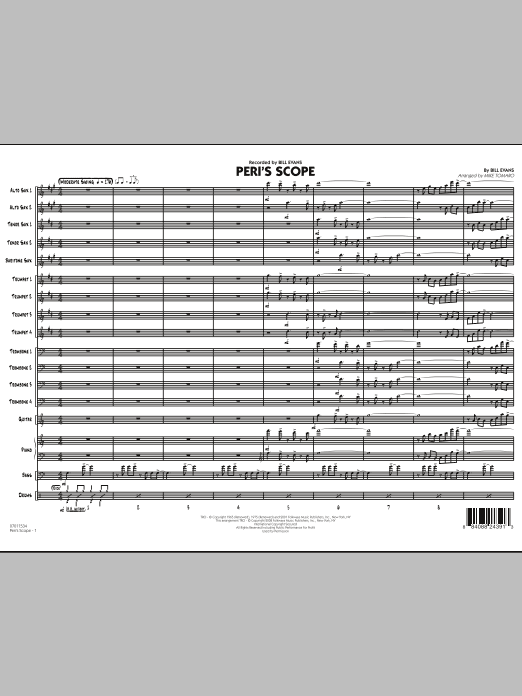

Peri's Scope: Jazz Ensemble Conductor Score & Parts
By Bill Evans / Arranged by Mike Tomaro
Grade: 4
Item: 35-PK00118711
$50.00
Pickup currently not available
Buy Extra Parts (Digital PDF Download)
| Product | Price | Quantity |
|---|---|---|
| Peri's Scope - Conductor Score (Full Score) | $7.50 | |
| Peri's Scope - Alto Sax 1 | $6.00 | |
| Peri's Scope - Alto Sax 2 | $6.00 | |
| Peri's Scope - Tenor Sax 1 | $6.00 | |
| Peri's Scope - Tenor Sax 2 | $6.00 | |
| Peri's Scope - Baritone Sax | $6.00 | |
| Peri's Scope - Trumpet 1 | $6.00 | |
| Peri's Scope - Trumpet 2 | $6.00 | |
| Peri's Scope - Trumpet 3 | $6.00 | |
| Peri's Scope - Trumpet 4 | $6.00 | |
| Peri's Scope - Trombone 1 | $6.00 | |
| Peri's Scope - Trombone 2 | $6.00 | |
| Peri's Scope - Trombone 3 | $6.00 | |
| Peri's Scope - Trombone 4 | $6.00 | |
| Peri's Scope - Guitar | $6.00 | |
| Peri's Scope - Piano | $6.00 | |
| Peri's Scope - Bass | $6.00 | |
| Peri's Scope - Drums | $6.00 | |
| Peri's Scope - C Solo Sheet | $6.00 | |
| Peri's Scope - Bb Solo Sheet | $6.00 | |
| Peri's Scope - Eb Solo Sheet | $6.00 | |
| Peri's Scope - Bass Clef Solo Sheet | $6.00 |
Parts Added to Cart!
Description
Here's a tuneful jazz standard by the master of jazz piano, Bill Evans. This creative and appealing medium swing chart features interesting counterpoint along with the classic melody. Tenor sax and trumpet share the solo duties.


Peri's Scope: Jazz Ensemble Conductor Score & Parts isn't in MakeMusic Cloud just yet...but it could be. Let us know you'd like to see it, and you'll help shape what comes next. In the meantime, start a free trial and dive into thousands of interactive titles your students can play along with today.
Request This Title
Tell us you want it.
Start Your Free Trial
Explore everything that's ready to play right now.
Sample Audio
No sample audio found.
Sample Video
No sample videos found.
Additional Details
Publisher:
Hal Leonard
SKU:
35-PK00118711
More about this title
About the Composer: Bill Evans
Bill Evans redefined what jazz piano could accomplish, moving the instrument toward sophisticated harmonic exploration and chamber-like intimacy. His influence extends far beyond performers who studied him directly; his compositional approach shaped how musicians think about voicing, texture, and the relationship between soloist and ensemble.
Why we love this
Mike Tomaro's arrangement captures Evans's harmonic sensibility while keeping the orchestration transparent enough for a Grade 4 ensemble to execute cleanly. The counterpoint between parts creates genuine musical sophistication without requiring virtuosic chops, and the shared solo space between tenor sax and trumpet gives both sections a moment in the spotlight.
What to expect
The tune sits comfortably in medium swing territory with a breezy, conversational quality. Evans's compositional fingerprints appear in the rich chord changes and the way the melody interacts with the harmony underneath, creating a piece that feels both accessible and genuinely sophisticated.
Who it's for
Jazz ensembles working at the Grade 4 level who are ready for repertoire with real harmonic depth and interweaving voices. Directors looking for a standard that offers substance without overwhelming younger players will find this particularly useful.
How to get the most out of it
- Isolate the counterpoint in rehearsal by having one section sustain while the other section works its line separately. This clarity upfront prevents the parts from muddying together in performance.
- Shape the dynamics around the soloists' entries rather than keeping accompaniment figures at one level throughout. The supportive voicings should breathe and recede when the sax or trumpet takes over.
- Lock the tempo with a felt swing subdivision rather than a strict metronomic pulse. Medium swing charts rely on the ensemble's collective sense of the pocket, not mathematical precision.
How to use it
This works beautifully on a jazz-focused concert where you want to showcase both the ensemble's ability to support soloists and their comfort with harmonic sophistication. Pair it with a funkier or more uptempo chart to show range within your set, or use it as the closing number on a program where a relaxed, swinging note serves as the perfect sendoff.
Skills your students will build
- Recognizing and performing in swing rhythm at a medium tempo
- Blending accompaniment texture while tracking solo entries
- Balancing harmonic voicings across multiple instruments
- Listening to and responding to other soloists in real time