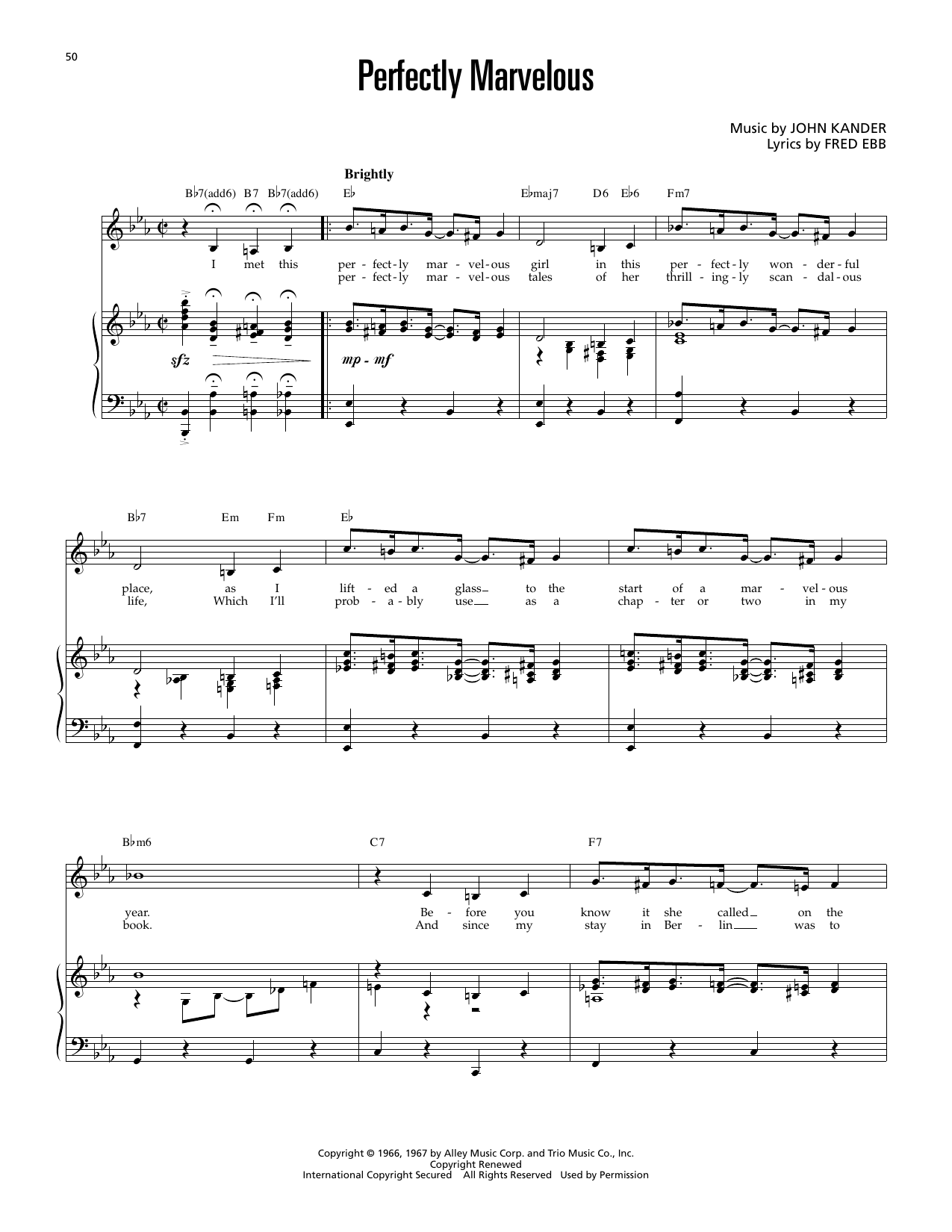
John Kander composed the score for Cabaret with lyricist Fred Ebb in 1966, creating one of musical theater's most incisive and darkly comic works. The show's songs became instantly iconic, performed in cabarets and concert halls worldwide, and Kander's sophisticated harmonic language and rhythmic precision have made them staples of both theater and vocal music curricula.
Why we love this
Kander writes vocal lines that feel conversational and natural while remaining musically sophisticated. The accompaniment sits perfectly under the voice without overwhelming it, making this accessible for singers at many levels while rewarding careful, stylized interpretation.
What to expect
Lighthearted and knowing, with an edge of theatrical wit underneath the cheerfulness. The music captures someone finding joy in small moments while the Cabaret context adds layers of irony and sophistication.
Who it's for
Soprano and mezzo-soprano singers preparing audition material or concert programs will find a song that showcases personality and stylistic maturity. Pianists accompanying vocalists benefit from a part that demands musical sensitivity rather than technical heroics.
How to get the most out of it
Lean into the character's perspective. This song works best when the vocalist commits to the persona of someone genuinely delighted by life's small pleasures, not when sung as a general feel-good number.
Balance the piano part so it supports but doesn't drive. The accompaniment should feel like conversation, not competition.
Shape the melodic phrases with conversational rhythm. Kander's lines follow speech patterns, so avoid metronomic phrasing in favor of natural breathing and emphasis.
How to use it
This works well in a Broadway or 20th-century American song recital, paired with other Kander and Ebb selections or contrasted against heavier dramatic material. It's also ideal for vocal competitions or audition prep where singers need a piece that demonstrates personality and polish without excessive technical demands.
Skills your students will build
Stylistic interpretation of mid-20th century musical theater
Character development through song
Balancing vocal line with sophisticated piano accompaniment
Phrasing based on lyrical and conversational language patterns
You May Also Like
Scan to Complete Your Purchase
Use your phone's camera to scan the code below
You'll log in on your phone and the order will be added to your account