
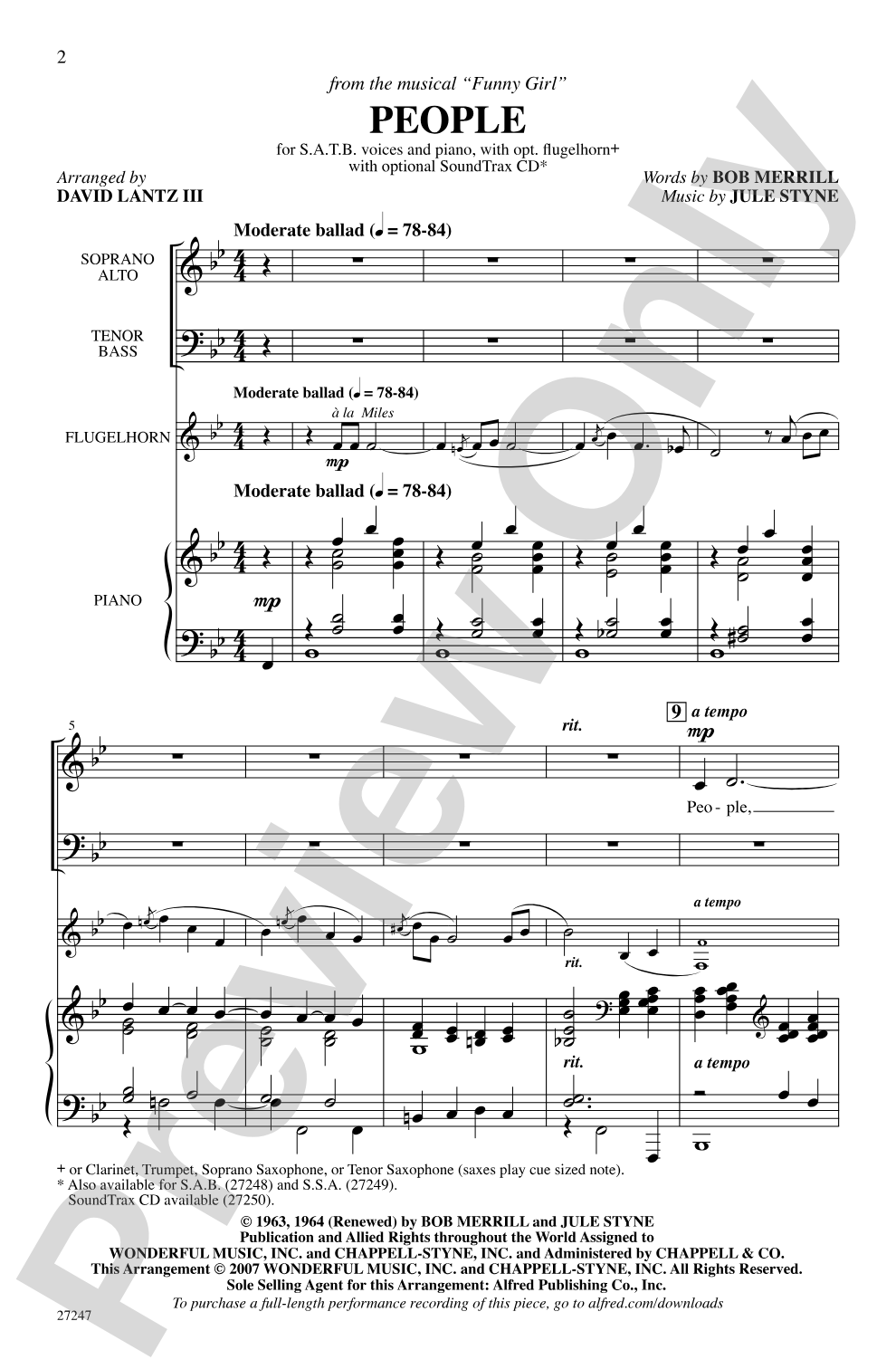
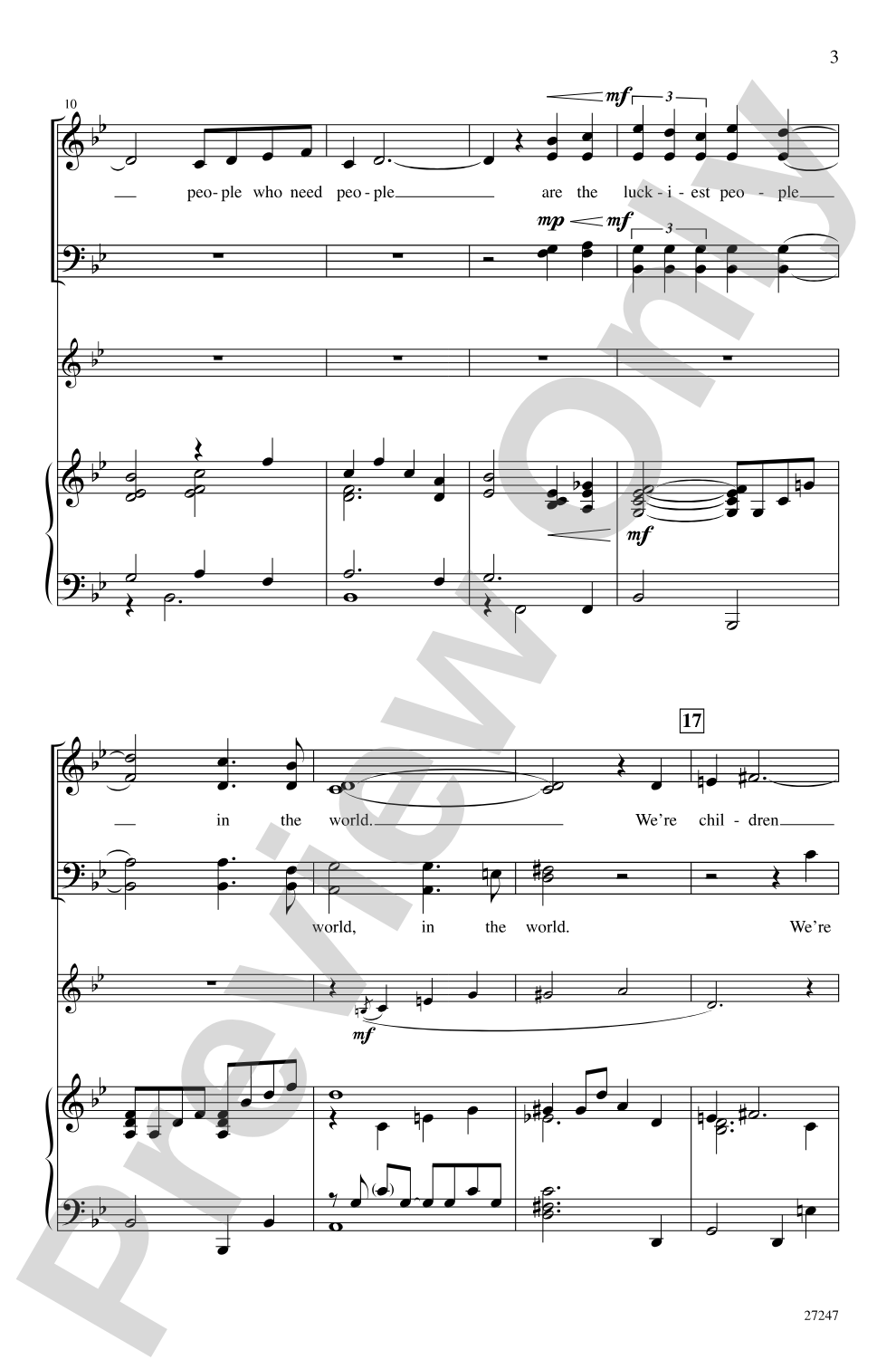
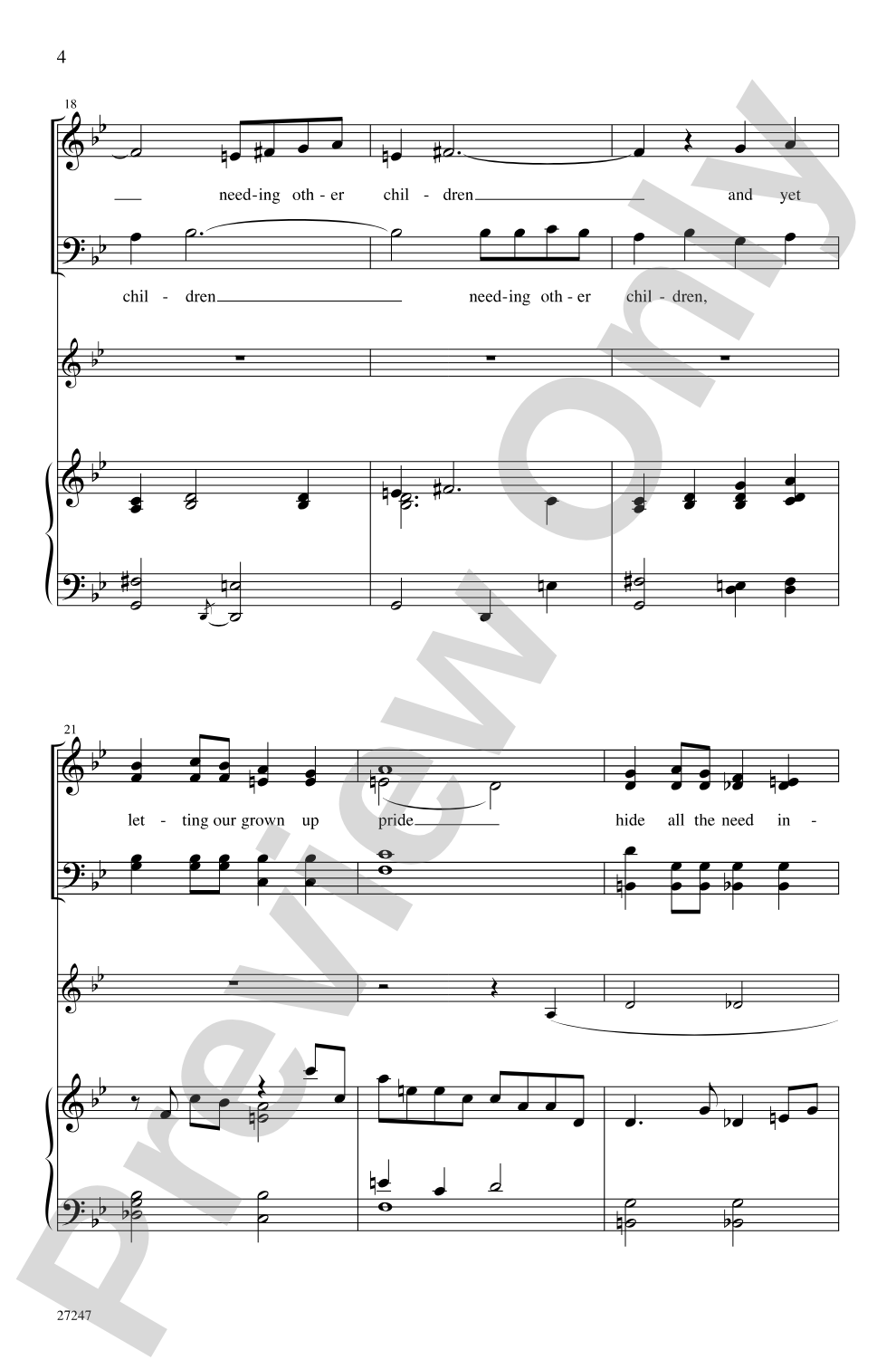

People: SATB Choral Octavo
From the Musical Funny Girl
Words by Bob Merrill, music by Jule Styne / arr. David Lantz III
Item: 00-PO-0007975
$1.85
Minimum order quantity: 20 copies
Pickup currently not available
Description
A stylish arrangement of a classy song from the musical Funny Girl. The optional flugelhorn is a brilliant addition to a very rich and performable arrangement. And the well-known lyrics are special: "People who need people are the luckiest people in the world."


People: SATB Choral Octavo isn't in MakeMusic Cloud just yet...but it could be. Let us know you'd like to see it, and you'll help shape what comes next. In the meantime, start a free trial and dive into thousands of interactive titles your students can play along with today.
Request This Title
Tell us you want it.
Start Your Free Trial
Explore everything that's ready to play right now.
Sample Audio
1
Audio File
--:--
0:00
0:00
Sample Video
No sample videos found.
Additional Details
Series:
Alfred Pop Choral Series
Publisher:
Alfred Music
Page Count:
12
SKU:
00-PO-0007975
More about this title
About the Composer: Jule Styne
Jule Styne (1905-1994) was a prolific composer whose work defined the golden age of American musical theatre. His gift for melody shaped the sound of Broadway from the 1940s through the 1970s, with scores for Gypsy, Funny Girl, Bells Are Ringing, and High Button Shoes among his most celebrated contributions to the stage.
Styne's compositions remain teaching staples because they balance accessibility with sophistication. His melodies sit naturally in the voice, his harmonies reward careful listening, and his songs tell stories that resonate across generations. For choral directors, his work offers the rare combination of popular appeal and genuine musical substance.
Why we love this
David Lantz's arrangement honors the emotional core of this Styne classic while making it thoroughly singable for mixed choirs. The optional flugelhorn line adds warmth and sophistication without becoming a distraction, and the harmonic language opens doors for teaching blend and balance in a contemporary idiom.
What to expect
Warm, introspective, and achingly human. The song sits in a place where vulnerability and confidence coexist, and the arrangement respects that tension by keeping the orchestration lean enough to let the singers' voices carry the emotional weight.
Who it's for
This arrangement works for choirs ranging from high school to community ensembles who want to sing Broadway without oversimplifying it. Singers appreciate the straightforward vocal writing, and directors appreciate having a piece that sounds polished and feels genuinely rewarding to rehearse.
How to get the most out of it
- Balance the melody so it floats above the supporting harmonies rather than sitting on top of them. Think of the inner voices as the emotional foundation, not a bed to sit on.
- Work the text first as a single choir before separating parts. This keeps the emotional intention consistent across all four voice lines and prevents sections from drifting into purely technical singing.
- If using the flugelhorn, place it slightly back in the mix so it colors the sound rather than competing with the choir's warmth.
- Shape phrases across the bar line. This song's power comes from its flowing, conversational quality, not from emphasizing downbeats.
How to use it
This fits naturally into a Broadway or American songbook concert, where it can anchor a set of standards and popular music. It also works as a poignant contrast in a more eclectic program, particularly if you're building toward a theme about connection or community.
Skills your students will build
- Shaping legit vocal lines with theatrical diction and emotional intention
- Balancing four-part harmony while maintaining melodic clarity
- Sustaining longer phrases without losing pitch stability
- Interpreting lyrical content and translating it into vocal expression