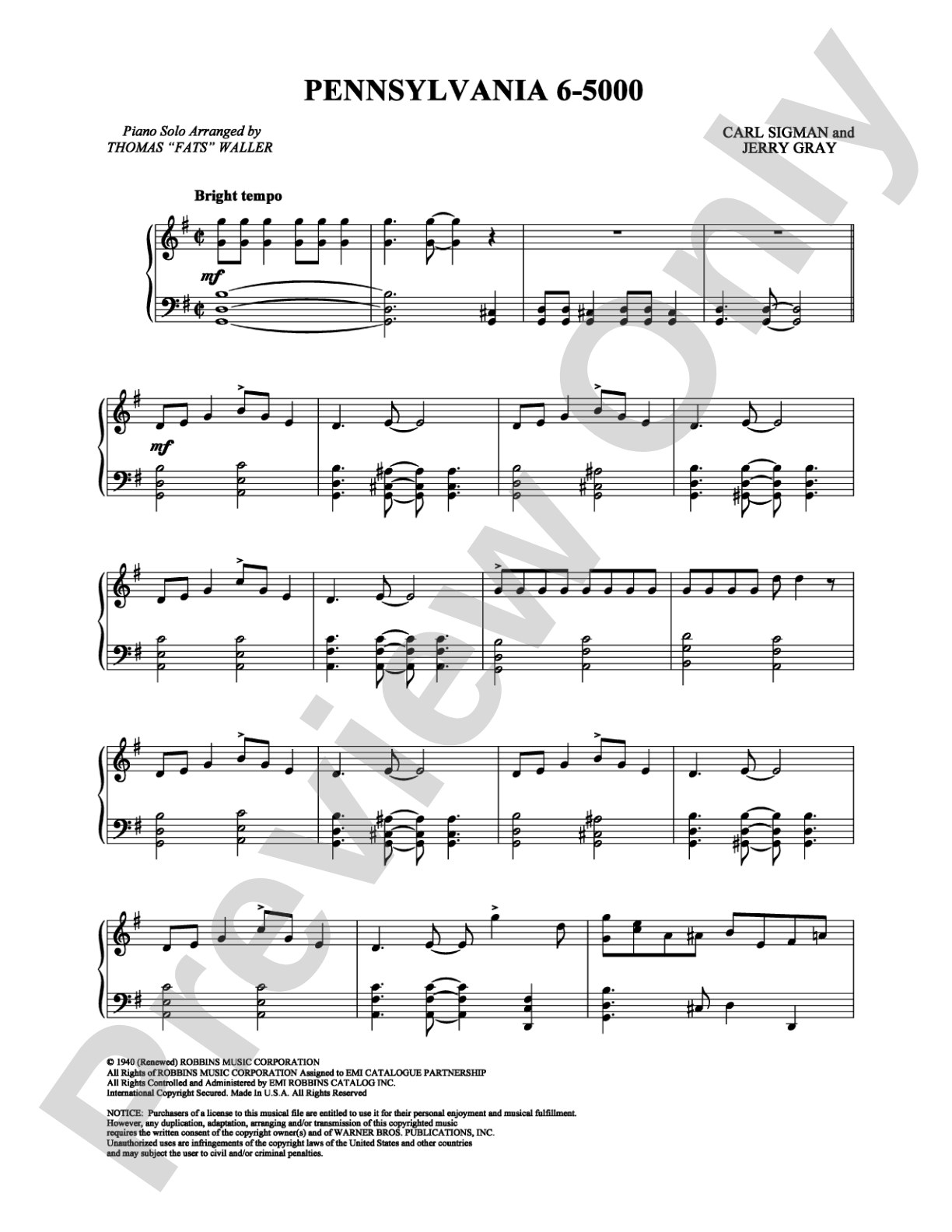
Pennsylvania 6-5000: Piano Digital Sheet Music

Pennsylvania 6-5000: Piano Digital Sheet Music

Carl Sigman, Jerry Gray, Glenn Miller, Fats Waller

Item: 00-PS-0007187

Digital Download
$3.99
Description

Pennsylvania 6-5000: Piano Digital Sheet Music isn't in MakeMusic Cloud just yet...but it could be. Let us know you'd like to see it, and you'll help shape what comes next. In the meantime, start a free trial and dive into thousands of interactive titles your students can play along with today.

Sample Audio
No sample audio found.
Sample Video
Additional Details
SKU: 00-PS-0007187

More about this title

About the Artist: Glenn Miller

Glenn Miller led one of the most commercially successful big bands of the swing era, and his 1939-1942 orchestra defined a sound that millions of Americans heard on radio and in films. His arranging approach emphasized clarity and unity of tone, particularly through his signature use of clarinet over saxophones, creating an instantly recognizable texture that influenced generations of musicians and bandleaders.

Why we love this

This tune captures the infectious energy of swing-era radio without demanding the complexity of a full big band arrangement. Pianists get to inhabit the harmonic language and rhythmic vitality that made Miller's era so distinctive, and the piece's straightforward popularity means students hear it with fresh ears rather than as "classical" repertoire.

What to expect

Bright, energetic, and instantly joyful, this tune radiates the optimism and danceable rhythm that made swing-era music so widely loved. The harmonic movement feels familiar yet sophisticated, propelling the melody forward with the kind of momentum that makes listeners want to move.

Who it's for

Pianists exploring jazz standards and popular music of the 1940s will find this accessible entry point into the swing idiom. Teachers seeking repertoire that connects classical technique to American popular music tradition will value how this piece sits naturally at the intermediate level.

How to get the most out of it

  • Keep the left hand stride loose and bouncy; this is swing, not stride piano, so maintain a light touch even when filling the bass
  • Lean into the offbeat syncopations rather than playing them straight; let the rhythm breathe rather than metronomically perfect
  • Balance the melody so it sings over the accompaniment without overshadowing the harmonic movement underneath

How to use it

Include this in a recital celebrating American songwriting or as a bridge between classical and jazz studies. It works well alongside other popular standards from the same era or as a conversation starter about how radio hits and concert music occupied different spaces in 1940s American culture.

Skills your students will build

  • Reading swing rhythms and syncopation
  • Interpreting jazz articulation and phrasing from a written score
  • Balancing melody against accompaniment figures
  • Understanding stride and comping techniques in context

You May Also Like