Pennsylvania 6-5000: Piano/Vocal/Chords Digital Sheet Music

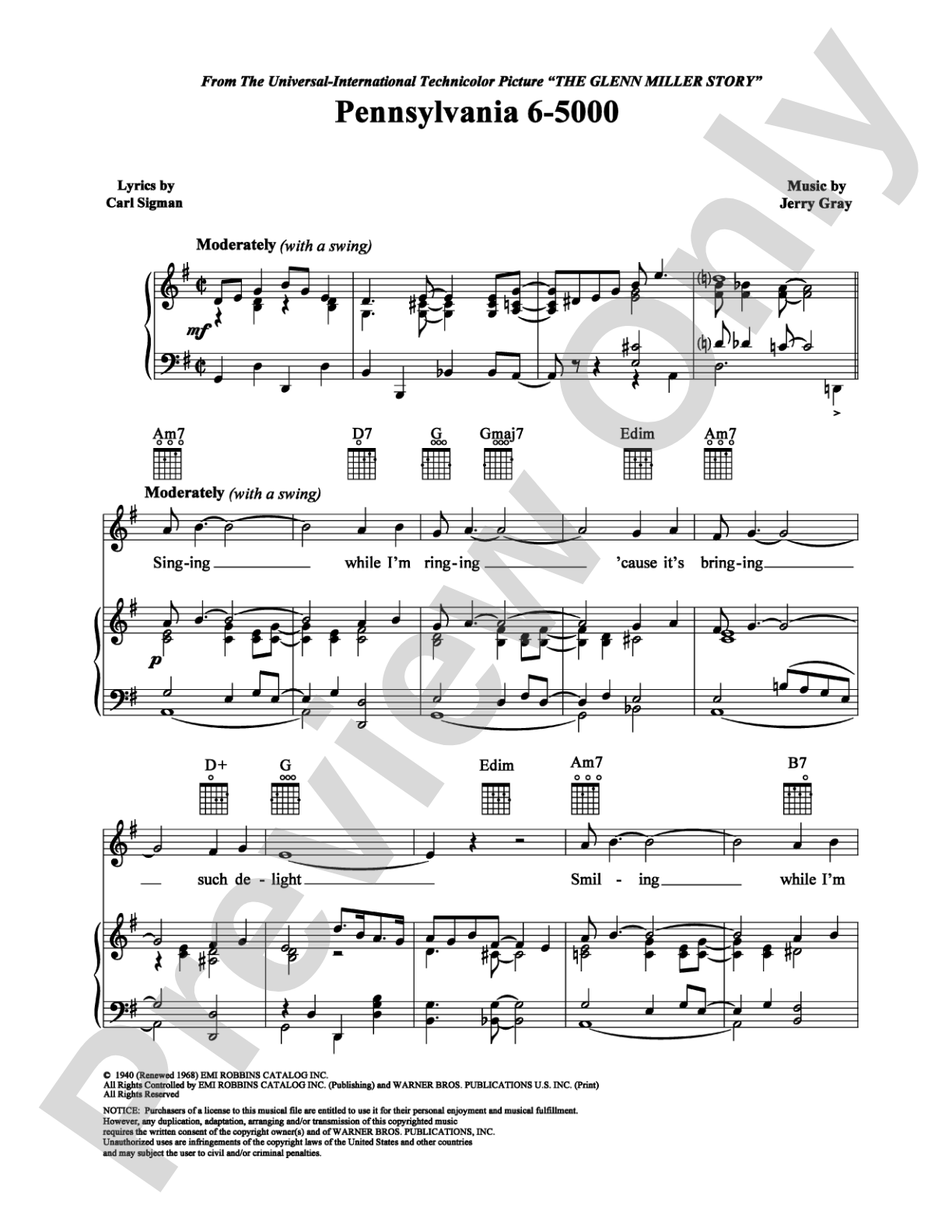
Pennsylvania 6-5000: Piano/Vocal/Chords Digital Sheet Music

Jerry Gray, Glenn Miller

Item: 00-PS-0004307

Digital Download
$3.99
Description

Pennsylvania 6-5000: Piano/Vocal/Chords Digital Sheet Music isn't in MakeMusic Cloud just yet...but it could be. Let us know you'd like to see it, and you'll help shape what comes next. In the meantime, start a free trial and dive into thousands of interactive titles your students can play along with today.

Sample Audio
No sample audio found.
Sample Video
Additional Details
SKU: 00-PS-0004307

More about this title

About the Artist: Glenn Miller

Glenn Miller led one of the most commercially successful big bands of the 1940s, becoming a household name through radio broadcasts, recordings, and film appearances. His distinctive sound—defined by clarinet melody over saxophone harmonies—made "Pennsylvania 6-5000" an instant hit in 1940 and a standard that has endured for over eight decades. Miller's arrangements prioritized clarity and accessibility without sacrificing sophistication, principles that made his music appeal to dancers, radio listeners, and serious musicians alike.

Why we love this

This song captures the energy and charm of the swing era in a package that works equally well in a jazz combo, at a community event, or as a solo piano feature. The melody is immediately singable, the chord changes are authentic to the period without being overly complex, and the nostalgic appeal resonates across generations of audiences.

What to expect

Bright, energetic, and tinged with the glamour of 1940s radio broadcasts and dance halls. The song exudes optimism and rhythmic vitality, with a melody that practically invites listeners to swing along. There's an almost cinematic quality to the arrangement that evokes era-appropriate elegance without feeling stiff.

Who it's for

Piano teachers and students exploring jazz standards and swing-era repertoire will find this accessible and rewarding. Vocalists preparing audition material or jazz recitals benefit from this melody's singability and historical authenticity. Community pianists, jazz combo musicians, and directors building nostalgia-focused concerts all have reason to keep this arrangement in their libraries.

How to get the most out of it

  • Lean into the rhythmic drive of the original big band arrangement by maintaining a crisp, swinging eighth-note feel throughout, especially during the piano accompaniment.
  • Balance the vocal melody with the piano so the song's hook remains front and center; the tune is memorable only if listeners can clearly hear it.
  • Use the chord symbols to explore tasteful comping options in the left hand; jazz voicings from the era often favor 7th and 9th chords that add color without muddying the texture.
  • If performing as a solo piano piece without vocals, phrase the melody line to suggest the warmth and legibility of the original vocal recording.

How to use it

Feature this as a solo piano interlude during a jazz concert or as a sung encore that connects your ensemble to the swing tradition. It pairs naturally with other Glenn Miller standards or works by his contemporaries, and audiences recognize it immediately, making it ideal for community performances or school functions seeking that vintage appeal.

Skills your students will build

  • Swing rhythm and the jazz interpretation of eighth notes
  • Reading and playing from chord symbols with tasteful voicing choices
  • Balancing melody and accompaniment in piano/vocal arrangements
  • Understanding the melodic and harmonic language of 1940s swing standards

You May Also Like