
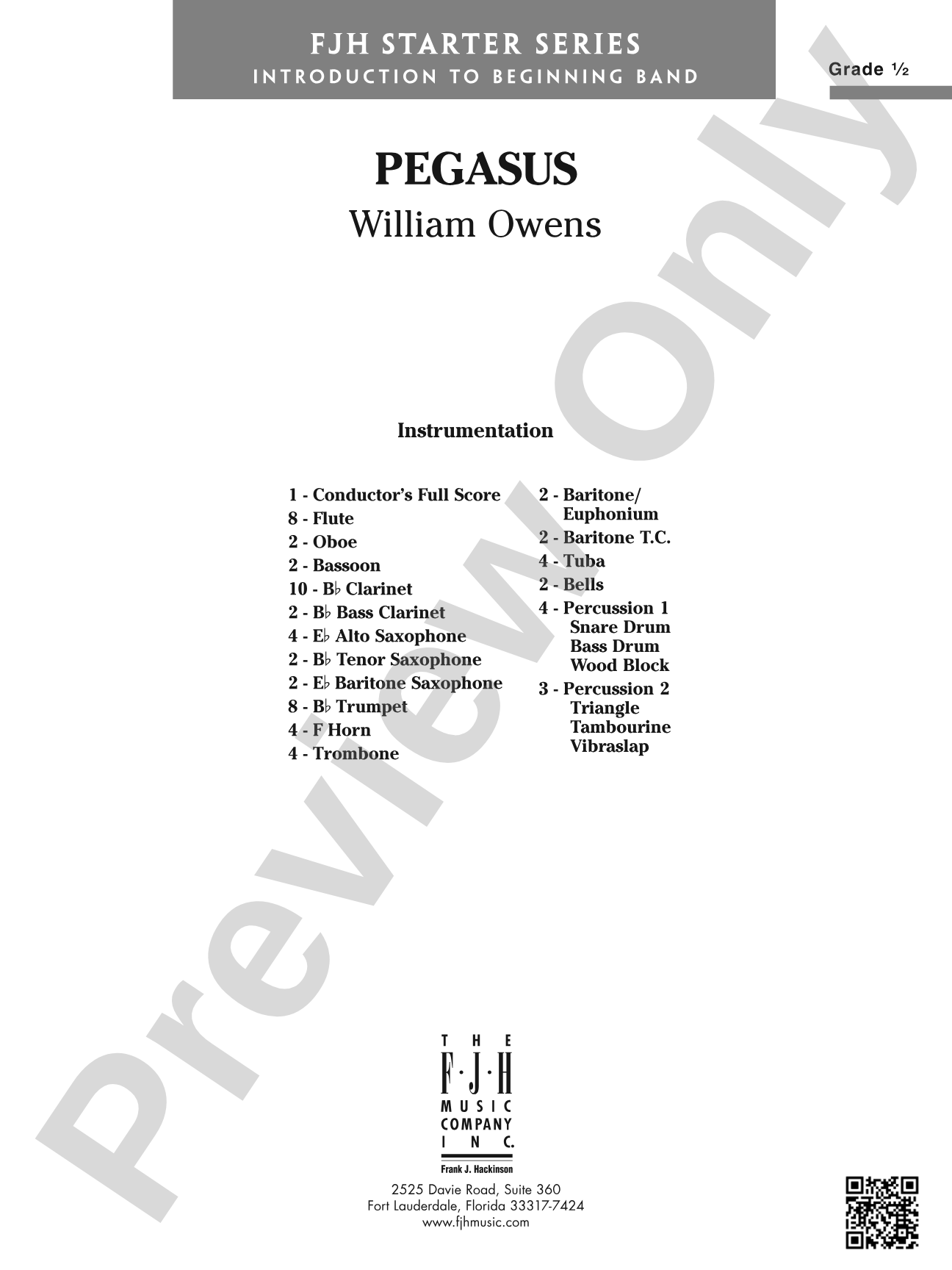
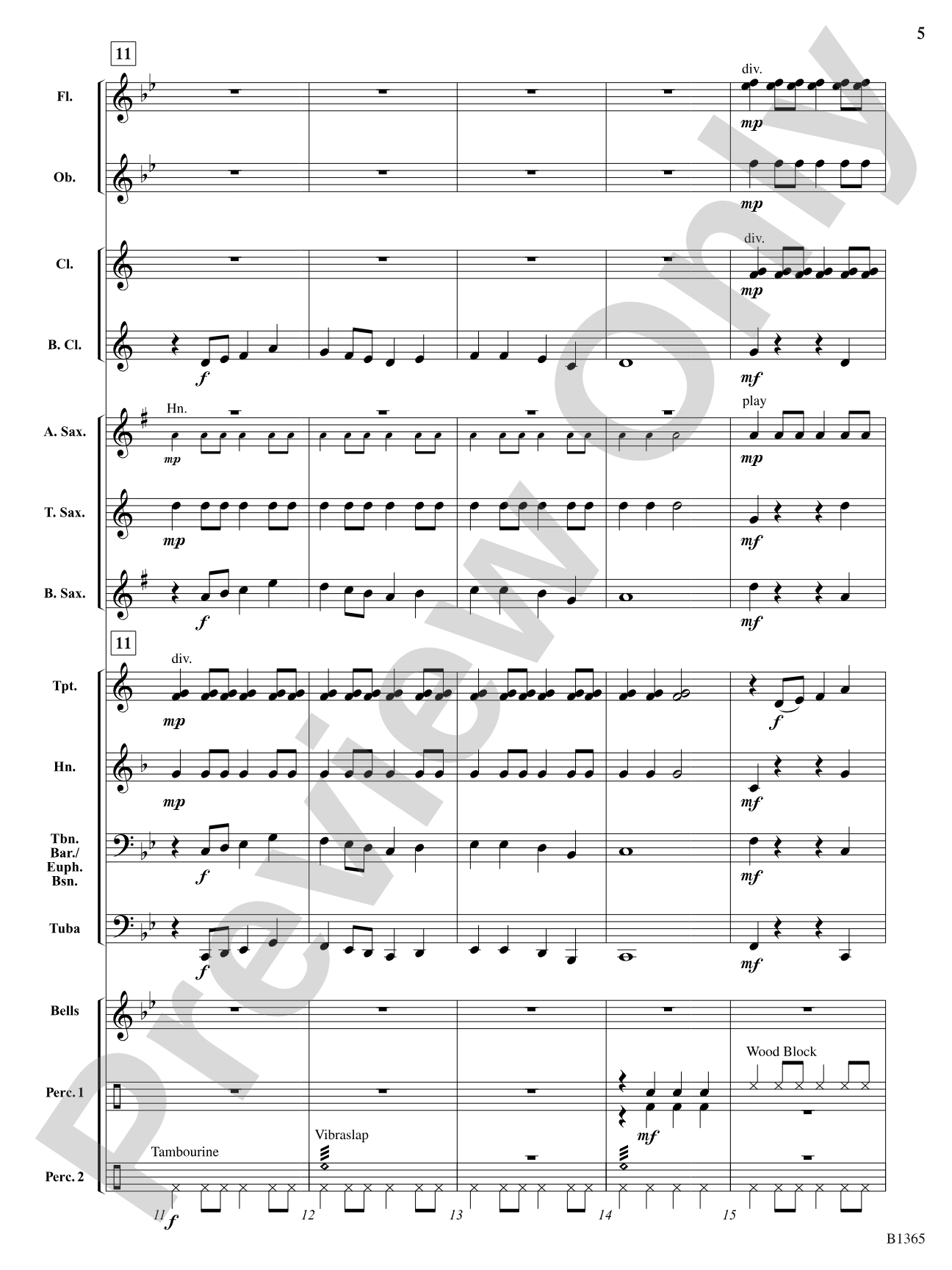
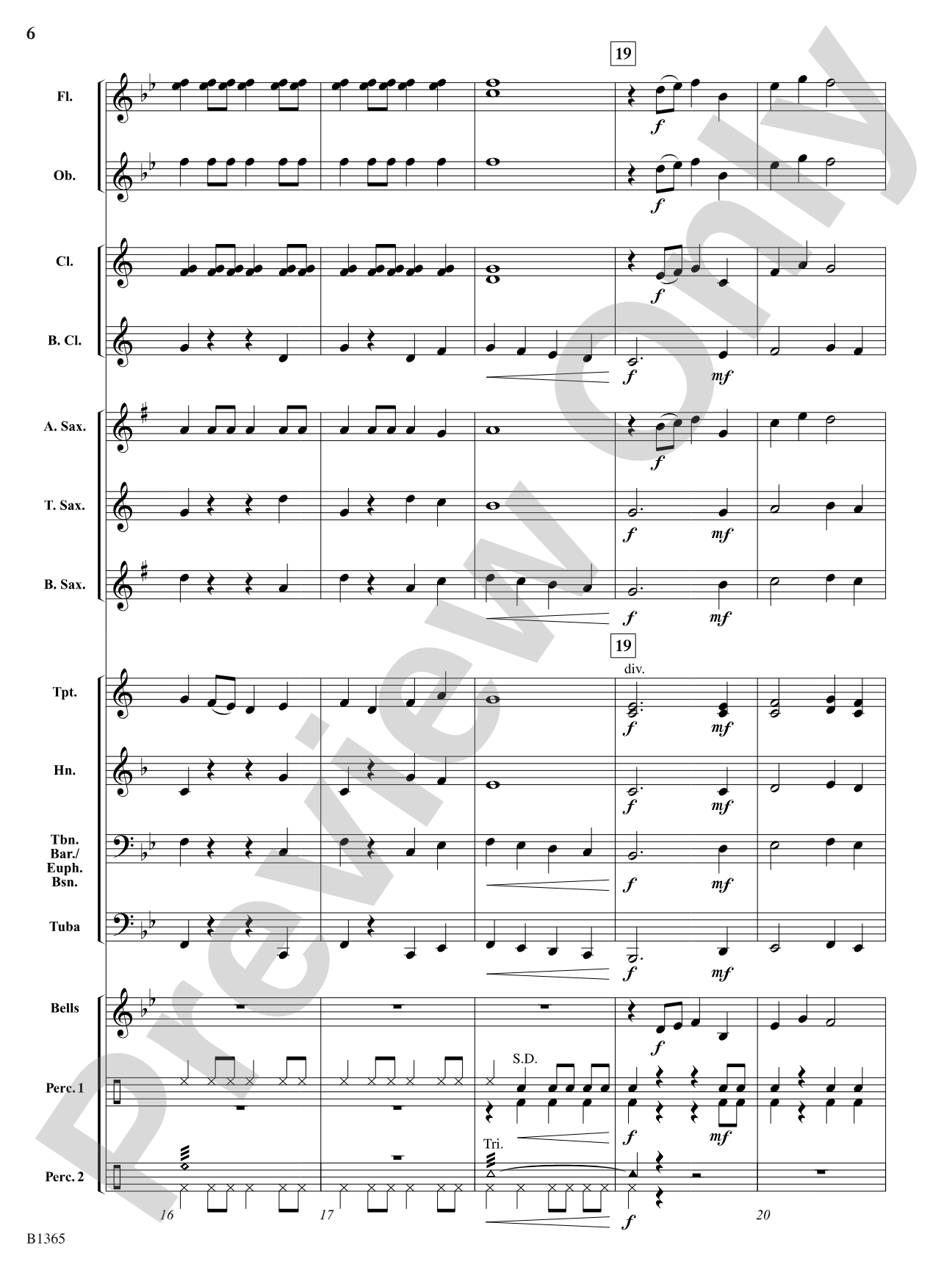
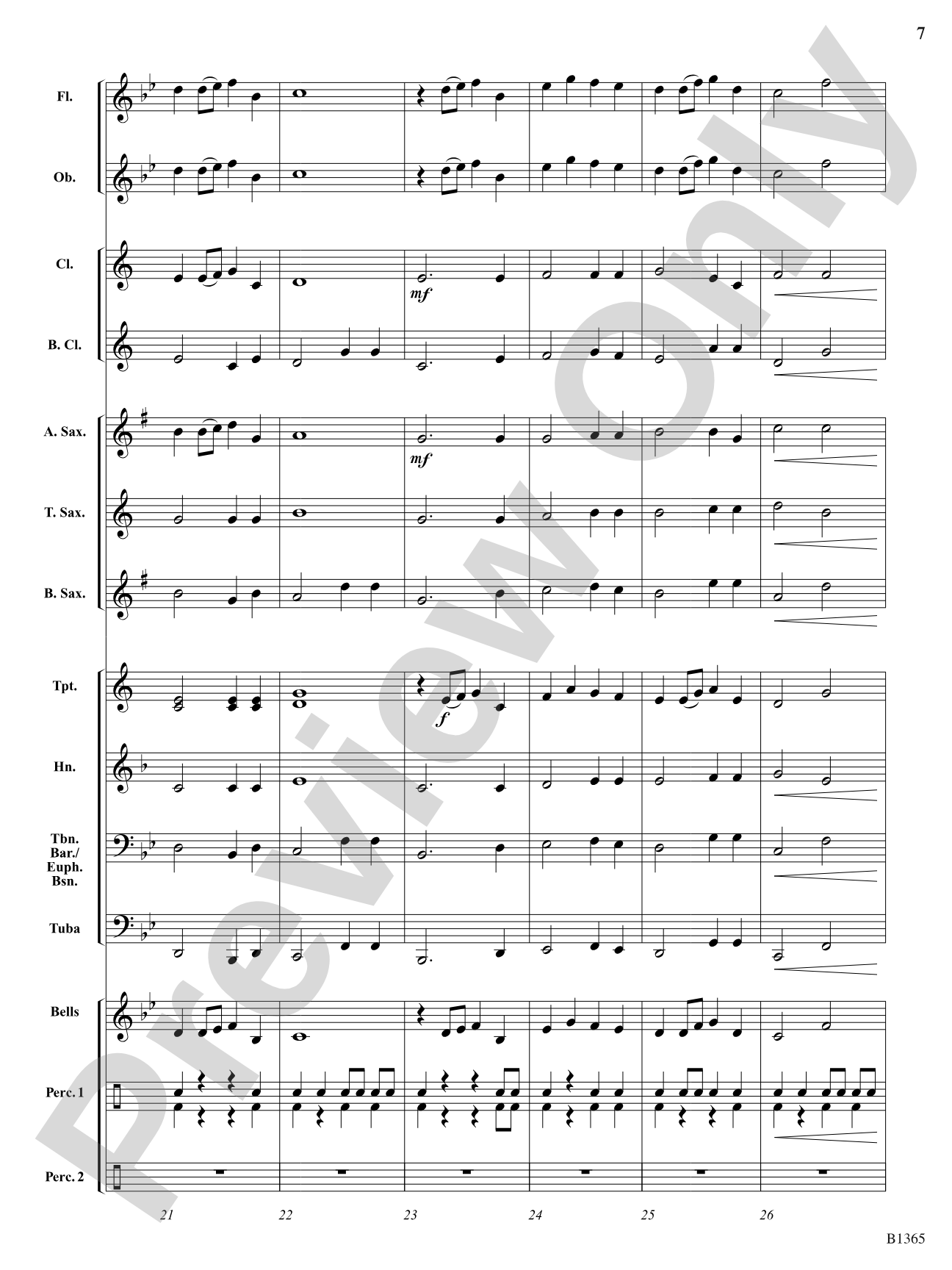
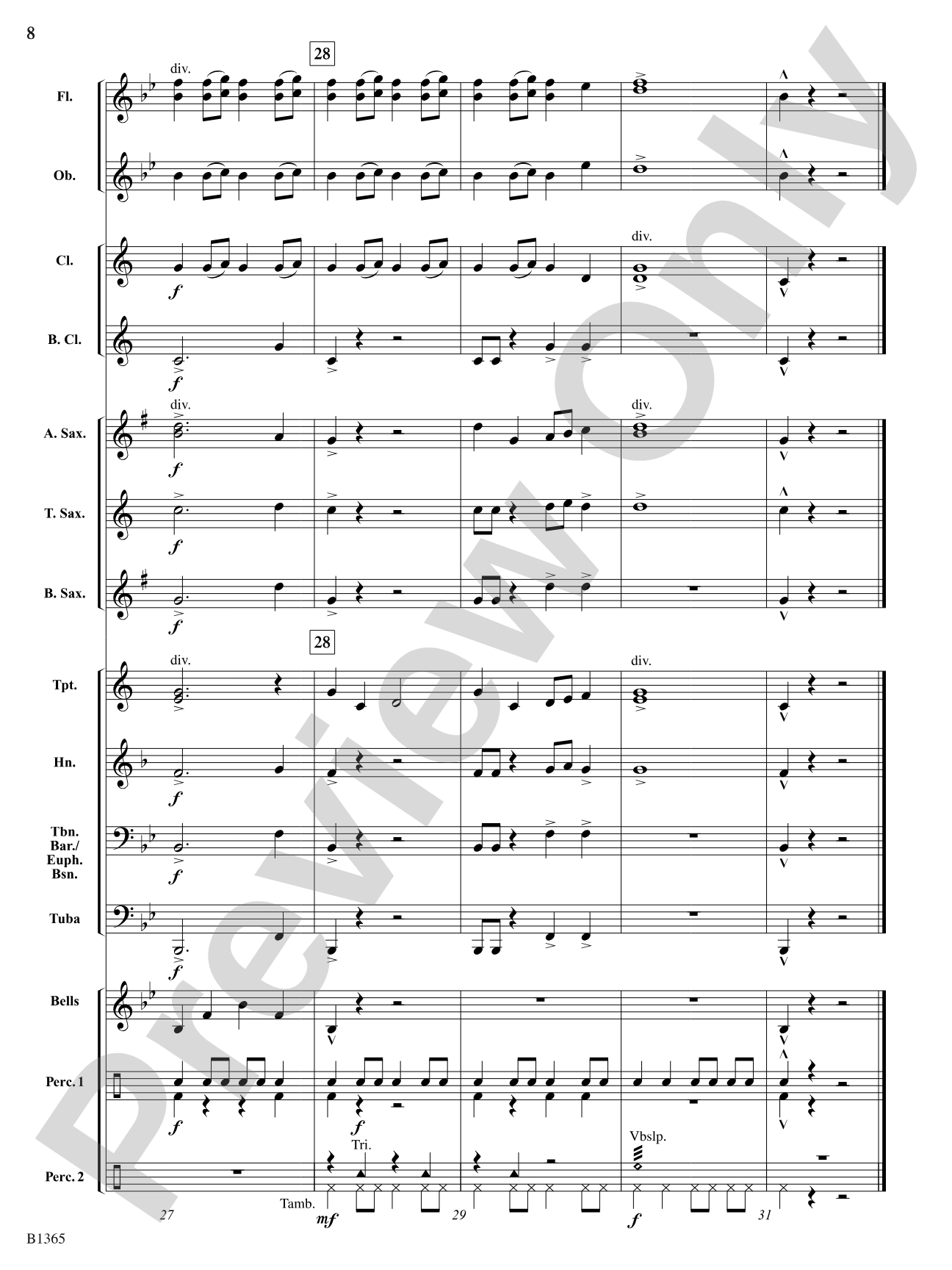
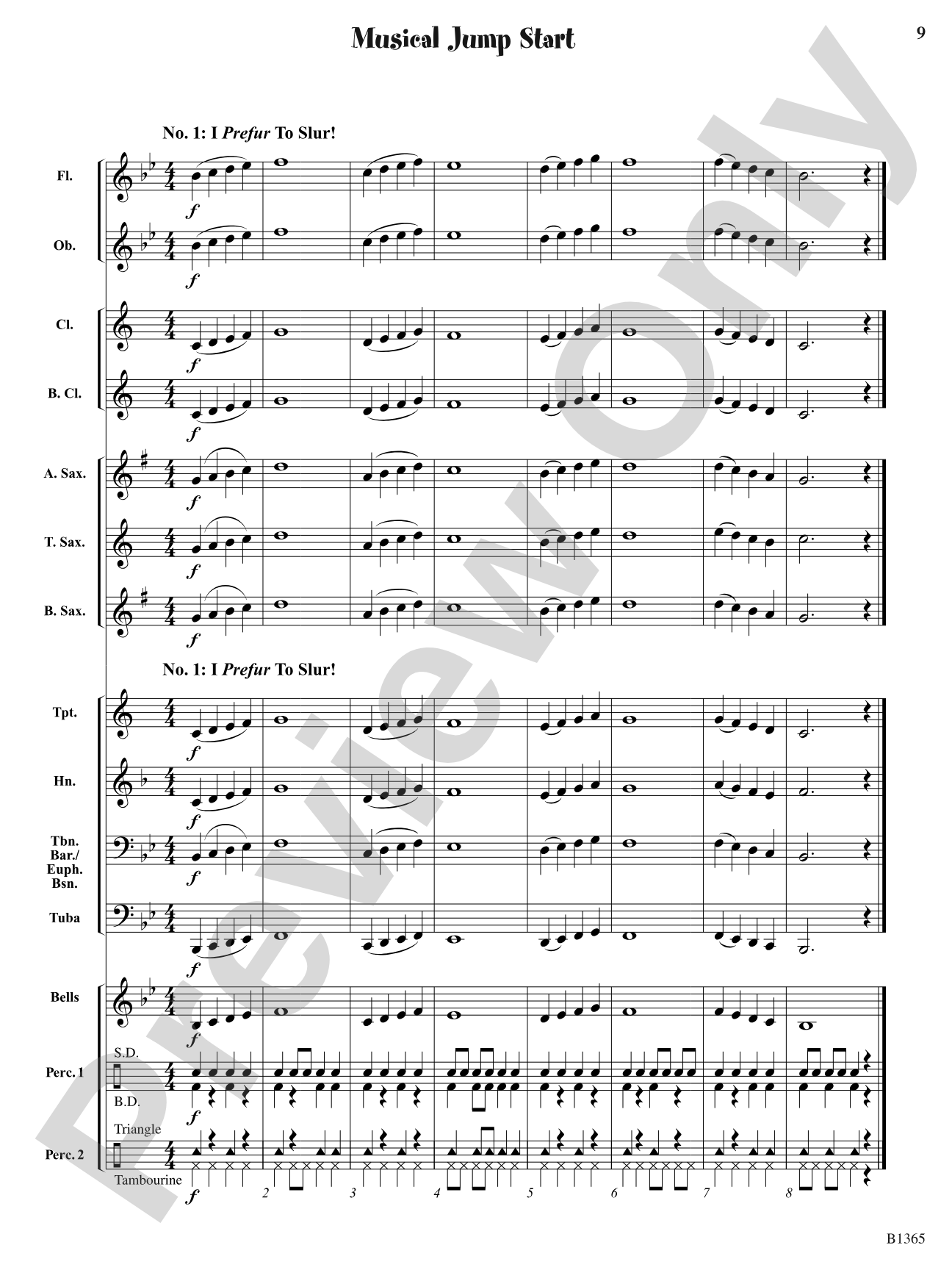
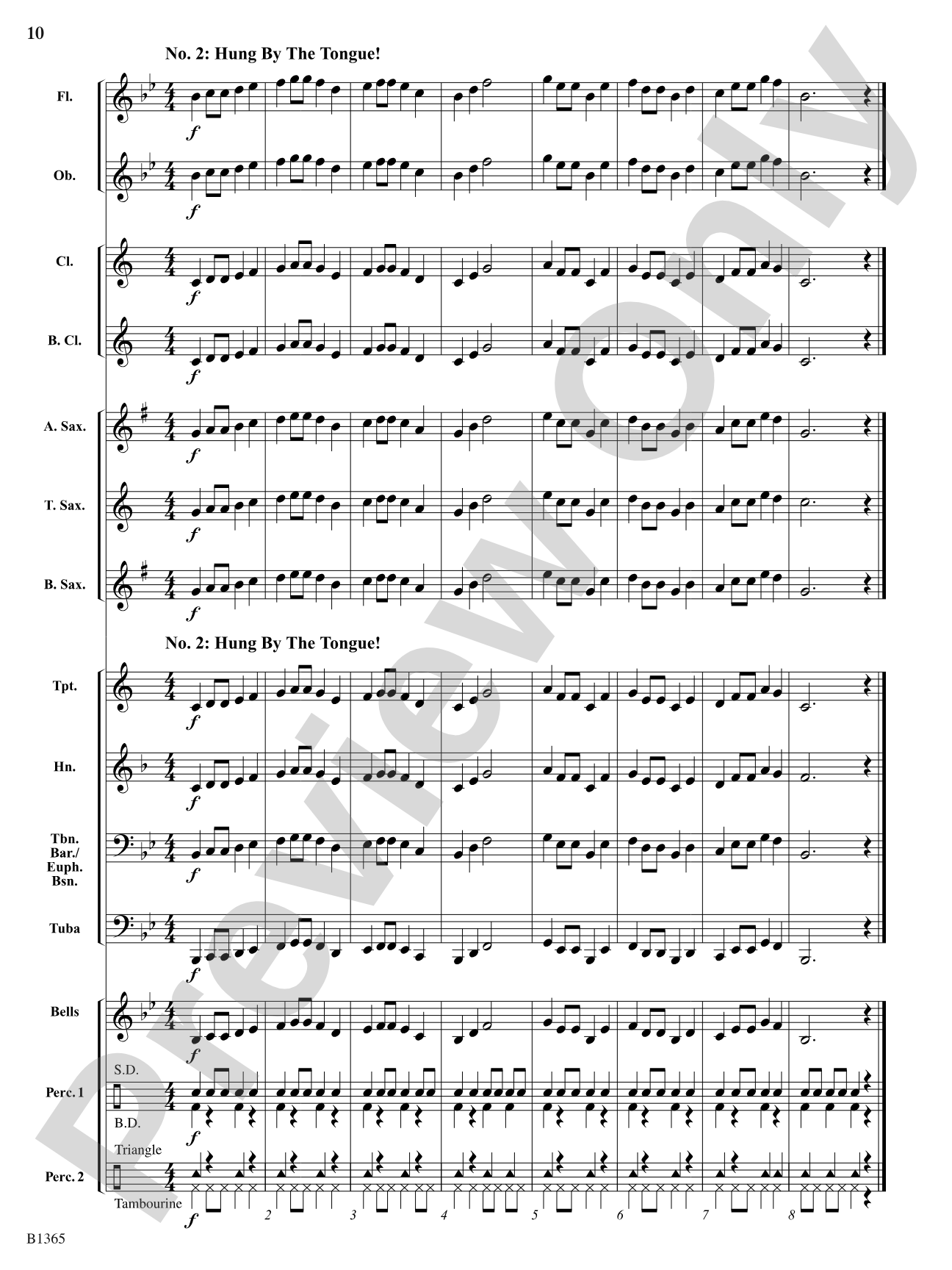
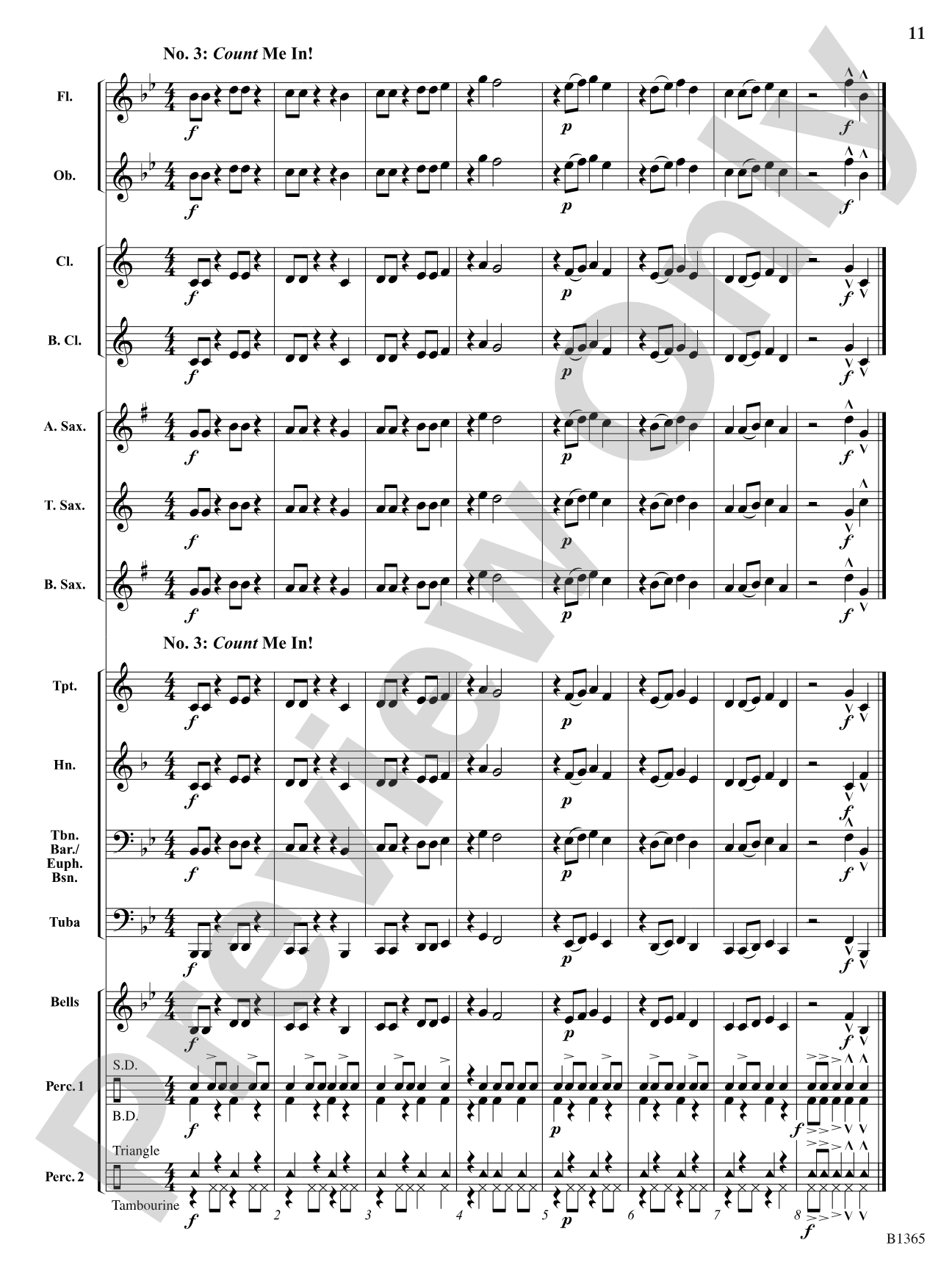

Pegasus: Concert Band Conductor Score & Parts
By William Owens
Level:.5
Item: 98-DB1365
$55.00
Pickup currently not available
Buy Extra Parts (Digital PDF Download)
| Product | Price | Quantity |
|---|---|---|
| Pegasus: Score | $11.00 | |
| Pegasus: Flute | $7.00 | |
| Pegasus: Oboe | $7.00 | |
| Pegasus: Bassoon | $7.00 | |
| Pegasus: B-flat Clarinet | $7.00 | |
| Pegasus: B-flat Bass Clarinet | $7.00 | |
| Pegasus: E-flat Alto Saxophone | $7.00 | |
| Pegasus: B-flat Tenor Saxophone | $7.00 | |
| Pegasus: E-flat Baritone Saxophone | $7.00 | |
| Pegasus: B-flat Trumpet | $7.00 | |
| Pegasus: F Horn | $7.00 | |
| Pegasus: Trombone | $7.00 | |
| Pegasus: Baritone/Euphonium | $7.00 | |
| Pegasus: Baritone T.C. | $7.00 | |
| Pegasus: Tuba | $7.00 | |
| Pegasus: Bells | $7.00 | |
| Pegasus: Percussion 1 | $7.00 | |
| Pegasus: Percussion 2 | $7.00 |
Parts Added to Cart!
Description
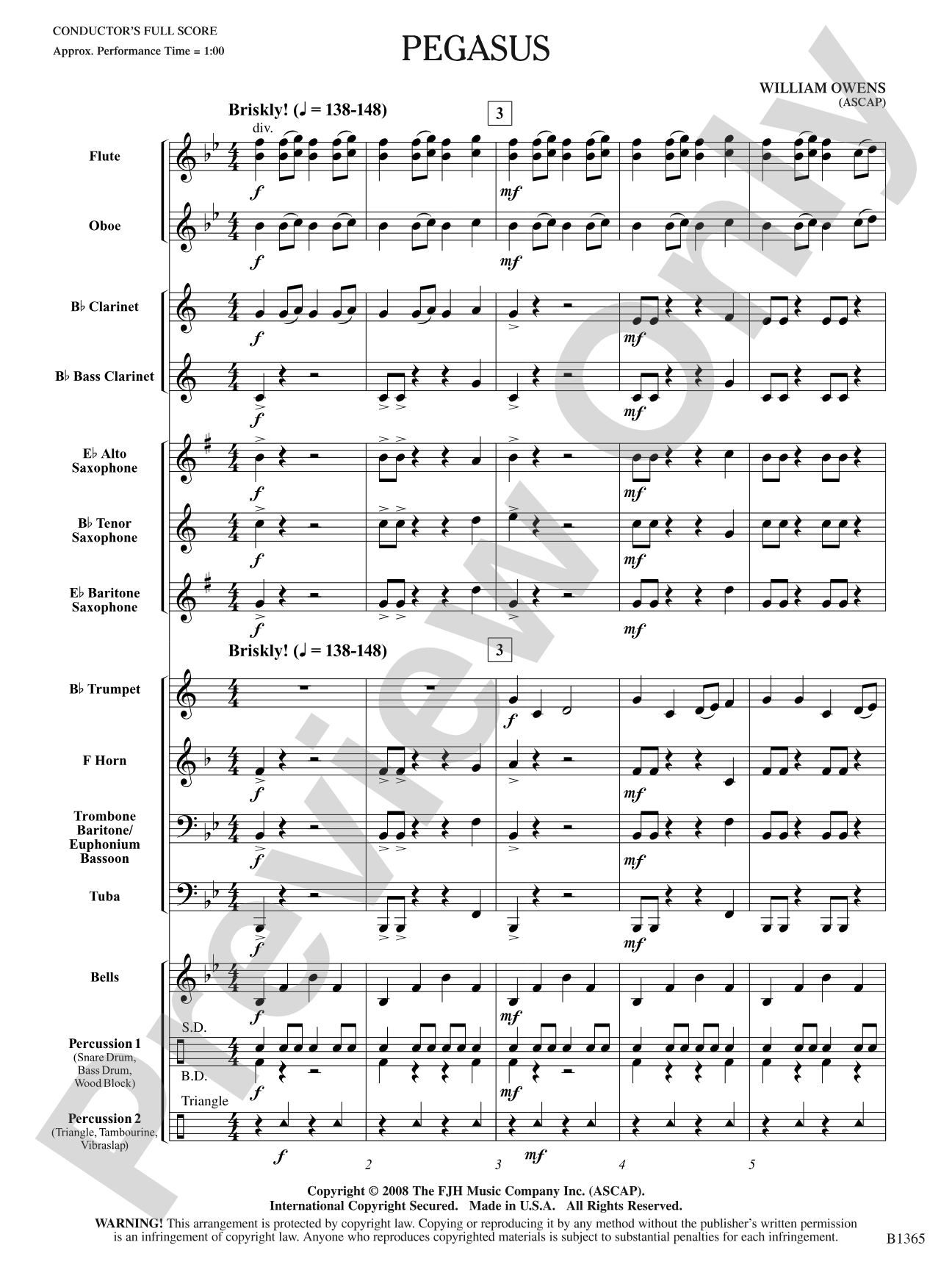
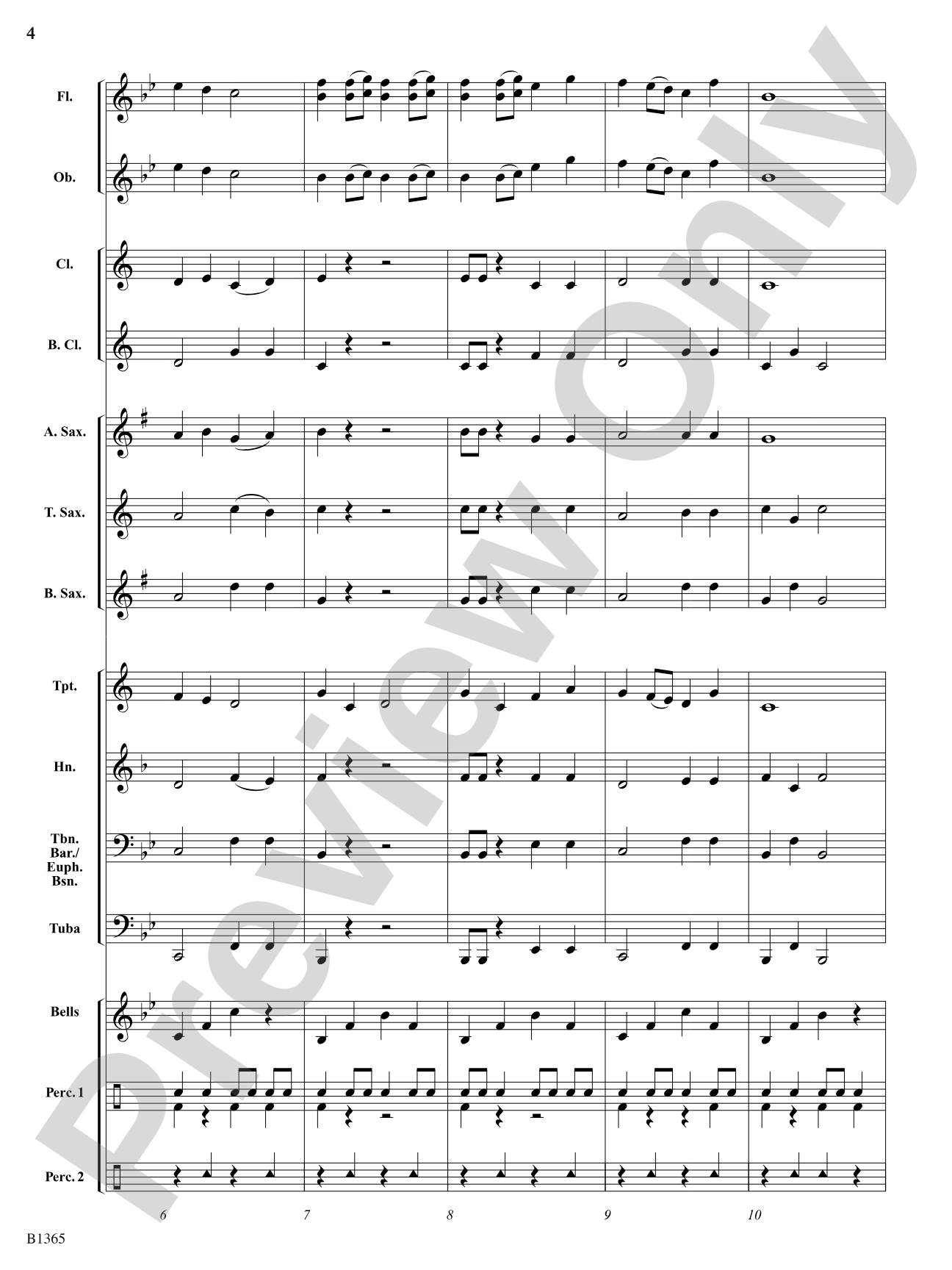
Take an imaginary flight on the ever-graceful winged-horse Pegasus! Using just six notes, this work manages to capture the grandeur of this mythical creature through the triumphant melodies that are passed around the ensemble. Harmonies are surprisingly rich for a work at this level and make the piece sound much harder than it really is. Fabulous!


Pegasus: Concert Band Conductor Score & Parts isn't in MakeMusic Cloud just yet...but it could be. Let us know you'd like to see it, and you'll help shape what comes next. In the meantime, start a free trial and dive into thousands of interactive titles your students can play along with today.
Request This Title
Tell us you want it.
Start Your Free Trial
Explore everything that's ready to play right now.
Sample Audio
1
Audio File
--:--
0:00
0:00
Sample Video
No sample videos found.
Additional Details
Series:
FJH Starter Series
Publisher:
The FJH Music Company, Inc.
SKU:
98-DB1365
More about this title
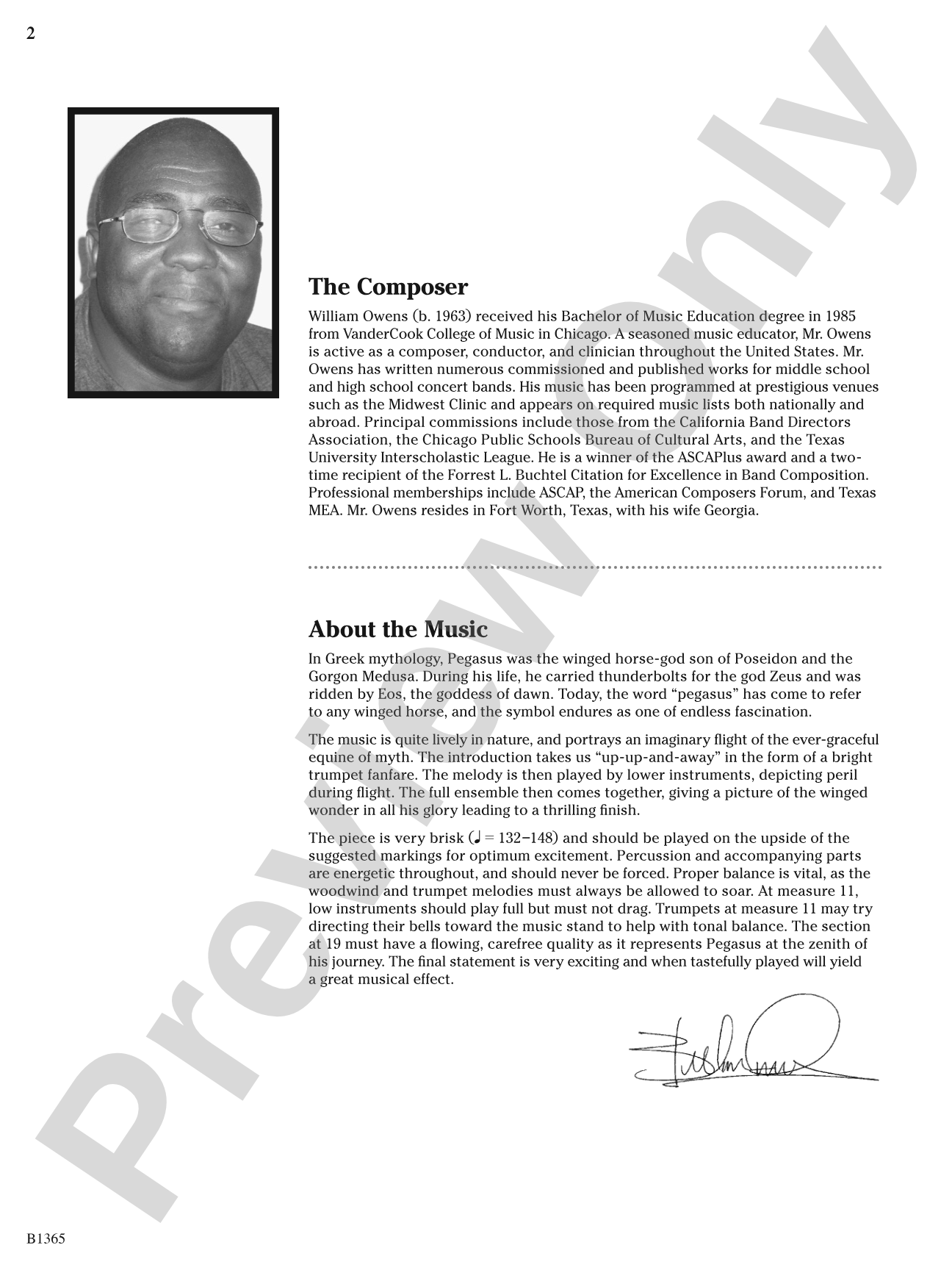
About the Composer: William Owens
William Owens brings three decades of classroom experience to his compositions for young musicians. A VanderCook College of Music graduate and former Texas band director, he has created over 300 works for concert band, string orchestra, and small ensemble since 1993. His music appears on festival and required music lists across the country and has become a cornerstone of the young band repertoire.
Owens serves as a clinician and guest conductor throughout North America and holds memberships in ASCAP, TMEA, and Phi Beta Mu International. He is a Distinguished Alumnus of VanderCook and recipient of the Texas Bandmasters Association's Meritorious Achievement Award. His compositional approach balances accessibility with musicianship, making him a trusted voice in young ensemble literature.
Why we love this
Owens demonstrates remarkable restraint here, using a limited pitch set to create something that sounds far more sophisticated than its technical demands suggest. The piece rewards careful voicing and ensemble balance without requiring students to navigate complex rhythms or ranges, making it ideal for building confidence in younger groups while maintaining genuine musical substance.
What to expect
The piece evokes a sense of wonder and uplift, with graceful contours that suggest the arc and majesty of flight. Despite its modest technical profile, the surprising harmonic depth creates a sense of grandeur that feels both triumphant and delicate.
Who it's for
Beginning and early intermediate concert bands will find this piece accessible and rewarding. It works equally well for groups making their first festival appearance or for experienced ensembles seeking a showcase piece that highlights balance and phrasing over technical display.
How to get the most out of it
- Balance the melody as it travels between sections rather than doubling it in every voice. The piece gains more elegance when each section hears the tune clearly before passing it along.
- Shape the phrasing with subtle dynamic swells that suggest the graceful movement of wings. Avoid sudden volume changes; let the music breathe.
- Emphasize the harmonic richness by ensuring that sustained voices are singing with full tone. These harmonies create the grandeur, so every supporting voice matters.
How to use it
This works beautifully as an opener at a festival or concert, establishing a confident, musical tone without overwhelming young performers. It pairs well with more technically demanding pieces on the same program, offering contrast and demonstrating that musicianship transcends difficulty level.
Skills your students will build
- Listening to and balancing ensemble voices within a limited harmonic palette
- Sustaining tone quality on held notes that support the melodic line
- Passing a melody through different instrumental families while maintaining musical continuity
- Shaping phrases through dynamic inflection rather than sudden changes in volume