Peer Gynt Suite: Tuba Sheet Music Preview

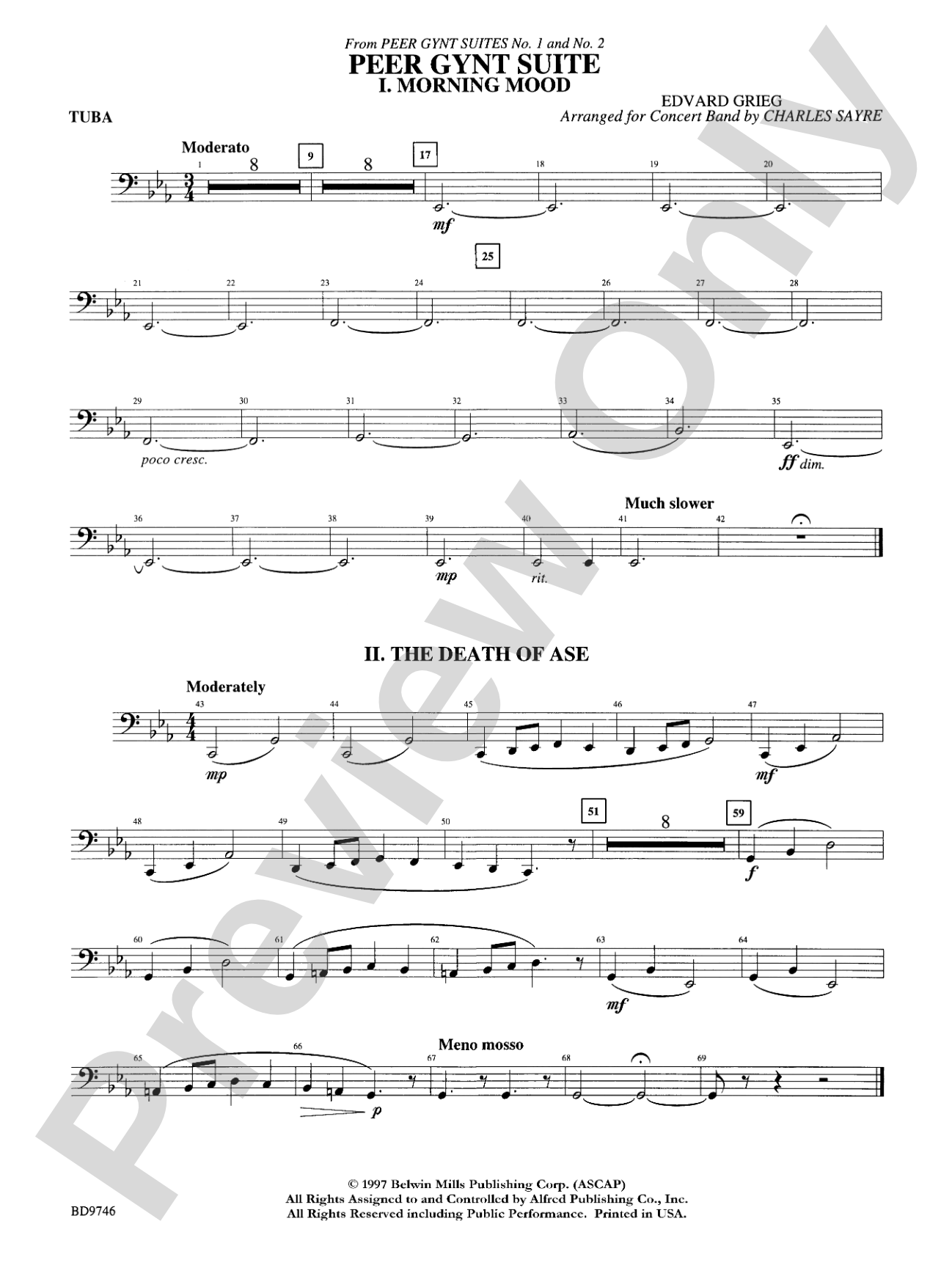
Peer Gynt Suite: Tuba

I. Morning Mood / II. The Death of Ase / III. Anitra's Dance / IV. In the Hall of the Mountain King

By Edvard Grieg / arr. Charles Sayre

Grade: 2 (Easy)

Item: 00-PC-0002054_TB1

Digital Download
$3.00
Description
Edvard Grieg's early musical training took place in Germany, but philosophical constraints sent him back to his native Norway, where he began what is now referred to as the Norwegian School. He is best known for his Peery Gynt Suites, No. 1 & No. 2, originally written as orchestral suites and as incidental accompaniments for Ibsen's epic drama. This sparkling scoring includes Morning Mood, The Death of Ase, Anitra's Dance, and In The Hall Of The Mountain King. (4:56)

Don't just read it, hear it, play along with it, and watch your students grow with it. In MakeMusic Cloud, Peer Gynt Suite: Tuba comes alive with professional accompaniment, adjustable tempo, and built-in practice tools that turn solo practice into real progress.

Sample Audio
No sample audio found.
Sample Video
Additional Details
Series: Belwin Young Band
Publisher: Alfred Music
Page Count: 268
SKU: 00-PC-0002054_TB1

More about this title

About the Composer: Edvard Grieg

Edvard Grieg (1843-1907) established himself as a towering figure in Romantic music by synthesizing European compositional training with Norwegian folk idioms and nationalist pride. After studying in Leipzig, he returned to Norway and became the country's musical ambassador, creating works that drew deeply from Scandinavian melodies, harmonies, and cultural identity.

His collaboration with playwright Henrik Ibsen on incidental music for the drama Peer Gynt produced what may be his most enduring legacy. Originally conceived as orchestral accompaniment to Ibsen's five-act work, these suites transcended their theatrical origins to become concert staples, performed and beloved worldwide in countless orchestrations and arrangements.

Why we love this

Charles Sayre's arrangement captures the melodic brilliance and harmonic color of Grieg's original without overwhelming a Grade 2 ensemble. Young musicians encounter genuine masterwork material here—recognizable, beautifully orchestrated themes that students actually want to play—while building facility with the core concert band sound. This is the rare early-level piece that works equally well in festival competition and as a rewarding concert opener.

What to expect

These four movements carry the listener through Peer Gynt's journey with lyrical warmth and dramatic sweep. Morning Mood awakens with crystalline serenity; The Death of Ase unfolds as intimate mourning; Anitra's Dance sparkles with exotic allure; In The Hall Of The Mountain King builds from mystery to triumphant chaos, capturing the wild energy of a supernatural mountain realm.

Who it's for

Concert bands at the Grade 2 level will find this arrangement accessible yet substantive. Directors preparing young musicians for festival competition or building a repertoire of recognizable concert works benefit from a piece that engages both players and audiences immediately.

How to get the most out of it

  • Balance the sectional solos in Morning Mood carefully; these exposed passages gain character when each section controls dynamics and phrasing without forcing volume.
  • Shape The Death of Ase with sustained, singing tone throughout. This movement's impact depends on lyrical control rather than technical display.
  • Approach Anitra's Dance with rhythmic clarity and light articulation. The folk character emerges through precision and dance-like energy, not aggressive playing.
  • Build In The Hall Of The Mountain King gradually. Resist rushing the opening; let the famous theme emerge with mounting excitement rather than starting at full intensity.

How to use it

Program this suite as a concert centerpiece that appeals to diverse audiences while remaining technically appropriate for developing ensembles. The four contrasting movements work beautifully as a complete arc or can be extracted individually for shorter concert segments; the famous Mountain King movement alone serves as an crowd-pleasing finale.

Skills your students will build

  • Balancing exposed melodic lines across sections
  • Sustaining lyrical phrasing at varying dynamics
  • Executing clean sectional articulation in folk-style passages
  • Managing tempo control through accelerating passages
  • Responding to harmonic color changes created by orchestration

You May Also Like