
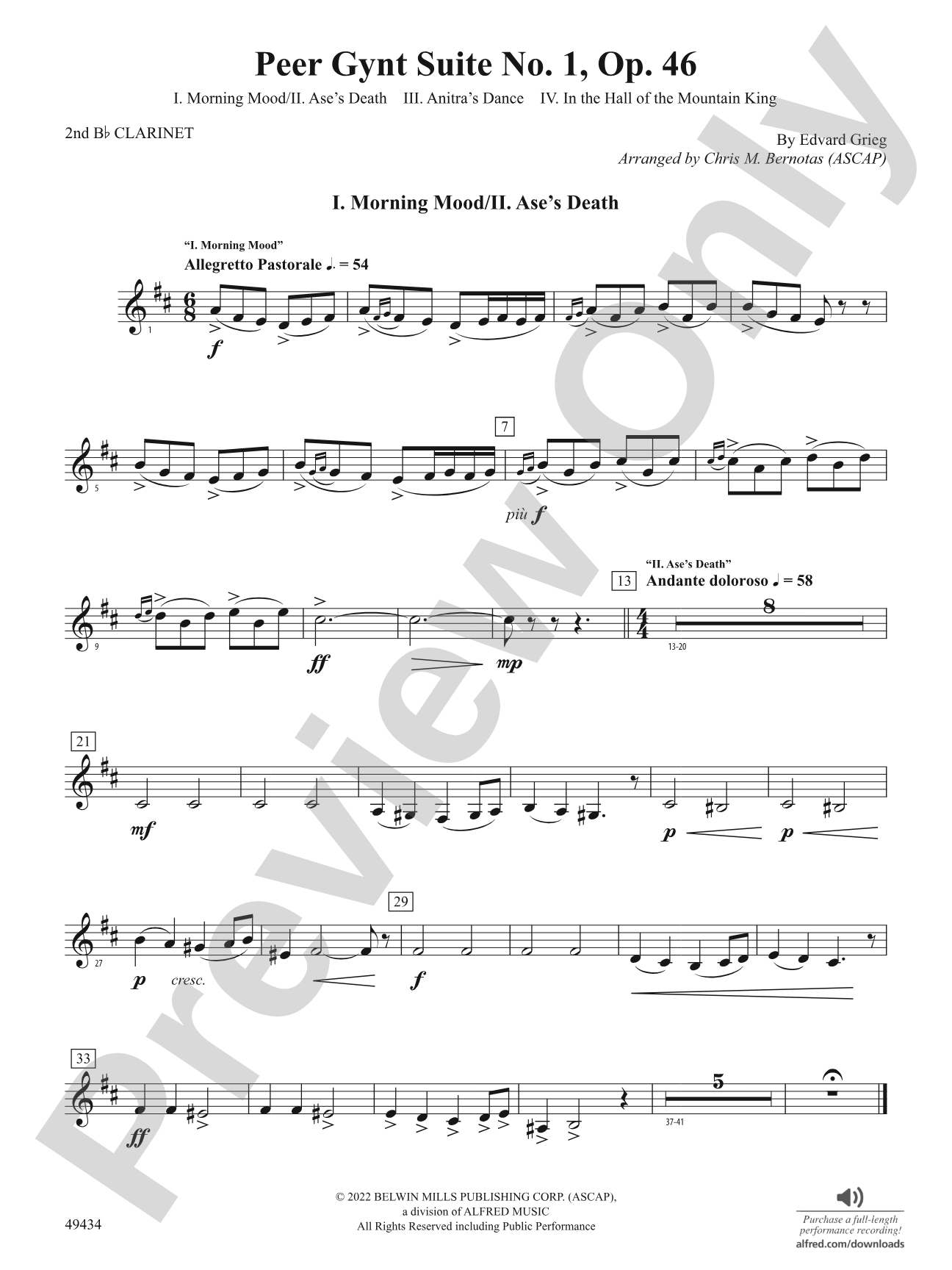

Peer Gynt Suite No.1, Op. 46: 2nd B-flat Clarinet
I./II. Morning Mood / Aase's Death; III. Anitra's Dance; IV. In the Hall of the Mountain King
By Edvard Grieg / arr. Chris M. Bernotas
Grade: 3
Item: 00-PC-0018760_C2
$3.00
Pickup currently not available
Description
A stunning arrangement of the incredible masterwork Peer Gynt Suite No.1, Op. 46! It is perfect for string orchestra alone, or with added instruments up to a full orchestra. This setting, by Chris M. Bernotas, offers the opportunity to explore the entire suite. All four movements are presented in approachable keys and are abridged to the perfect length and difficulty level for your next concert. (5:30)


Don't just read it, hear it, play along with it, and watch your students grow with it. In MakeMusic Cloud, Peer Gynt Suite No.1, Op. 46: 2nd B-flat Clarinet comes alive with professional accompaniment, adjustable tempo, and built-in practice tools that turn solo practice into real progress.
Open in the Player
Jump straight in and assign it today.
Start Your Free Trial
Open this title and explore the full library in minutes.
Sample Audio
1
1 Peer Gynt Suite No
--:--
2
2 Peer Gynt Suite No
--:--
3
3 Peer Gynt Suite No
--:--
1 Peer Gynt Suite No
0:00
0:00
Sample Video
Additional Details
Series:
Belwin Concert Full Orchestra
Publisher:
Alfred Music
SKU:
00-PC-0018760_C2
More about this title
About the Composer: Edvard Grieg
Edvard Grieg (1843-1907) was a Norwegian composer whose music became a cornerstone of orchestral and chamber repertoire. His gift for melody and harmonic color established him as one of the most performed composers in concert halls worldwide, and his works remain essential to orchestral education at every level.
Greig's ability to capture landscape, emotion, and narrative through orchestration made him a natural voice for dramatic music. Peer Gynt, his incidental music for Henrik Ibsen's play, showcases these strengths completely. Written in 1876, the work has endured as one of the most recognizable orchestral suites ever composed, treasured equally by professional orchestras and student ensembles.
Why we love this
This arrangement preserves the unmistakable character and melodic strength of Grieg's original while making the full four-movement suite genuinely playable for Grade 3 orchestras. Bernotas has the arranging skill to let the music breathe at a younger level without sacrificing the emotional arc that makes Peer Gynt so rewarding to perform. Audiences recognize these movements instantly, which means your students get the rare gift of performing a masterwork that feels substantial from the first rehearsal.
What to expect
Peer Gynt carries you from the stillness of a Norwegian dawn into the feverish energy of a mountain king's hall, then settles into tender, intimate song. The orchestration sparkles with Romantic color and storytelling that feels both grand and intimate. Even in this schooled-down version, the music speaks with Grieg's signature warmth and melodic generosity.
Who it's for
Conductors leading Grade 3 orchestras who want to program a substantial, recognizable work that doesn't require extensive rehearsal time to sound musical and polished. This arrangement works for orchestras with mixed instrumentation depth; you can perform it with strings only or add winds and brass as your ensemble allows. It's also ideal for festival competition or concert programming where impact and audience connection matter.
How to get the most out of it
- Shape the famous sunrise theme in Morning with gentle, singing bows in the upper strings; it's the heart of the movement and deserves careful dynamic control even at this grade level.
- Balance the rhythmic drive in In the Hall of the Mountain King so the bass line stays audible; younger orchestras often let this accompaniment disappear, but clarity here makes the piece dance.
- Bring out the contrasting timbral colors between sections in Anitra's Dance rather than letting it flatten into one volume; the arrangement likely separates woodwinds and strings purposefully.
- Let the Solvejg's Song movement breathe at a slower tempo than students instinctively want; this melody needs space to sing, and resistance to rushing will improve musicality across your ensemble.
How to use it
Open a concert with all four movements as your centerpiece, allowing the suite's narrative arc to anchor an entire program. Alternatively, feature Morning or Solvejg's Song as a contrasting interlude between heavier works, since either movement stands alone beautifully. The suite's manageable 5:30 runtime makes it flexible for festival competitions or spring concert slots where you want one major work that builds confidence without consuming your rehearsal calendar.
Skills your students will build
- Balancing multiple melodic lines in the same section
- Sustaining legato phrasing across phrase lengths and tempo changes
- Controlling dynamic contrast between adjacent sections
- Responding to changing harmonic color and orchestration texture
- Building ensemble cohesion in a multi-movement work with distinct character in each movement