
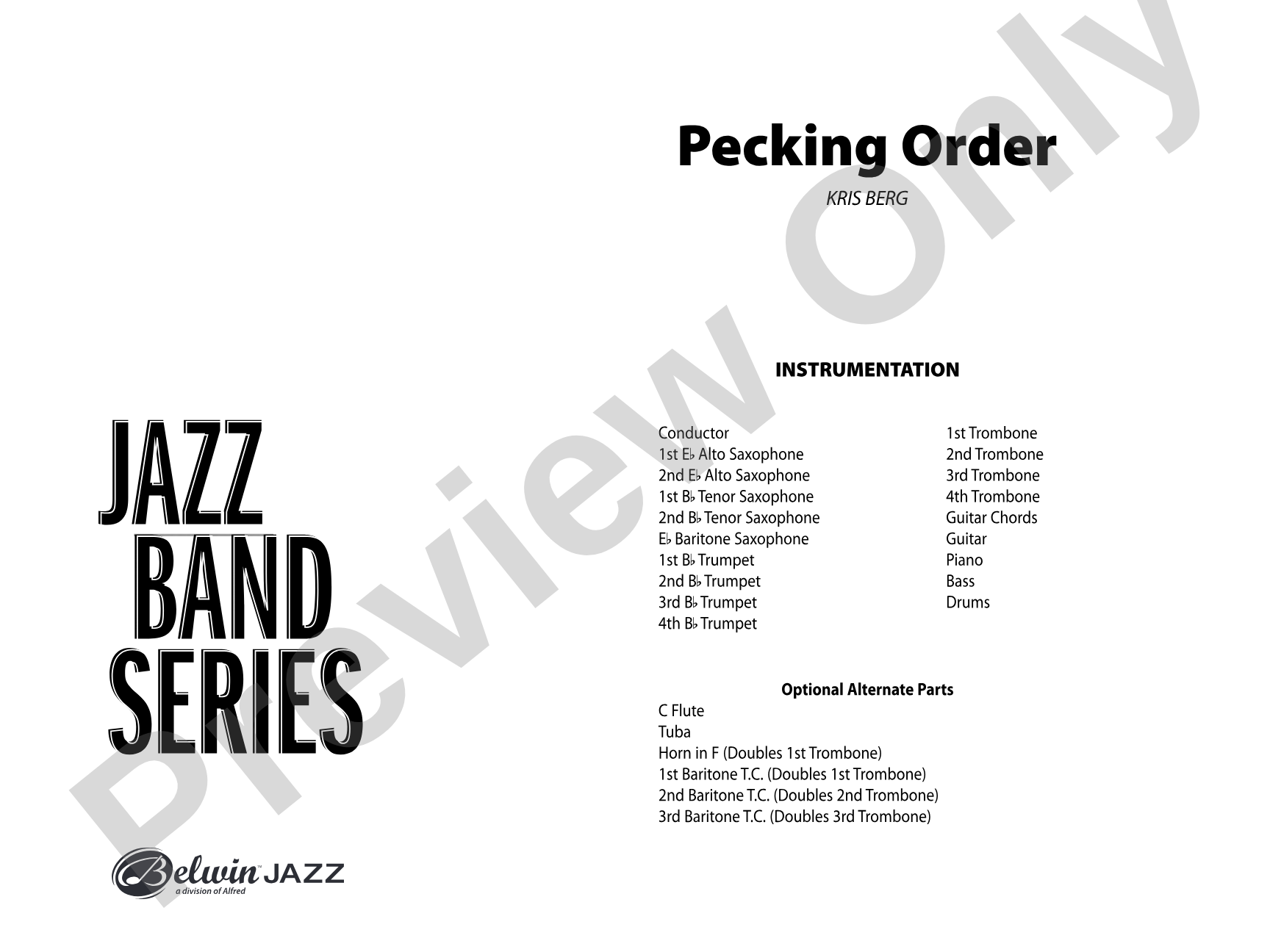
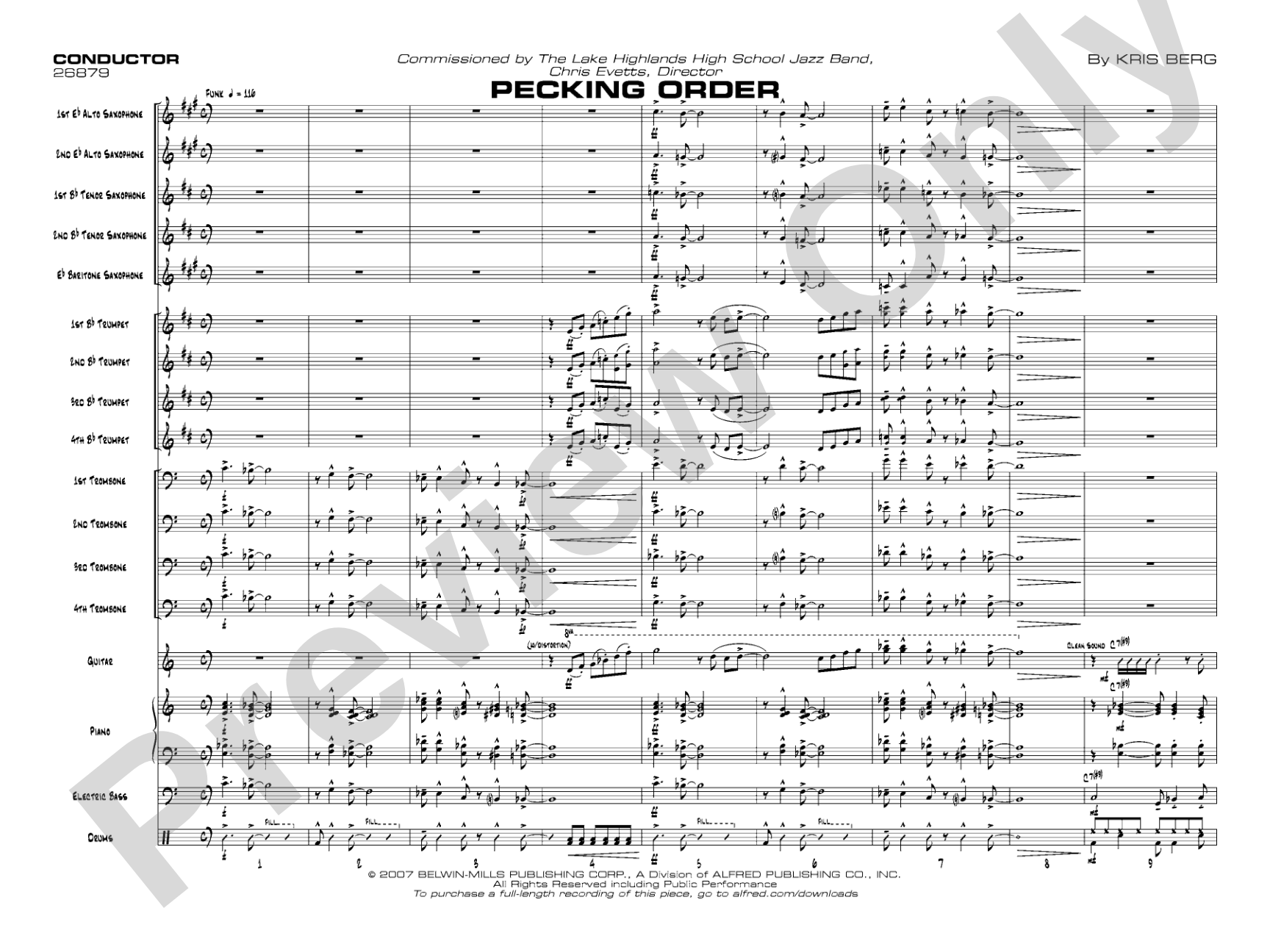
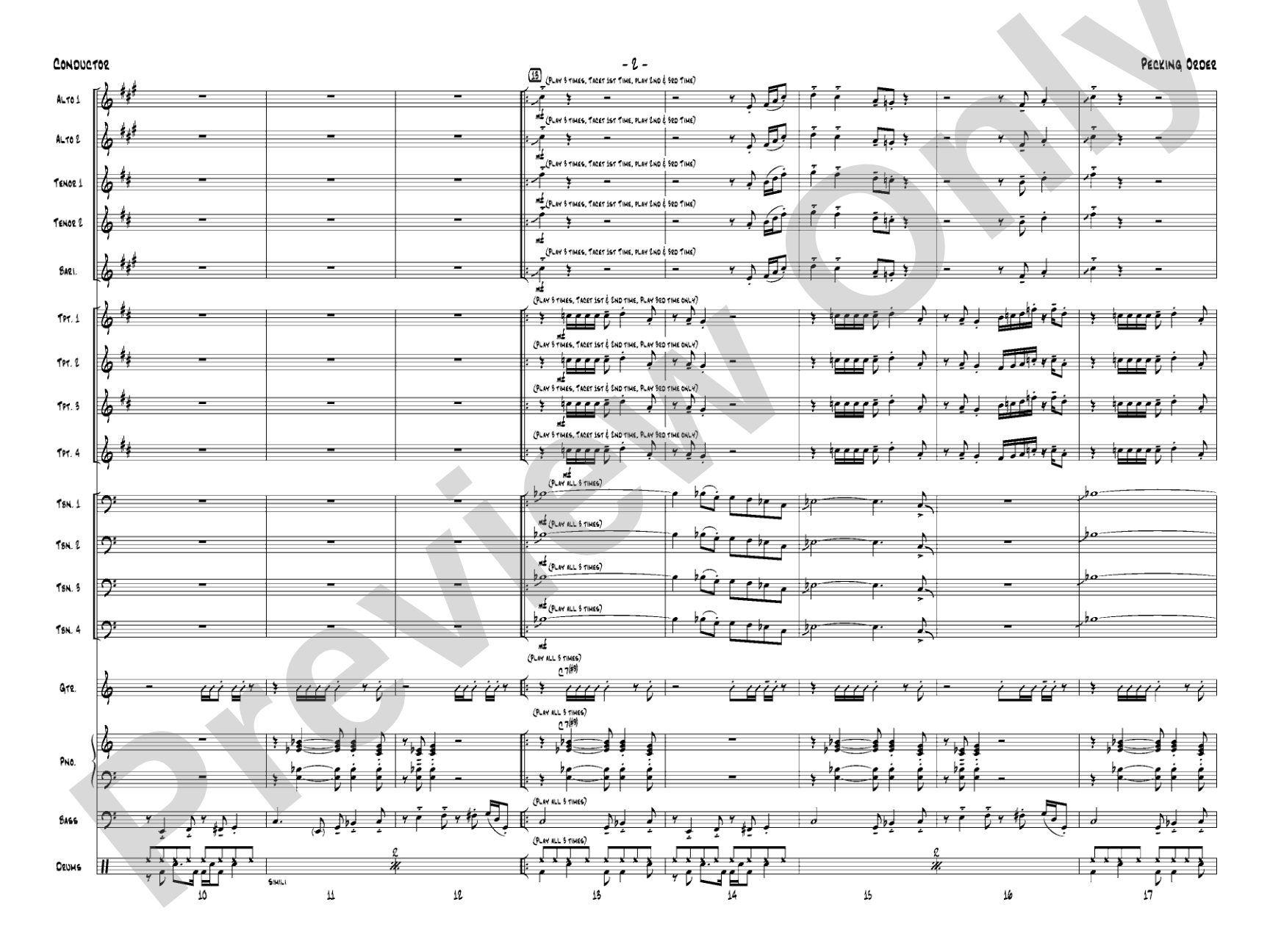
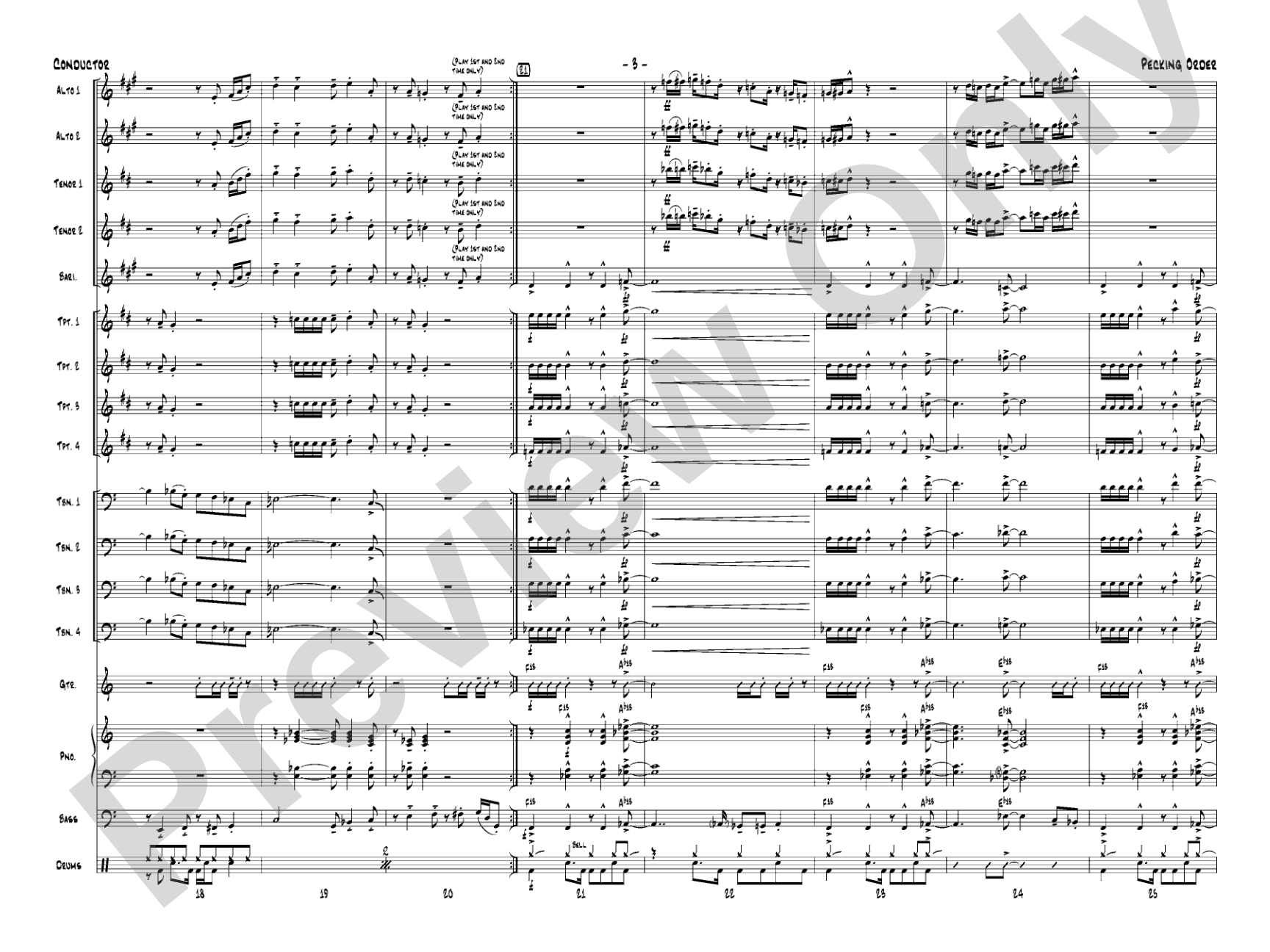
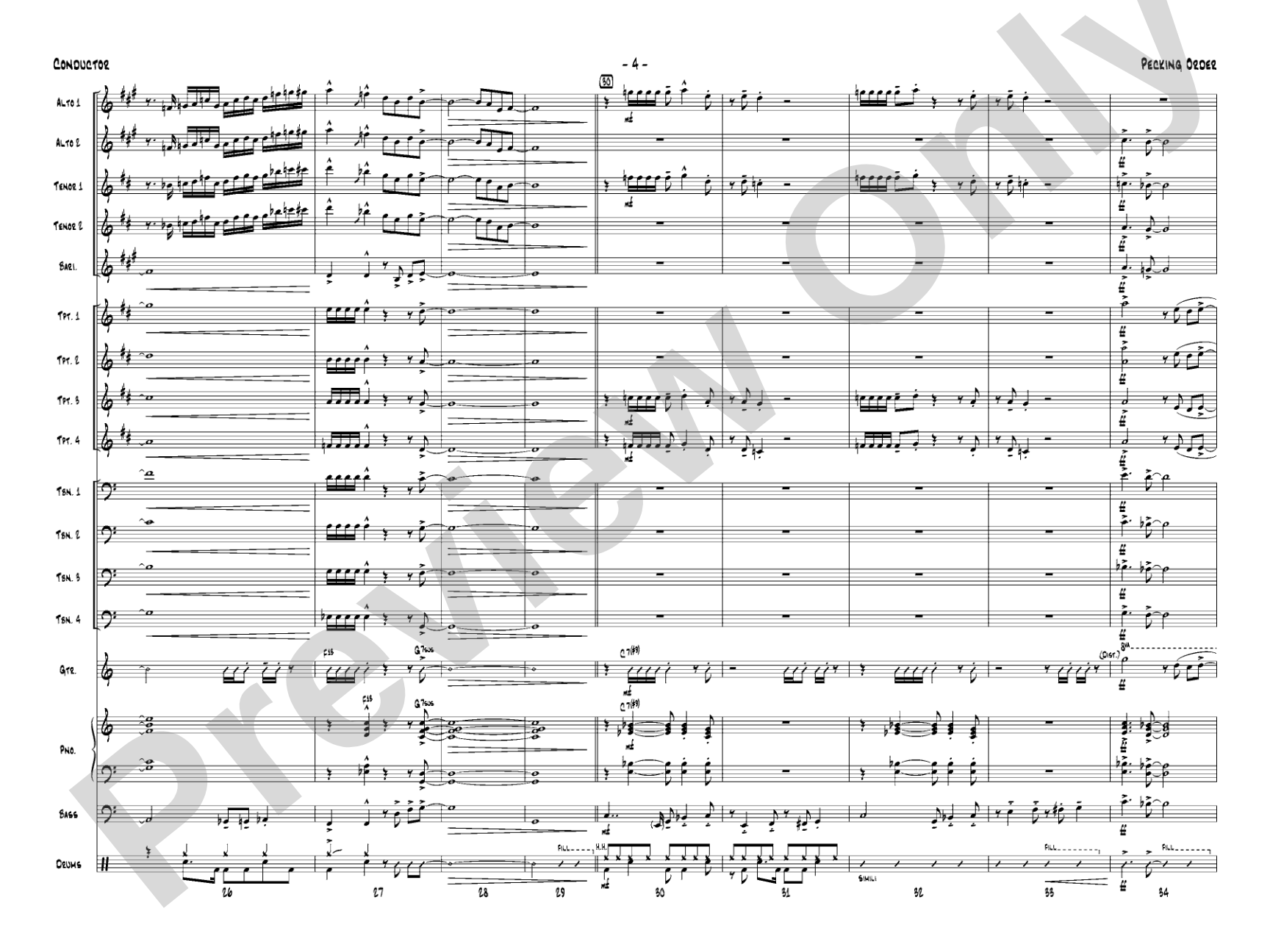
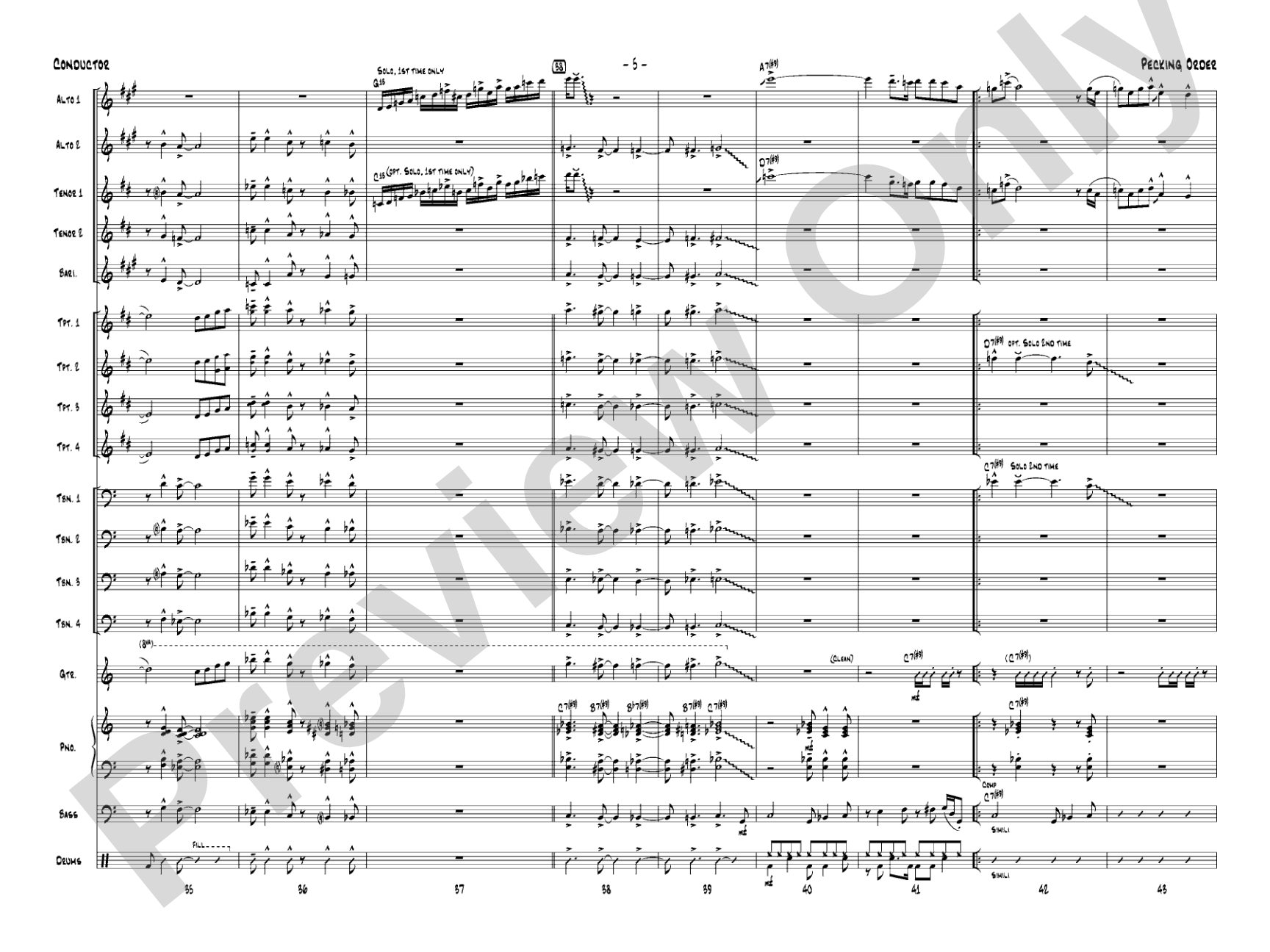
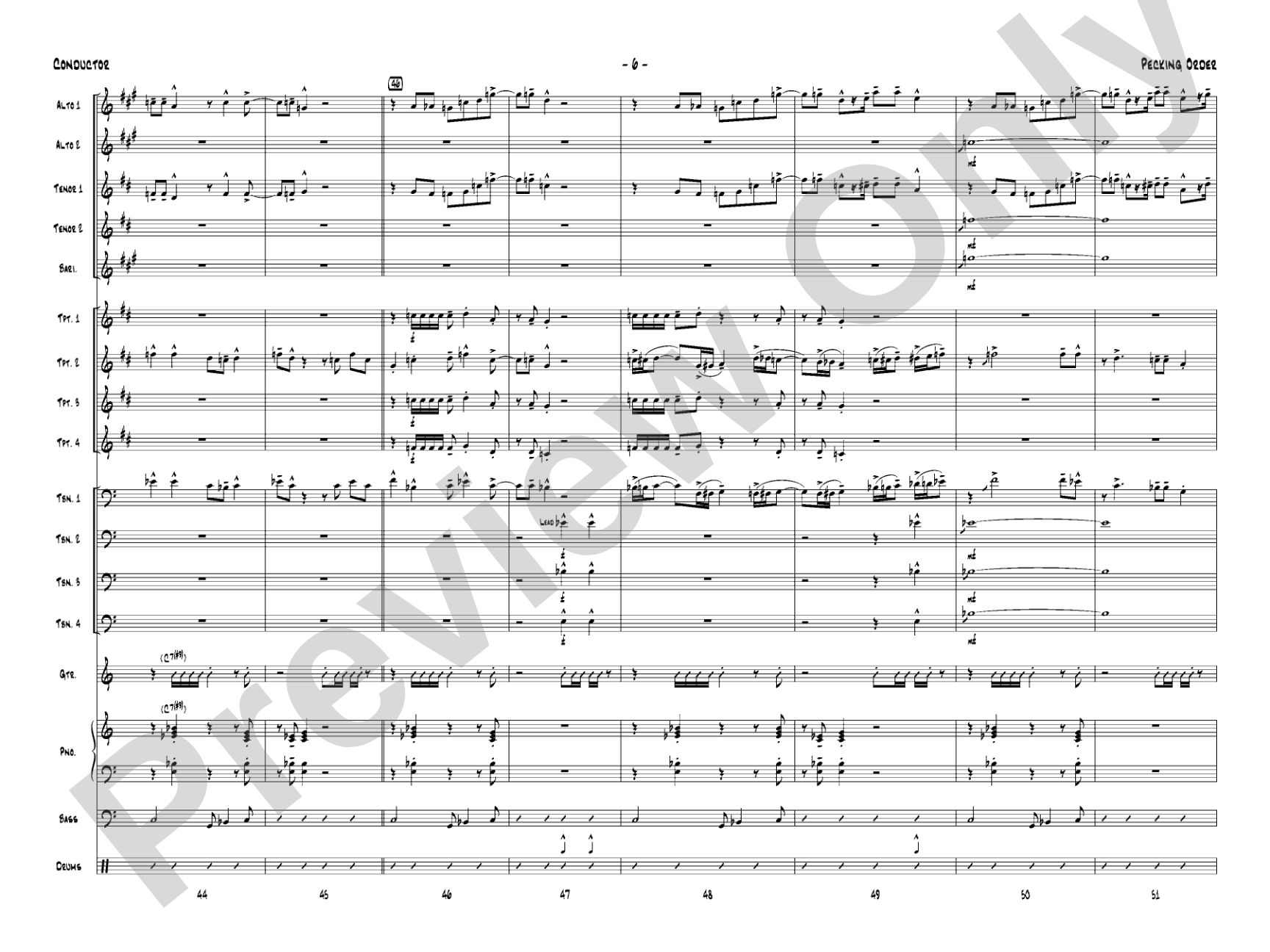
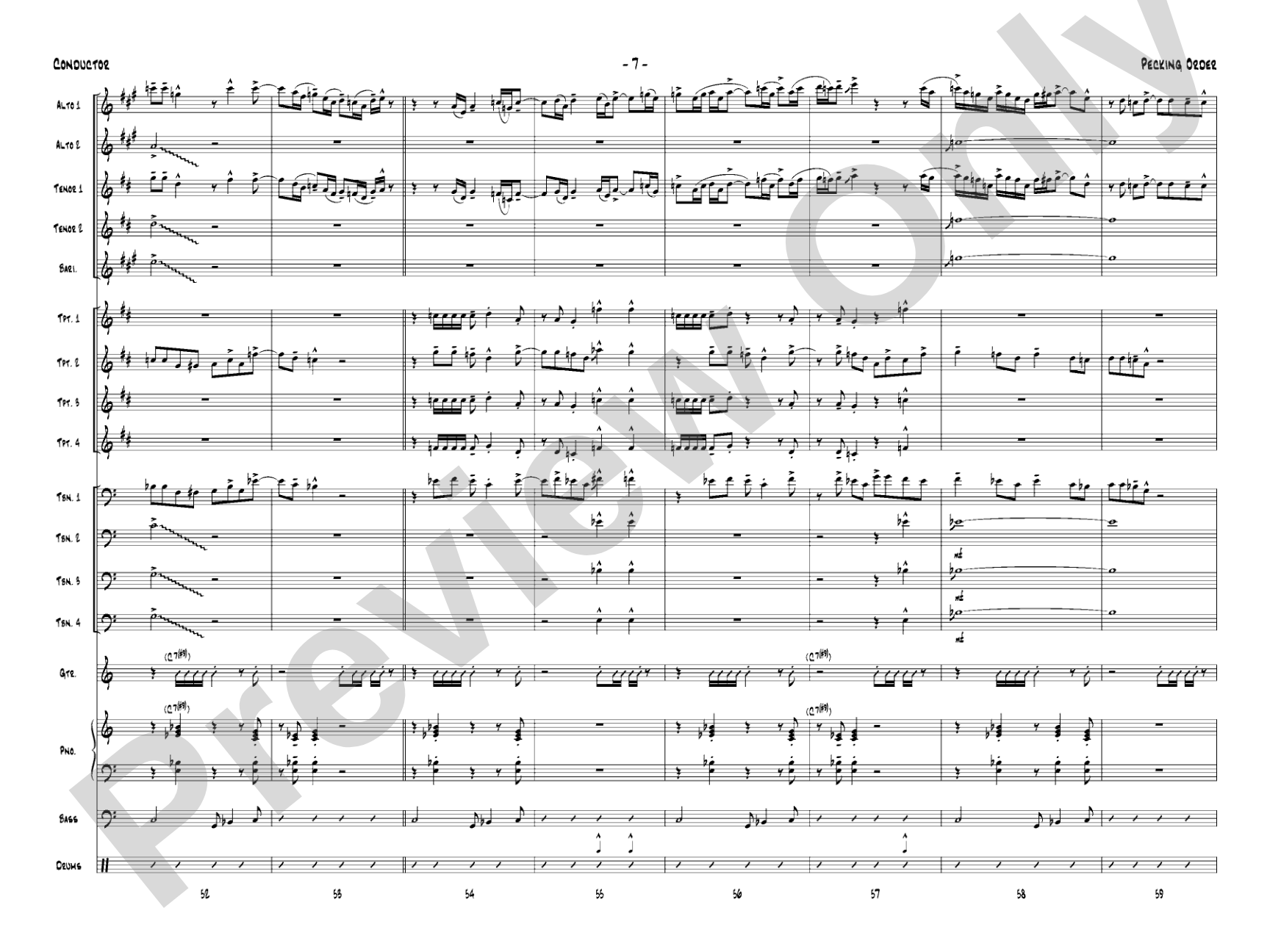
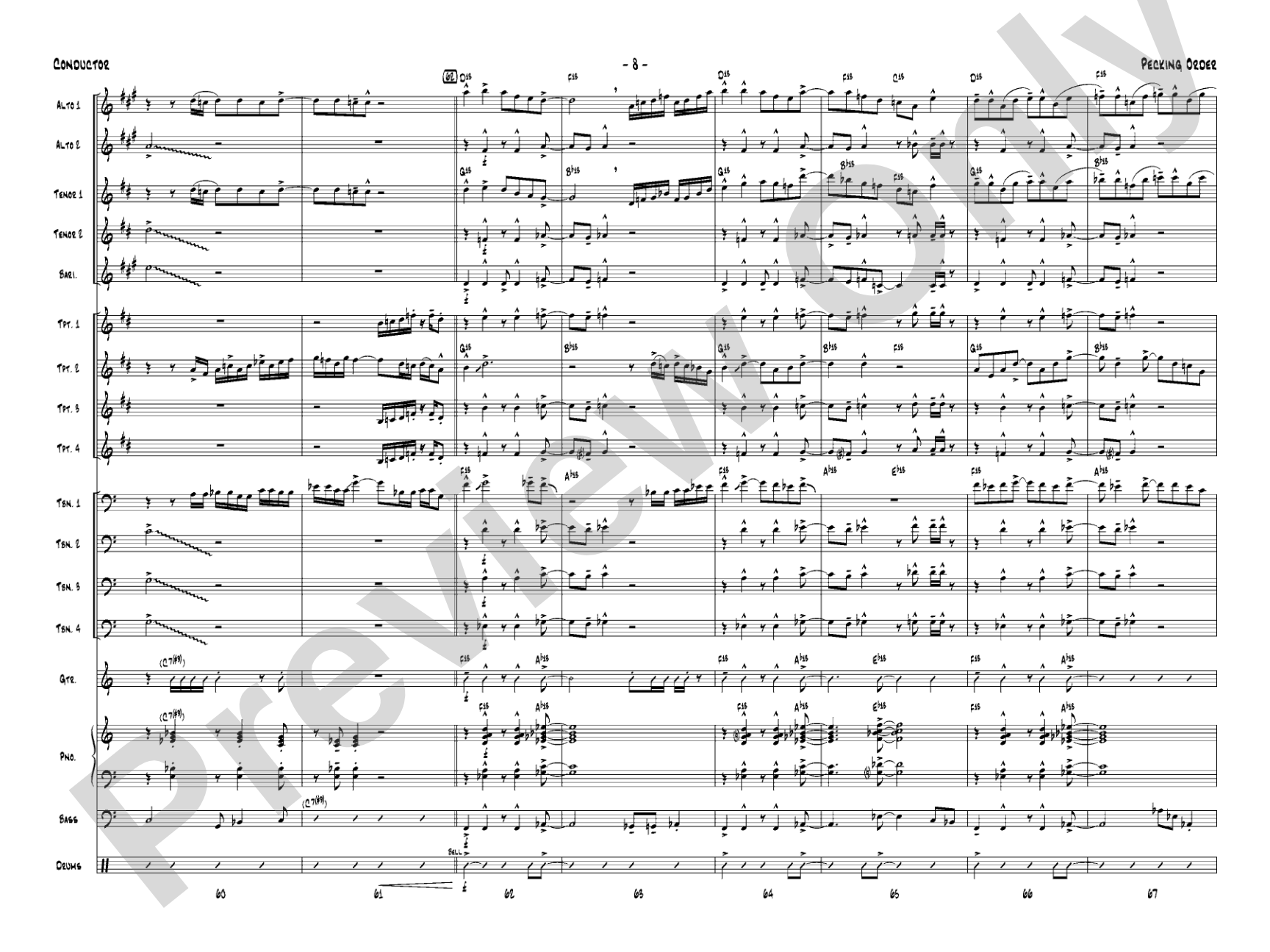
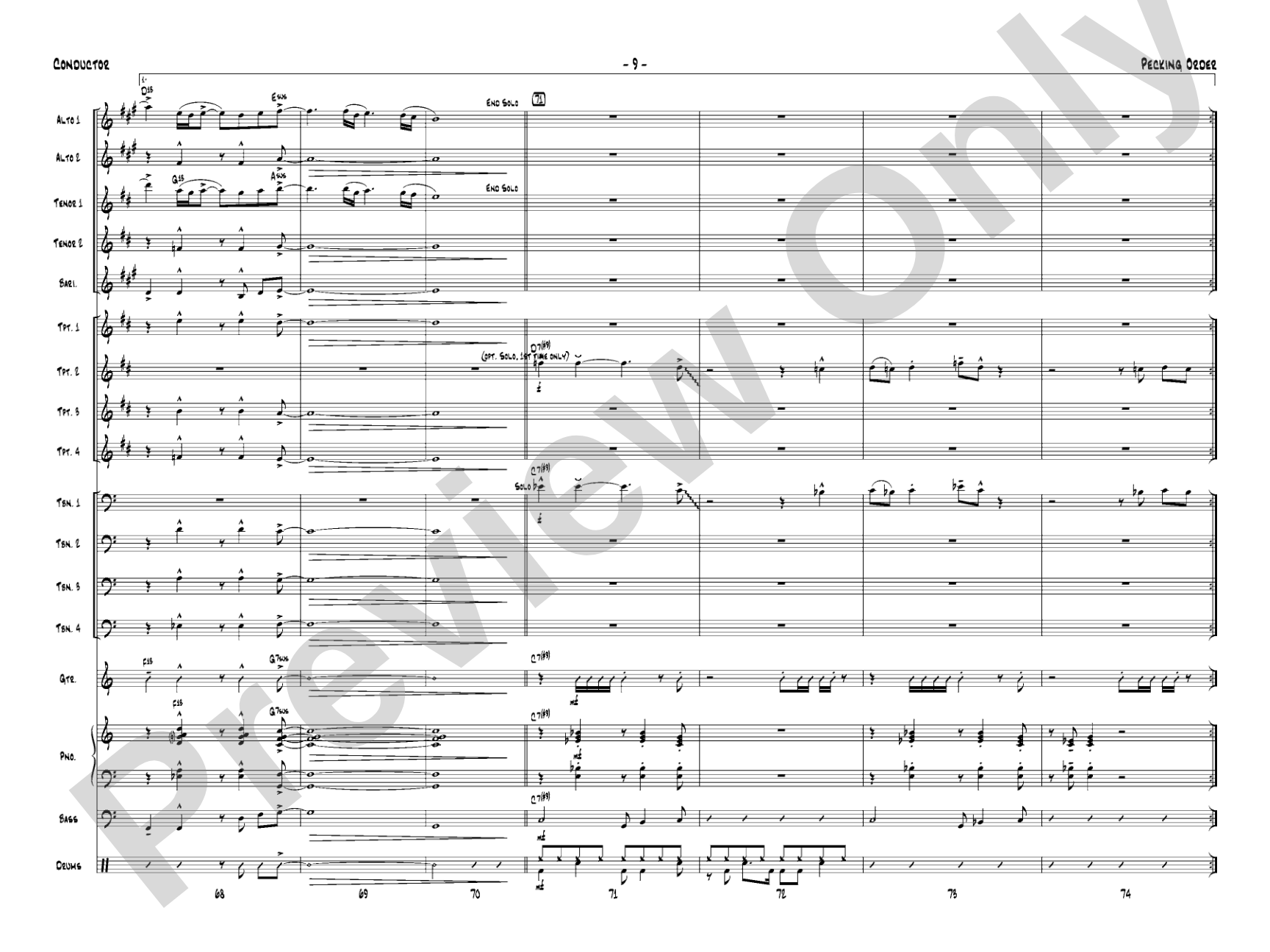
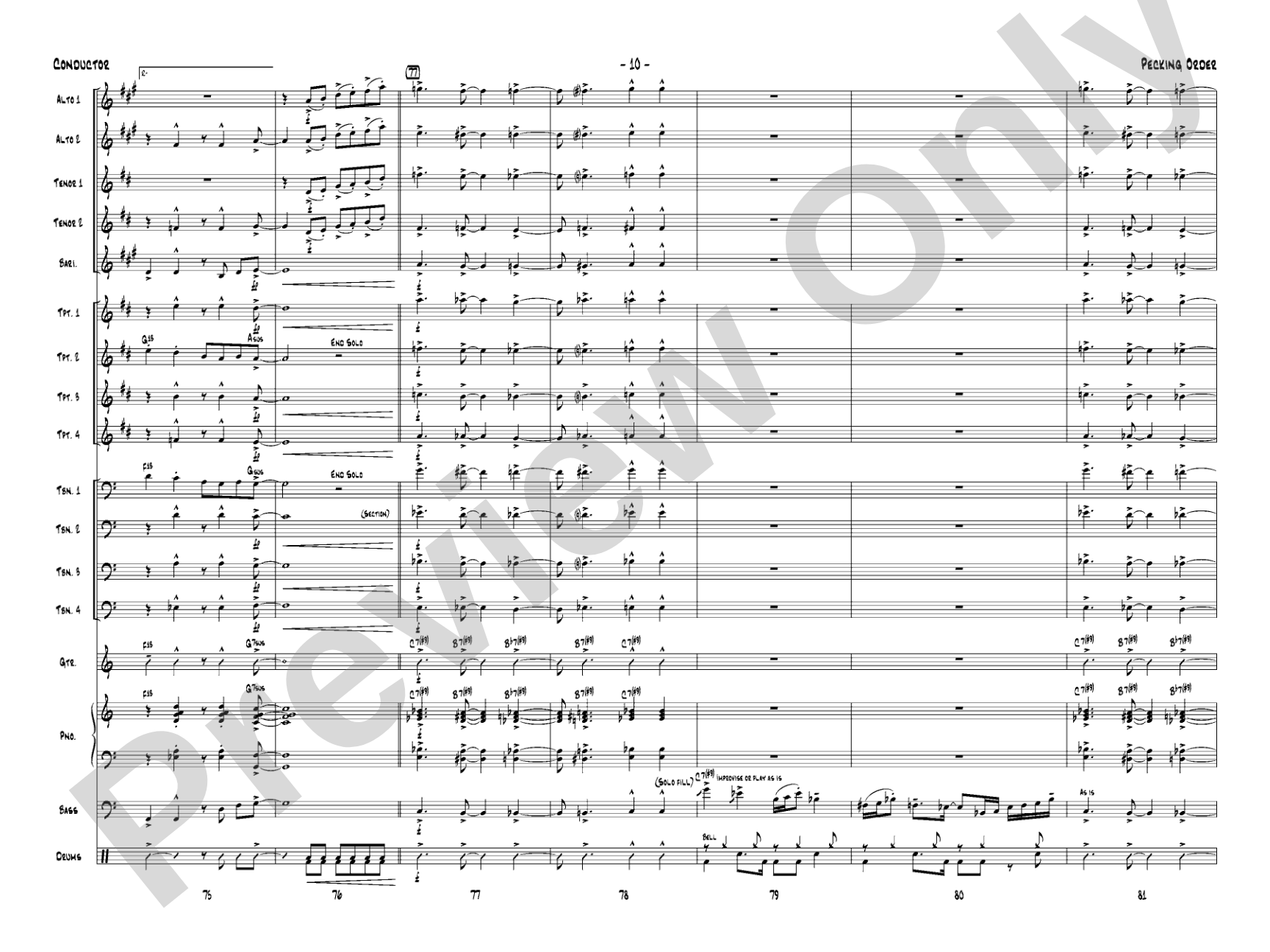
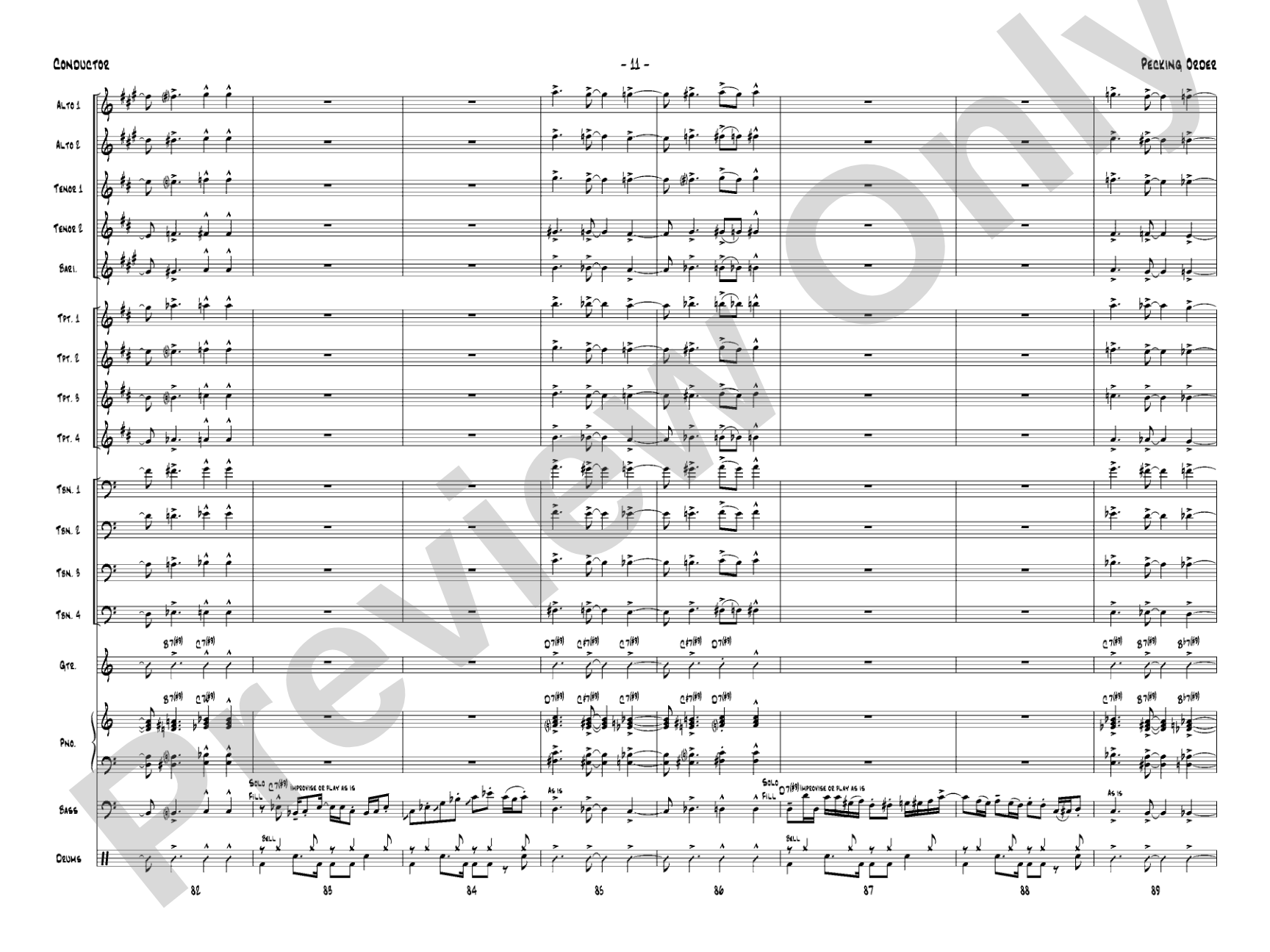
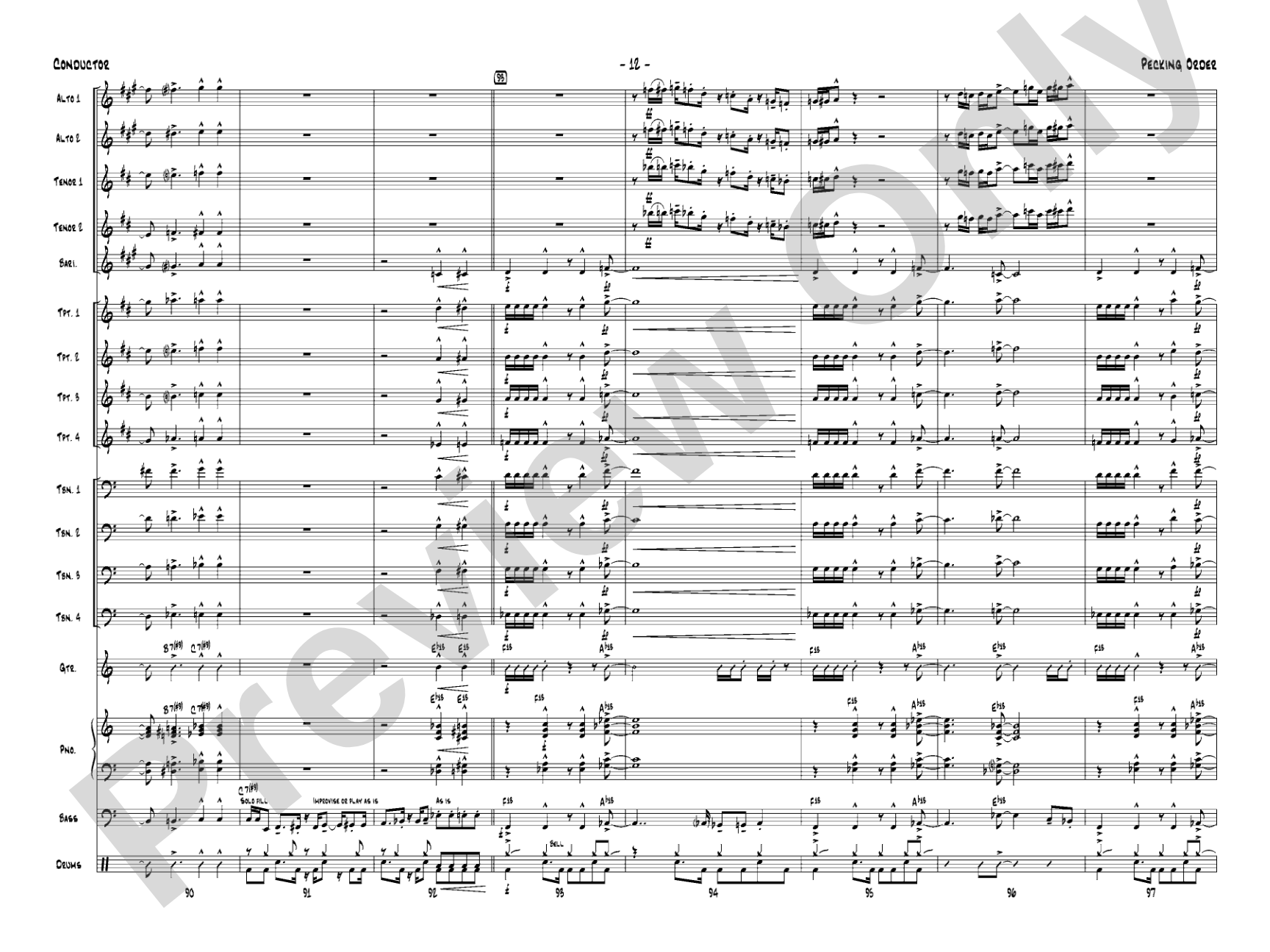
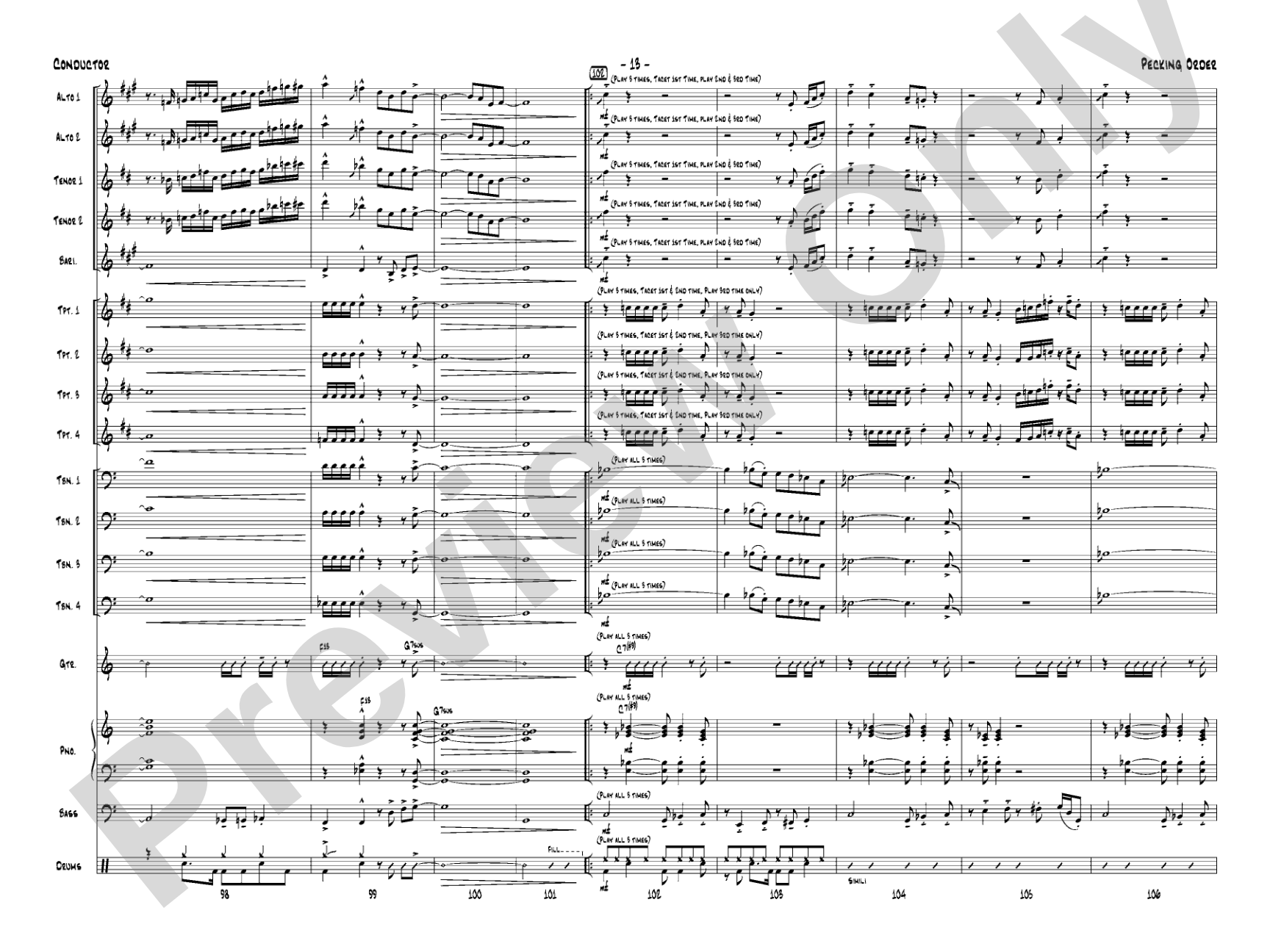
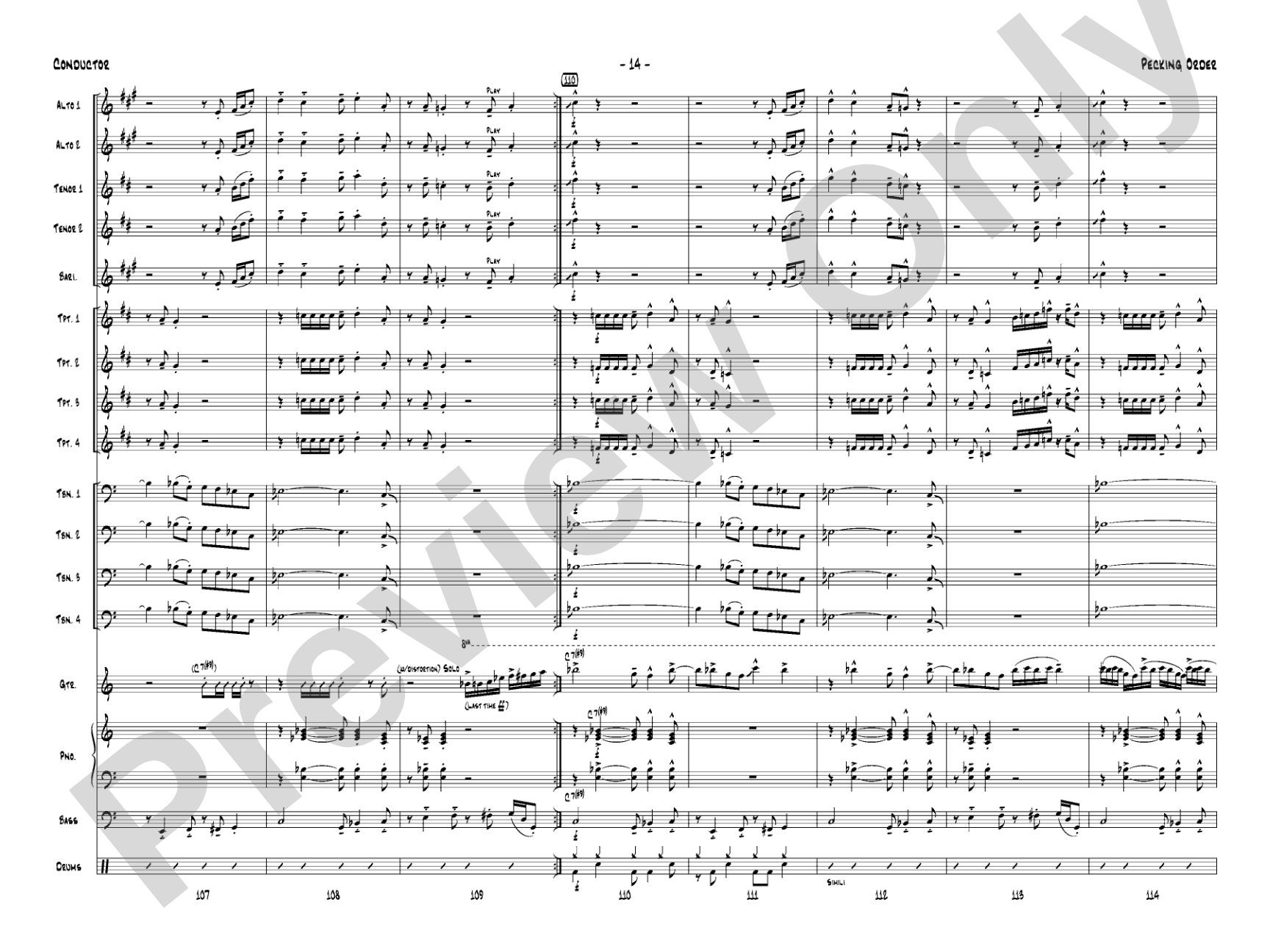
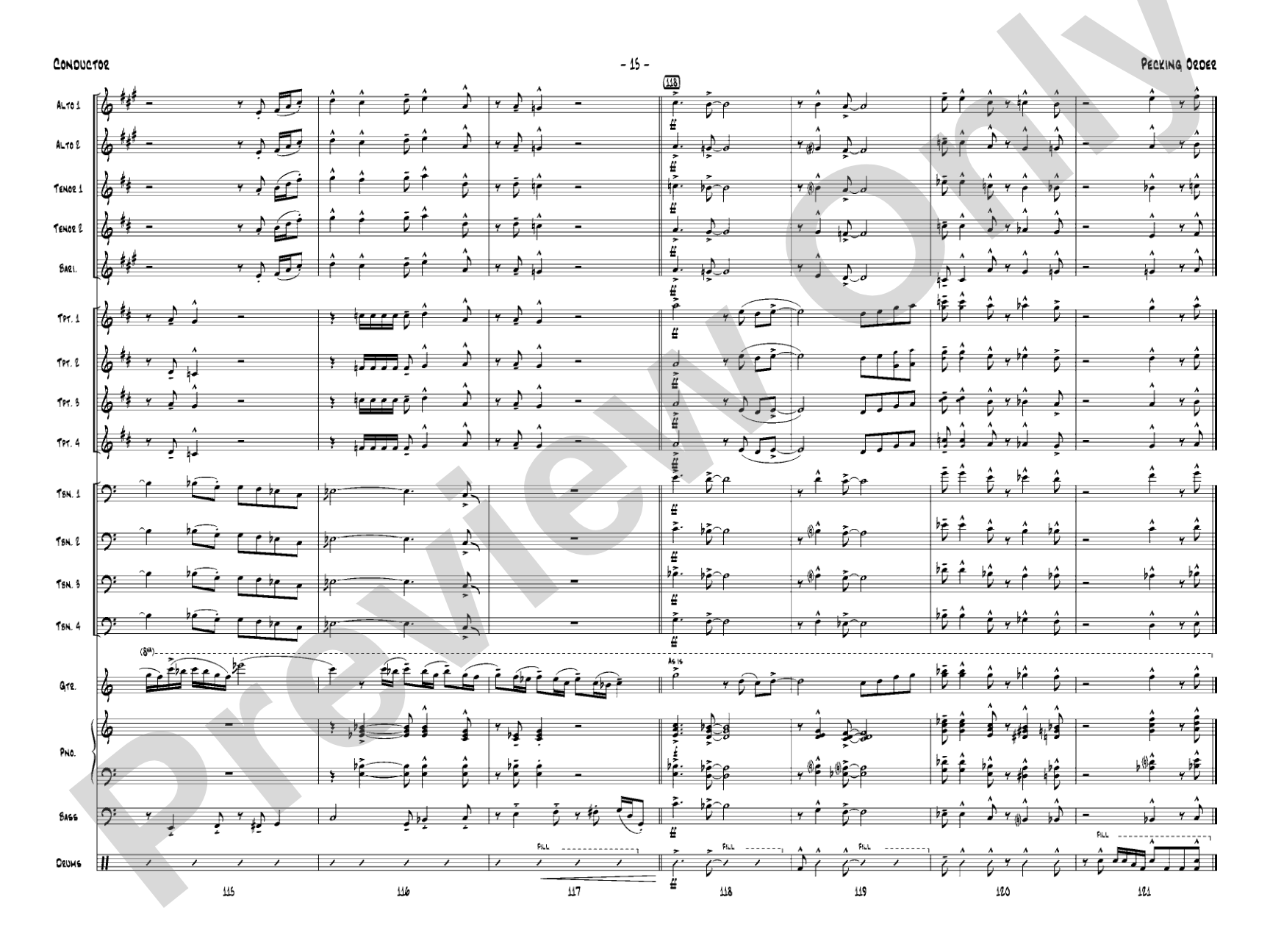




Pecking Order: Score
By Kris Berg
Grade: 3 (Medium)
Item: 00-PR-0004002
$10.00
Pickup currently not available
Description
Kris Berg brings another super-funky "chicken" chart to market and this one features a James Brown groove. Solo are written out for alto, tenor, trumpet and trombone. Lead trumpet range is to written A above the staff (optional B-flat). Riffs, fun lines and a serious groove are all inside. Treat your band to a terrific funk chart perfect for every performance. Get on the funky train. This title is available in MakeMusic Cloud.


Don't just read it, hear it, play along with it, and watch your students grow with it. In MakeMusic Cloud, Pecking Order: Score comes alive with professional accompaniment, adjustable tempo, and built-in practice tools that turn solo practice into real progress.
Open in the Player
Jump straight in and assign it today.
Start Your Free Trial
Open this title and explore the full library in minutes.
Sample Audio
1
Audio File
--:--
0:00
0:00
Sample Video
No sample videos found.
Additional Details
Series:
Jazz Band Series
Publisher:
Alfred Music
Page Count:
94
SKU:
00-PR-0004002
More about this title
About the Composer: Kris Berg
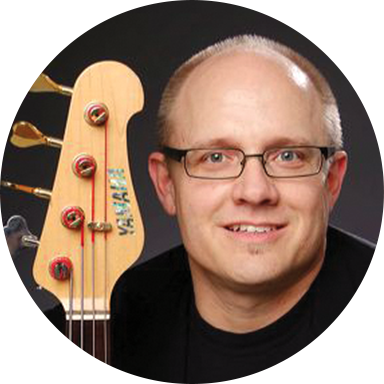
Kris Berg directs the jazz studies program at Collin County Community College in Texas, where he earned both his bachelor's and master's degrees in jazz studies from the University of North Texas. His arrangements and compositions have circulated globally among professional ensembles and are published through Belwin Jazz, a division of Alfred Publishing. Berg founded and directs both the Collin Jazz Fest and the Texas All-Star Jazz Camp, and his student ensembles have earned multiple invitations to perform at the Montreux Jazz Festival.
Active as both a performer and clinician for Yamaha Corporation of America, Berg has appeared alongside major jazz artists including Kurt Elling, Randy Brecker, Peter Erskine, Bob Mintzer, and Clark Terry. He authored the widely used instructional resource Bass Lines in Minutes and maintains endorsements with Walter Woods Amplifiers. His career reflects deep roots in both the educational and professional jazz communities.
Why we love this
Berg understands what makes a funk chart actually groove. The James Brown foundation here gives your ensemble a familiar rhythmic anchor, while the written solos for alto, tenor, trumpet, and trombone eliminate the guesswork for students still building improvisation chops. This is the kind of chart that gets a room moving while teaching ensemble cohesion and section balance.
What to expect
Pure James Brown swagger with sharp horn hits and a rhythm section that refuses to leave the pocket. The riffs and fun lines create momentum without requiring complicated ensemble synchronization, so the focus stays on attitude and groove.
Who it's for
Jazz ensemble directors seeking a straightforward funk vehicle that works equally well at festival clinics and concert performances. Students who are still developing solo confidence will appreciate the written solos that model phrasing and tone, while stronger improvisers can use them as springboards.
How to get the most out of it
- Lock the drum chair and rhythm section into the pocket first; once they commit to the groove, the horns will follow naturally.
- Balance the written solos carefully against the ensemble riffs so individual voices cut through without the full band sounding sparse.
- Use the optional high trumpet range (up to written A, with B-flat possible) only if your lead player is comfortable; the groove works perfectly at the standard range.
- Build energy gradually across the chart rather than opening at full intensity; funk charts need room to grow.
How to use it
Program this alongside more straightforward jazz standards to show your audience the full spectrum of big band repertoire. It works especially well in the second half of a concert when attention might be flagging, or as a closer if you want to send people out energized.
Skills your students will build
- Locking into a consistent groove and maintaining it across tempo variations
- Balancing ensemble sound with individual solo projection
- Reading and interpreting written jazz solos with appropriate phrasing and articulation
- Responding rhythmically to section riffs while tracking the lead voice
- Managing extended range demands (especially lead trumpet to A and beyond)