
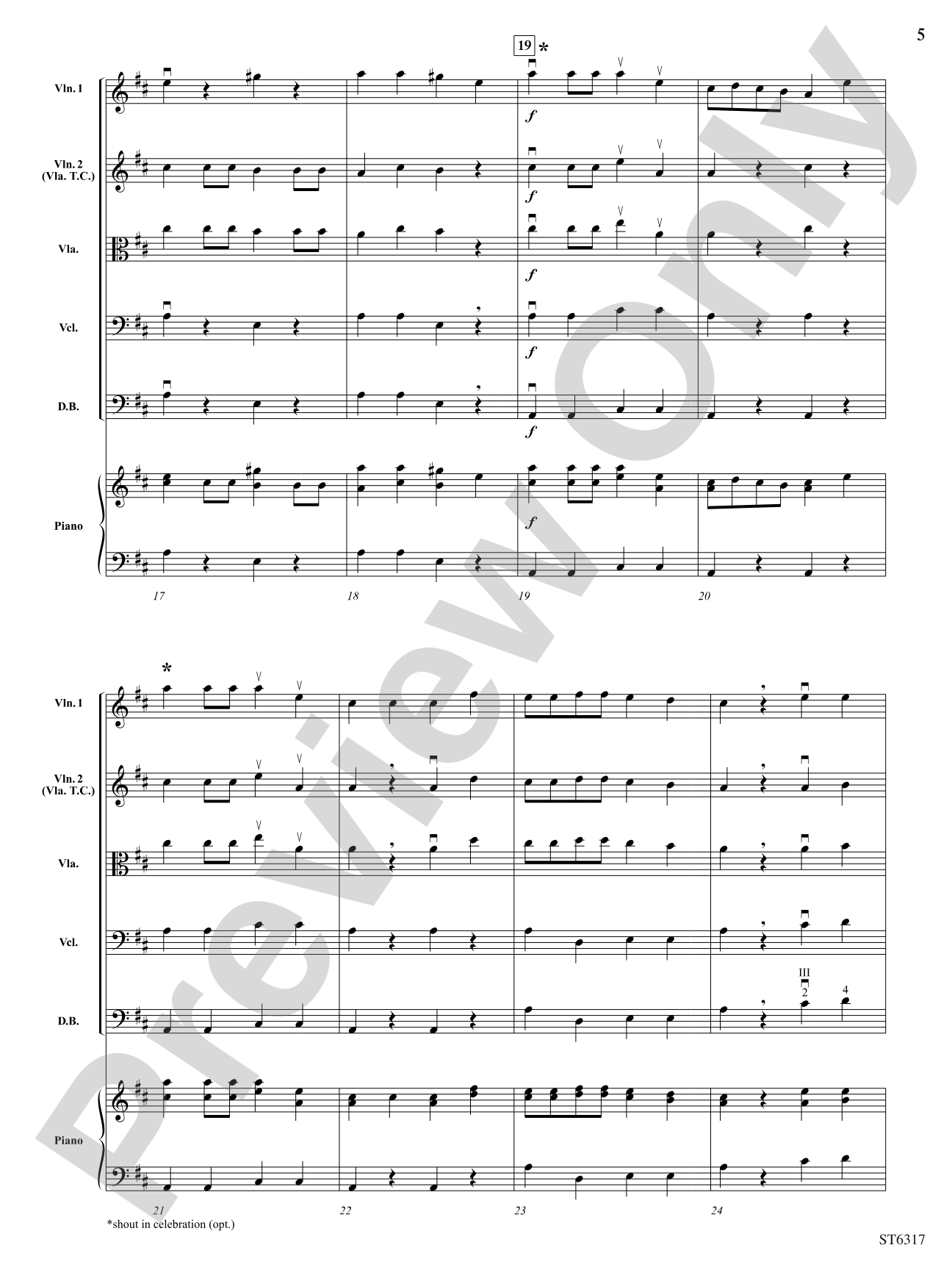
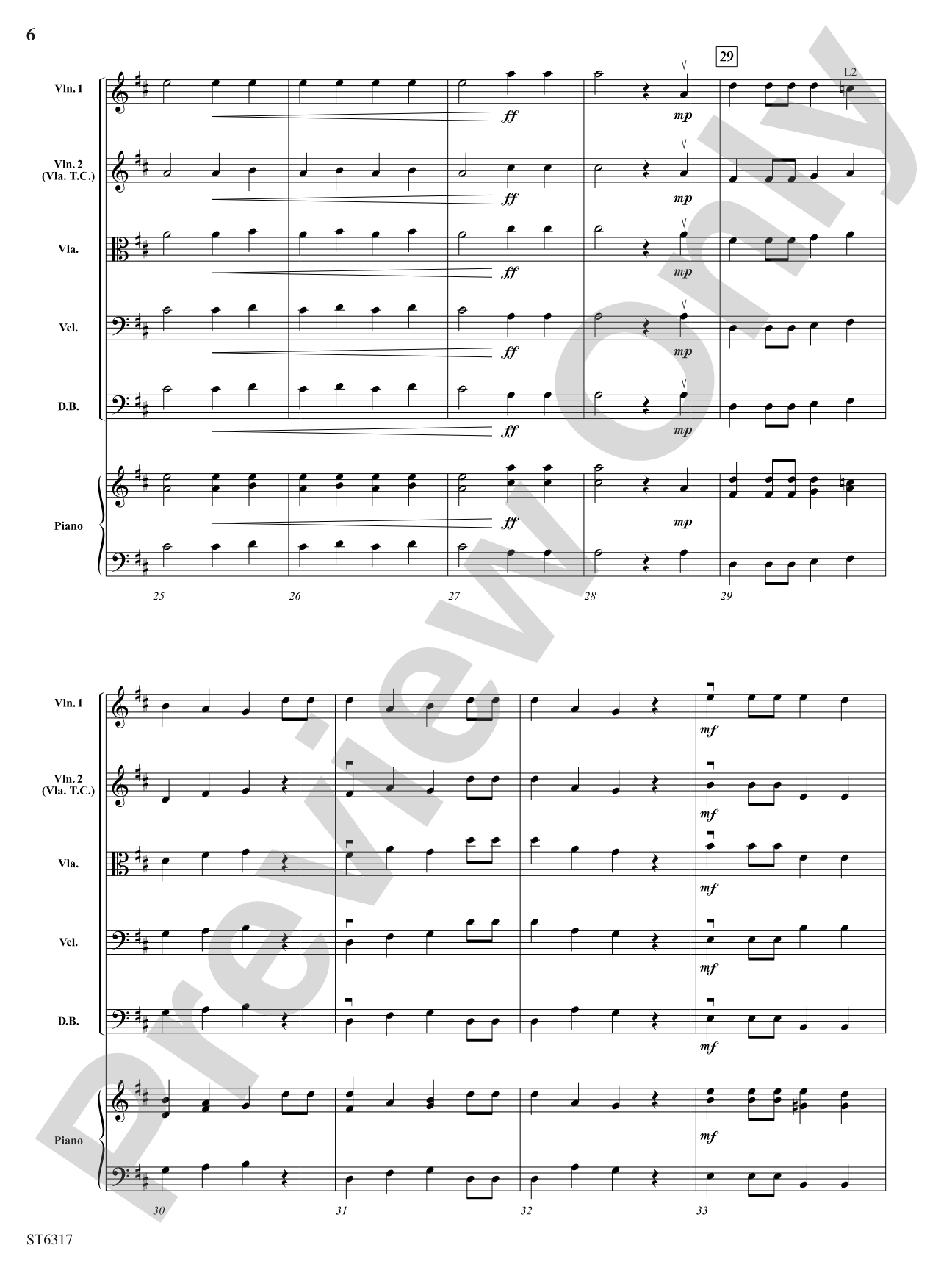
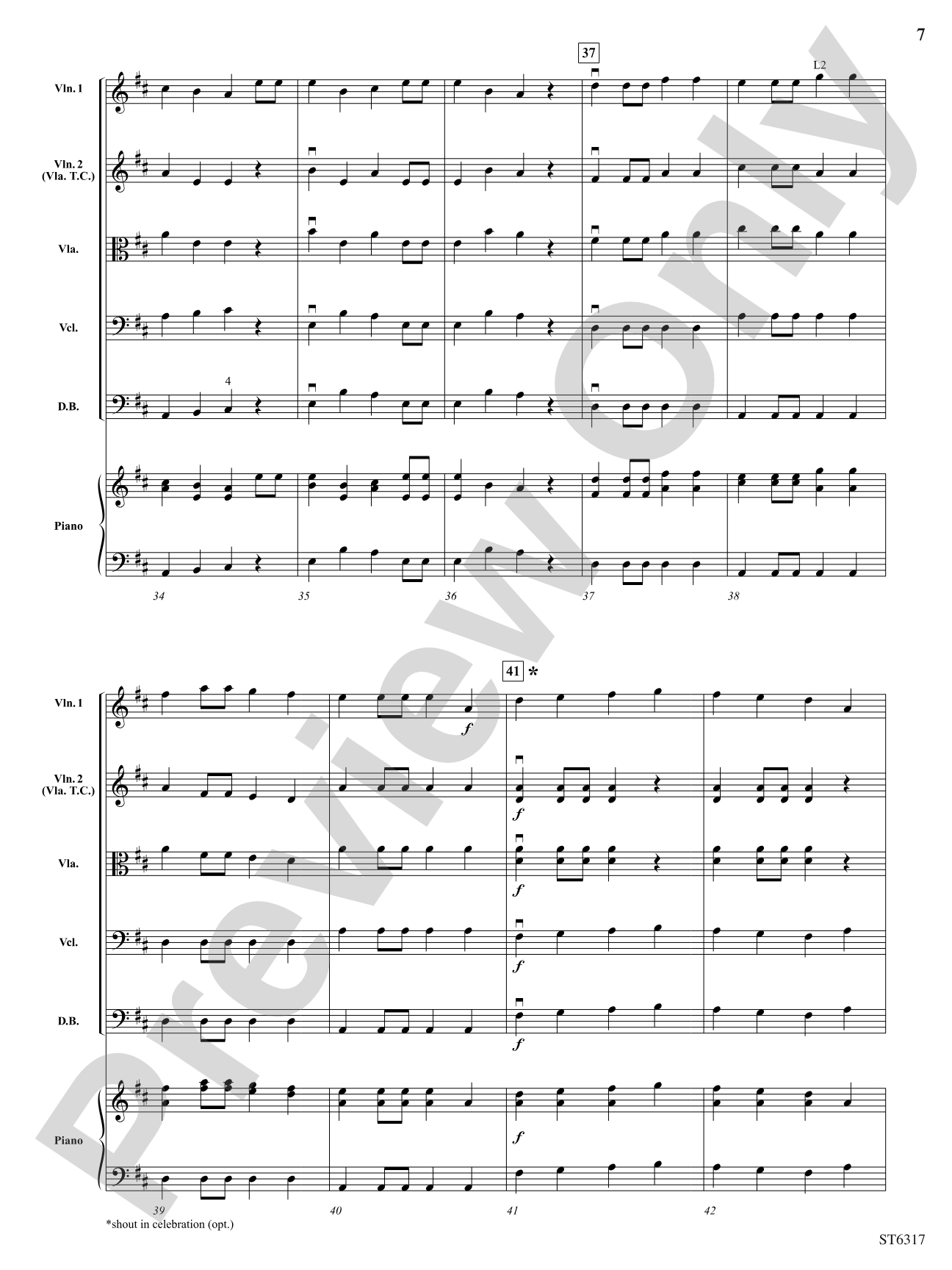
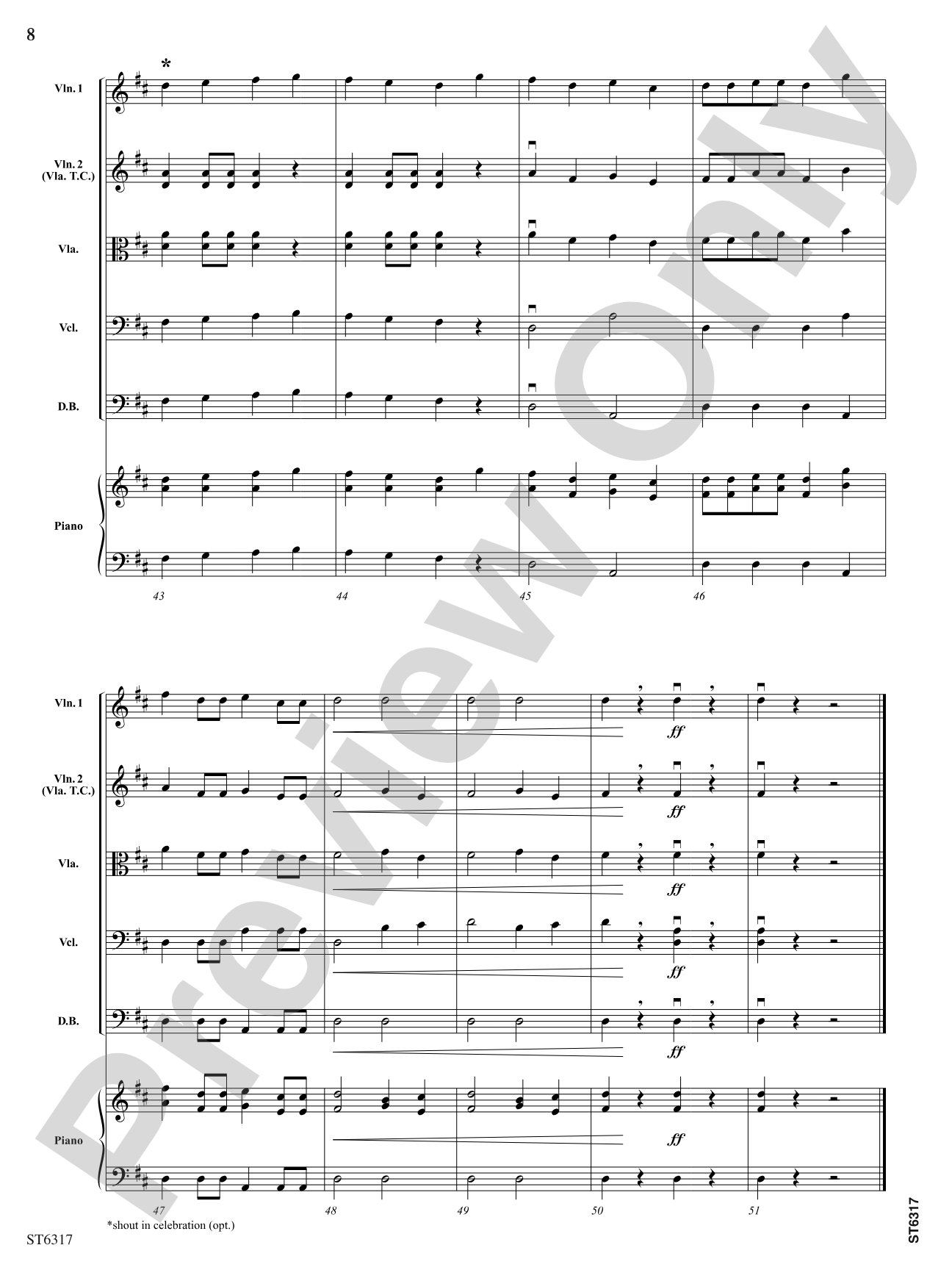

Peasant Wedding March: Score
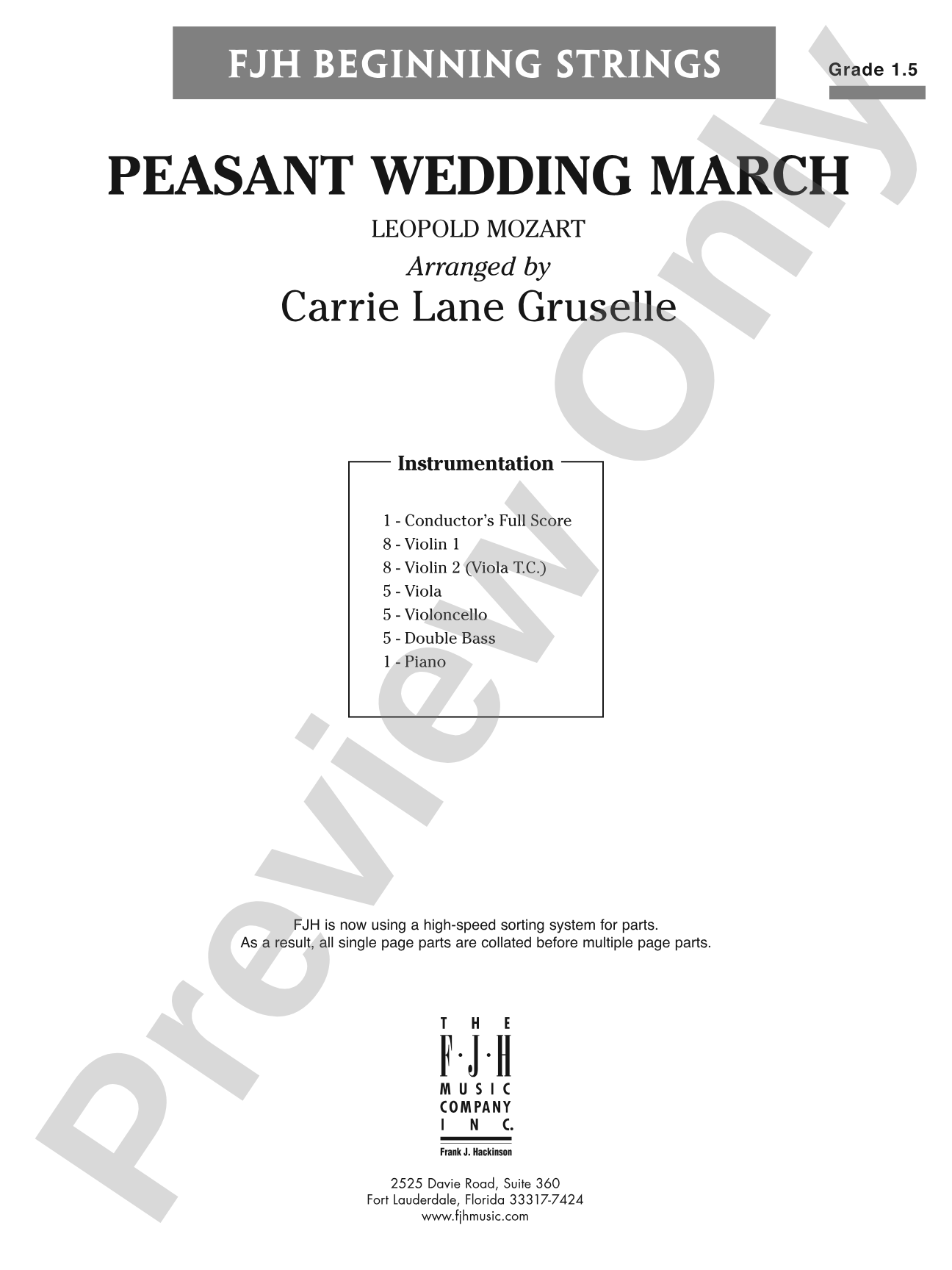
By Leopold Mozart / arr. Carrie Lane Gruselle
Grade: 1.5
Item: 98-DST6317S
$5.00
Pickup currently not available
Description
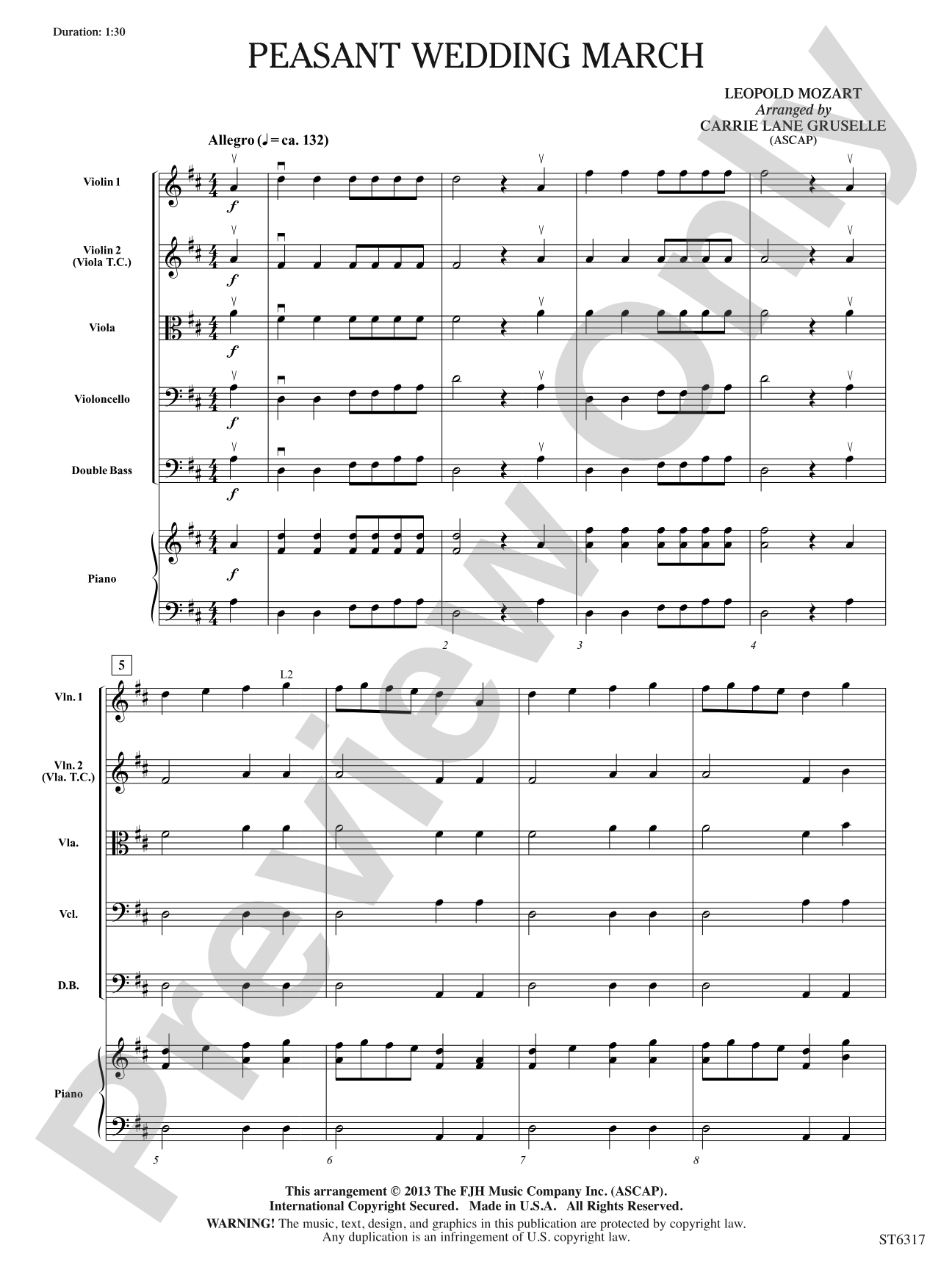
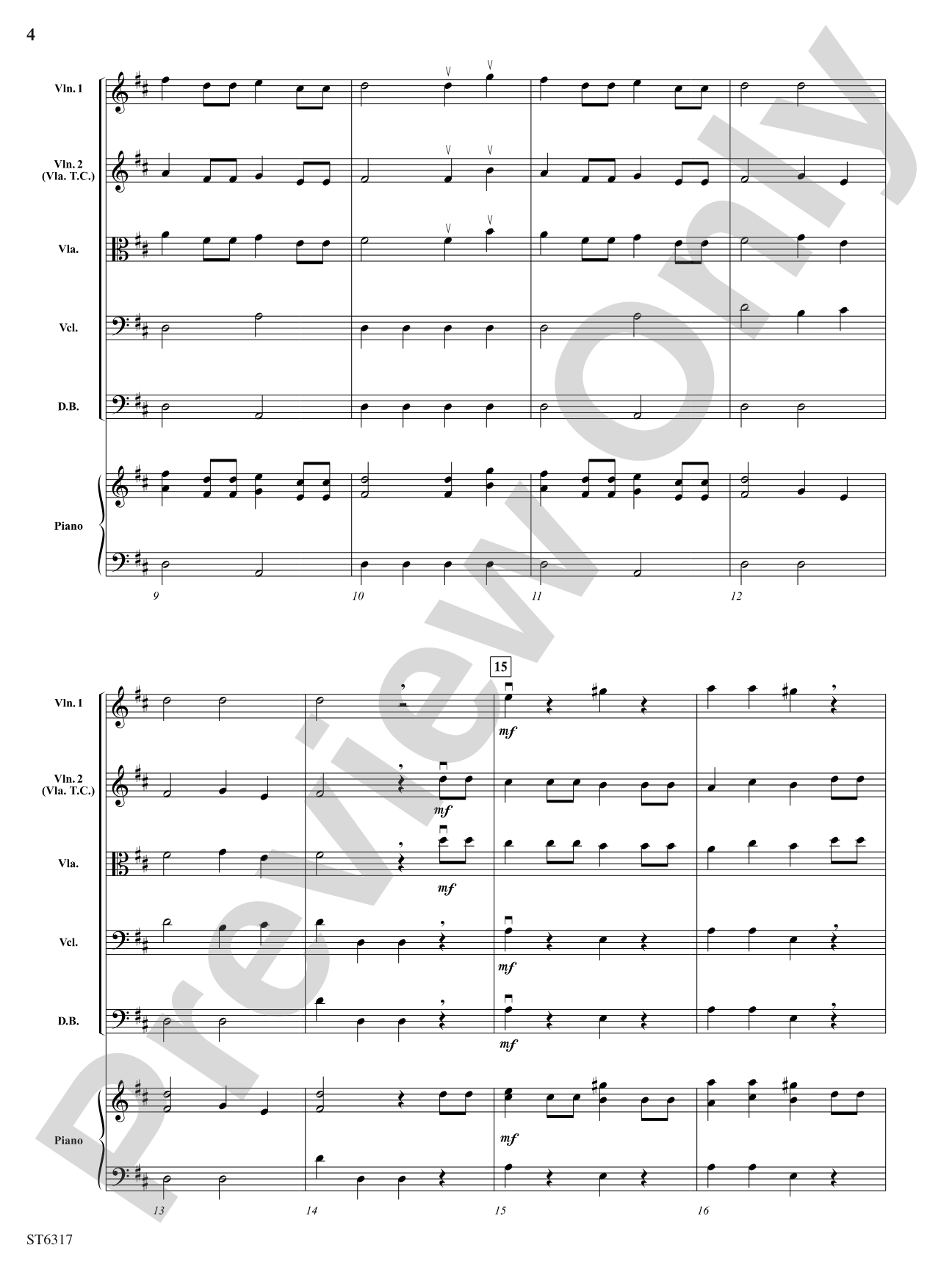
Whoops and hollers are optional in this festive work (and yes, they are also in the composer's original score!). Your ensemble works as a team to celebrate the happy couple with strong homophonic rhythms and predictable harmonies. At the same time, the first violins have the opportunity to significantly explore their E string tone and pitches in the familiar key of D Major. And since violin 2 doubles the viola, you may wish to have ALL of your violins work on their E strings!


Peasant Wedding March: Score isn't in MakeMusic Cloud just yet...but it could be. Let us know you'd like to see it, and you'll help shape what comes next. In the meantime, start a free trial and dive into thousands of interactive titles your students can play along with today.
Request This Title
Tell us you want it.
Start Your Free Trial
Explore everything that's ready to play right now.
Sample Audio
1
Audio File
--:--
0:00
0:00
Sample Video
No sample videos found.
Additional Details
Series:
FJH Beginning Strings
Publisher:
The FJH Music Company, Inc.
SKU:
98-DST6317S
More about this title
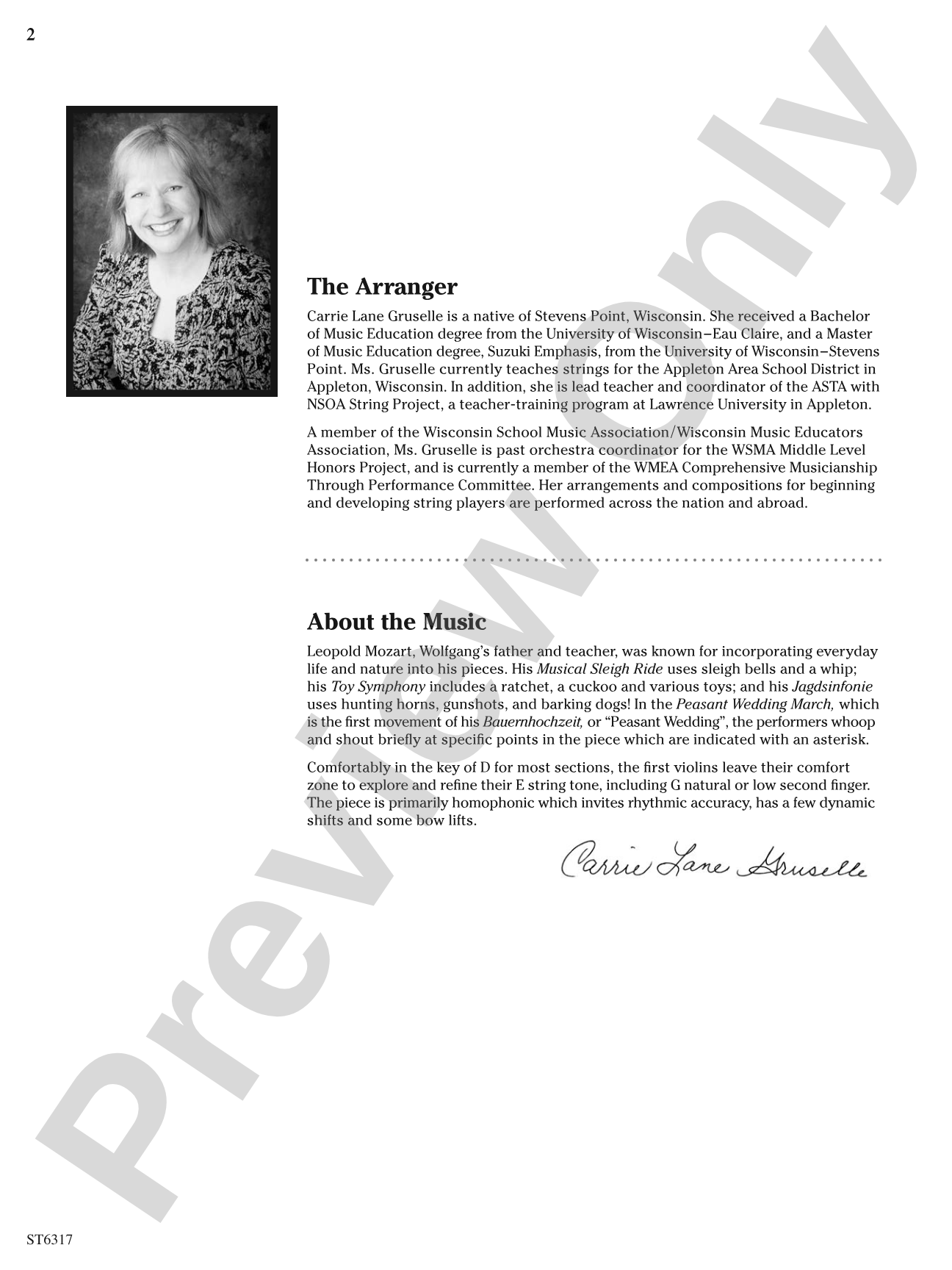
About the Composer: Leopold Mozart
Leopold Mozart (1719-1787) was a respected violinist, composer, and pedagogue who shaped the musical education of his era. Though often overshadowed by his son Wolfgang Amadeus, Leopold was a significant figure in his own right, composing over 100 works across multiple genres and earning a prominent position at the Salzburg court. His practical understanding of string instruments and student capabilities informed much of his output, making his works both musically engaging and genuinely teachable.
Why we love this
This arrangement captures the spirited character of Leopold Mozart's original while making it genuinely accessible to young orchestras. The homophonic texture keeps your ensemble locked together, the D Major key feels comfortable, and the optional whoops and hollers invite students to own the festive energy of the piece. Carrie Lane Gruselle's orchestration lets first violins shine on the E string without leaving the rest of the group behind.
What to expect
Bright, spirited, and celebratory. The homophonic writing creates a unified sound without demanding complex voice leading, while the D Major key and energetic rhythms evoke the village festivity in Leopold Mozart's title. This is music designed to make young players feel like they are part of something joyful and together.
Who it's for
Beginning string orchestras (Grade 1.5) will find this piece immediately satisfying to play and hear. It works equally well for conductors building ensemble cohesion and for students gaining confidence in basic orchestral reading and rhythmic coordination.
How to get the most out of it
- Establish a strong rhythmic pulse in rehearsal before worrying about refinement; these predictable harmonies sit best when the ensemble moves with confidence and unity.
- Work first violins on E string tone separately, using this piece as an opportunity to build brightness and resonance in an upper register they may not visit often.
- Lean into the festive character; if your students are comfortable with it, the optional whoops and hollers (present in Leopold Mozart's original score) add authentic charm and boost morale.
- Since violin 2 doubles viola, consider sectional work where both parts reinforce each other's intonation and rhythmic placement in the fuller texture.
How to use it
Program this as a high-energy opener or closer when you want the audience to feel the optimism of your ensemble. It pairs well alongside other accessible masterwork arrangements or with original contemporary pieces at a similar level, and it works beautifully as a spring concert selection when programming calls for something festive and substantial without excessive technical demands.
Skills your students will build
- Secure ensemble rhythmic unity in homophonic textures
- E string tone quality and pitch accuracy (first violins)
- Reading and playing in D Major
- Part independence and listening (violin 2 and viola doubling)
- Responding to stylistic cues in arrangement (articulation, dynamics, character)