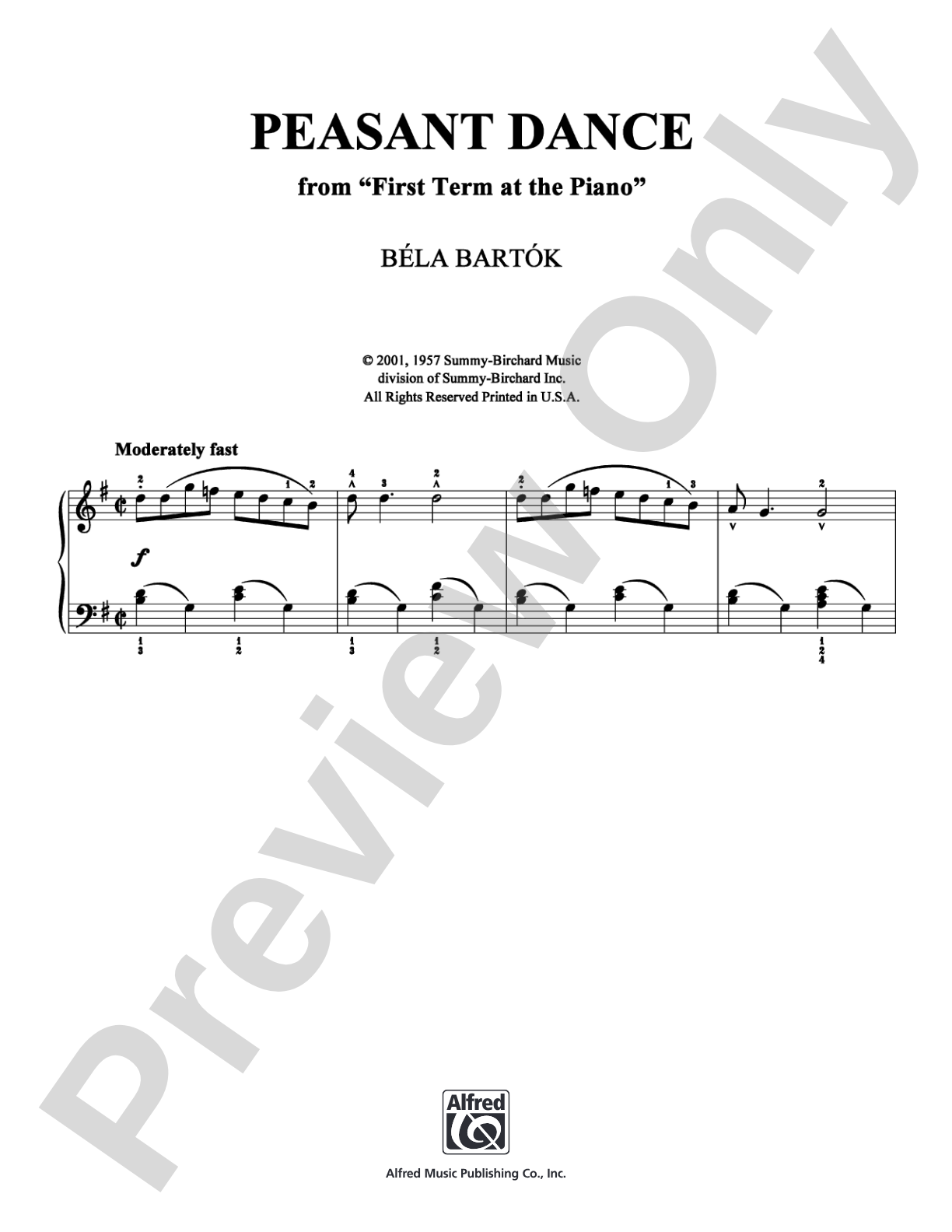
Peasant Dance: Piano Digital Sheet Music

Peasant Dance: Piano Digital Sheet Music

Béla Bartók

Item: 00-PS-0000210

Digital Download
$3.99
Description

Peasant Dance: Piano Digital Sheet Music isn't in MakeMusic Cloud just yet...but it could be. Let us know you'd like to see it, and you'll help shape what comes next. In the meantime, start a free trial and dive into thousands of interactive titles your students can play along with today.

Sample Audio
No sample audio found.
Sample Video
Additional Details
SKU: 00-PS-0000210

More about this title

About the Composer: Béla Bartók

Béla Bartók (1881, 1945) was a Hungarian composer and pianist who fundamentally reshaped twentieth-century classical music by synthesizing folk traditions with modernist techniques. He spent decades collecting and analyzing peasant songs across Eastern Europe, and this deep engagement with authentic folk material became the backbone of his compositional voice. His work proved that rigorous scholarship and artistic innovation were not opposing forces; they could strengthen each other.

Bartók's influence on music education remains substantial. Teachers value his pieces because they introduce students to twentieth-century idioms without abandoning accessibility. His writing respects the performer while demanding genuine musicianship and cultural curiosity.

Why we love this

Peasant Dance captures the raw energy and irregular rhythmic vitality that define Bartók's approach to folk material. The piece offers pianists an accessible entry point into his compositional language, with authentic folk idioms and driving rhythmic momentum that feel immediate and rewarding to perform.

What to expect

Peasant Dance pulses with the straightforward joy and physical directness of a village celebration. The melody carries the character of an authentic folk tune, sturdy and memorable, while the accompaniment propels the piece forward with rhythmic insistence that feels both modern and rooted in traditional percussion-driven ensembles.

Who it's for

Intermediate pianists seeking repertoire that builds comfort with twentieth-century harmonic language and folk-inflected rhythmic thinking. This piece works well for students ready to move beyond Romantic idioms and explore how composers engaged with traditional music.

How to get the most out of it

  • Emphasize the rhythmic drive of the folk melody rather than smoothing phrase lines; Bartók's dance pieces thrive on accent and articulation that echo percussion-based folk ensembles.
  • Differentiate the hand roles clearly: the folk tune should emerge as the primary voice while accompaniment remains rhythmically alive but subordinate.
  • Observe all dynamic markings carefully; Bartók uses sudden shifts in volume to shape the architecture of short forms, not just to add drama.

How to use it

Program this alongside other twentieth-century works that draw from folk sources (Stravinsky, Kodály) to frame a thematic recital exploring how composers of the era engaged with traditional music. It also provides an excellent bridge piece between Romantic solo works and more complex contemporary repertoire in a student recital.

Skills your students will build

  • Reading and performing folk-derived melodies with authentic character and rhythmic integrity
  • Distinguishing melodic voice from accompaniment in twentieth-century textures
  • Interpreting modal and pentatonic harmonic language
  • Executing rhythmic precision in dance-based forms
  • Controlling tone color to reflect folk instrument timbres

You May Also Like