
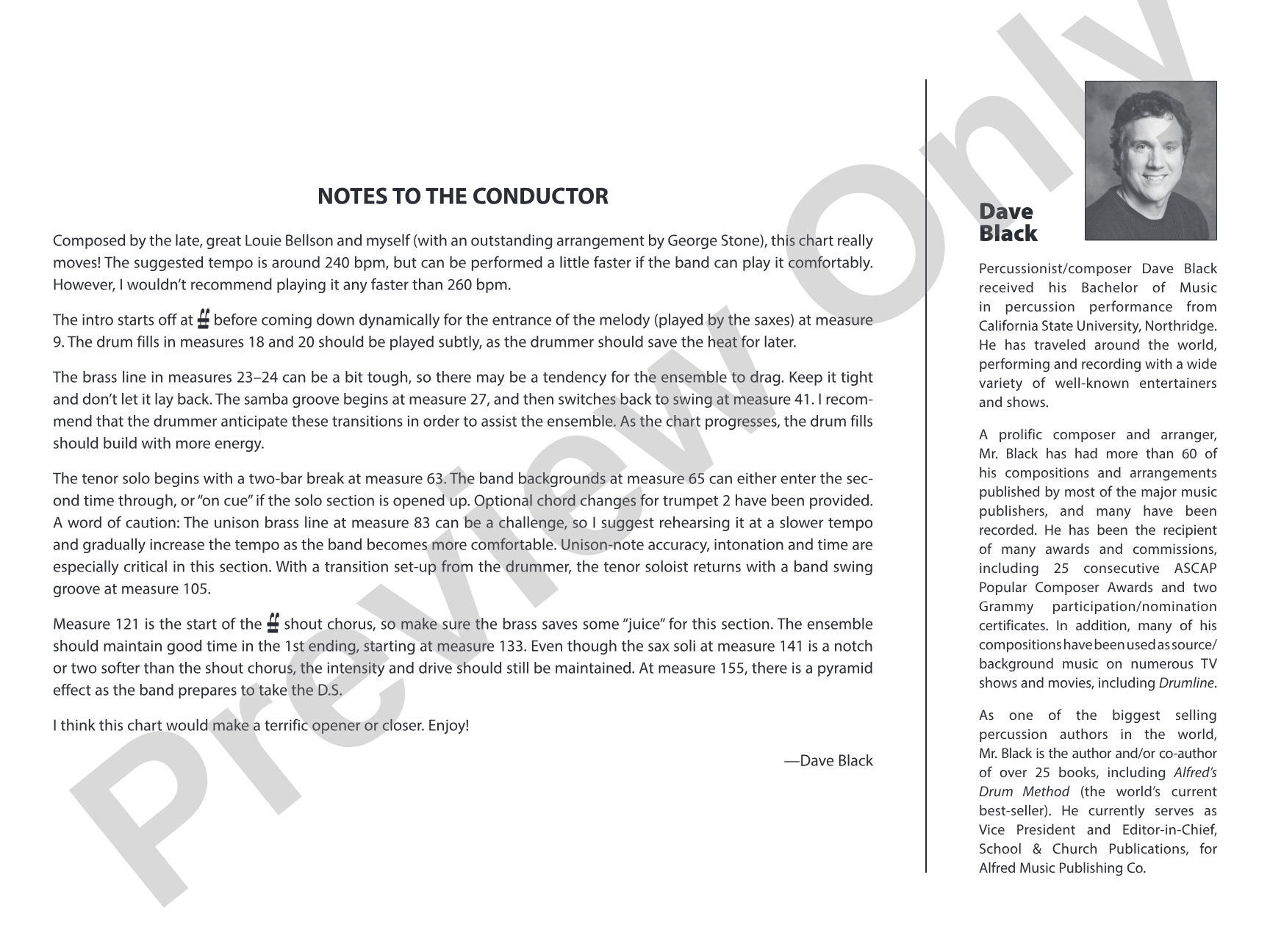
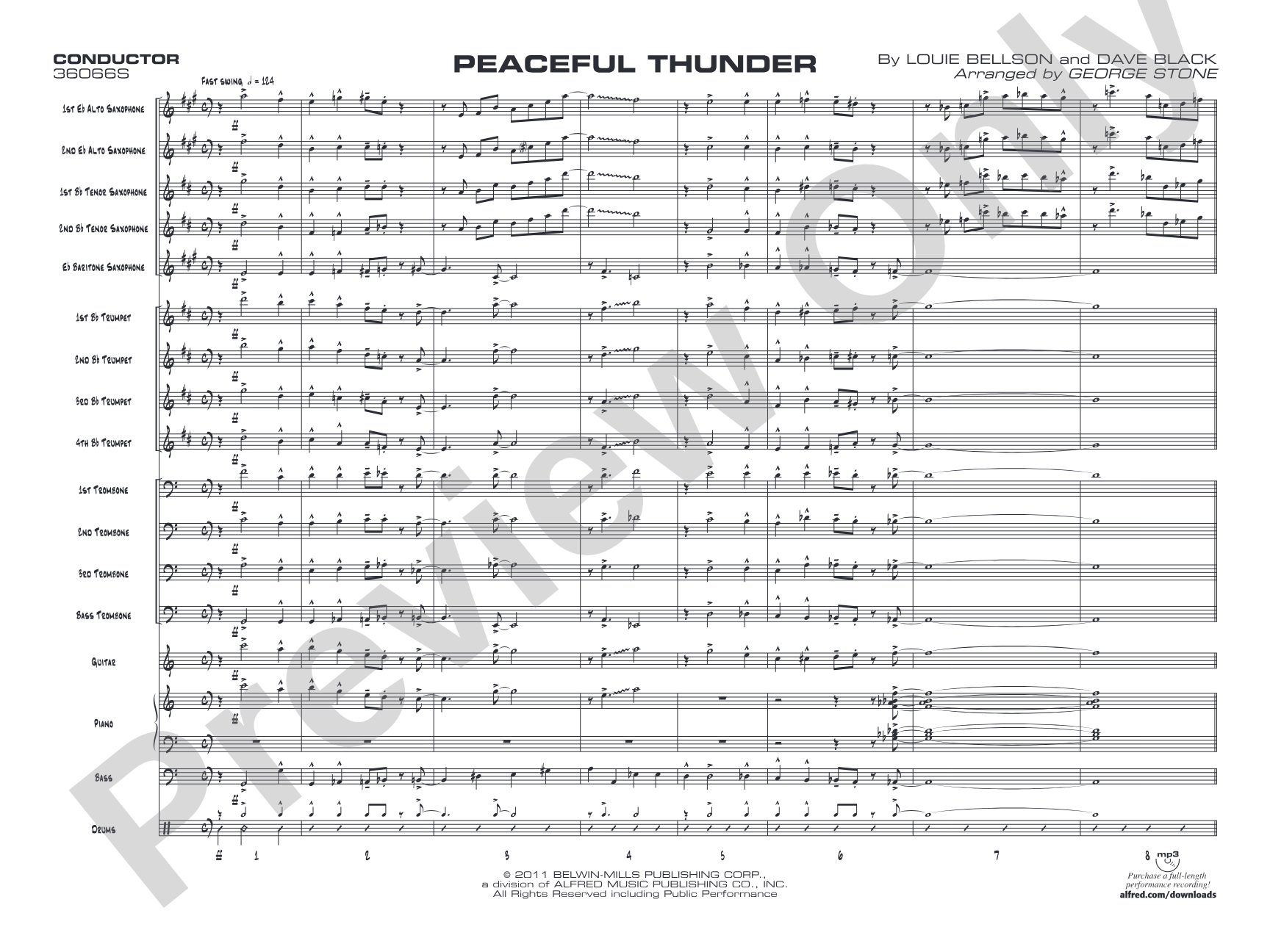
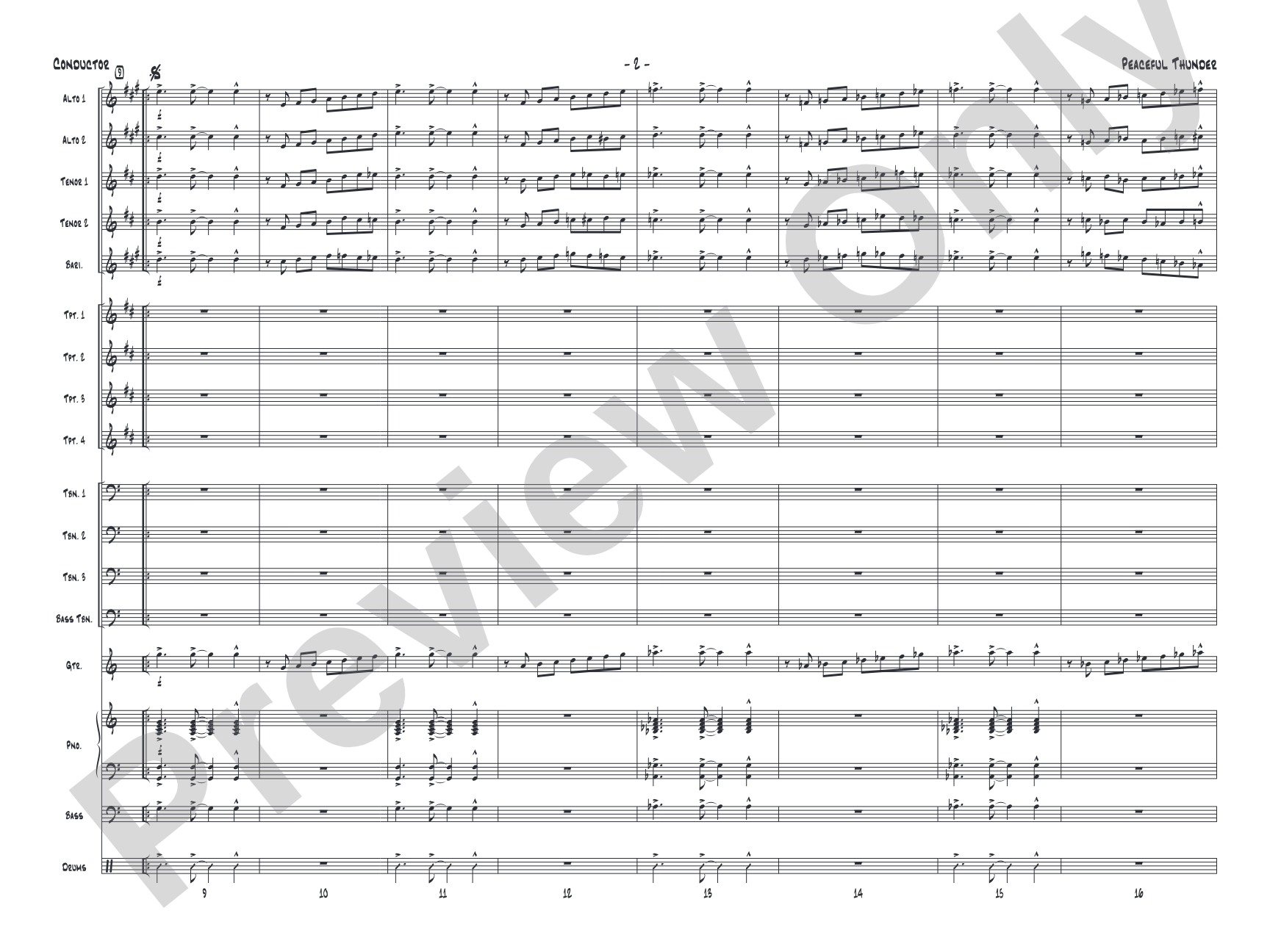
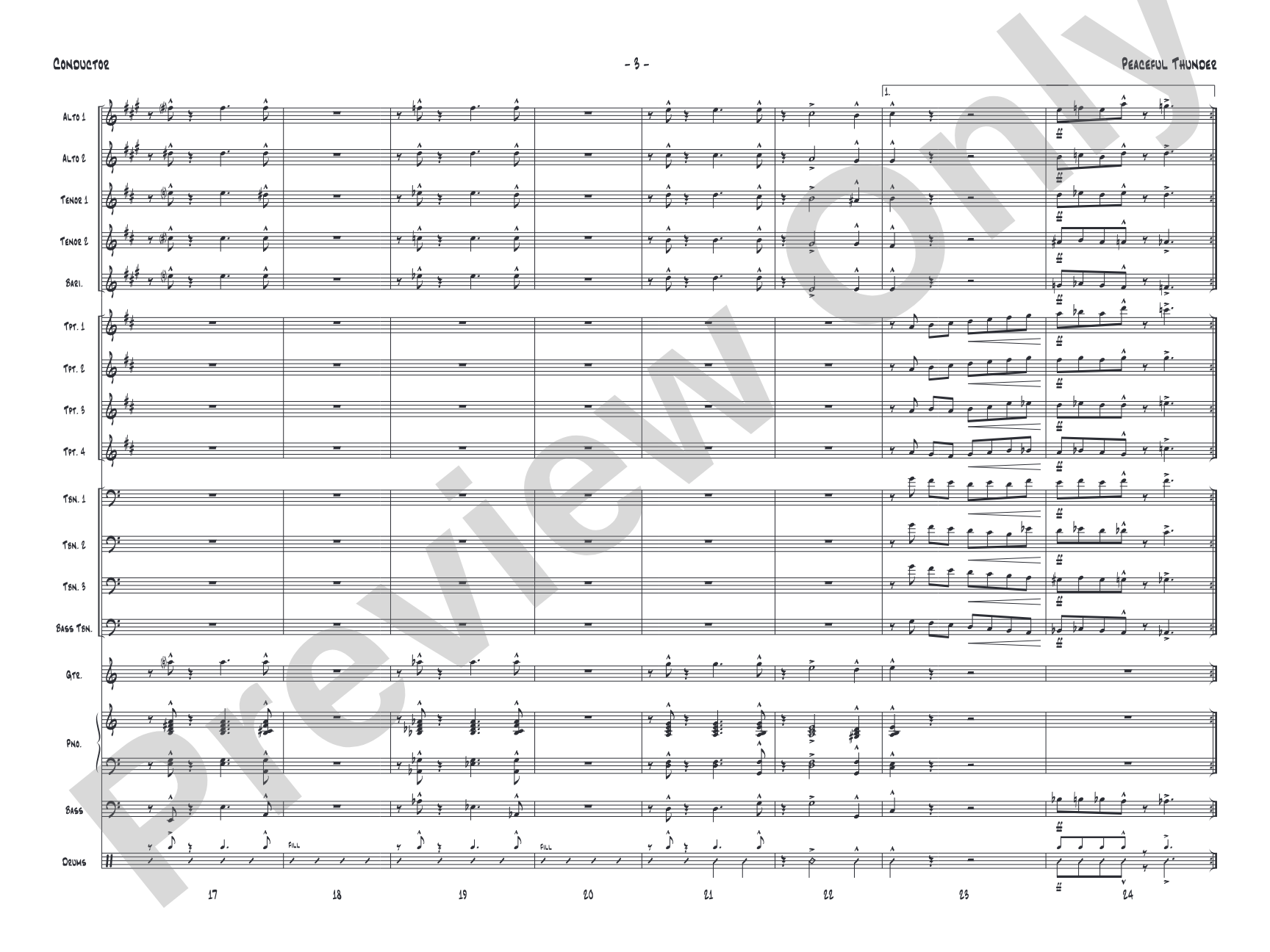
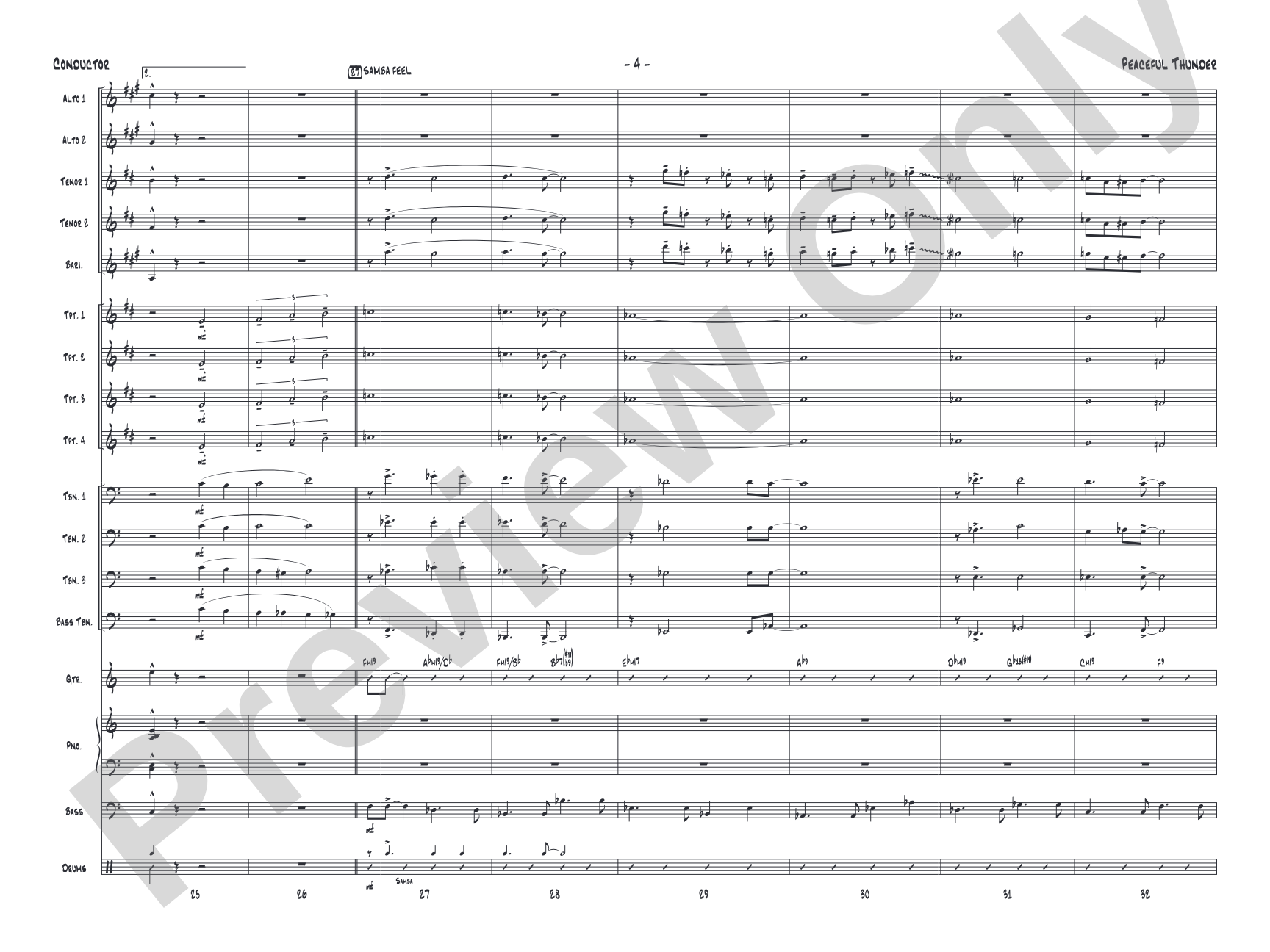
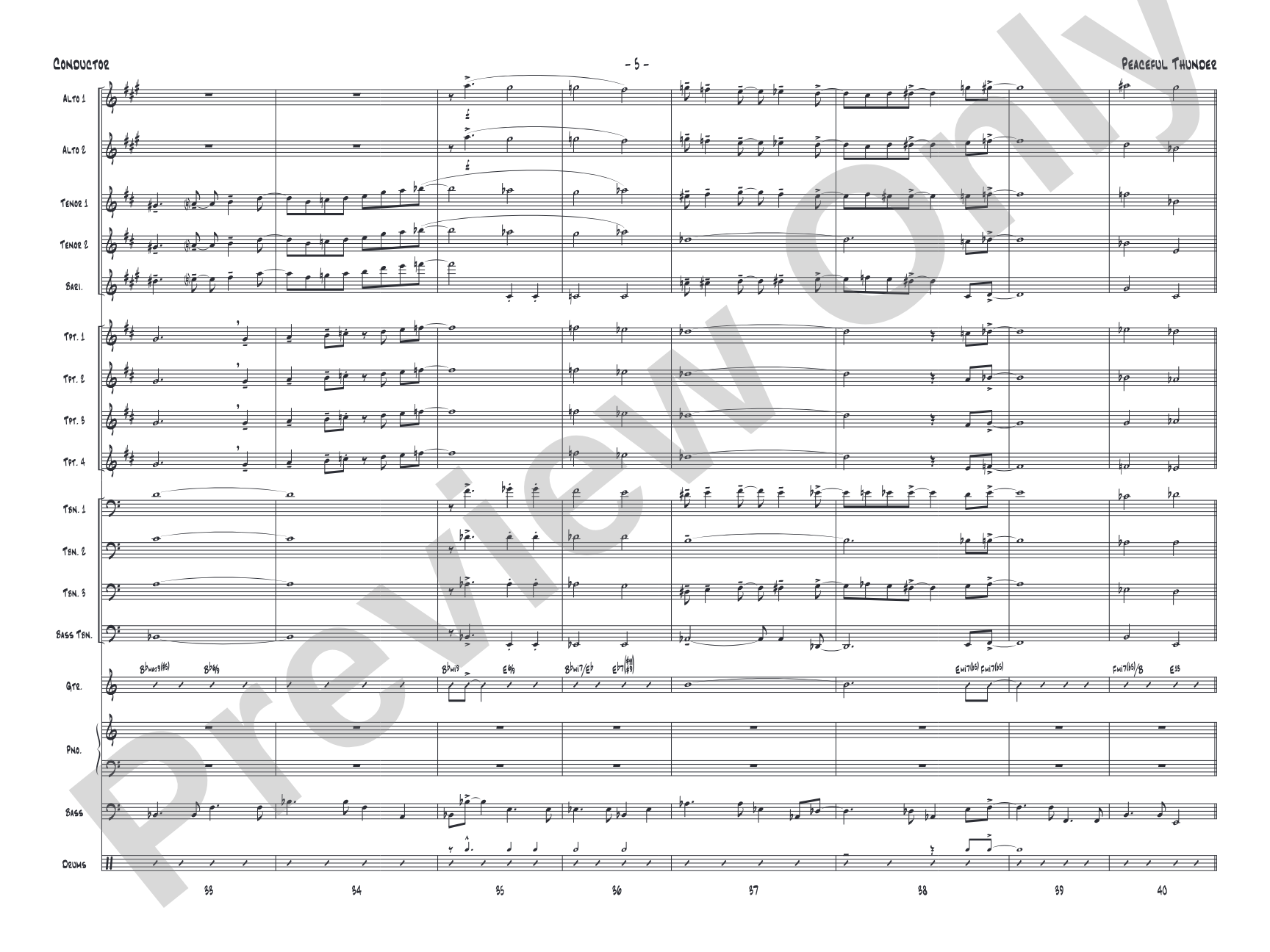
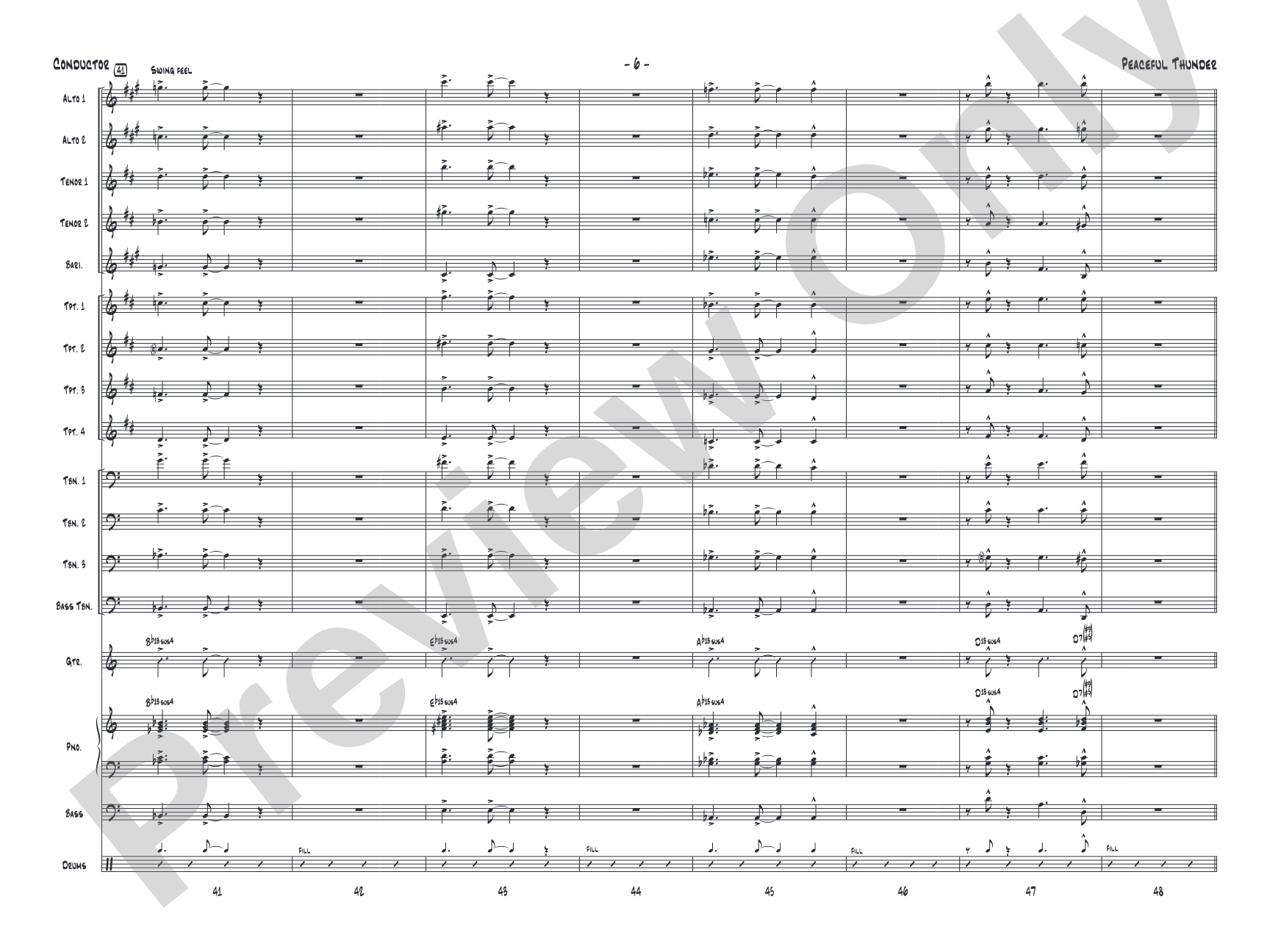
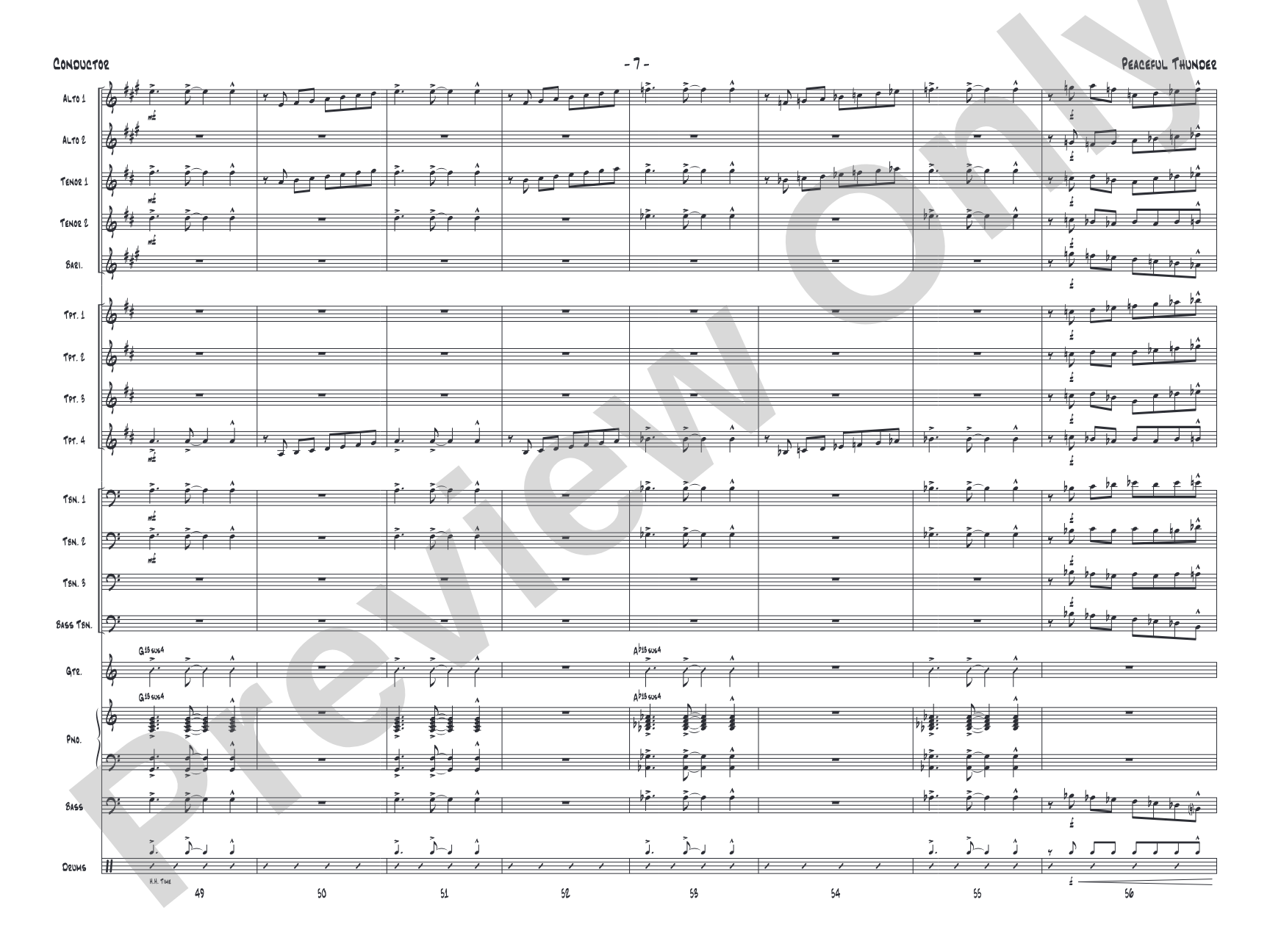
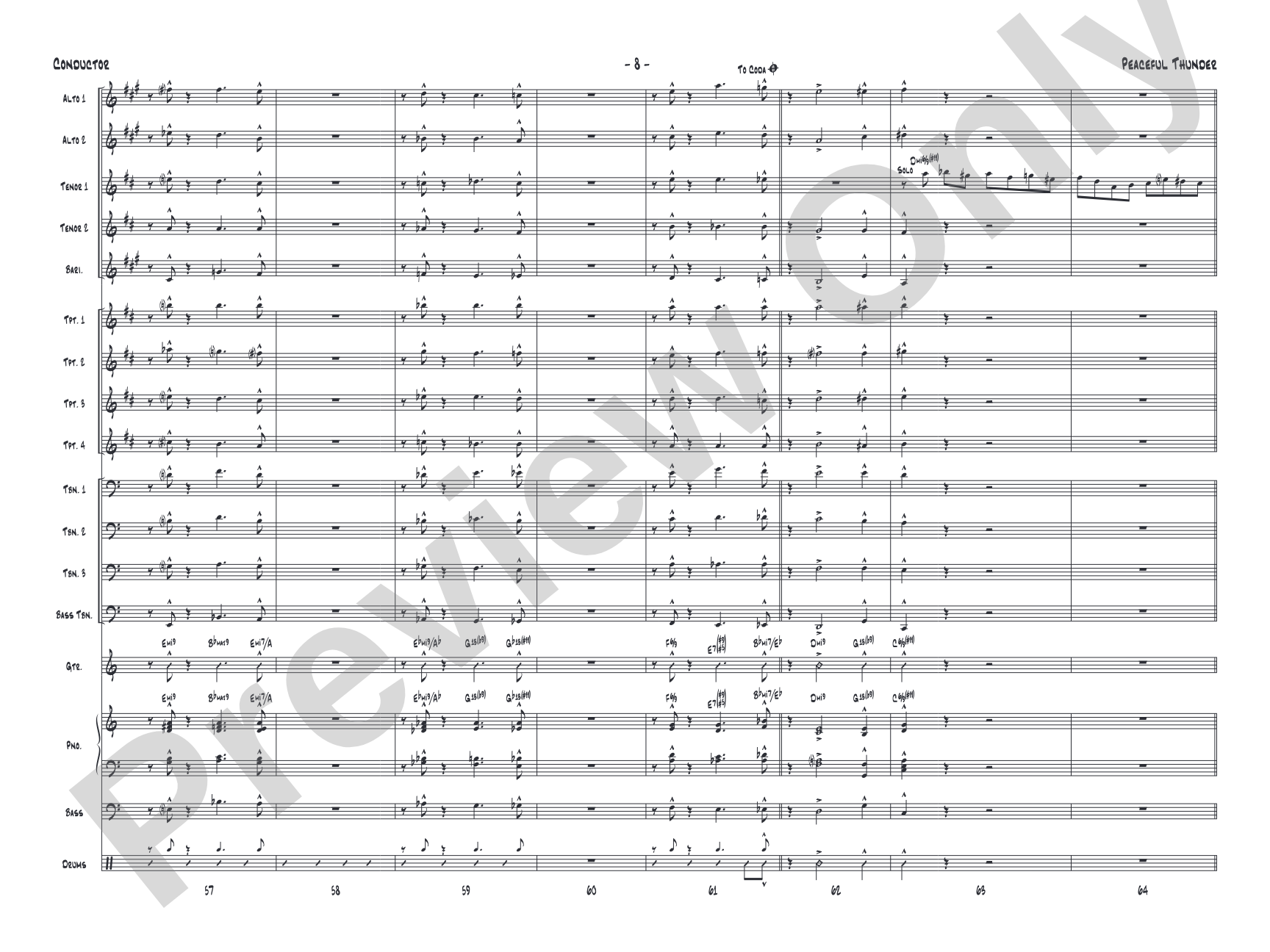
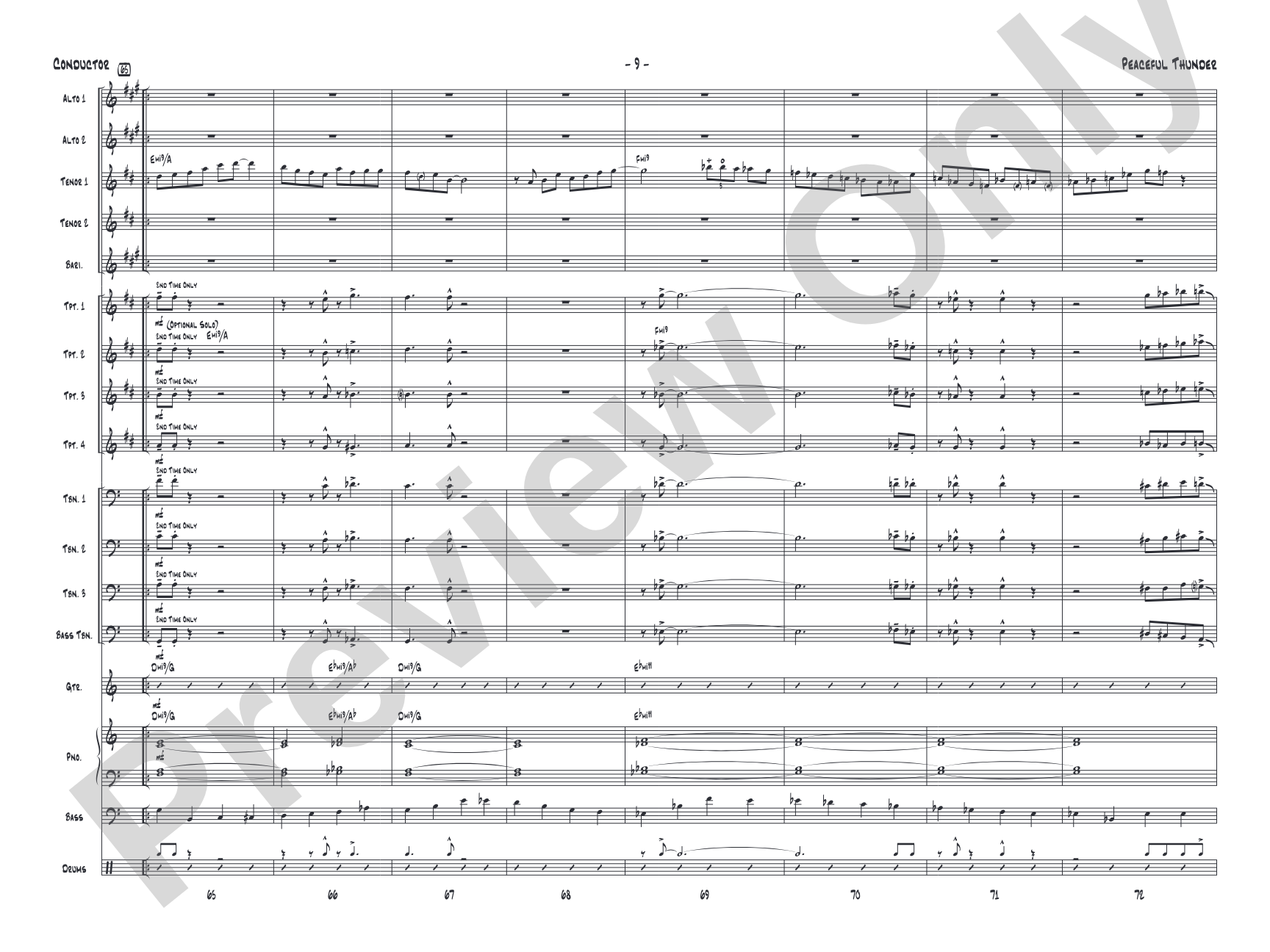
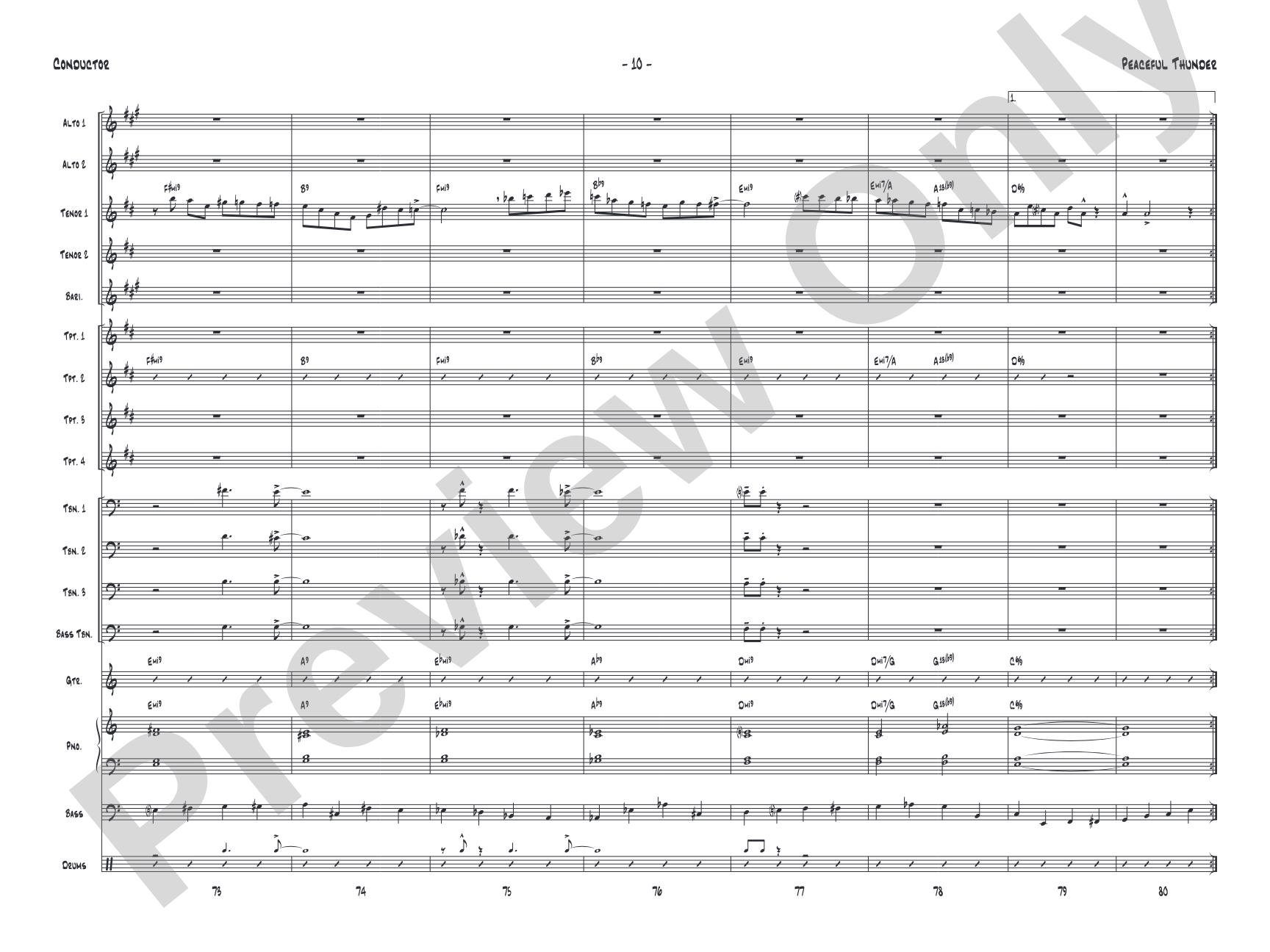
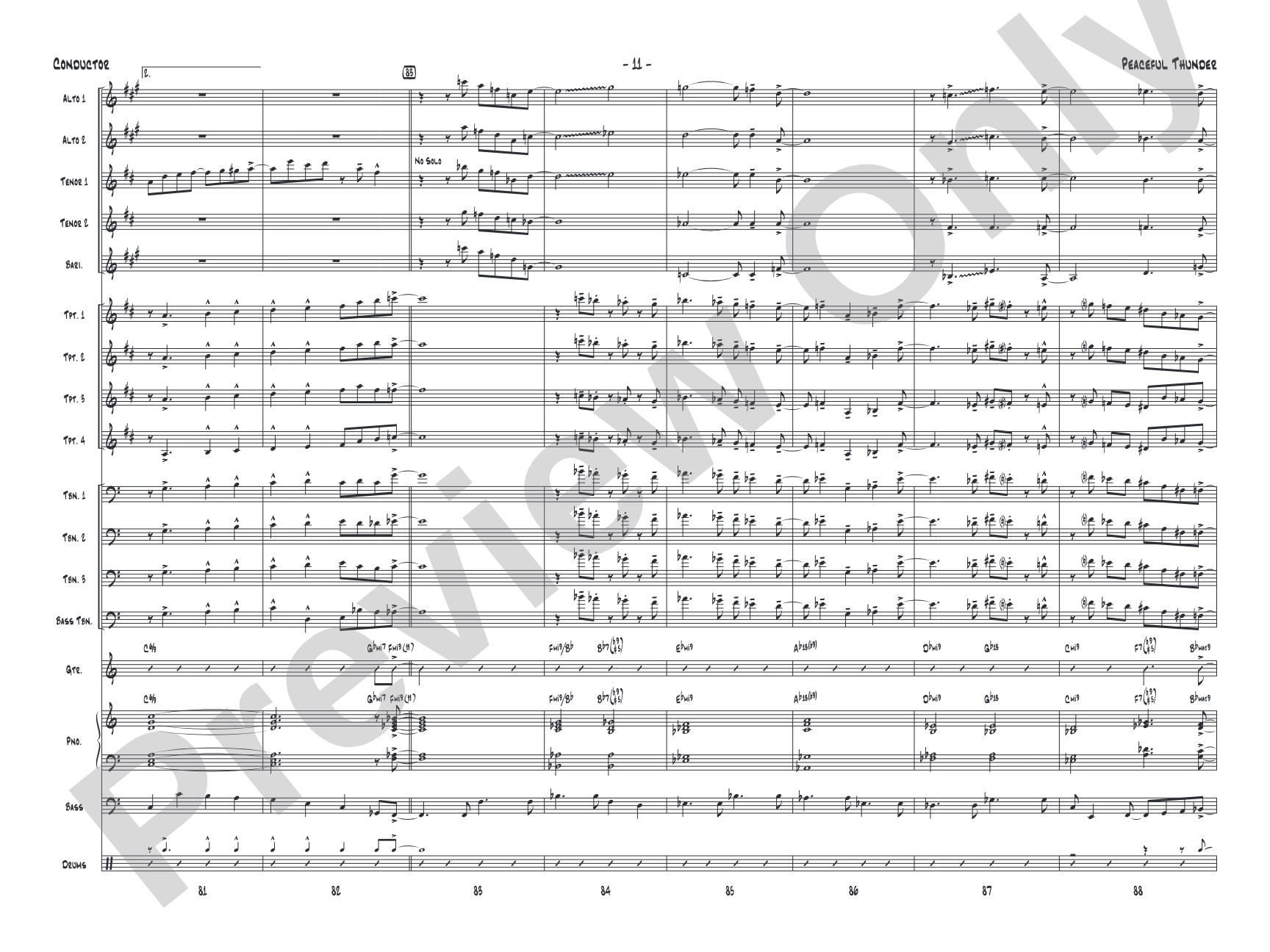
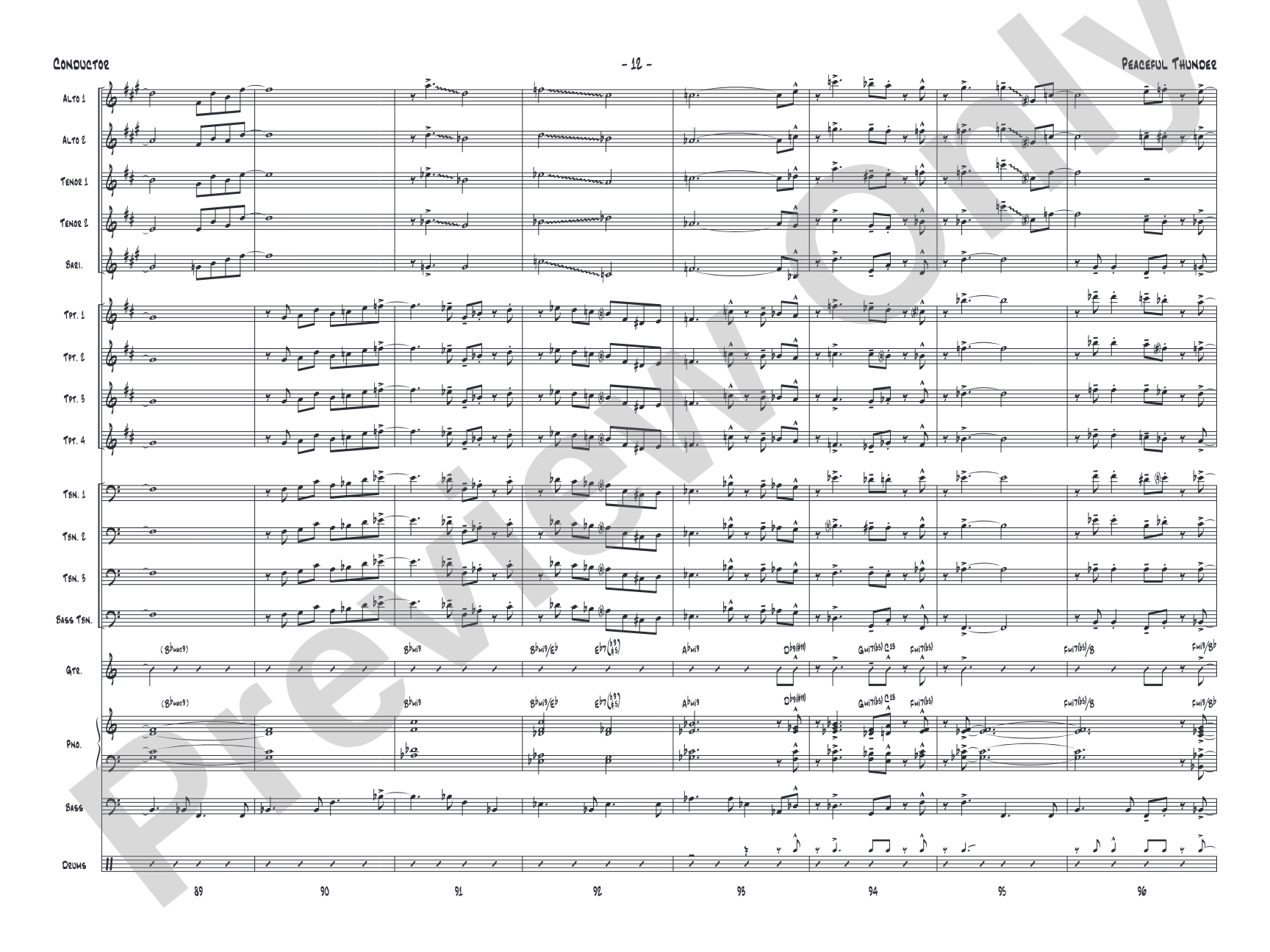
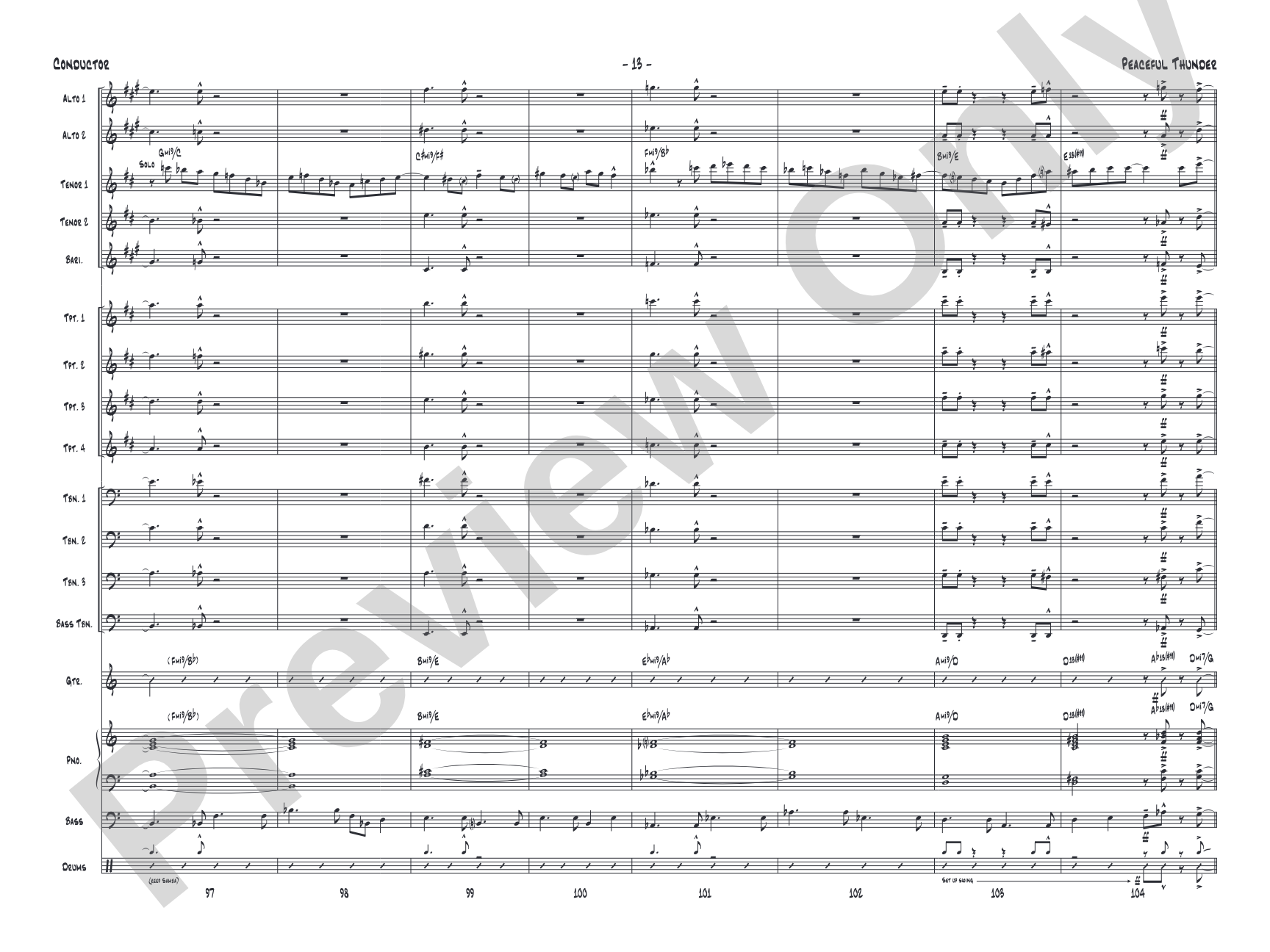
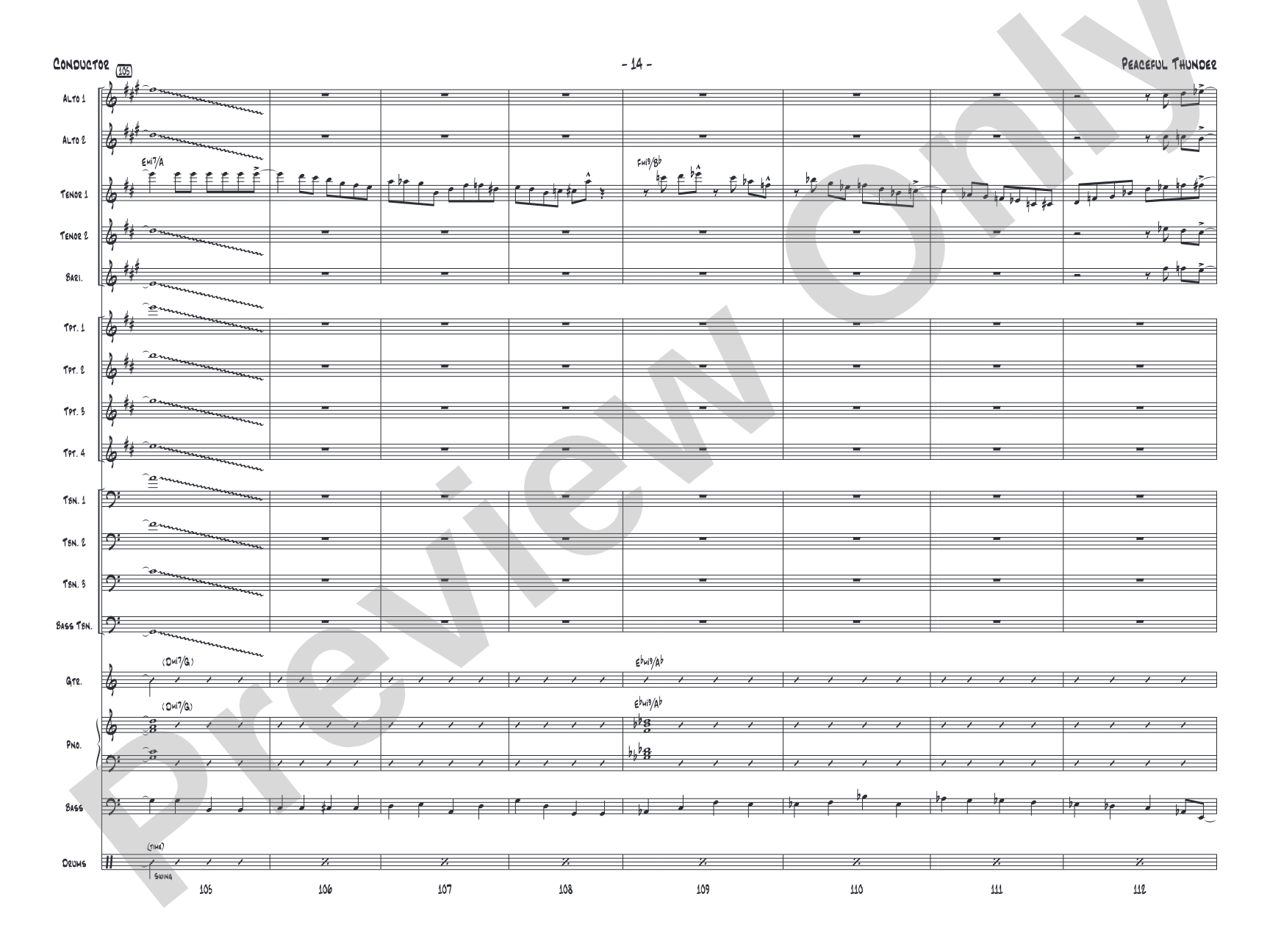
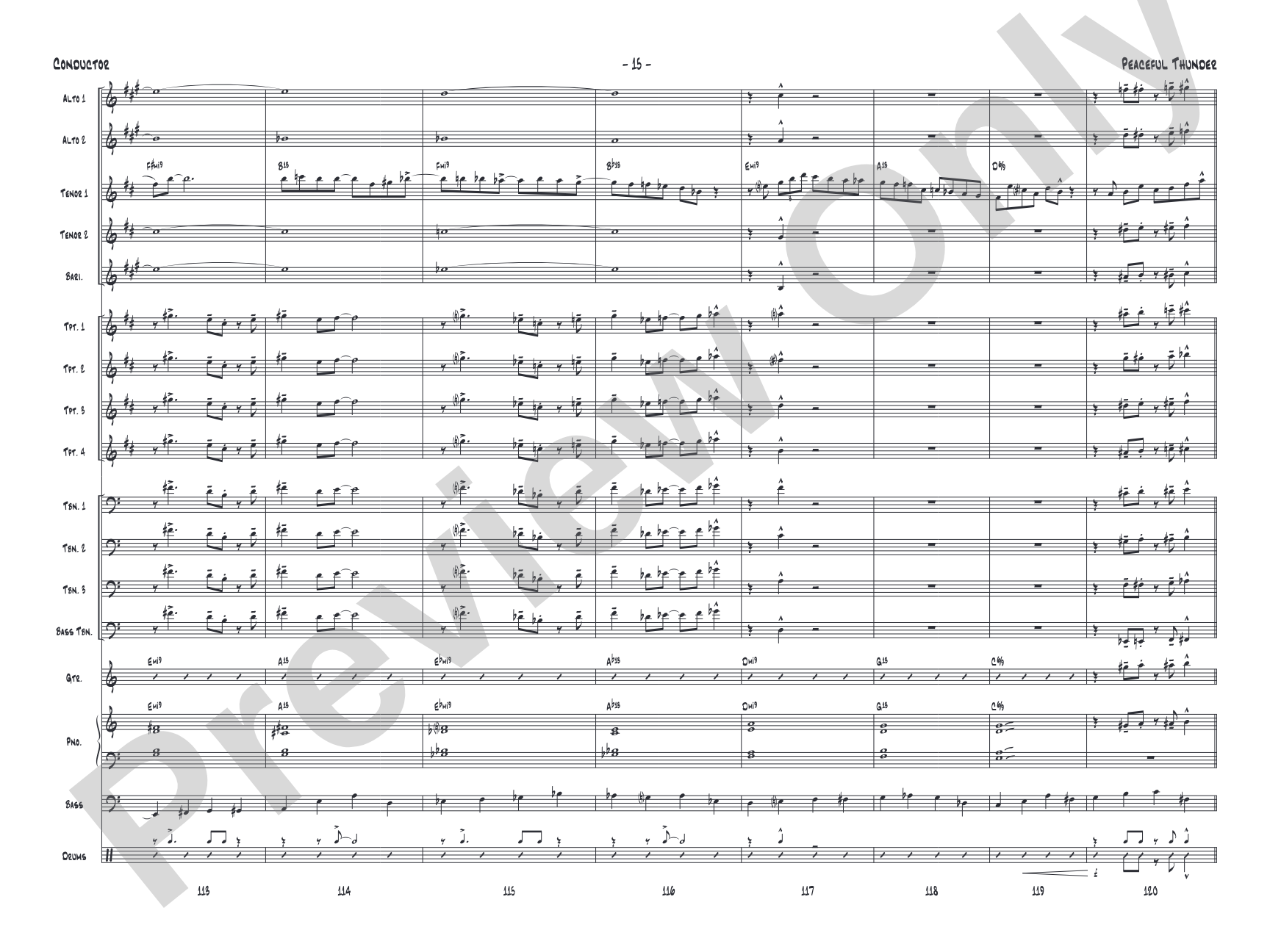
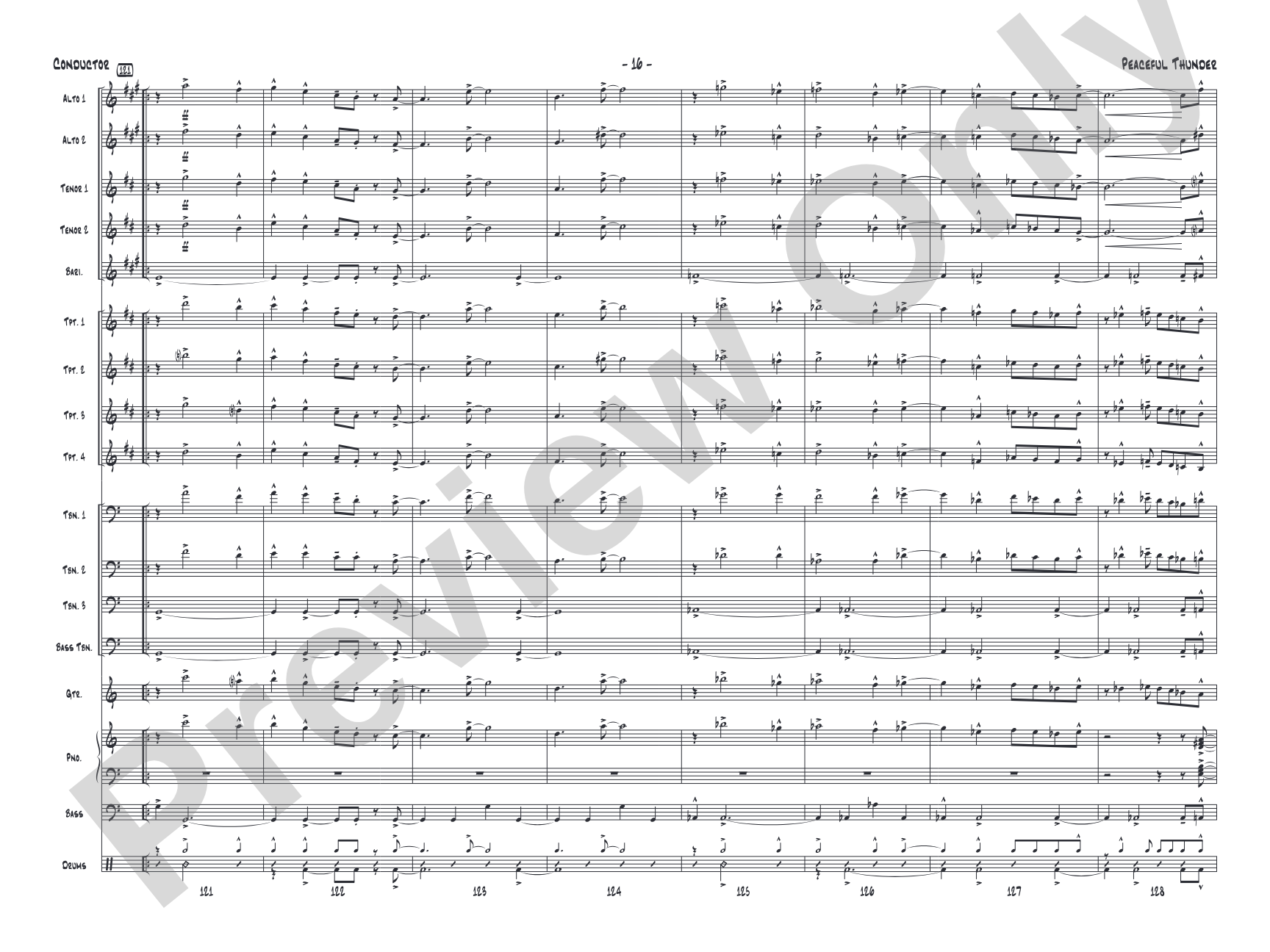
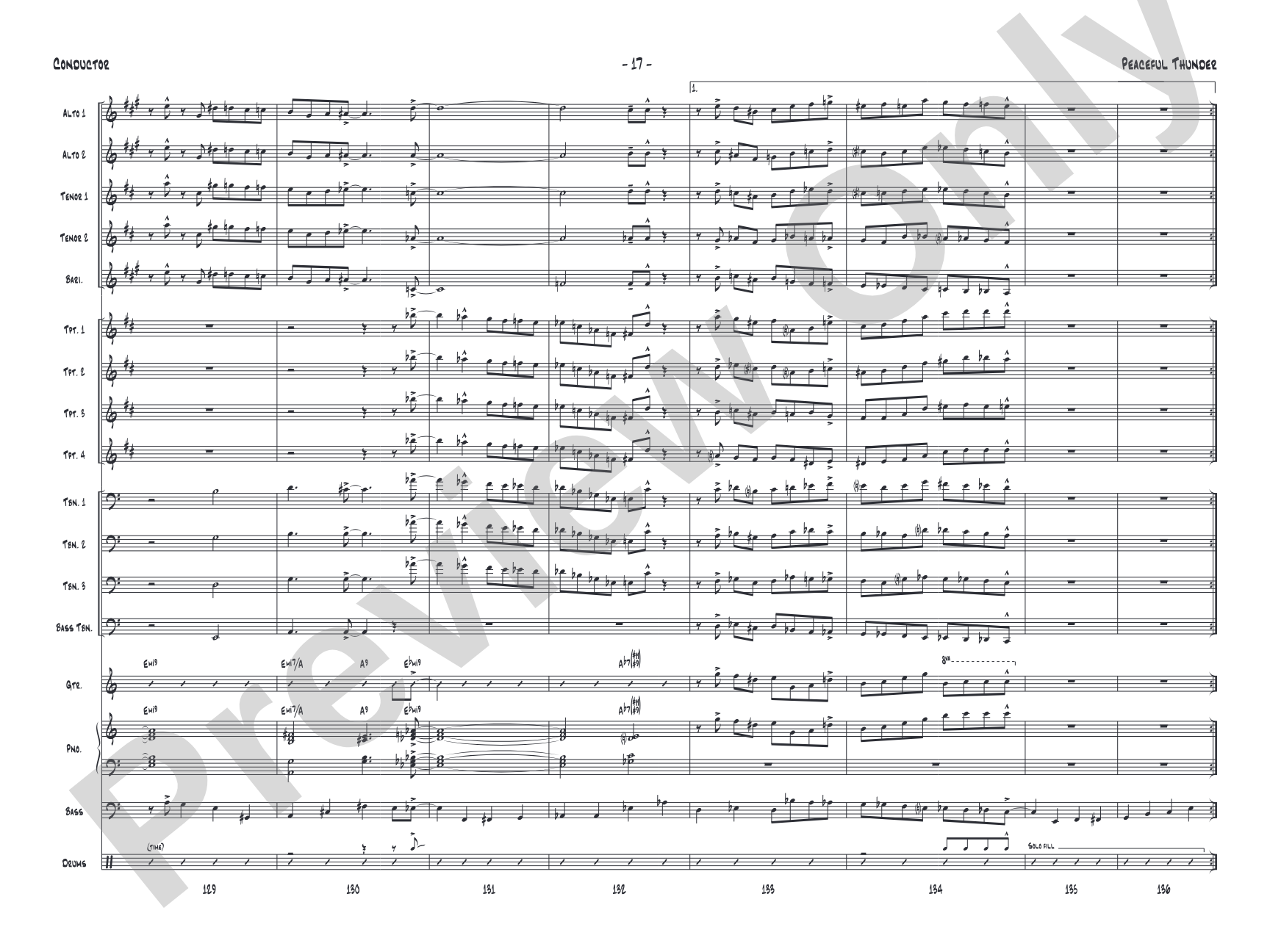
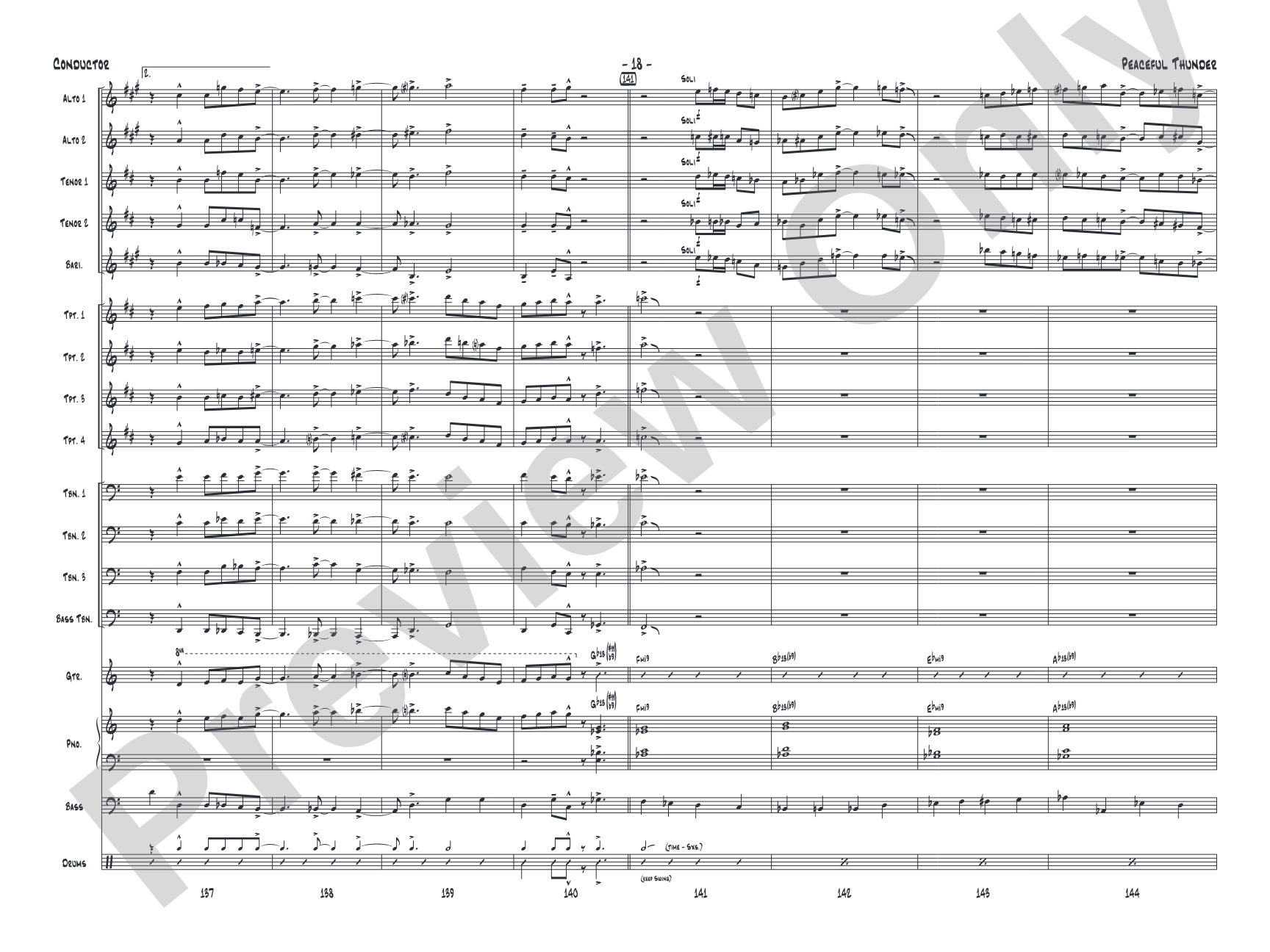
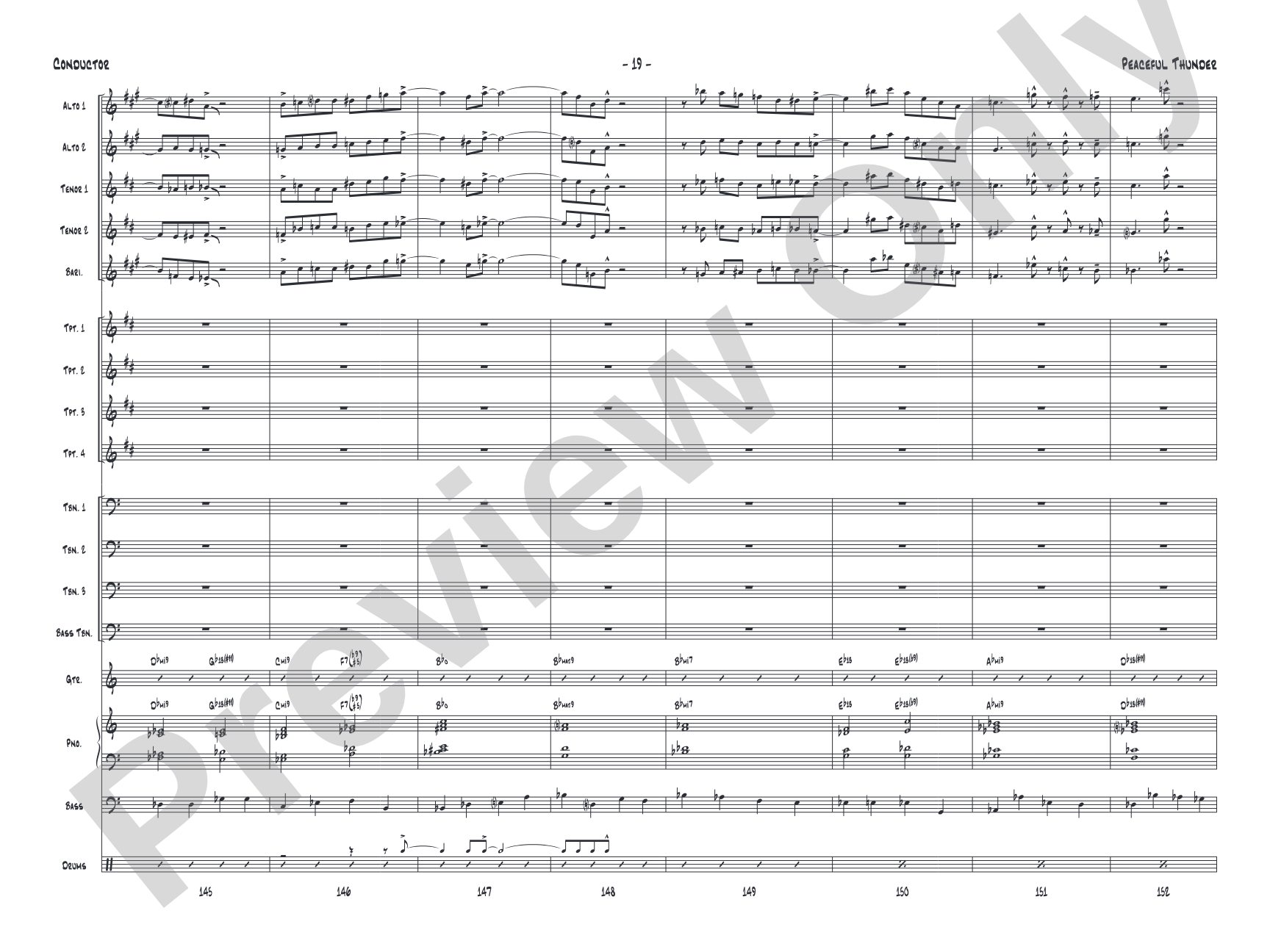
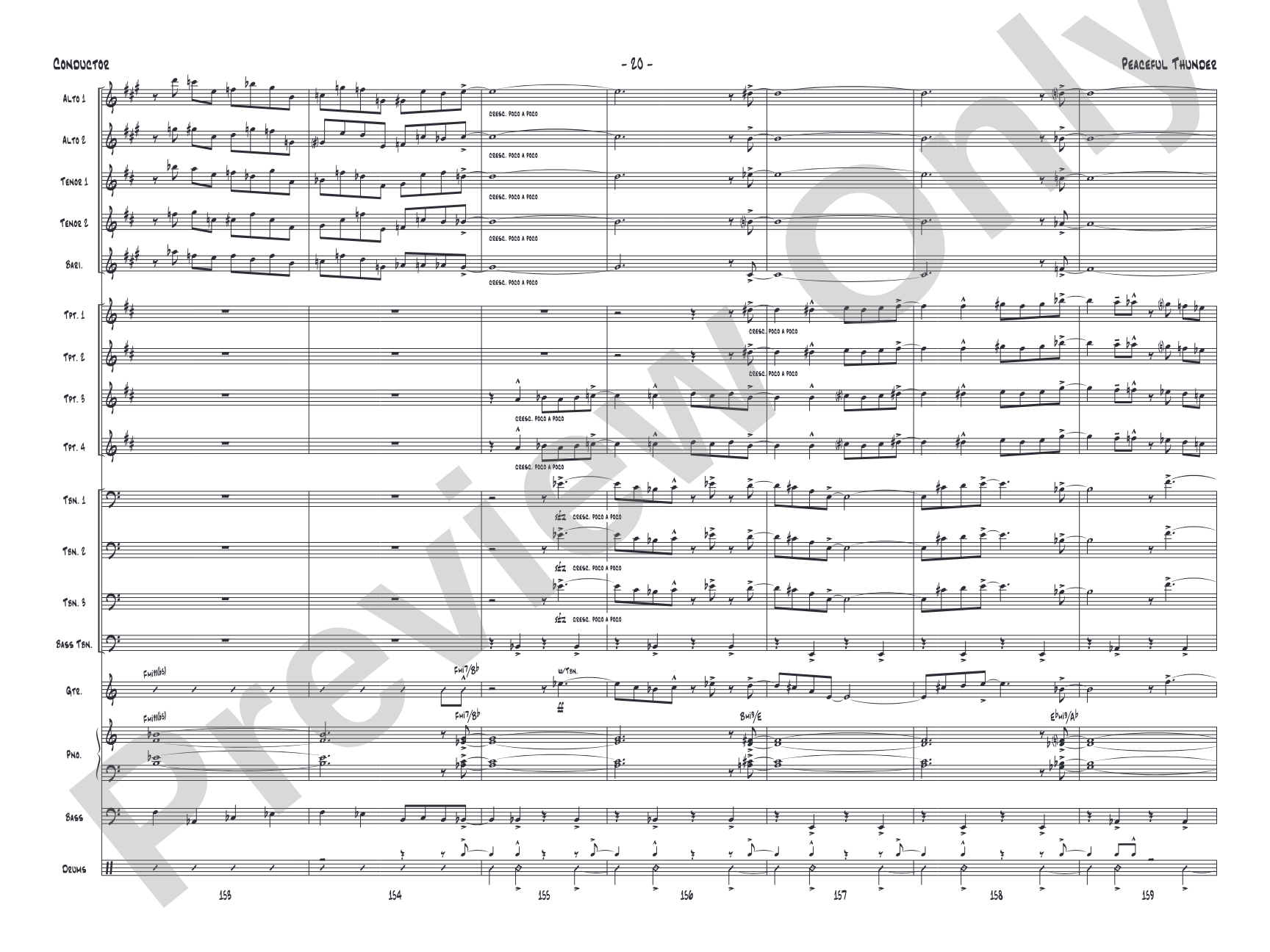
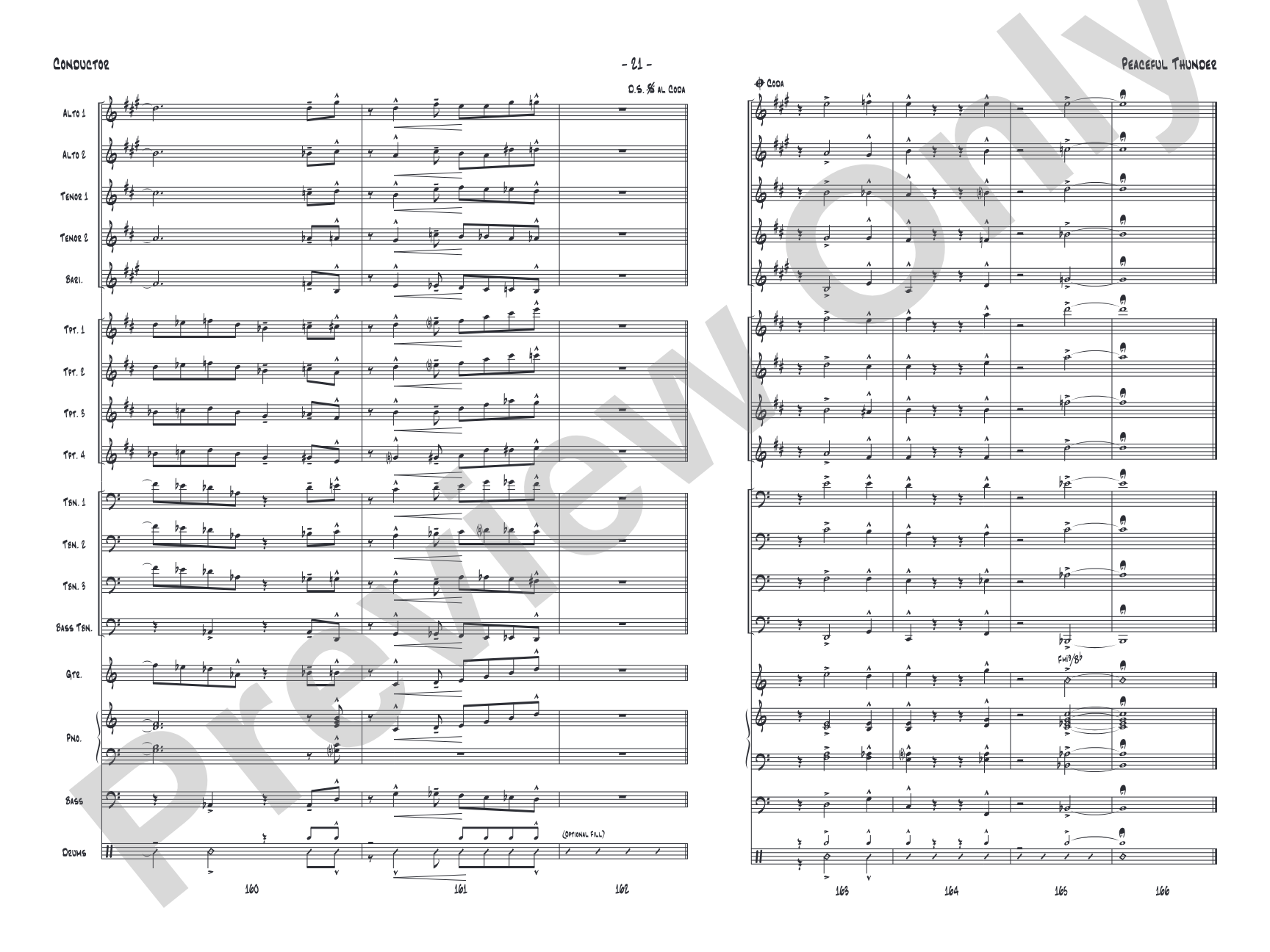

Peaceful Thunder: Jazz Ensemble Conductor Score & Parts
By Louie Bellson and Dave Black / arr. George Stone
Grade: 5 (Advanced / Difficult)
Item: 00-PK-0006958

$55.00
Pickup currently not available
Buy Extra Parts (Digital PDF Download)
Parts Added to Cart!
Related Items
Peaceful Thunder: Jazz Ensemble Conductor Score |
$10.00
|
View |
Description
Challenge your group with this swinger including a samba bridge! Features include solo space for tenor and/or optional trumpet, some great drum fill space, a nice sax soli, and lead trumpet to high D with one high E. This is a super concert opener or closer! This title is available in MakeMusic Cloud.


Don't just read it, hear it, play along with it, and watch your students grow with it. In MakeMusic Cloud, Peaceful Thunder: Jazz Ensemble Conductor Score & Parts comes alive with professional accompaniment, adjustable tempo, and built-in practice tools that turn solo practice into real progress.
Open in the Player
Jump straight in and assign it today.
Start Your Free Trial
Open this title and explore the full library in minutes.
Sample Audio
1
Audio File
--:--
0:00
0:00
Sample Video
No sample videos found.
Additional Details
Series:
Premier Jazz Series
Publisher:
Alfred Music
Page Count:
108
SKU:
00-PK-0006958
More about this title
About the Composer: Louie Bellson
Louie Bellson was one of jazz's most recorded and versatile drummers, with a career spanning seven decades and collaborations ranging from Duke Ellington to Ella Fitzgerald to Count Basie. Beyond his drumming prowess, Bellson composed and arranged extensively for big bands and jazz ensembles, bringing a sophisticated understanding of rhythm section dynamics and ensemble balance to every project he touched.
Bellson's compositional voice reflects his deep knowledge of what works on the bandstand. His pieces balance accessibility with genuine musical substance, and his arrangements leave room for soloists to shine while maintaining structural integrity. For student ensembles, his work offers a masterclass in how jazz writing can be both challenging and rewarding.
Why we love this
Peaceful Thunder reads as a complete concert experience in a single piece: the opening captures that "hush before the storm" energy, the samba bridge provides genuine stylistic contrast without derailing ensemble cohesion, and the closing gives you multiple options for how to land it. Bellson and Black have written parts that let your rhythm section and horn section shine individually while never letting the ensemble lose focus. This is repertoire that sounds polished after moderate preparation but rewards deeper rehearsal investment.
What to expect
The piece opens with a contemplative, almost held-breath quality that gradually gathers momentum into a driving swing. The samba bridge brings warmth and infectious rhythmic energy before the music returns to its original character, transformed by what came before. The overall arc feels both introspective and celebratory, making it equally effective as a concert opener or finale.
Who it's for
Advanced jazz ensembles ready for Grade 5 demands including sustained high register writing, stylistic flexibility, and section independence. This works equally well for high school jazz bands with strong fundamentals and college ensembles looking for strong concert programming.
How to get the most out of it
- Establish the samba feel in the bridge with precision from your rhythm section; the clarity of the piano's comping and the bassist's pocket will determine whether the ensemble locks or feels loose.
- Give the tenor soloist and optional trumpet soloist separate rehearsal time to develop their voices before combining with the full ensemble.
- Balance the lead trumpet's high register passages by checking your lead and second trumpet blend during sectionals; players can tense up reaching for D and E, which clouds the tone.
- Use the drum fill space as a structural anchor rather than a free-for-all; mark clear cues with the ensemble so the fill breathes with purpose rather than feeling separated from the band.
How to use it
Schedule this as your opening number if you want to establish artistic intent and ensemble maturity right away, or save it for your closer when the band has warmed into the set and can bring full confidence to the high register demands. The stylistic contrast with the samba section makes it a strong anchor for a program mixing straight-ahead jazz with Latin influences.
Skills your students will build
- Swing feel and articulation consistency across section changes
- Samba rhythm feel and cross-cultural jazz adaptation
- Lead and second trumpet blend in the upper register
- Solo development and ensemble interaction
- Reading drum fills and responding to percussion cues
- Balancing dynamic contrast between lyrical and driving sections