
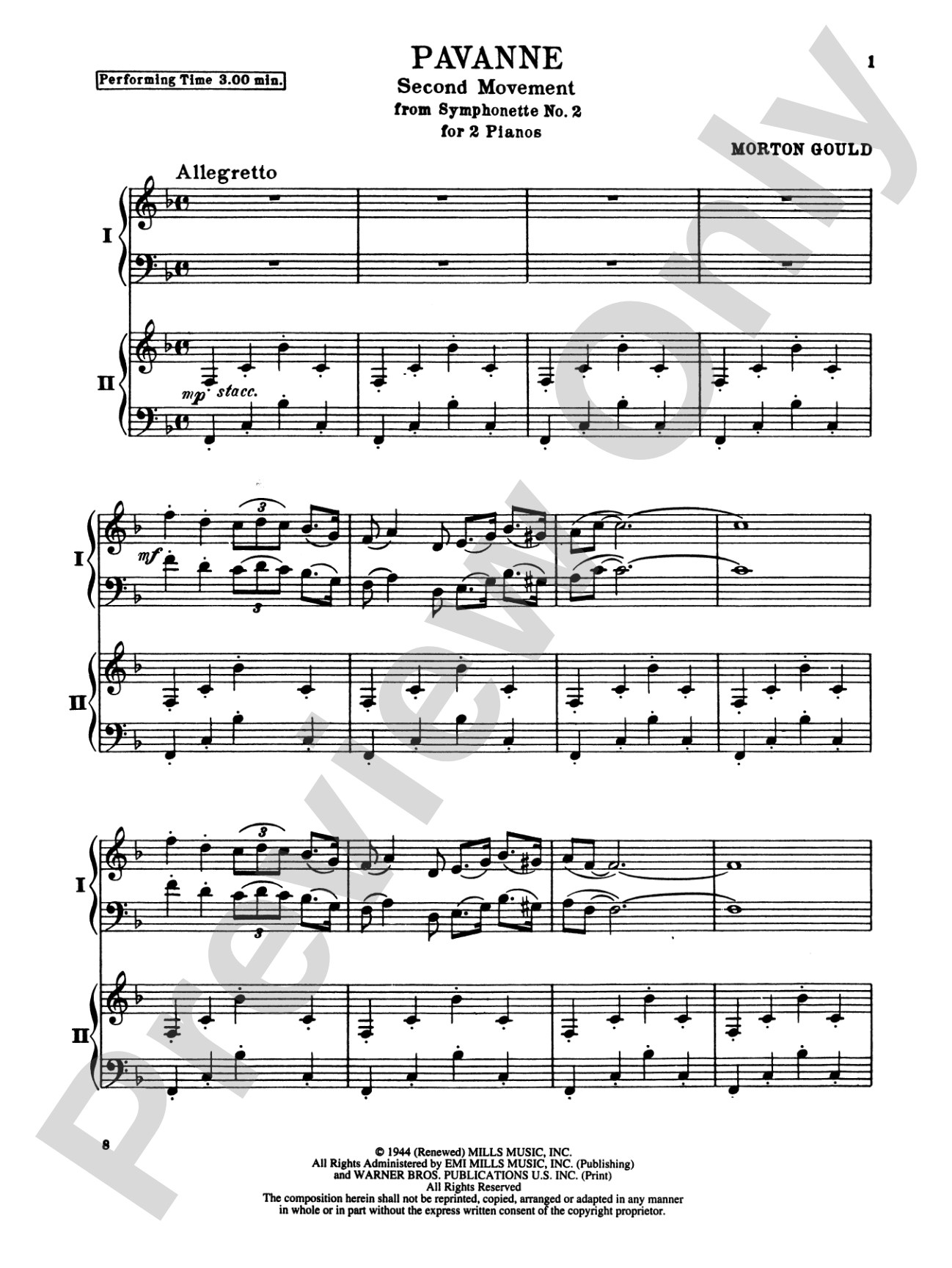

Pavanne - Piano Duo (2 Pianos, 4 Hands): Piano Duets & Four Hands
By Morton Gould
Level: Late Intermediate
Item: 00-PB-0000651
$7.95
Pickup currently not available
Description
Morton Gould composed brilliantly for orchestra, Broadway, film, television, ballet and piano. He became nationally recognized through his work in radio, where he introduced many of his own compositions in a light, distinctly American style. This arrangement of his "Pavanne," from Symphonette No. 2, is for 2 pianos, and it is unusually bright and sprightly (and almost jazzy) for what is traditionally a slower and statelier dance form. It has distinctly American and popular styling and is appropriate for two late intermediate level pianists. Two scores are included. A Federation Festivals 2024-2028 selection.


Pavanne - Piano Duo (2 Pianos, 4 Hands): Piano Duets & Four Hands isn't in MakeMusic Cloud just yet...but it could be. Let us know you'd like to see it, and you'll help shape what comes next. In the meantime, start a free trial and dive into thousands of interactive titles your students can play along with today.
Request This Title
Tell us you want it.
Start Your Free Trial
Explore everything that's ready to play right now.
Sample Audio
No sample audio found.
Sample Video
No sample videos found.
Additional Details
Publisher:
Alfred Music
Page Count:
20
SKU:
00-PB-0000651
More about this title
About the Composer: Morton Gould
Morton Gould built his career on a simple conviction: American classical music didn't need to sound European. He composed with facility across every medium available to him, orchestras, ballet companies, Broadway stages, and film studios, always maintaining a distinctly populist approach. His early work in radio gave him a national platform to test his ideas, and he used it to blur the line between concert hall and popular song, proving that serious musicianship and accessibility weren't enemies.
Gould's gift was melodic invention paired with sophisticated orchestration. He understood instrumental colors and how to write music that engaged performers without demanding virtuosity for its own sake. His symphonettes and lighter orchestral works became staples of American concert programming, offering an alternative to the European modernist canon that dominated academic circles. For pianists, his works present the rare opportunity to play twentieth-century American music that doesn't require specialized technique or conceptual preparation.
Why we love this
Gould's Pavanne flips expectations on its head. What should be stately and formal arrives bouncy and energized, with orchestral sparkle translated perfectly for two pianos. It's the kind of arrangement that makes late intermediate pianists feel like they're playing something much more sophisticated than the difficulty level suggests, and it programs beautifully alongside more traditional repertoire because it sounds so unmistakably American.
What to expect
Imagine a ballroom dance seen through a modern lens, all sparkle and forward momentum. The music glides with a lightness that feels almost theatrical, full of little character moments and rhythmic surprises that keep both players engaged and listening.
Who it's for
Two pianists at late intermediate level who want to play substantial twentieth-century American repertoire without needing virtuosic technique. This works equally well for festivals, recitals, or concert programs pairing it with classical or contemporary works.
How to get the most out of it
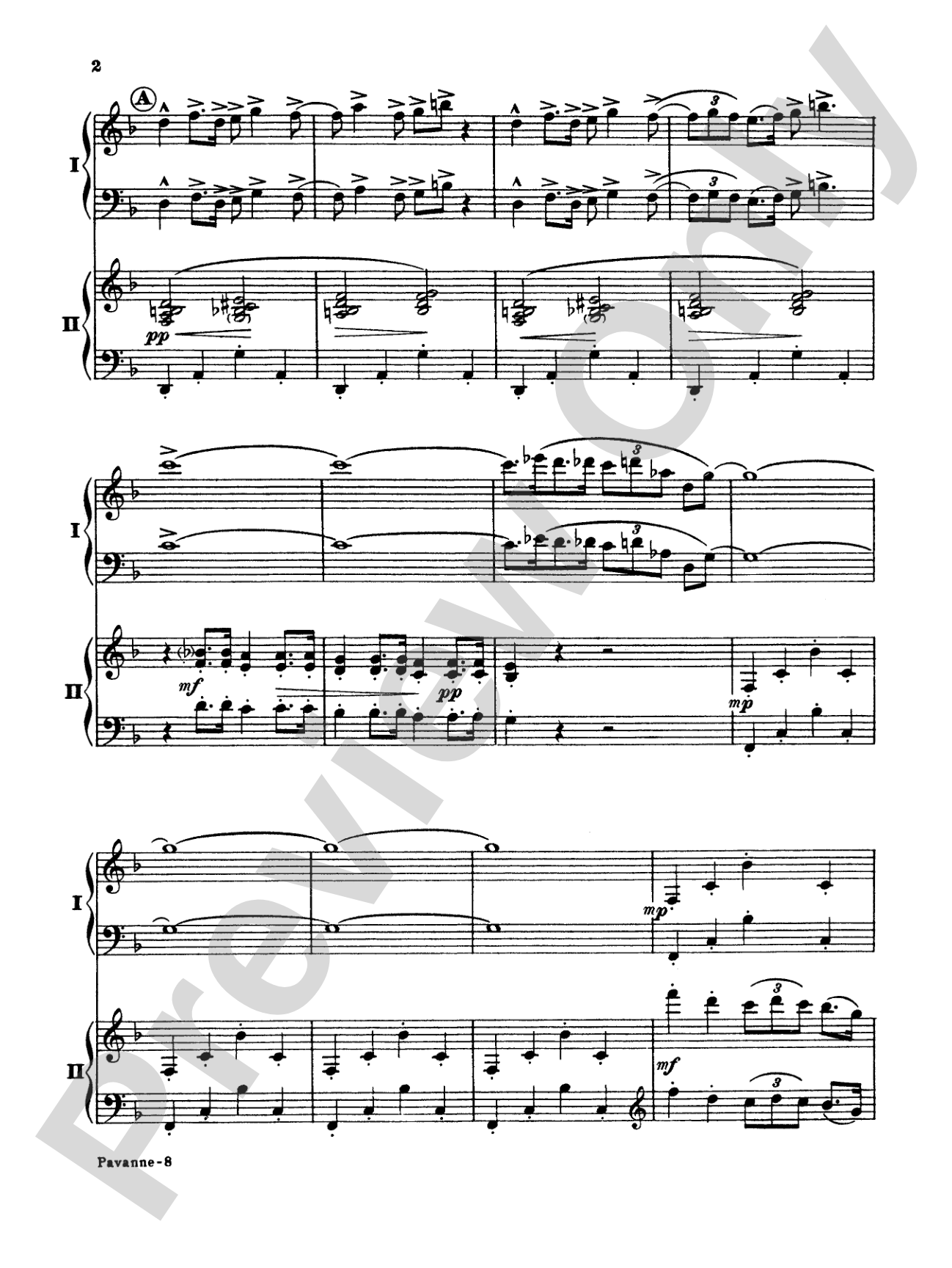
- Lean into the jazzy inflections Gould writes into the rhythmic figures. This isn't a baroque pavanne played at tempo; the syncopation and phrasing should feel almost conversational between the two pianos.
- Balance the partnerships carefully. Neither player should emerge as soloist; the piece works best when both instruments maintain equal presence and trade ideas fluidly.
- Pay attention to Gould's articulation markings. The staccatos and accents define the character far more than pedal, so clarity in touch matters as much as tempo control.
How to use it
Place this in a program of American concert music to anchor the twentieth-century portion of a recital. It also pairs naturally with other Gould works or with Copland and Bernstein pieces if you're building a thematic concert around distinctly American composers. Festival seasons make good homes for it as well, given the two-piano format appeals to collaborating pianists.
Skills your students will build
- Balancing melody and accompaniment between two instruments simultaneously
- Recognizing and performing twentieth-century American stylistic markers (jazz-influenced rhythms, syncopation, popular song phrasing)
- Negotiating rhythmic clarity and ensemble precision in syncopated contexts
- Listening and adjusting dynamics in real time as part of a partnership