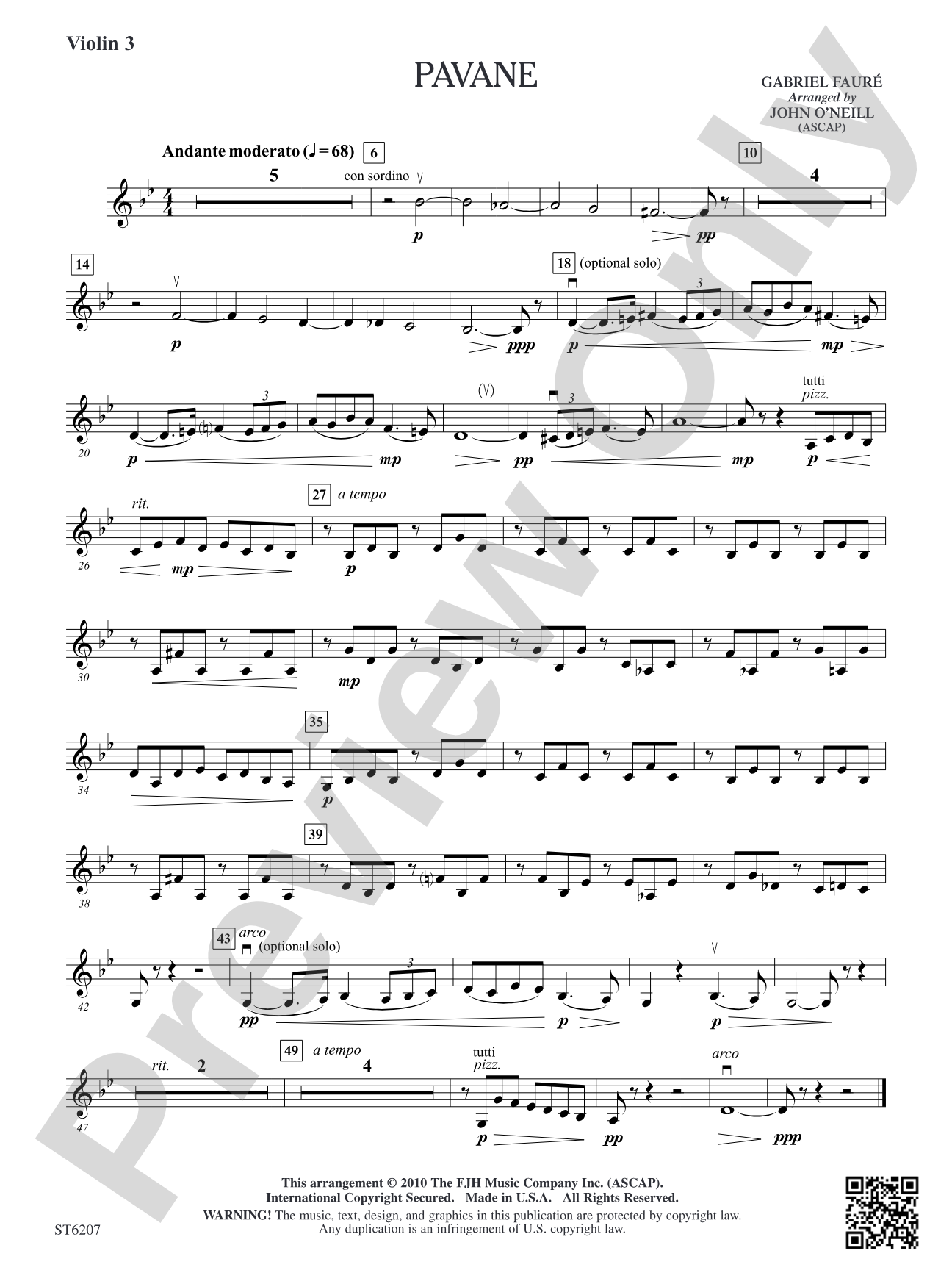
Pavane: Violin 3 (Viola T.C.) Sheet Music Preview

Pavane: Violin 3 (Viola T.C.)

By Gabriel Faure / arr. John O'Neill

Grade: 3

Item: 98-PC-DST6207_VN3

Digital Download
$7.00
Description
A chance for your strings to shine! Originally composed in 1887, Faure's Pavane became an instant hit with concert goers and has retained its popularity to this day. John O'Neill's arrangement uses a more friendly key for strings and offers optional solos in all instruments while still keeping the original spirit of the piece.

Pavane: Violin 3 (Viola T.C.) isn't in MakeMusic Cloud just yet...but it could be. Let us know you'd like to see it, and you'll help shape what comes next. In the meantime, start a free trial and dive into thousands of interactive titles your students can play along with today.

Sample Audio
0:00
0:00
Sample Video
Additional Details
Series: FJH String Orchestra
Publisher: The FJH Music Company, Inc.
SKU: 98-PC-DST6207_VN3

More about this title

About the Composer: Gabriel Faure

Gabriel Faure (1845-1924) was a French composer and pedagogue whose gift for melody and harmonic refinement shaped late Romantic music. He served as director of the Paris Conservatoire and mentored an entire generation of French musicians, but his legacy rests equally on his distinctive compositions: songs, chamber works, and orchestral pieces that prioritize elegance and emotional restraint over dramatic excess.

The Pavane, composed in 1887, stands among Faure's most performed works. Its graceful theme and refined orchestration made it an immediate favorite in concert halls across Europe, and it remains a staple of both professional and educational repertoires. The piece exemplifies Faure's belief that music should move the listener through beauty rather than bombast.

Why we love this

O'Neill's arrangement captures everything that makes the Pavane enduringly elegant while solving a real logistics problem: it sits in a more practical key for young string players without sacrificing the piece's aristocratic character. The optional solos give your strongest players meaningful material to showcase while keeping the ensemble texture intact, making it equally effective as a full-section piece or a vehicle for emerging soloists.

What to expect

The Pavane unfolds like a stately court dance painted in soft light. Its opening theme is serene and gently lilting, supported by flowing accompaniment that creates an impression of stillness and grace. The piece never demands intensity or virtuosity; instead, it asks for clarity, warmth, and a willingness to let lovely melodies speak for themselves.

Who it's for

String orchestras at the intermediate level who are ready to play mature repertoire with confidence and style. This arrangement welcomes younger ensembles into the world of French masterworks while offering advanced students substantive solo opportunities.

How to get the most out of it

  • Shape each phrase with a gentle swell rather than driving toward downbeats; Faure's melodies breathe naturally when the conductor imagines singing rather than conducting in strict time.
  • Balance the optional solos by having them rise just slightly above the harmonic foundation, never dominating the texture. The Pavane's beauty lives in the blend.
  • Establish a steady, unhurried tempo in rehearsal and maintain it throughout. Tempo rubato works against the piece's courtly character; instead, let the phrasing breathe within a consistent pulse.
  • Reserve vibrato for longer note values and pull it back on shorter notes to keep the texture clean and true to the period style the arrangement honors.

How to use it

Program this on a concert where you want to demonstrate your strings' musicality and ability to shape lyrical material. It pairs beautifully with lighter contemporary works or creates an elegant bridge between Baroque and Romantic programming. The piece is also contest-friendly and reads convincingly in under five minutes, making it ideal for both full concerts and festival competitions.

Skills your students will build

  • Phrasing and shaping long melodic lines with direction and continuity
  • Balancing solo lines against harmonic accompaniment
  • Maintaining steady pulse and ensemble cohesion without rubato
  • Developing tone quality and intonation in accessible key areas
  • Interpreting French Romantic style and period-appropriate articulation

You May Also Like