
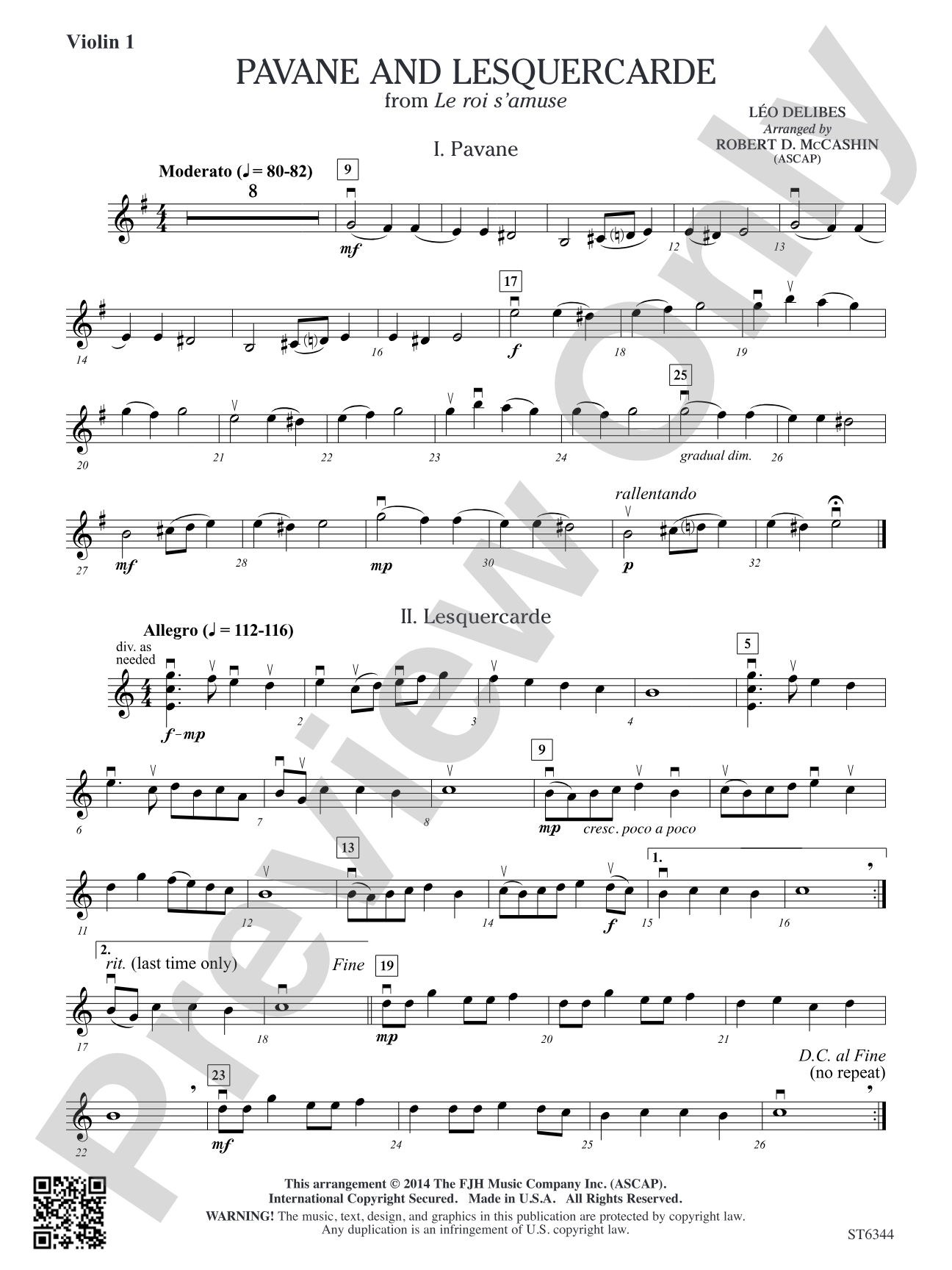

Pavane and Lesquercarde: Violin 1
By Leo Delibes / arr. Robert D. McCashin
Grade: 2.5
Item: 98-PC-DST6344_VN1
$7.00
Pickup currently not available
Description
This light, incidental music provides a wonderful change of pace in two contrasting movements. Beginning with the lyrical Pavane, students explore wonderful harmonic changes without emphasis on technique. As the second movement begins, a delightful carefree character comes out and is sure to charm your audience and provide many wonderful musical opportunities for your students.


Don't just read it, hear it, play along with it, and watch your students grow with it. In MakeMusic Cloud, Pavane and Lesquercarde: Violin 1 comes alive with professional accompaniment, adjustable tempo, and built-in practice tools that turn solo practice into real progress.
Open in the Player
Jump straight in and assign it today.
Start Your Free Trial
Open this title and explore the full library in minutes.
Sample Audio
1
Audio File
--:--
0:00
0:00
Sample Video
No sample videos found.
Additional Details
Series:
FJH Developing Strings
Publisher:
The FJH Music Company, Inc.
SKU:
98-PC-DST6344_VN1
More about this title
About the Composer: Leo Delibes
Leo Delibes (1836-1891) was a French composer whose gift for melody and orchestration made him one of the most performed composers in ballet and theatrical music. Though he is best known for his full-length ballets Coppélia and Sylvia, Delibes composed extensively for theater, film, and incidental music, demonstrating a remarkable ability to craft accessible, elegant music that serves dramatic purpose without sacrificing musical substance. His work remains a cornerstone of string orchestra repertoire because it combines clarity of voice and harmonic interest in ways that engage both players and listeners.
For educators, Delibes represents an invaluable resource: a master orchestrator who understood how to write idiomatically for strings while keeping the technical demands manageable. His music rewards careful phrasing and attention to voice leading without requiring virtuosic technique, making his works ideal for building musicianship across developmental levels.
Why we love this
Robert McCashin's arrangement preserves Delibes' elegant harmonic language while scaling the orchestration to student capabilities, creating a genuine two-movement concert piece rather than a condensed version. The contrasting moods between movements offer your ensemble a legitimate programming option that stands on its own musicality, not just as filler or novelty; audiences recognize the quality and students understand they're playing legitimate concert music.
What to expect
The Pavane unfolds with grace and warmth, inviting listeners into a reflective, dance-like world where harmonic color takes priority over technical display. The Lesquercarde suddenly brightens the mood, offering buoyant rhythmic energy and a sense of playful sophistication that leaves audiences smiling.
Who it's for
String orchestras at the Grade 2-2.5 level will find this work sits comfortably within their abilities while offering genuine musical substance. Directors looking for contest or festival selections that showcase musicianship without technical flash will appreciate how McCashin's arrangement maintains Delibes' compositional voice while remaining accessible to developing ensembles.
How to get the most out of it
- Shape the Pavane's phrases with forward momentum even at a moderate tempo; the lyrical quality comes from phrasing and tone control, not from dragging the tempo.
- Let the harmonic changes speak by bringing out inner voices subtly; mark bow distribution strategically so second violins and violas maintain presence without overbalancing the melody.
- Balance weight and lightness in the Lesquercarde by emphasizing rhythmic clarity in the accompaniment while keeping the main line singing; this prevents the carefree character from sounding thin or rushed.
- Rehearse entrances after rests carefully, as the two-movement structure means players will have extended passages of silence before re-entering.
How to use it
Pair this two-movement work as a strong centerpiece in a concert featuring mixed-genre repertoire; its length and contrasting character make it ideal for breaking up longer program blocks while demonstrating your ensemble's range. It works equally well as a contest piece where judges appreciate mature musical choices at accessible technical levels.
Skills your students will build
- Phrasing across longer melodic lines without relying on technical difficulty
- Reading and balancing harmonic voice leading in string voicings
- Adjusting articulation and tone to distinguish lyrical and carefree character
- Precision in ensemble entries after extended rests
- Dynamic control and sustain without sacrificing clarity of rhythm