

Pavane and La Volta: Score
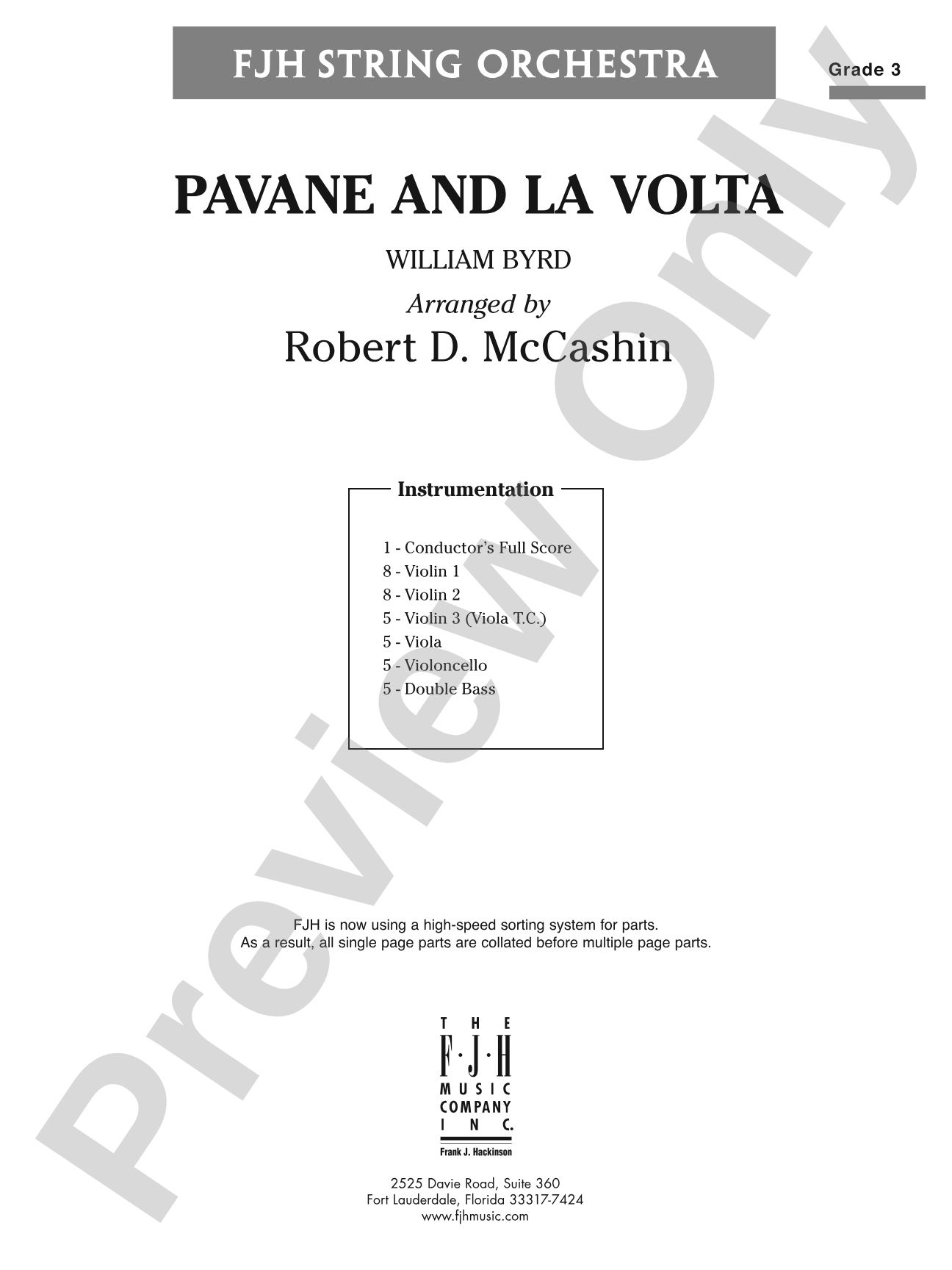
By William Byrd / arr. Robert D. McCashin
Grade: 3
Item: 98-DST6394S
$5.00
Pickup currently not available
Description
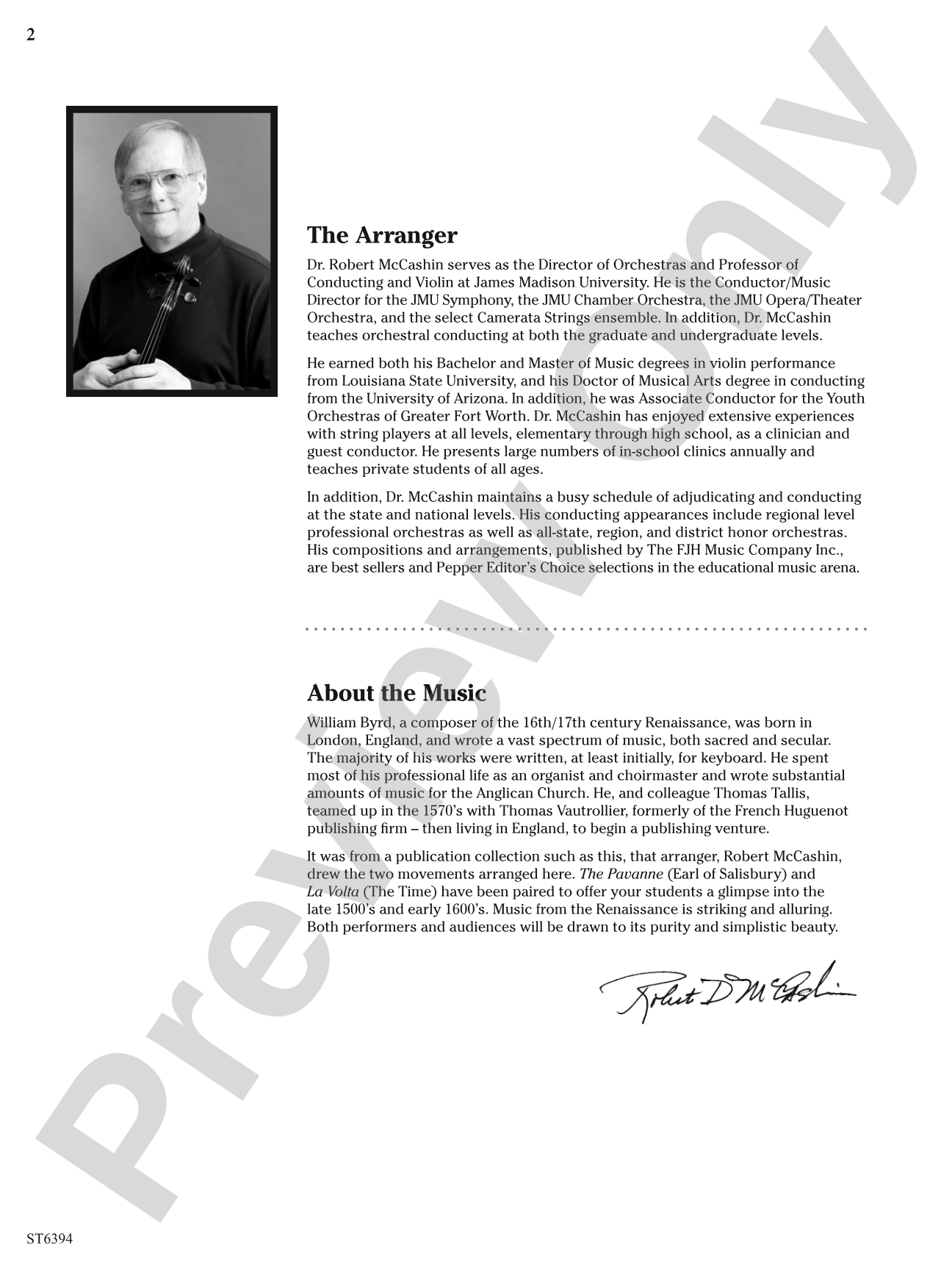
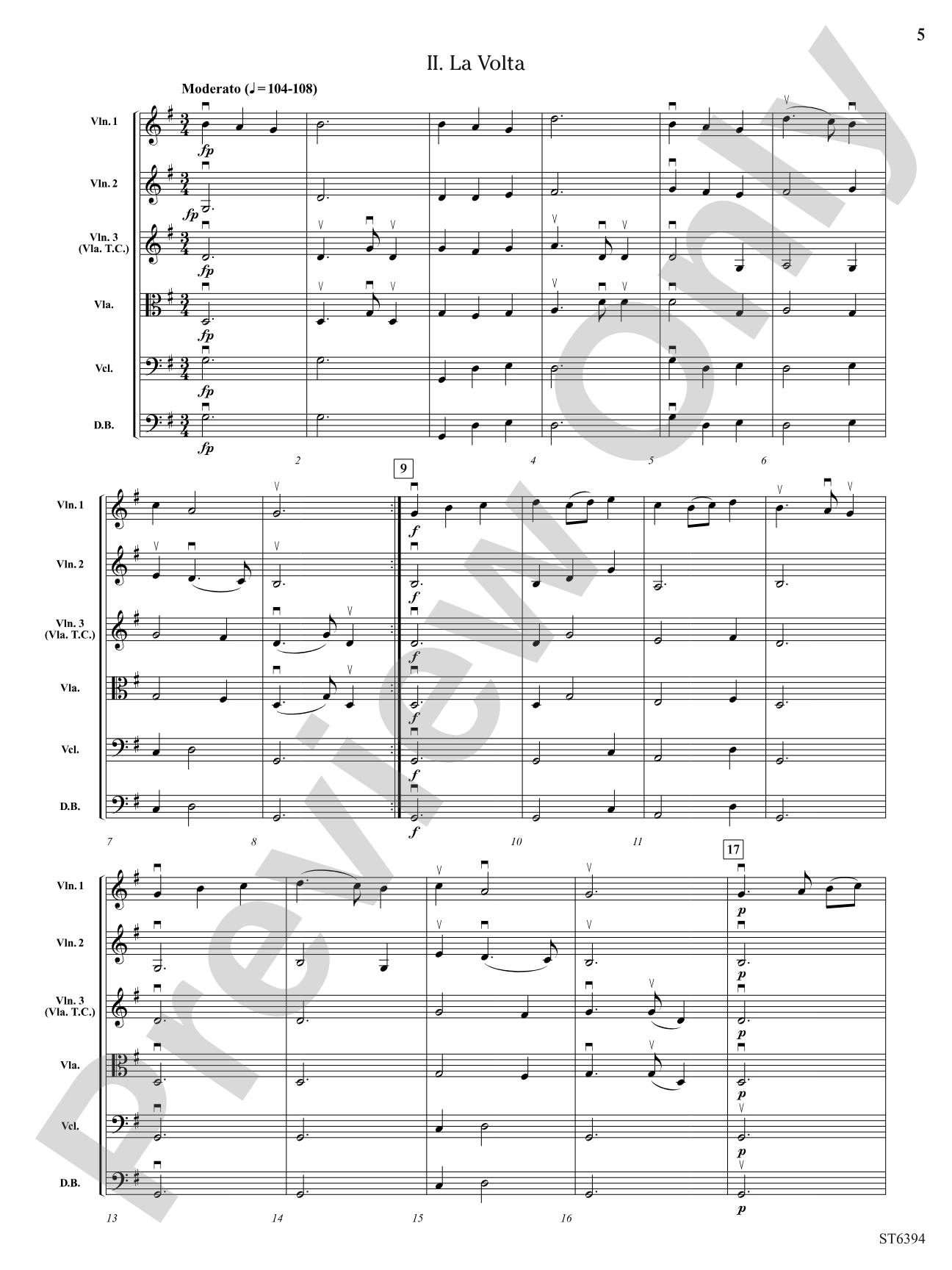
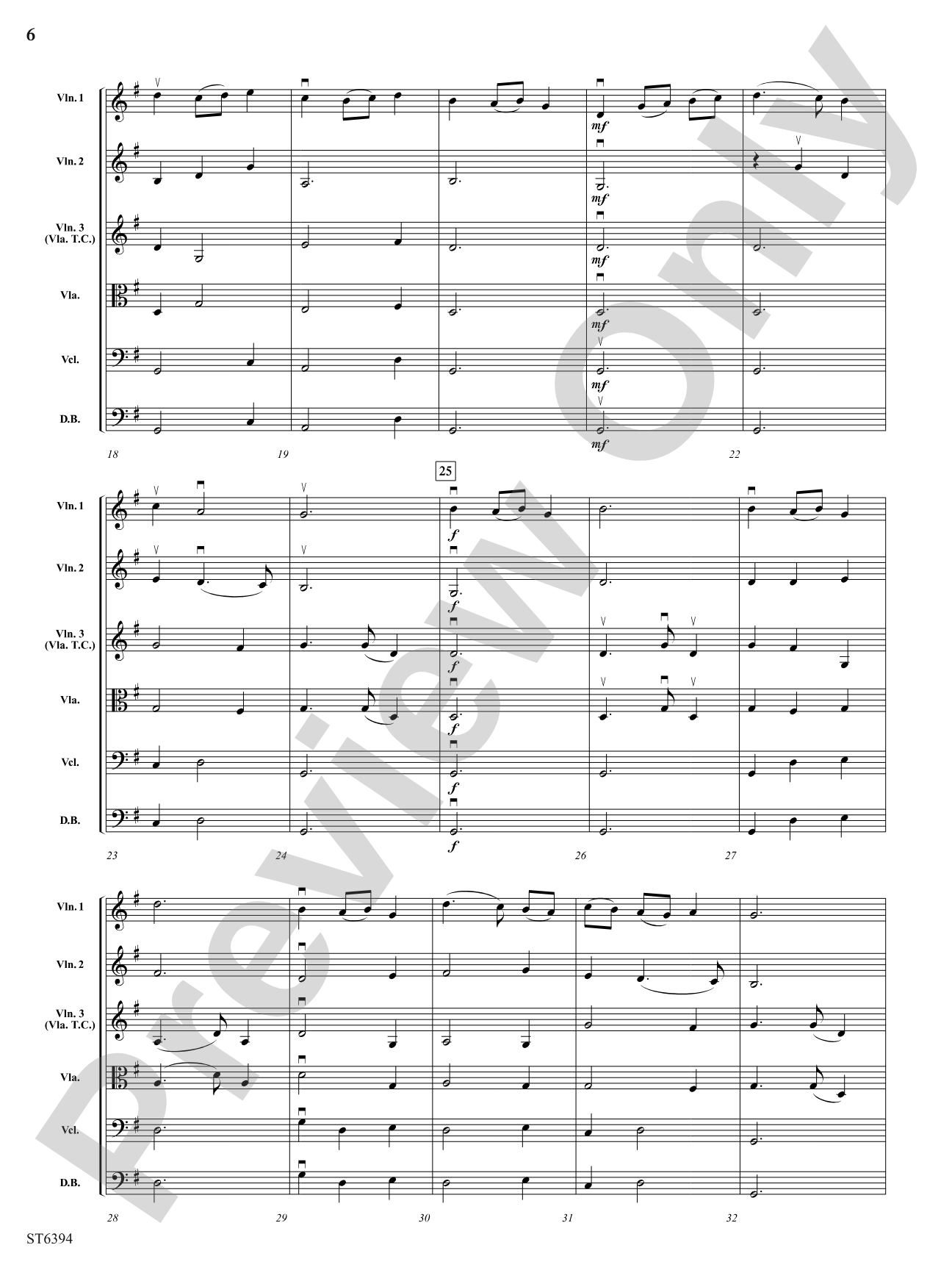
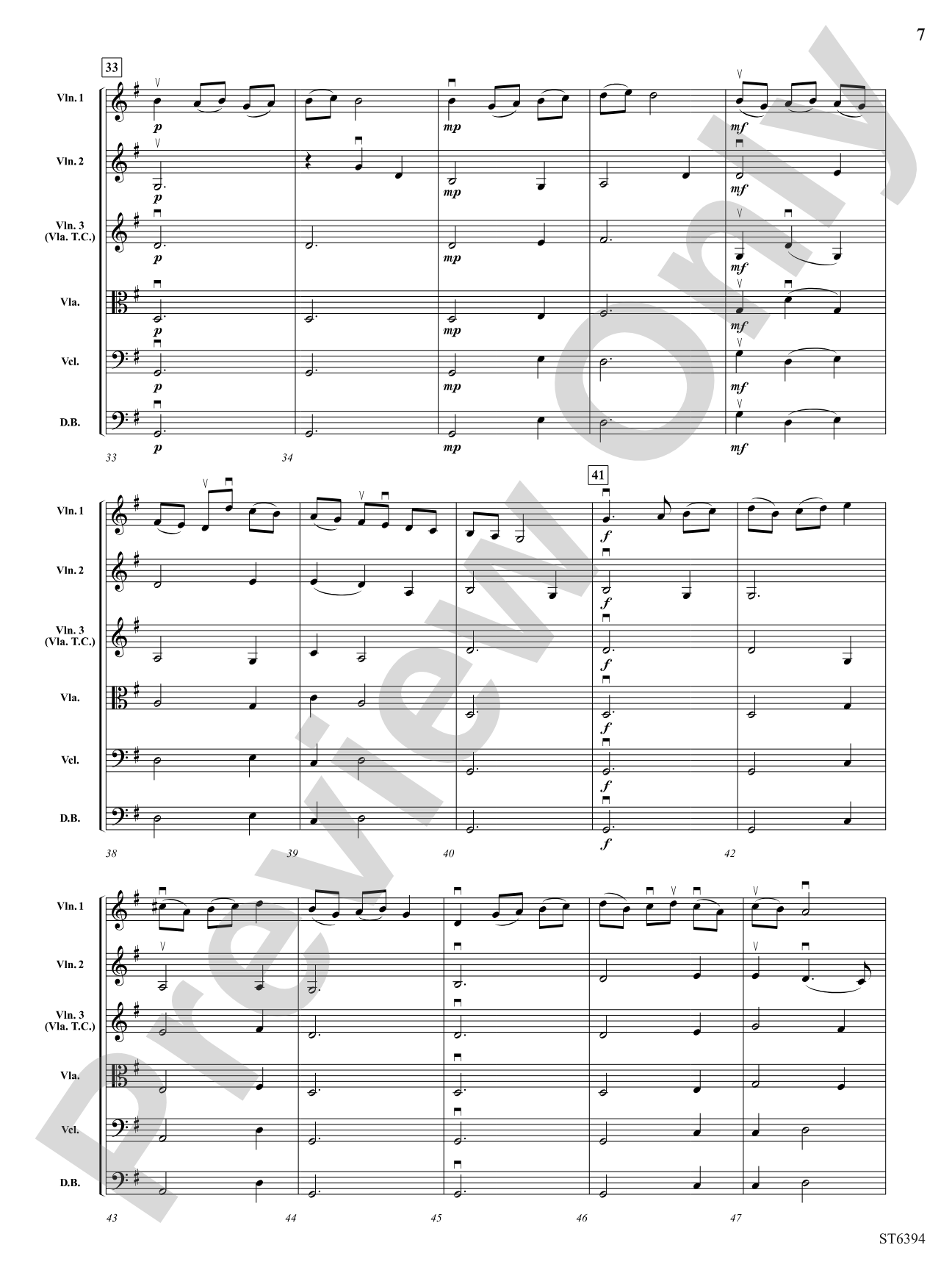
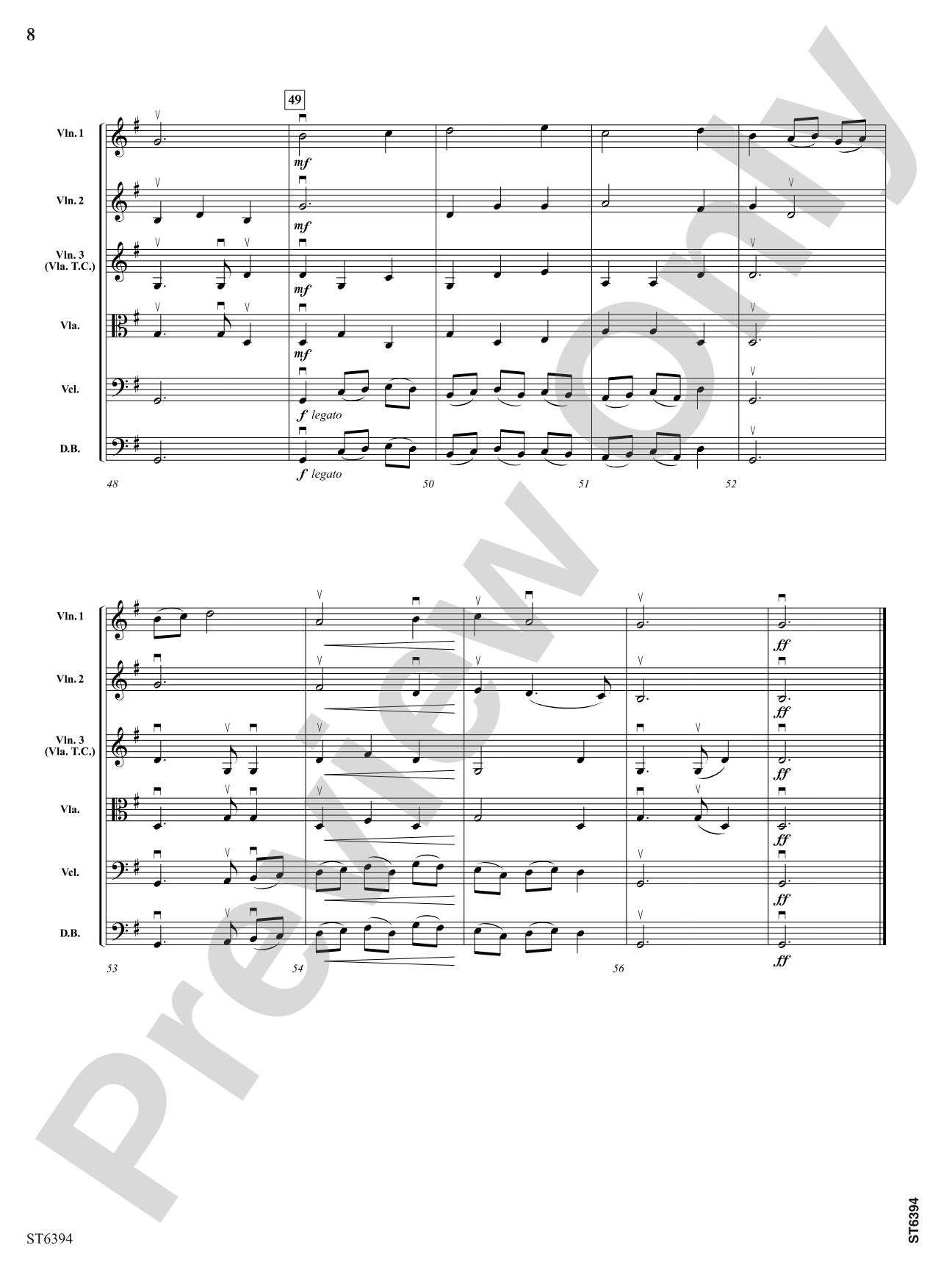
Drawn from an early collection by William Byrd, the Pavanne ("Earl of Salisbury") and La Volta ("The Time") have been paired to offer your students a glimpse into striking and alluring Renaissance music of the late 1500's and early 1600's. Both performers and audiences will be drawn to its purity and simplistic beauty.


Pavane and La Volta: Score isn't in MakeMusic Cloud just yet...but it could be. Let us know you'd like to see it, and you'll help shape what comes next. In the meantime, start a free trial and dive into thousands of interactive titles your students can play along with today.
Request This Title
Tell us you want it.
Start Your Free Trial
Explore everything that's ready to play right now.
Sample Audio
1
Audio File
--:--
0:00
0:00
Sample Video
No sample videos found.
Additional Details
Series:
FJH String Orchestra
Publisher:
The FJH Music Company, Inc.
SKU:
98-DST6394S
More about this title
About the Composer: William Byrd
William Byrd (1540-1623) was one of the most prolific and technically sophisticated composers of the English Renaissance. Working across vocal and instrumental genres, he produced hundreds of compositions that remain central to the period's musical canon. His keyboard works and dance pieces showcase remarkable contrapuntal skill and emotional depth, making him an essential figure for understanding Renaissance composition.
Byrd's instrumental dances, including pavanes and galliards, were written for both keyboard and consort settings. These pieces reveal his gift for melody and structural clarity, qualities that make them invaluable in educational settings. His influence extended well beyond his lifetime and continues to shape how we understand Renaissance counterpoint and form.
Why we love this
This pairing captures the refinement and restraint that define Renaissance instrumental music, offering your orchestra a chance to explore genuine historical repertoire without overwhelming technical demands. The arrangement preserves the elegant voice-leading of Byrd's originals while keeping Grade 3 players engaged through clear textures and logical part writing. Programming two dances back-to-back creates a compelling short suite that audiences find both accessible and sophisticated.
What to expect
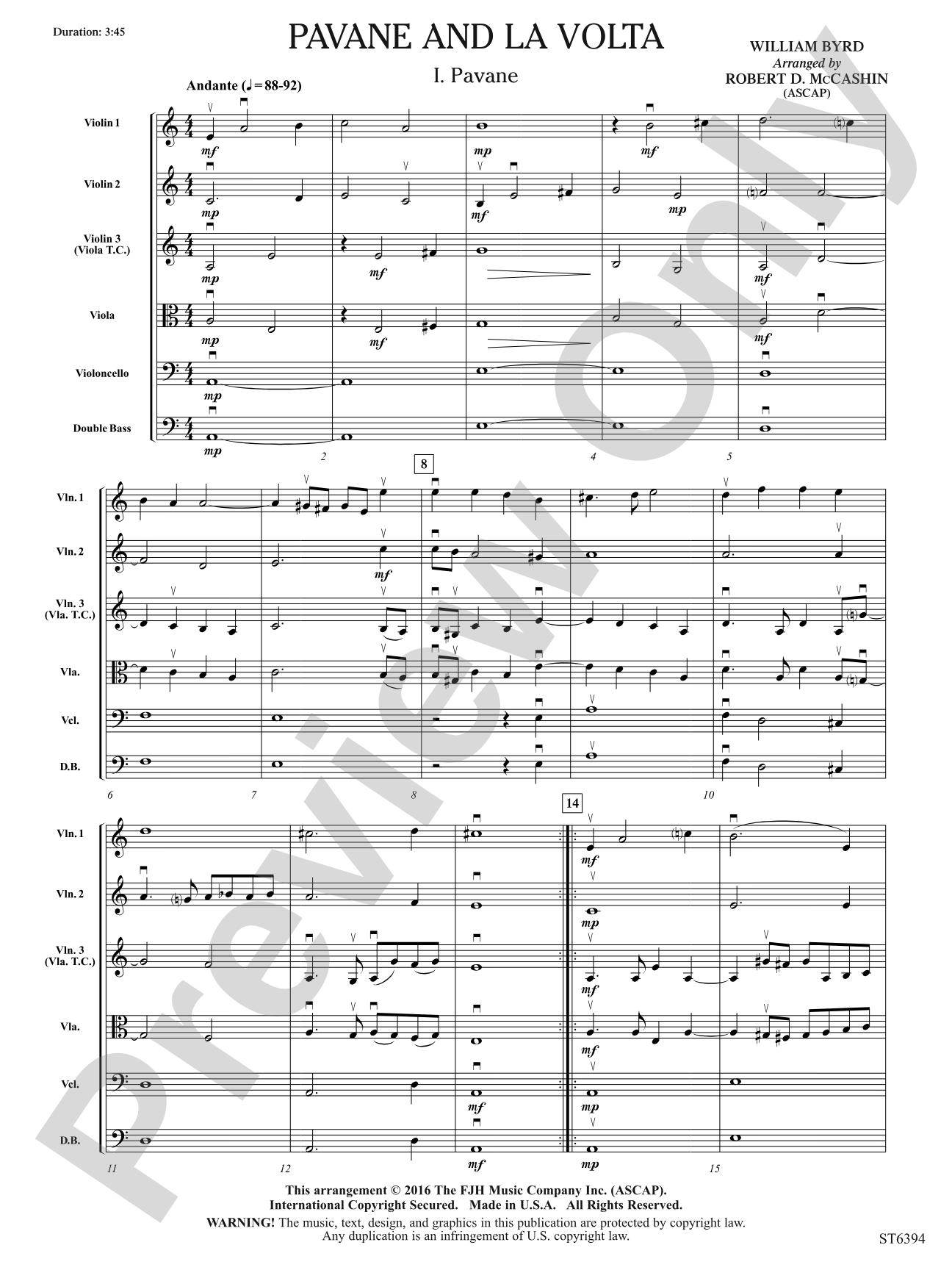
The pavane opens with unhurried dignity, its stepwise lines and sustained harmonies creating an almost meditative quality. La Volta responds with rhythmic buoyancy and lighter orchestration, the two pieces together evoking the courtly grace of music written for dancing nobles four centuries ago.
Who it's for
String orchestras at the Grade 3 level gain immeasurably from exploring Renaissance masterworks in accessible arrangements. This score works for ensembles building foundational ensemble skills and seeking authentic alternatives to newer compositions. Conductors seeking to broaden student exposure to historical repertoire and compositional technique will find this both manageable and musically substantial.
How to get the most out of it
- Balance the melodic line across your first violins and violas; these pieces depend on transparency rather than dynamic extremes. Let inner voices breathe so harmonic movement stays clear.
- Approach tempo as a function of style rather than speed. A moderate, unhurried pavane allows the harmonic language to register fully with your audience.
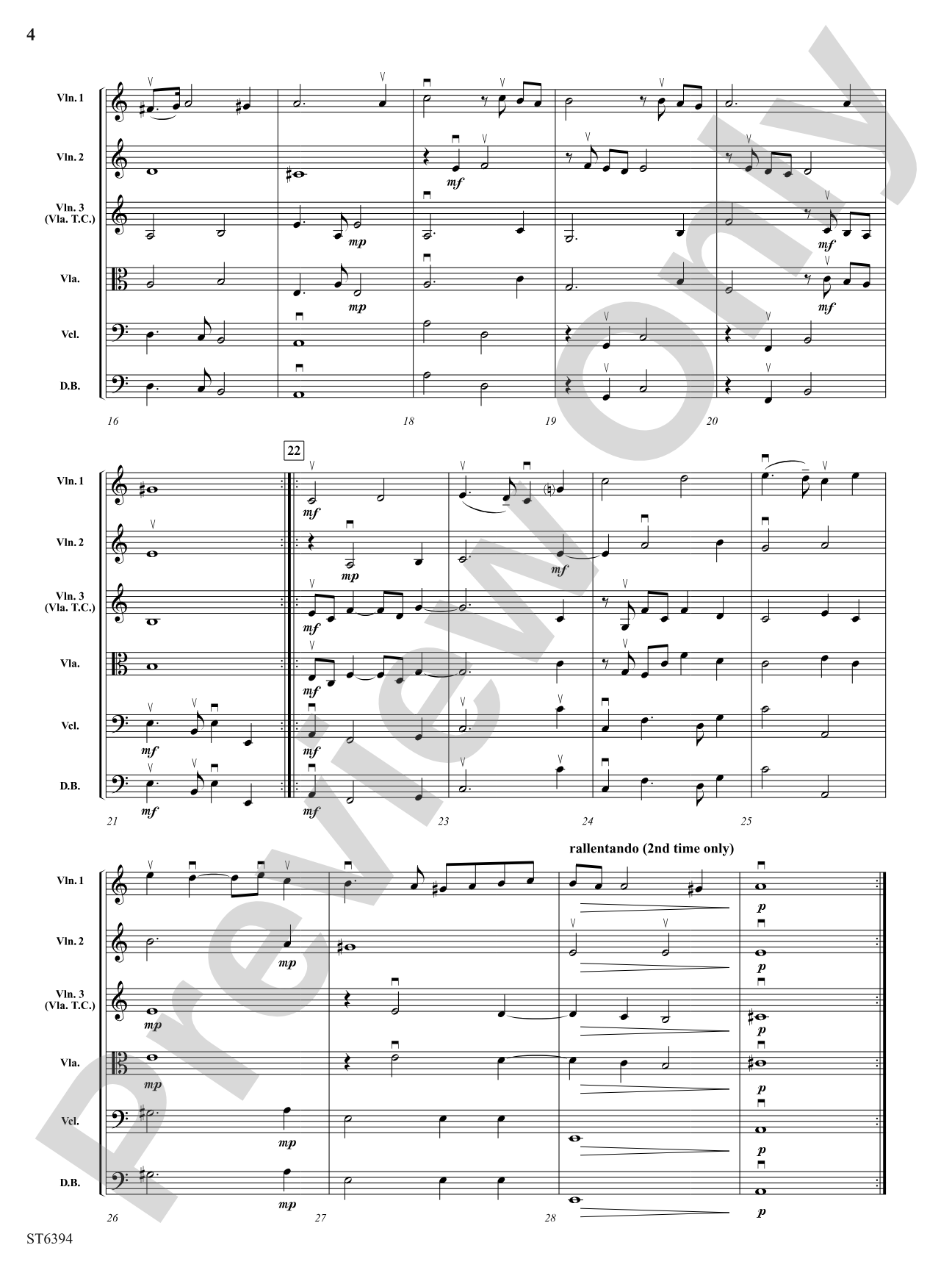
- Shape phrases by voice rather than by bar line. Each melodic idea has a natural arc; resist the urge to reset energy at measure boundaries.
- Use the second-violin and cello parts as a rhythmic anchor, especially in La Volta. Their steady pulse keeps the dance momentum alive without requiring fast tempos.
How to use it
Open a concert with this pair to immediately establish an elegant, refined atmosphere and signal to your audience that the evening engages serious musical ideas. Place it alongside Baroque transcriptions or later Romantic character pieces to create a program that traces stylistic development. These dances work especially well as a bridge between warm-up rehearsals focused on technique and larger ensemble works demanding interpretive maturity.
Skills your students will build
- Reading and executing clear Renaissance notation and part writing
- Maintaining ensemble alignment across multiple independent melodic lines
- Shaping non-metrical musical phrases within strict time signatures
- Understanding functional harmony and voice leading across harmonic progressions
- Balancing dynamic restraint with emotional expression in early music