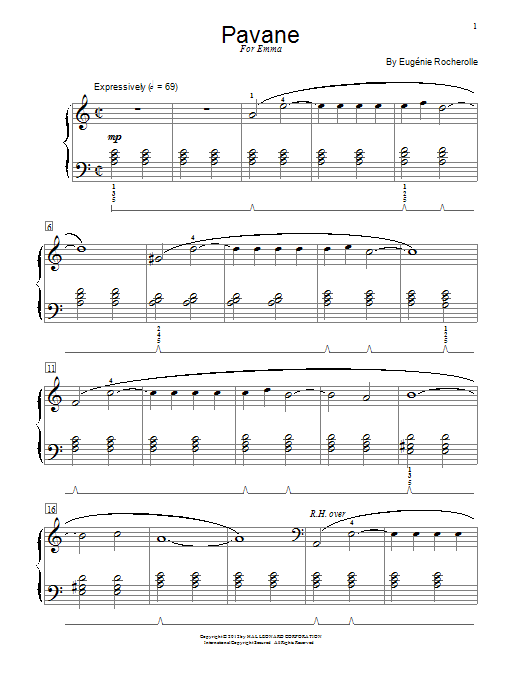
Eugénie Rocherolle is a French composer and pianist known for creating accessible yet musically sophisticated works for developing musicians. Her compositions blend classical forms with contemporary clarity, making her a trusted voice in music education across multiple instruments and levels.
Why we love this
Rocherolle understands what Grade 2 pianists actually need: music that sounds mature without requiring advanced technique. This arrangement respects the original Pavane while scaling it intelligently for young hands, giving students immediate access to a work they'll recognize and feel proud to perform.
What to expect
Dignified and graceful, with the measured poise of a courtly dance. The music unfolds quietly, inviting listeners into an intimate space where every phrase matters.
Who it's for
Grade 2 pianists ready to encounter Renaissance dance forms and longer, multi-section works. This piece also works well for students preparing for recitals or festivals where they want to program something classical with personality.
How to get the most out of it
Establish a steady, unhurried tempo from the start. The Pavane's formal character depends on rhythmic confidence, not speed.
Shape the phrase endings by allowing slight weight on the penultimate note before releasing into the cadence.
Listen for moments where the melody moves into the left hand. These transitions should feel seamless, as if one voice is handing off to another.
Bring out the harmonic support in the accompaniment without letting it overshadow the primary melodic line.
How to use it
This works beautifully as a solo recital piece for developing pianists, or pair it with other Renaissance or Baroque selections to create a focused thematic program. It's also substantial enough to anchor a student showcase without overwhelming a young performer's endurance.
Skills your students will build
Sustaining a singing melodic line across phrase boundaries
Playing two-voice counterpoint with clear voice independence
Controlling dynamics within a narrower range (appropriate to the form)
Understanding Baroque dance forms through direct experience
Managing hand positions across multiple registers of the keyboard
You May Also Like
Scan to Complete Your Purchase
Use your phone's camera to scan the code below
You'll log in on your phone and the order will be added to your account