
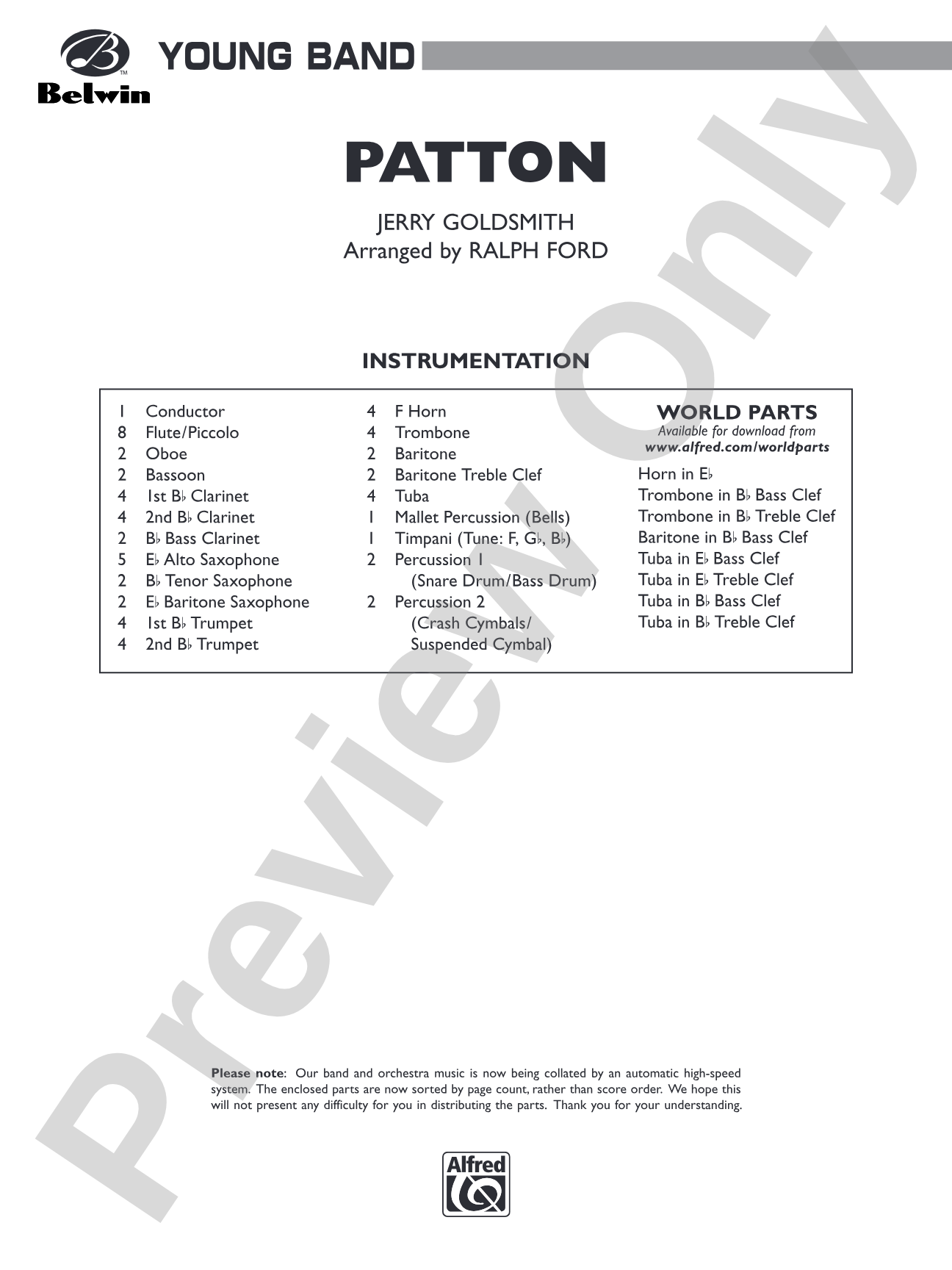

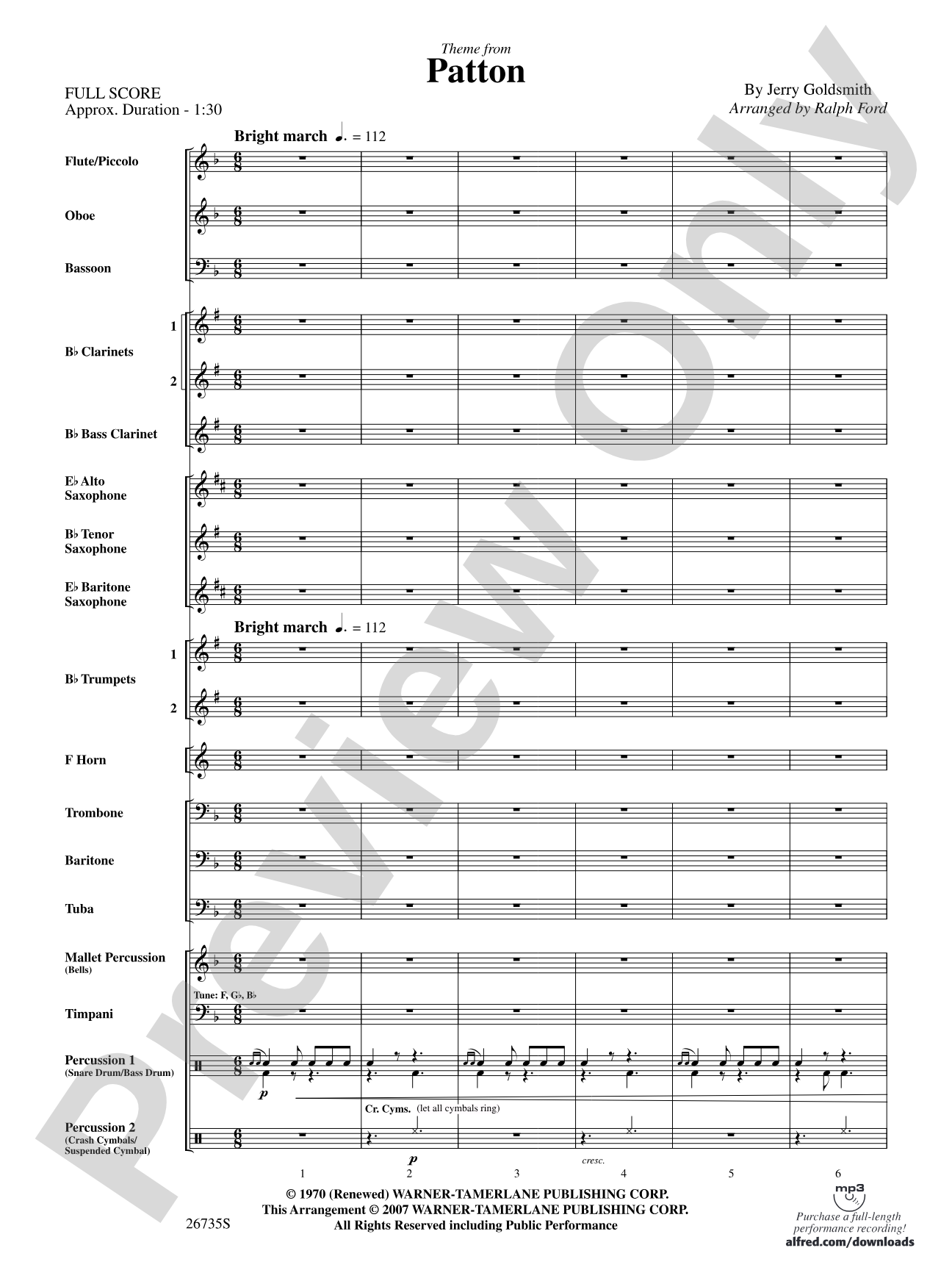
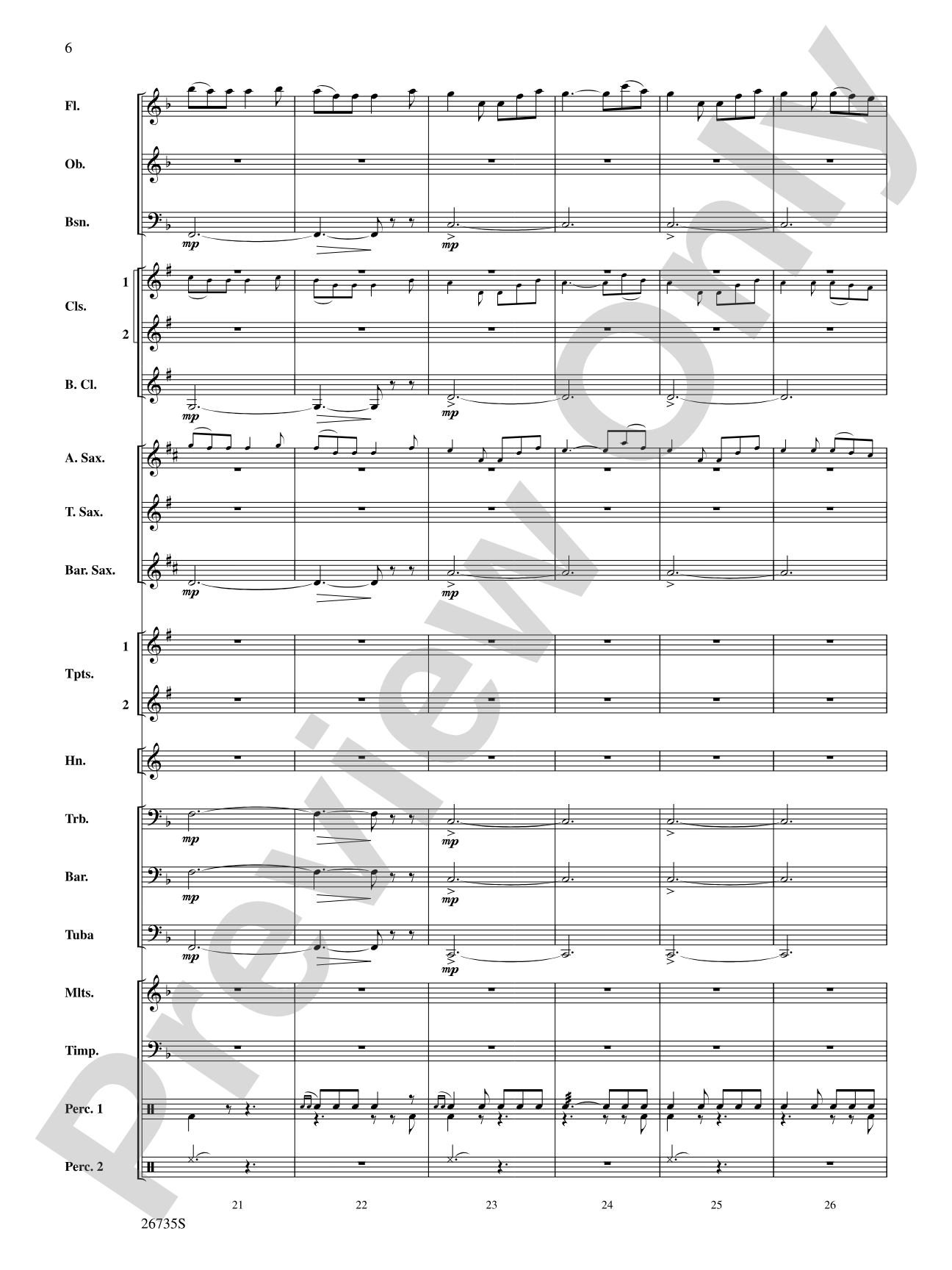
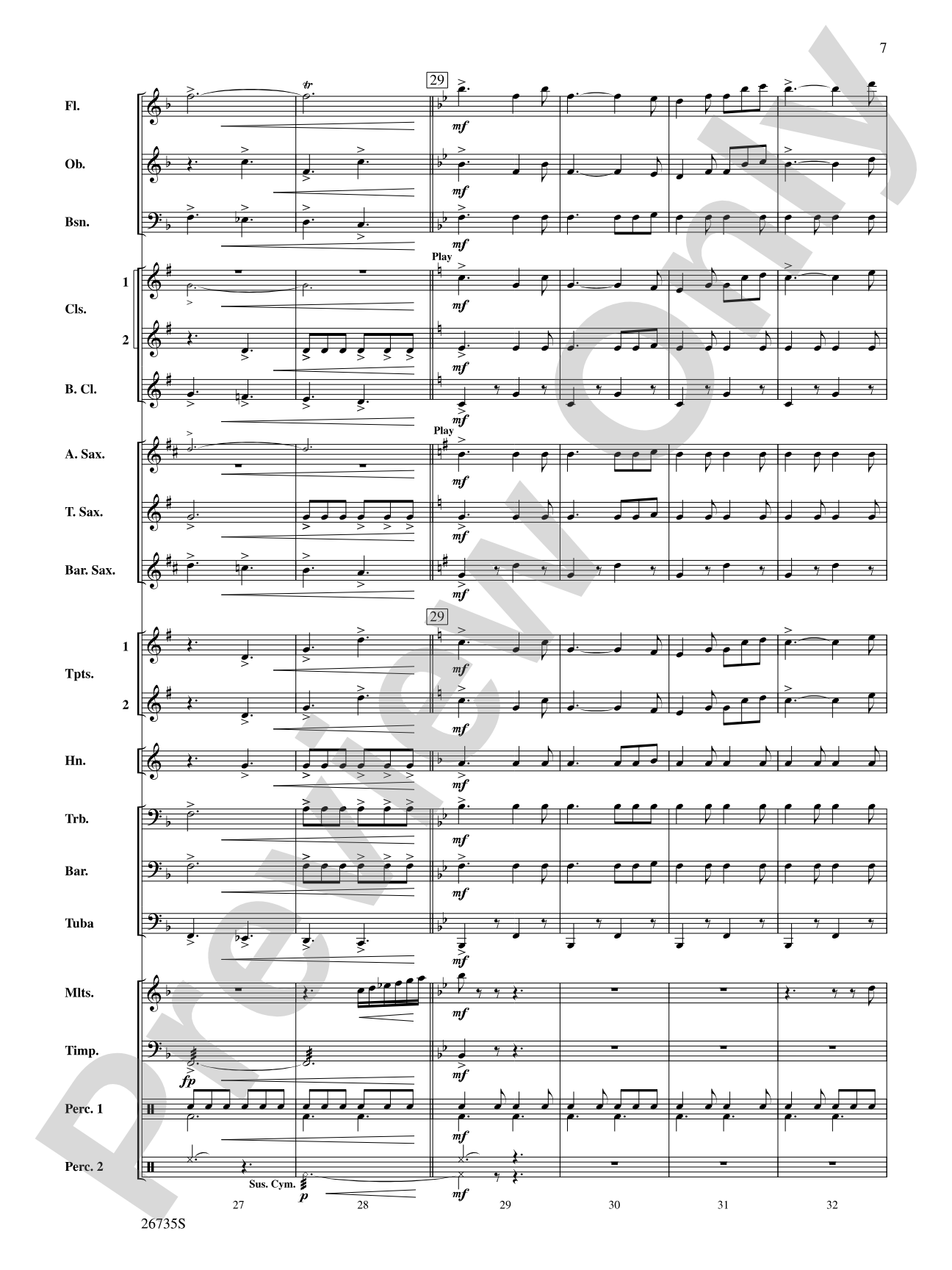
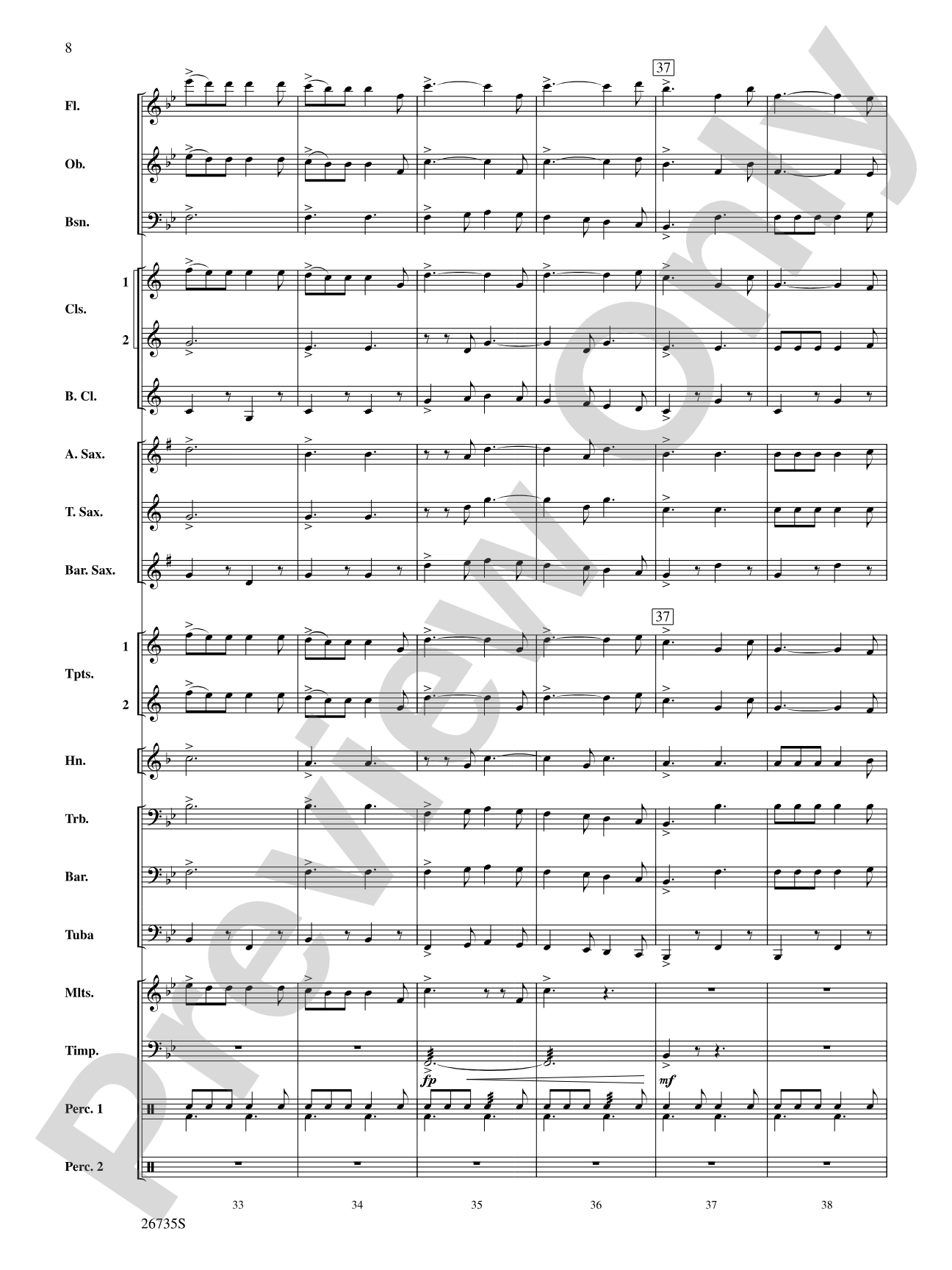
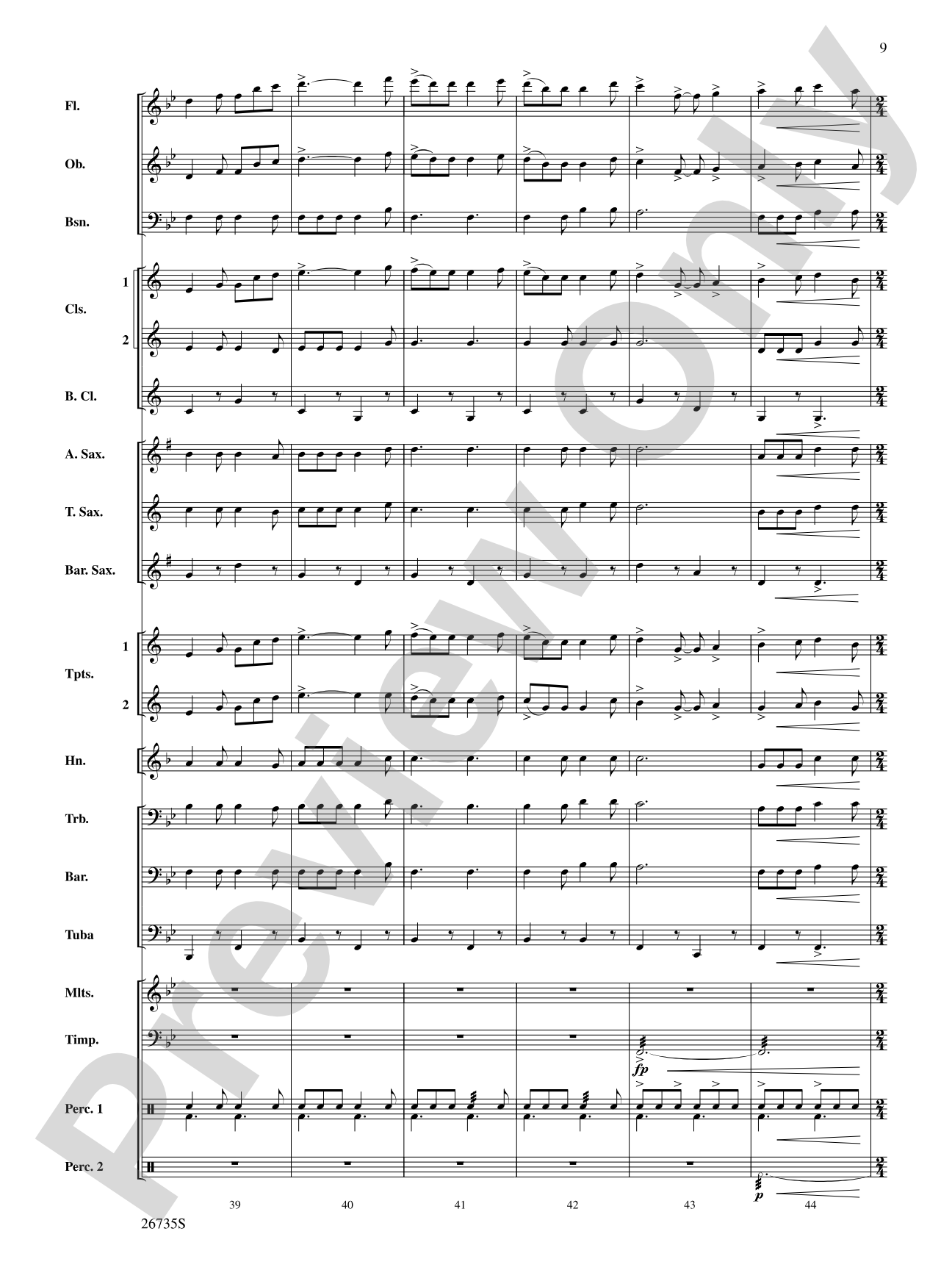
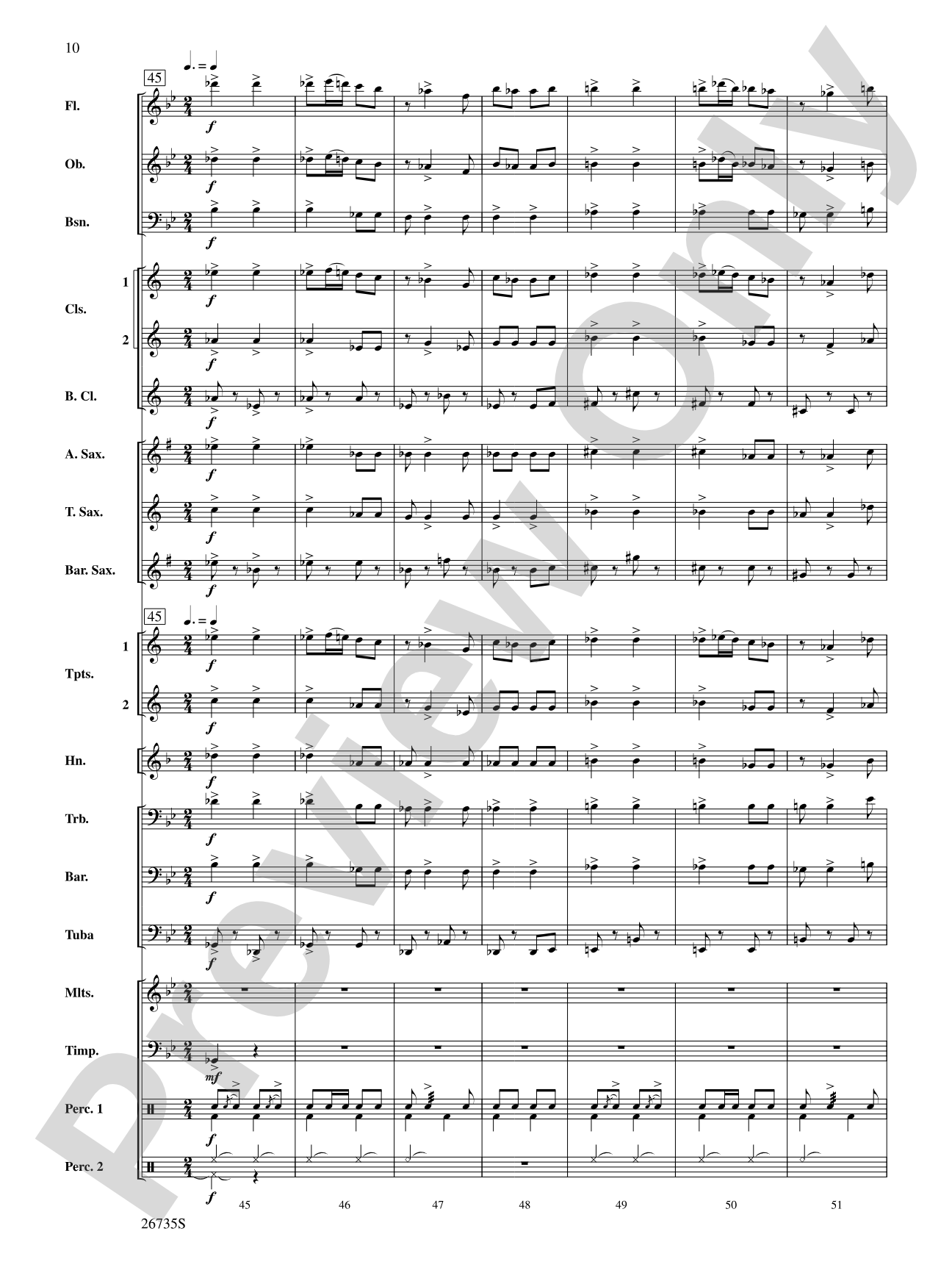
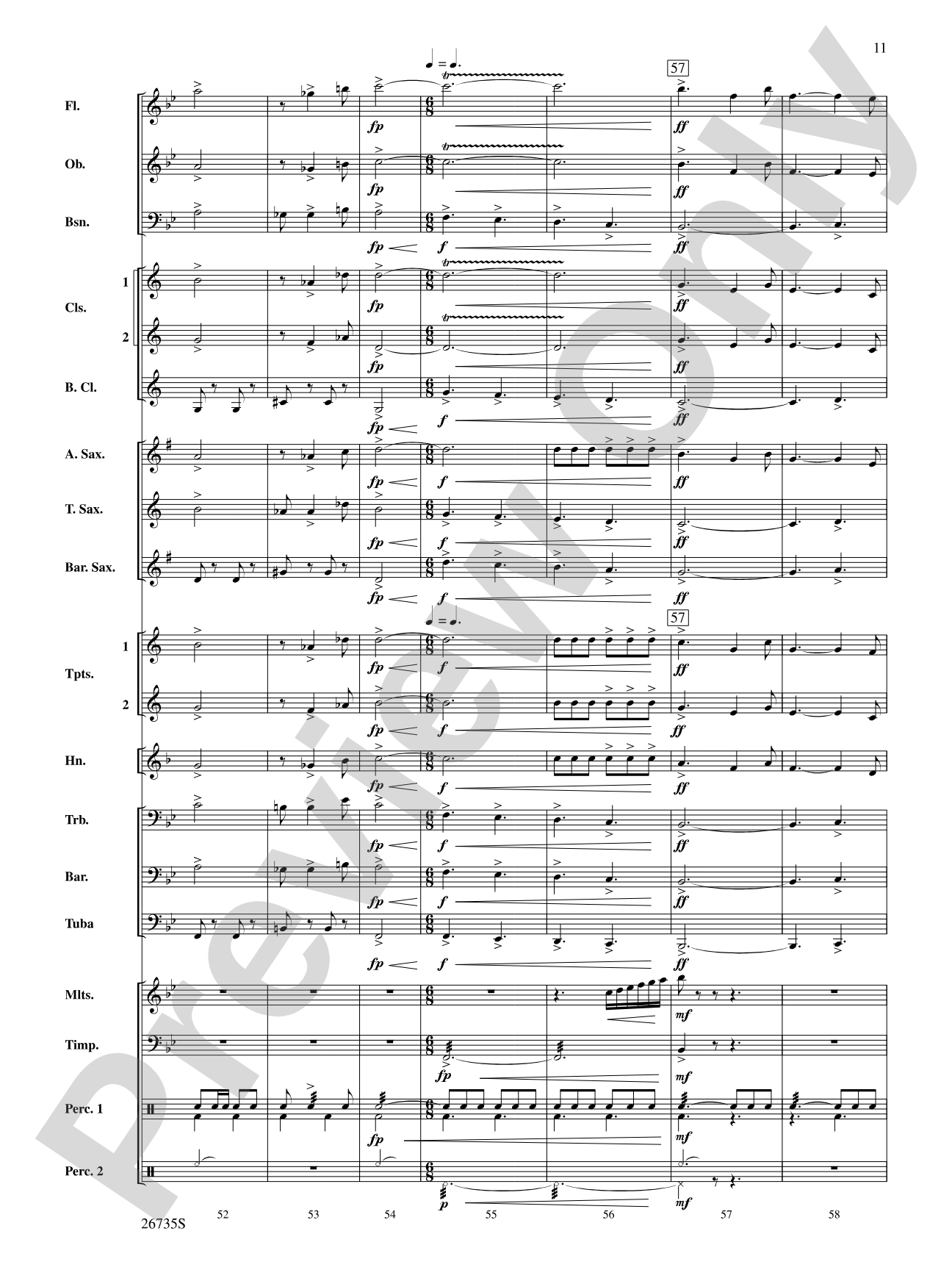
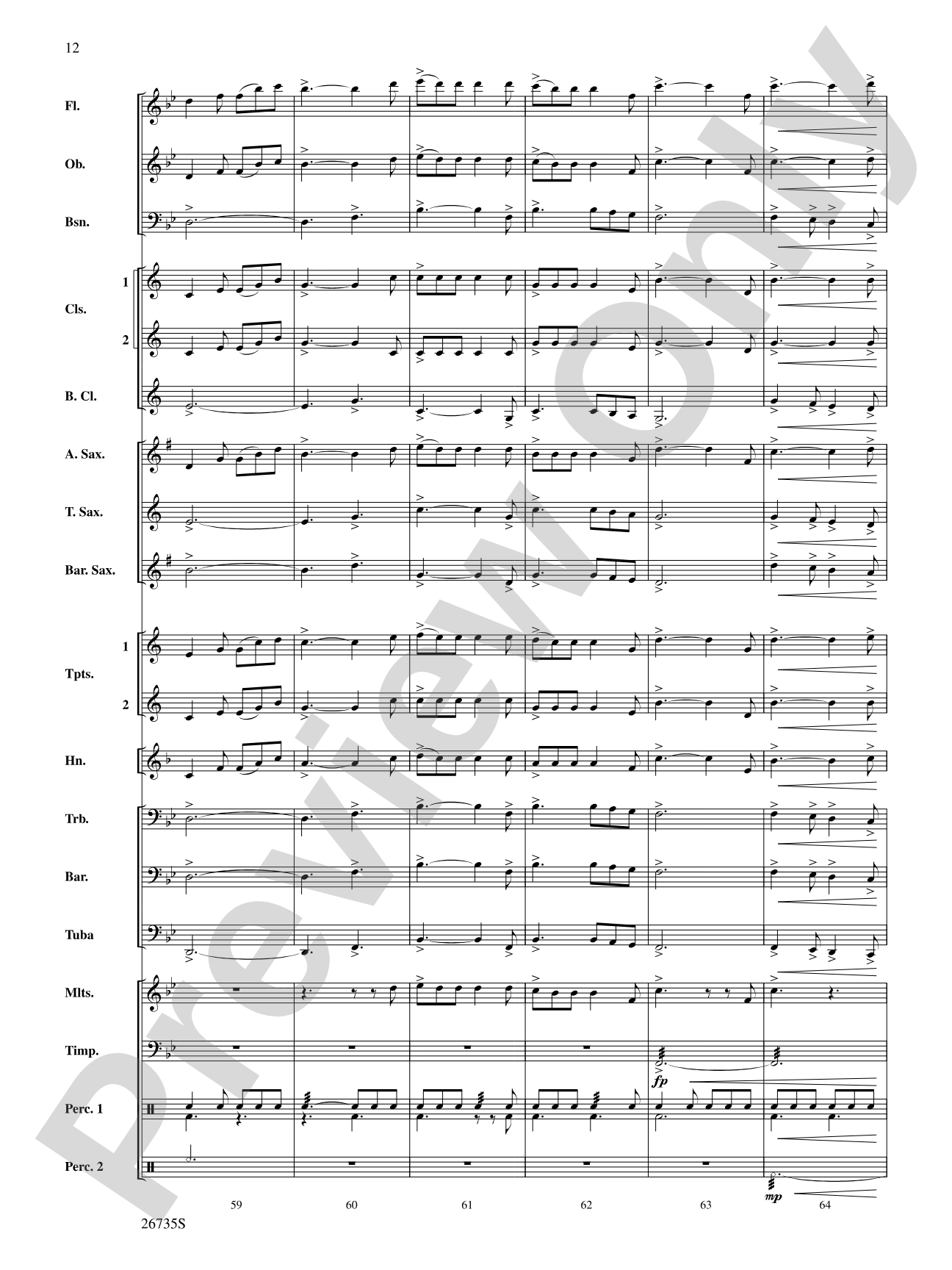
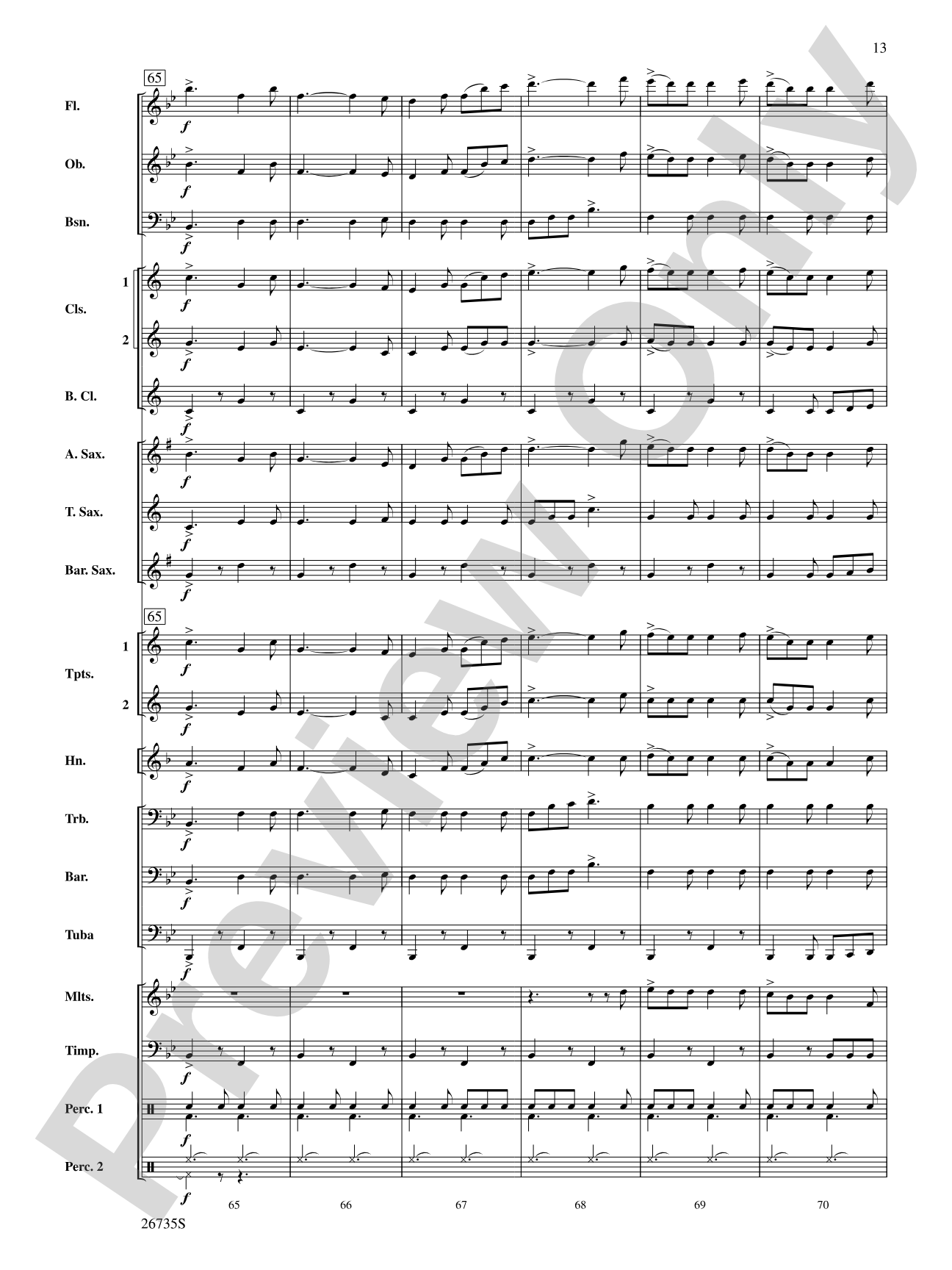
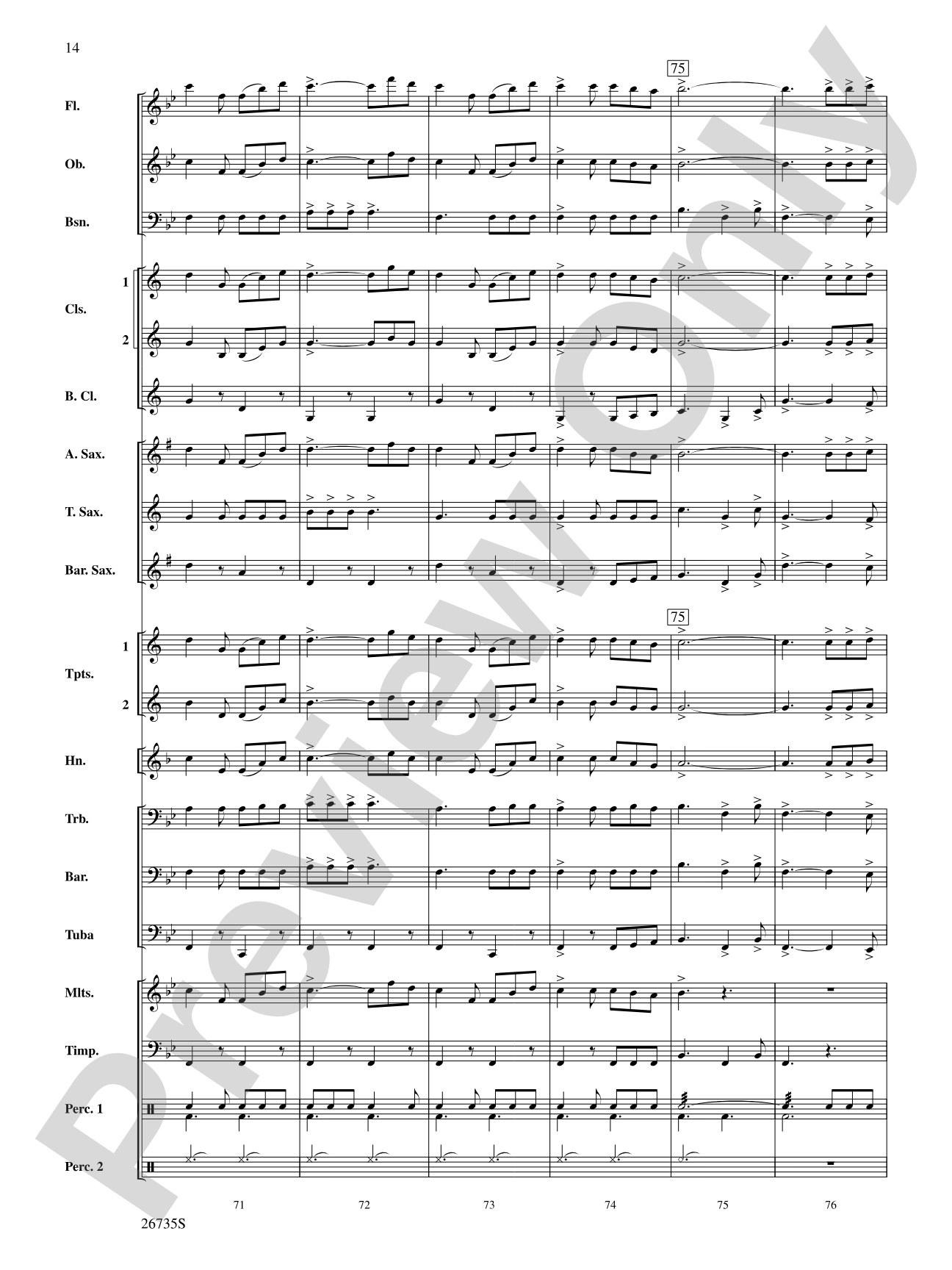
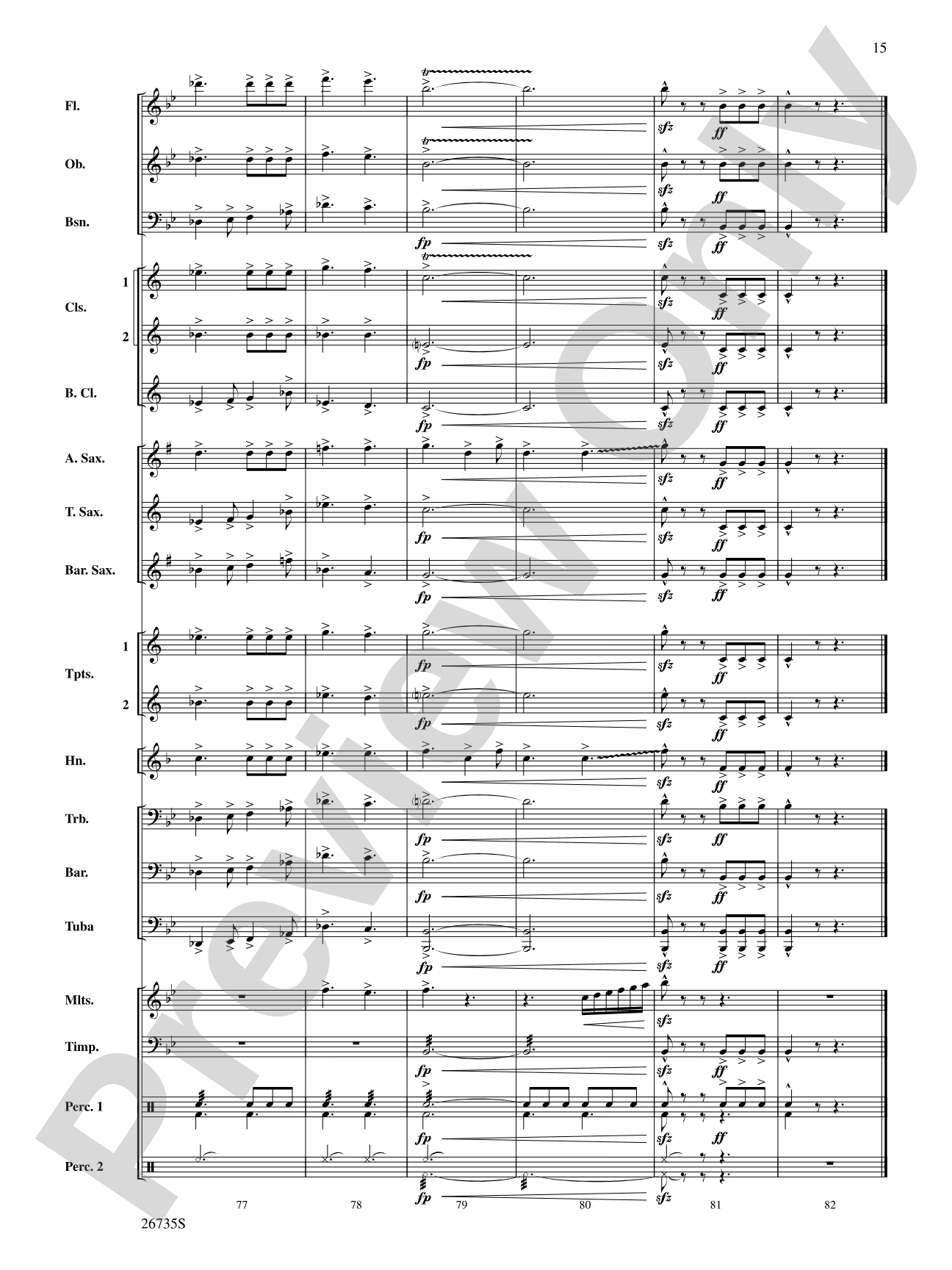


Patton: Concert Band Conductor Score & Parts
By Jerry Goldsmith / arr. Ralph Ford
Grade: 2 (Easy)
Item: 00-PK-0001212

$62.00
One moment…
Description
Commanding and bold, this Jerry Goldsmith film score theme remains a favorite across generations. Ralph Ford has solidly scored this charming march at the young band level. Your audience will leave your concert whistling the tune! This title is available in MakeMusic Cloud.


Don't just read it, hear it, play along with it, and watch your students grow with it. In MakeMusic Cloud, Patton: Concert Band Conductor Score & Parts comes alive with professional accompaniment, adjustable tempo, and built-in practice tools that turn solo practice into real progress.
Open in the Player
Jump straight in and assign it today.
Start Your Free Trial
Open this title and explore the full library in minutes.
Sample Audio
1
Audio File
--:--
0:00
0:00
Sample Video
No sample videos found.
Additional Details
Series:
Pop Young Band
Publisher:
Alfred Music
Page Count:
124
SKU:
00-PK-0001212
More about this title
About the Composer: Jerry Goldsmith
Jerry Goldsmith (1929-2004) shaped film scoring for over five decades, composing themes that became instantly recognizable across multiple generations of moviegoers. His work ranged from intimate character pieces to grand orchestral statements, and his ability to craft memorable melodic lines while maintaining sophisticated harmonic language made him one of the most recorded composers in cinema history.
Why we love this
This arrangement brings a universally recognized film theme into the young band repertoire without sacrificing the march's inherent charm and forward momentum. The Grade 2 scoring balances accessibility with genuine musical interest, giving developing musicians a piece that feels substantial rather than simplified. Your audience will connect immediately to the tune, and your students will feel the satisfaction of performing something that genuinely resonates.
What to expect
Brisk and purposeful, this march captures the bold, authoritative character of the original film theme while maintaining a light, approachable energy. The straightforward scoring lets the memorable melody shine without obscuring it beneath technical complexity.
Who it's for
This is ideal for developing concert bands looking for a Grade 2 work that connects with audiences while remaining accessible to musicians building fundamental ensemble skills. Directors programming pops concerts, film music features, or patriotic-themed concerts will find a reliable crowd-pleaser that doesn't demand extensive rehearsal time.
How to get the most out of it
- Maintain steady forward motion throughout the march without rushing. Young bands often accelerate in moments of confidence, so use a consistent conductor pulse to keep the tempo anchored.
- Shape the melodic line with attention to natural phrase breathing. Even at this grade level, the tune deserves legato phrasing rather than mechanical articulation.
- Balance the brass section carefully during tutti passages. Young band brass players tend to overblow in full ensemble moments; encourage them to match the dynamic level of the reeds.
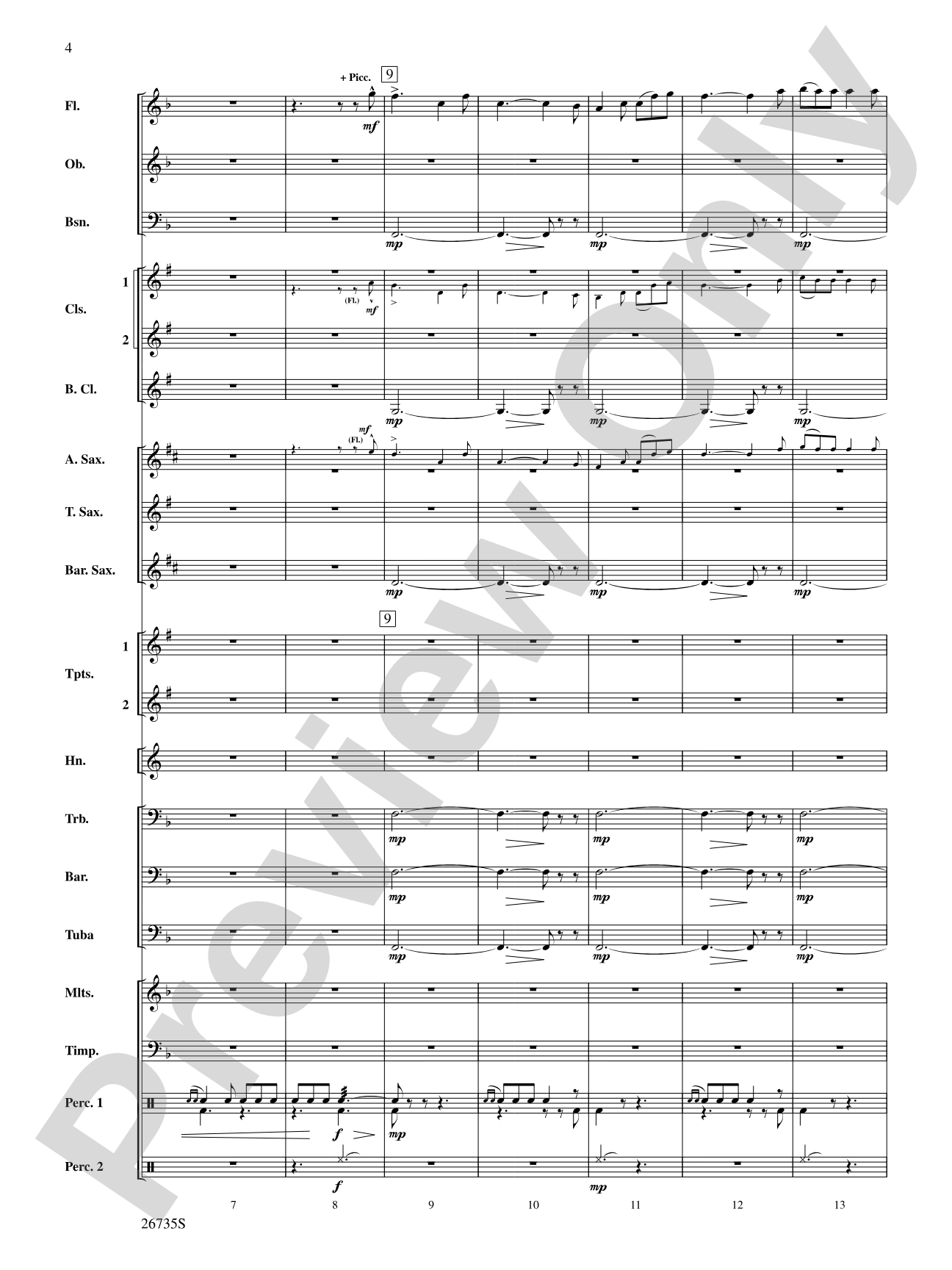
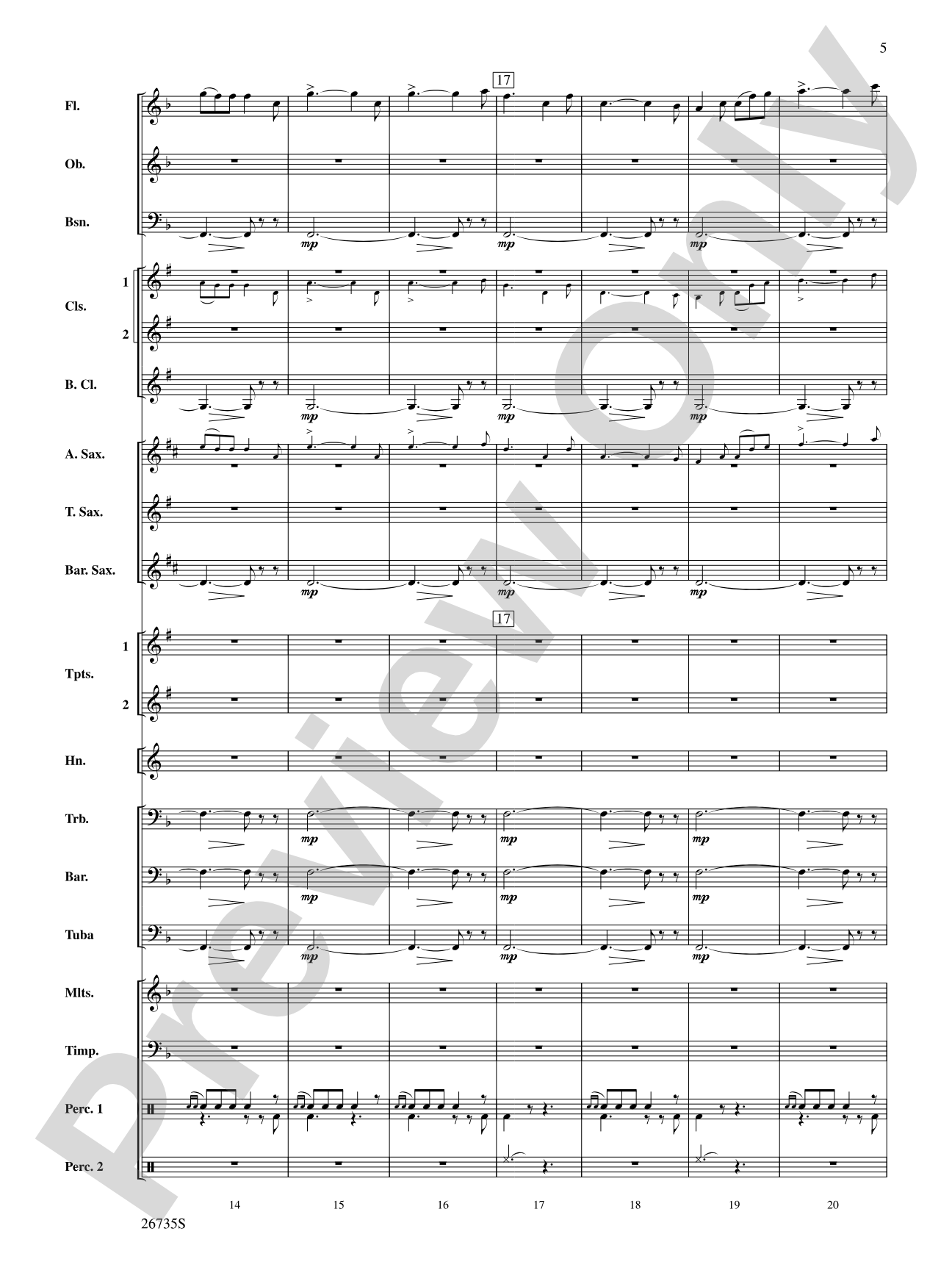
- Bring out the characteristic nature of the march rhythms in the accompaniment figures. These patterns drive the piece's energy, so clarity in the lower instruments elevates the whole performance.
How to use it
This works beautifully on a concert devoted to film music, where it can anchor a section of recognizable themes. It also serves as an excellent closer or opener for a pops concert, providing a sendoff that audiences will readily embrace. Consider programming it during the spring concert season when lighter, more entertaining repertoire balances heavier classical works.
Skills your students will build
- Maintaining steady tempo in march form
- Balancing melody and accompaniment within a full ensemble
- Phrasing and shaping a well-known melodic line
- Controlling dynamic contrast in a march context
- Ensemble cohesion across multiple instrument families