
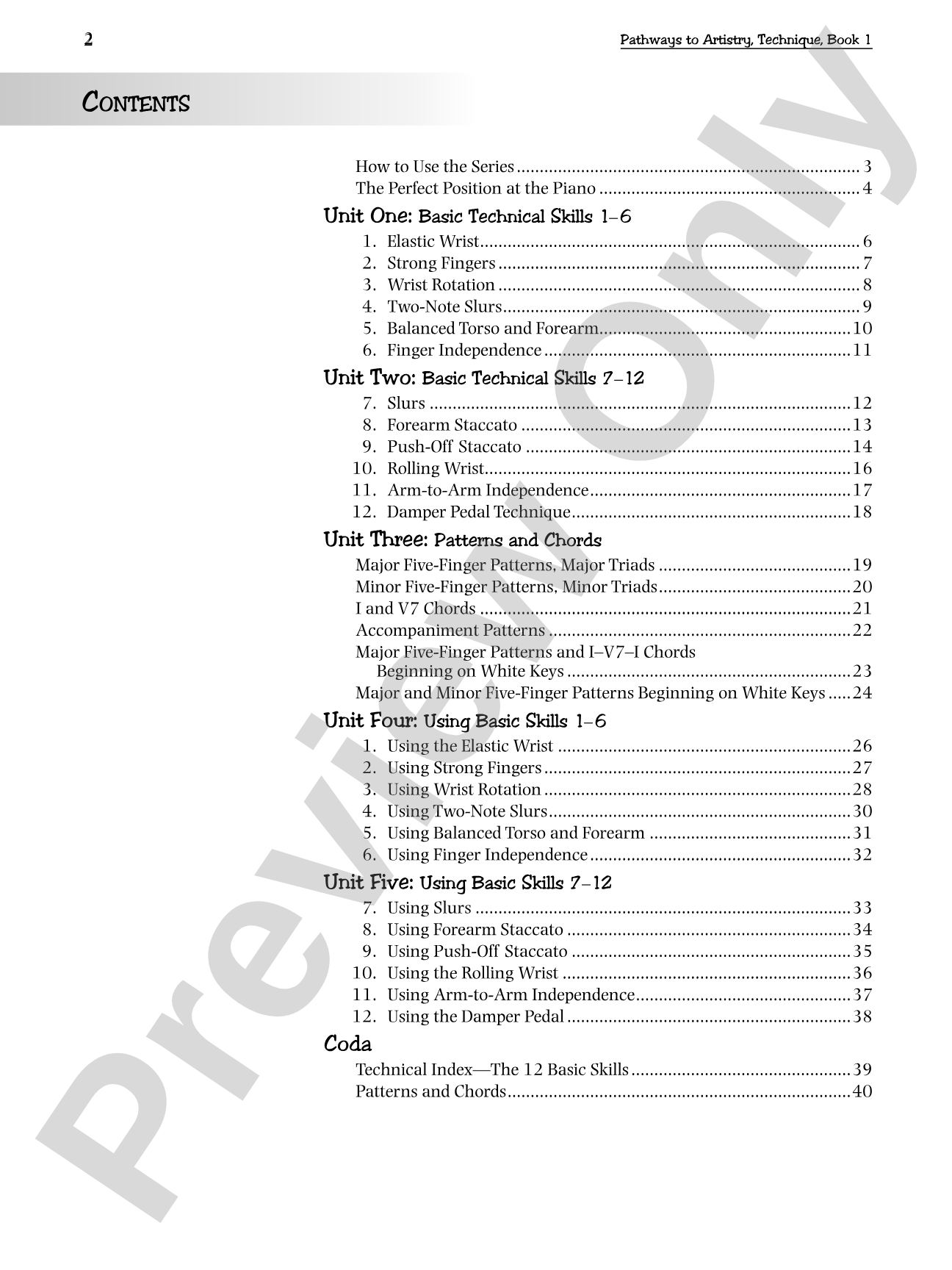
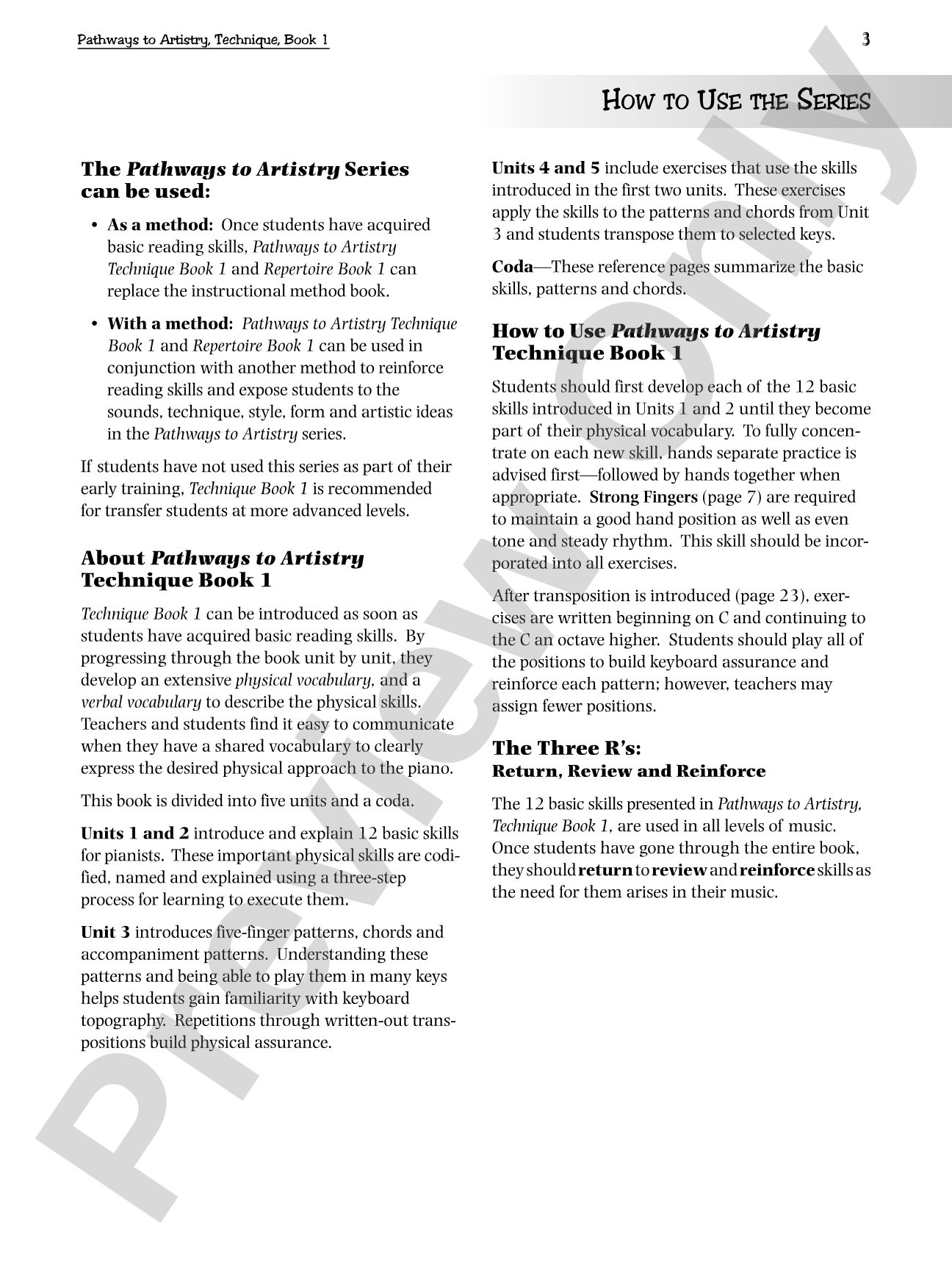
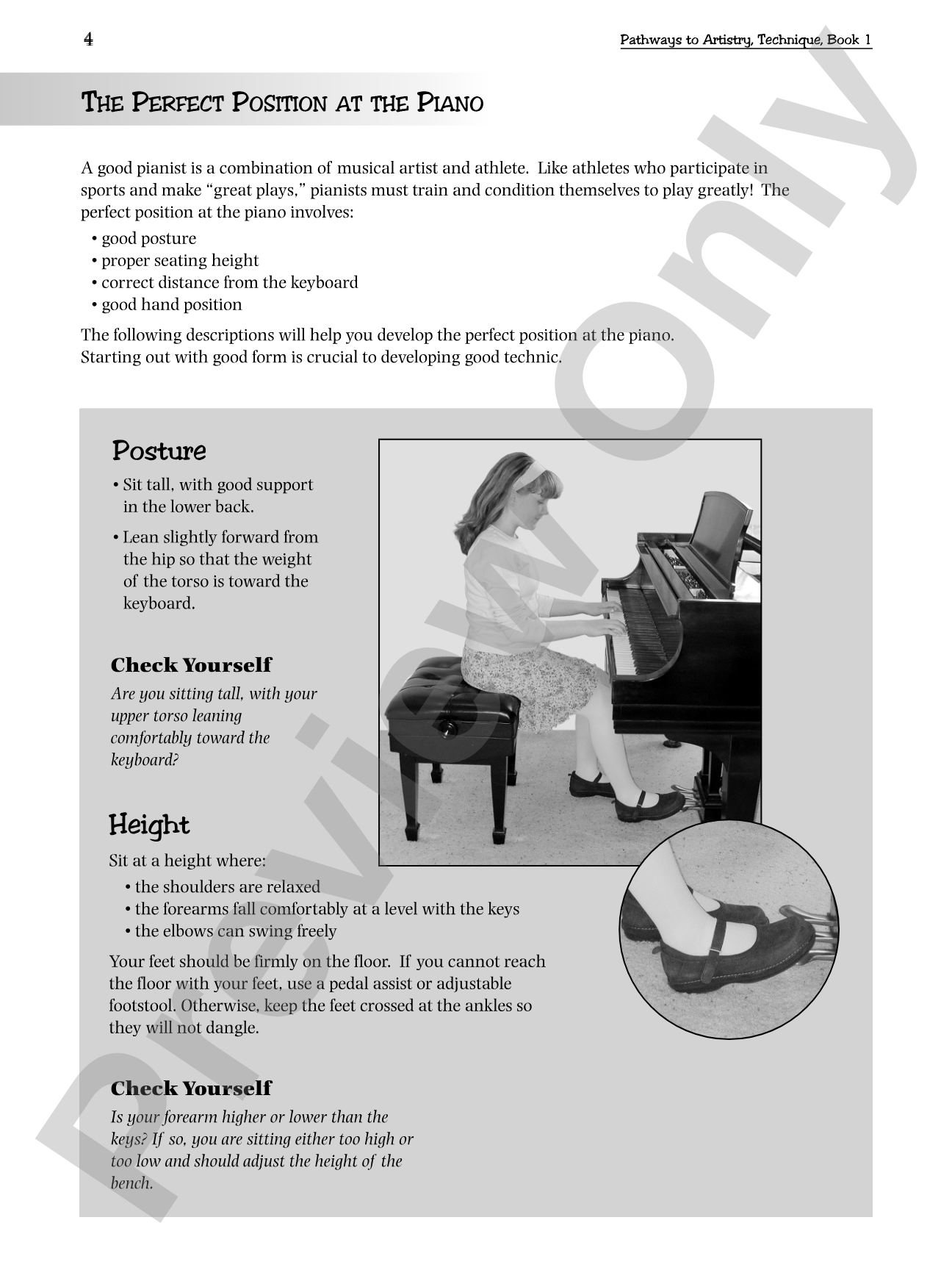
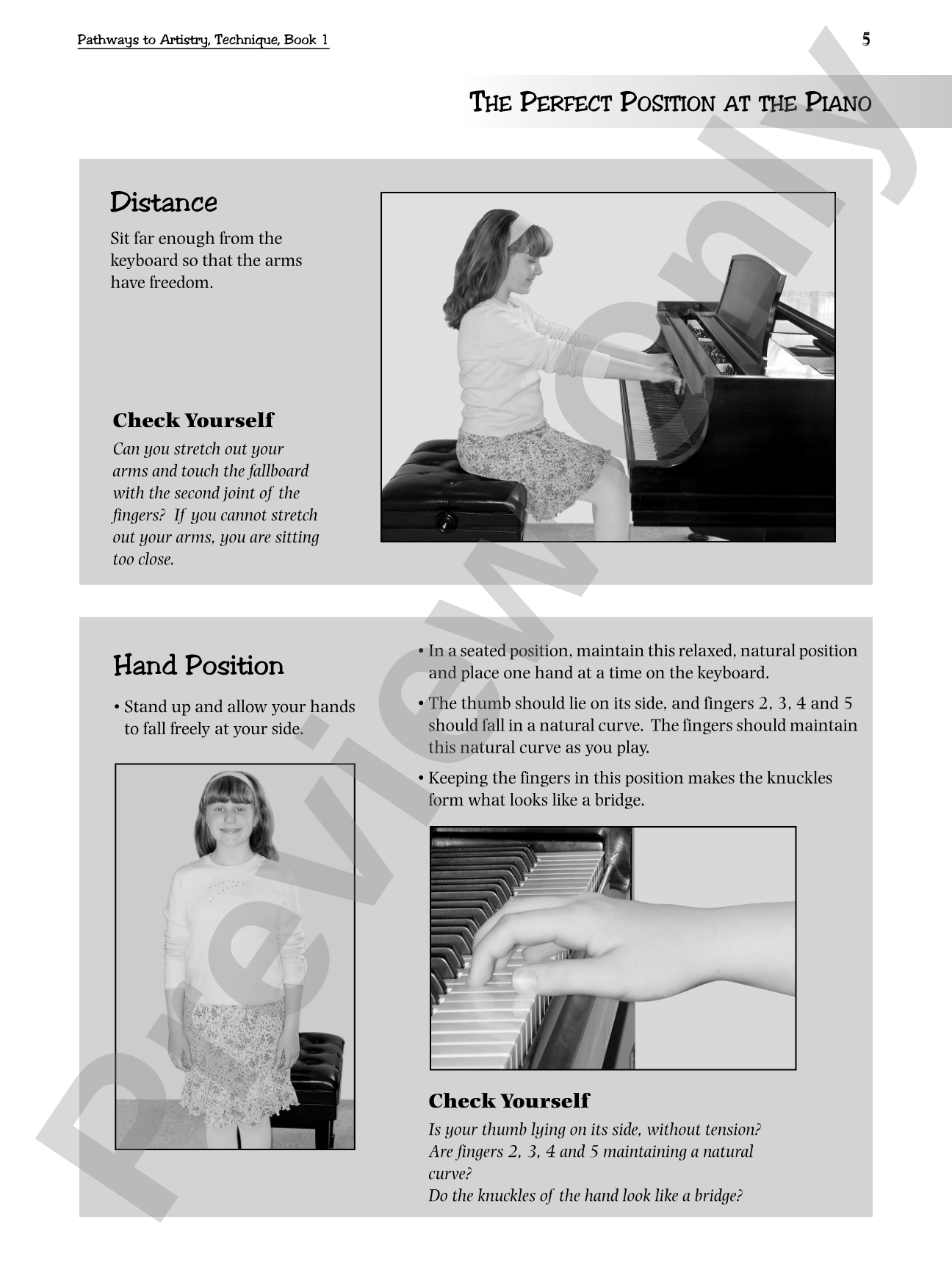

Pathways to Artistry: Technique, Book 1: A Method for Comprehensive Technical and Musical Development: Piano
A Method for Comprehensive Technical and Musical Development
By Catherine Rollin
Level: Late Elementary
Item: 00-PB-0001086
$8.99
Pickup currently not available
Related Items
Pathways to Artistry: Technique, Book 1: Piano Book |
$8.99
|
View |
Description
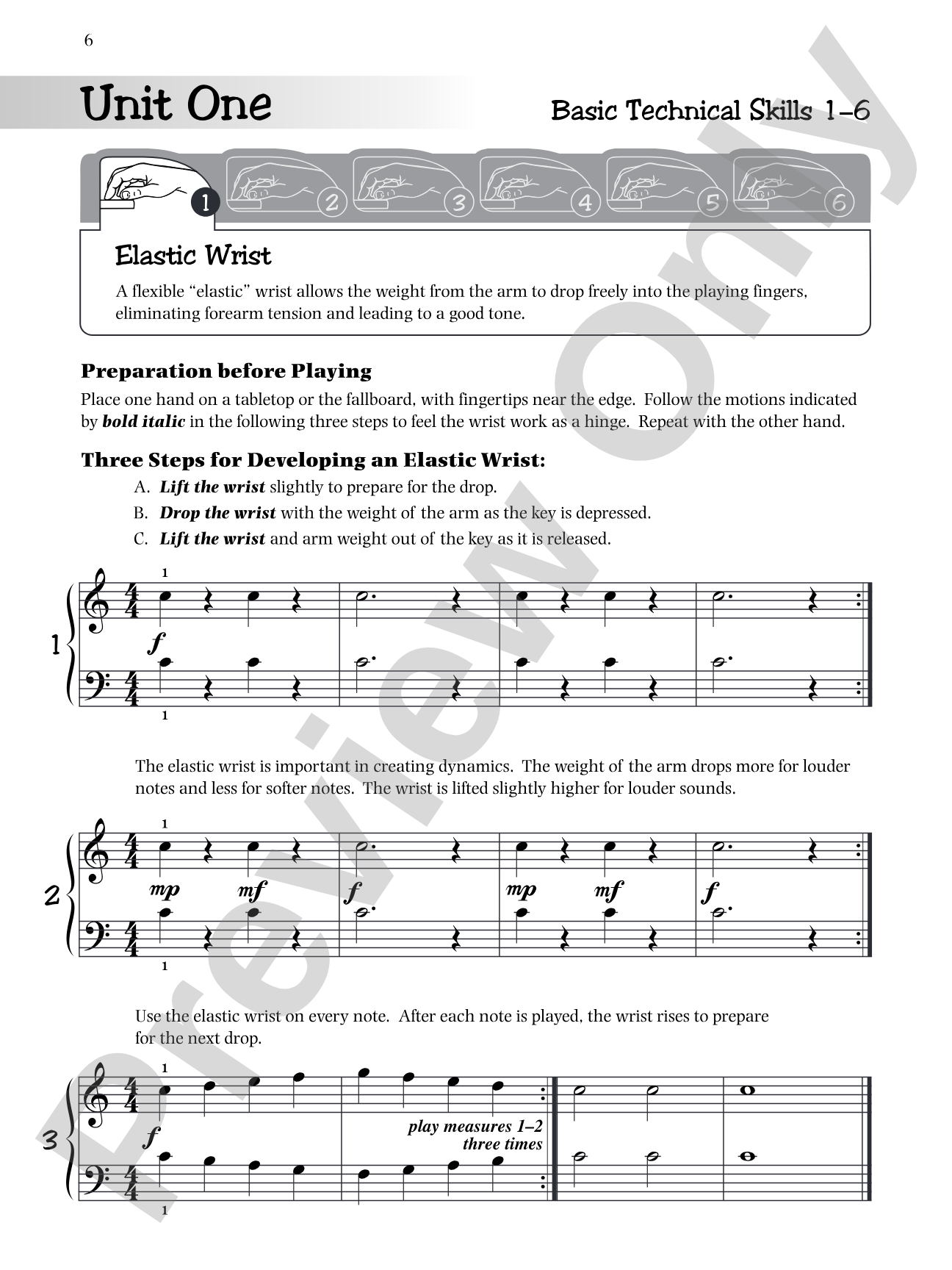
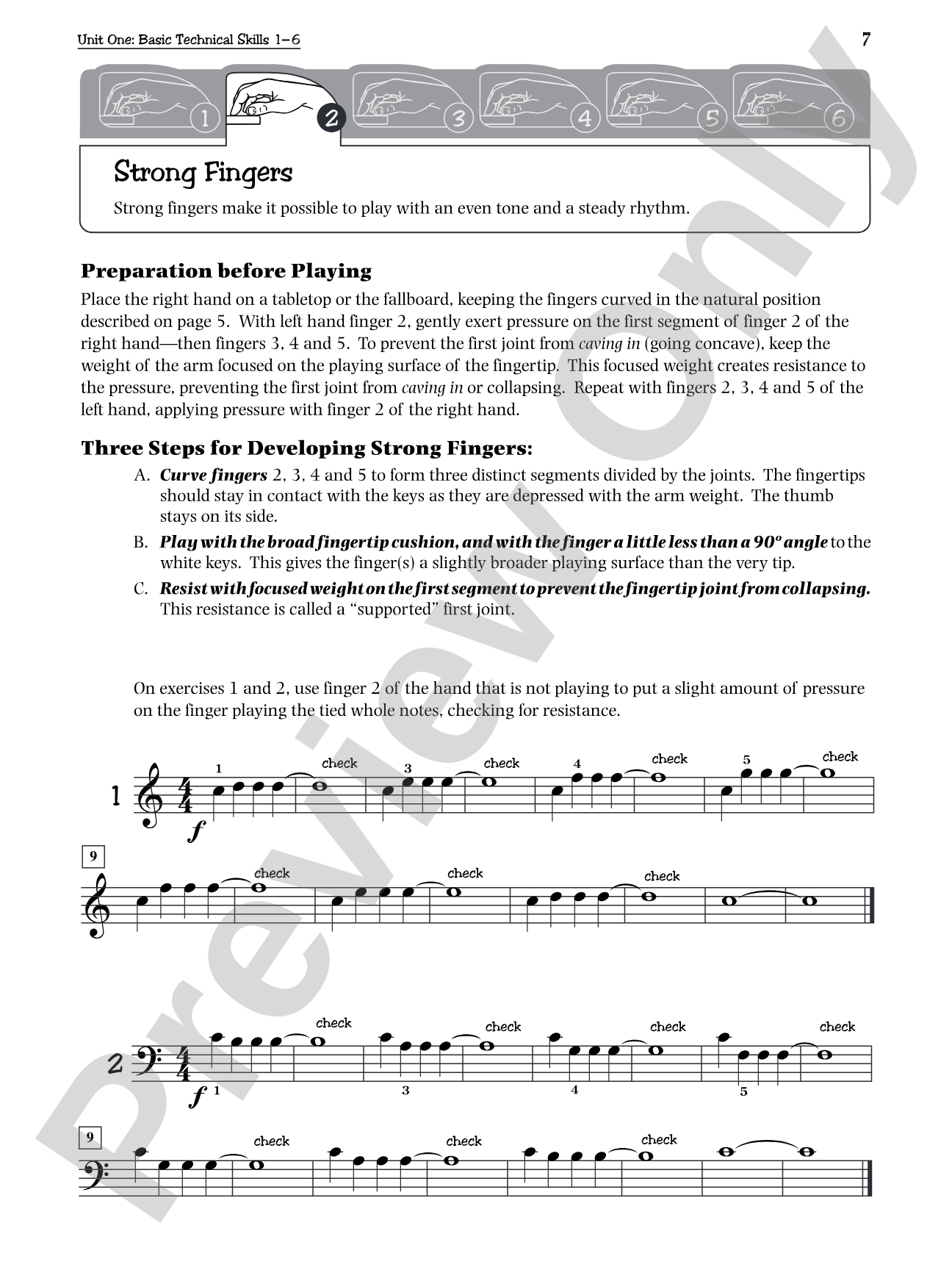
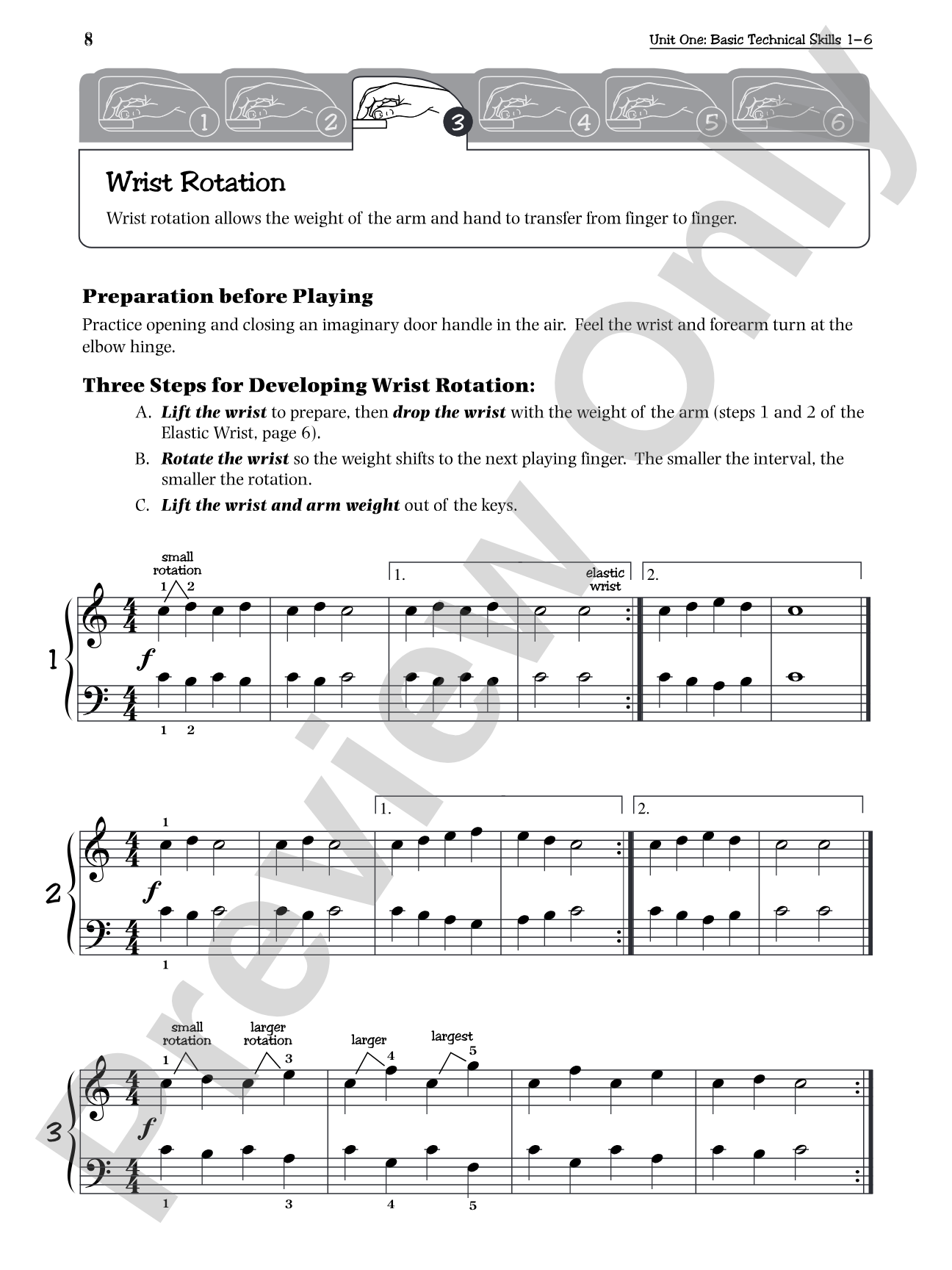
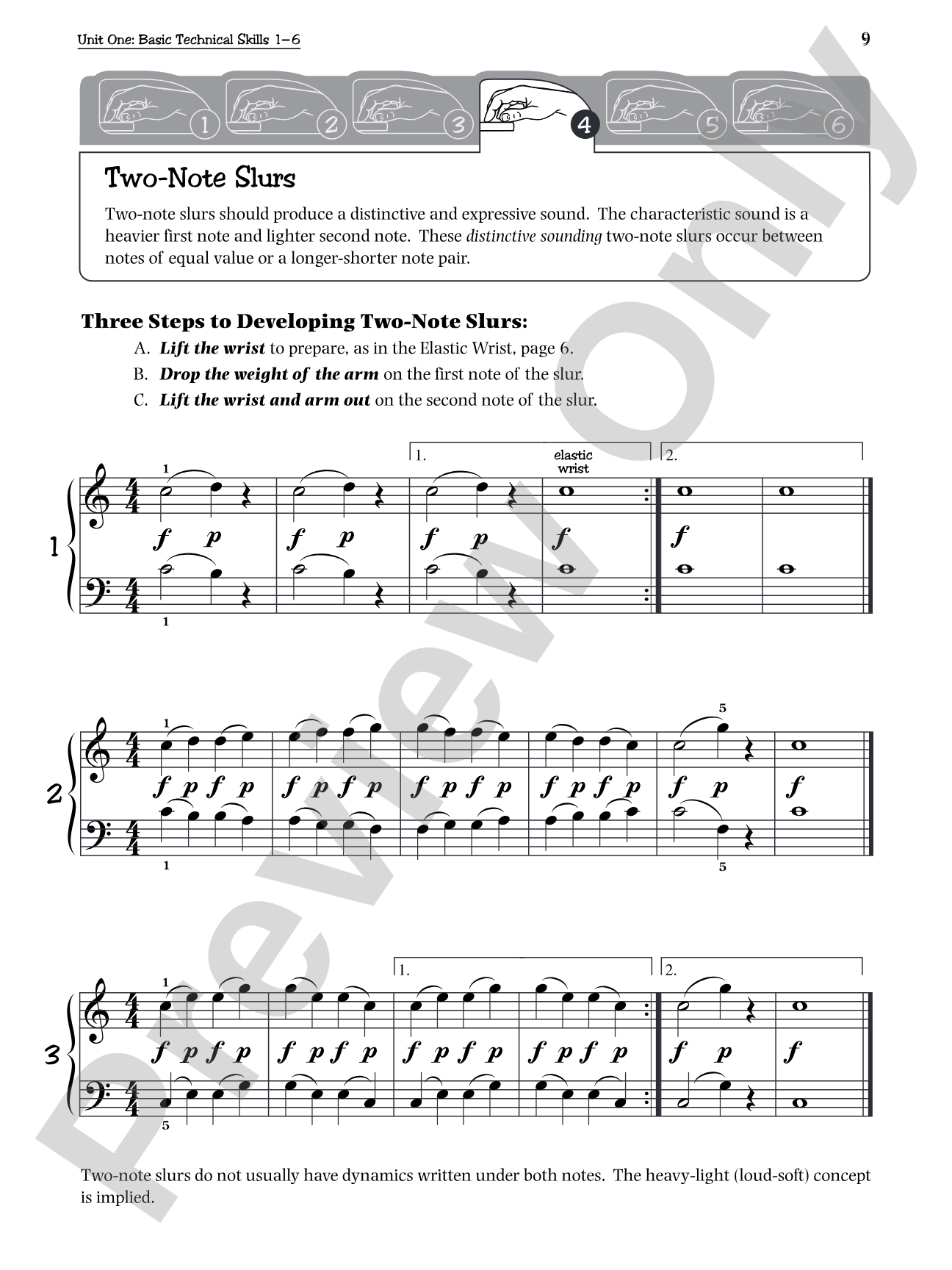
After acquiring basic reading skills, students are ready to begin this innovative series designed to emphasize artistry in the early stages of piano study. The series introduces basic technical skills and expands the student's knowledge of style, form and artistic ideas. The Technique Book gives students a verbal vocabulary that describes the physical skills needed to play music artistically and with technical assurance.


Pathways to Artistry: Technique, Book 1: A Method for Comprehensive Technical and Musical Development: Piano isn't in MakeMusic Cloud just yet...but it could be. Let us know you'd like to see it, and you'll help shape what comes next. In the meantime, start a free trial and dive into thousands of interactive titles your students can play along with today.
Request This Title
Tell us you want it.
Start Your Free Trial
Explore everything that's ready to play right now.
Sample Audio
No sample audio found.
Sample Video
No sample videos found.
Additional Details
Series:
Pathways to Artistry
Publisher:
Alfred Music
Page Count:
40
SKU:
00-PB-0001086
More about this title
About the Composer: Catherine Rollin

Catherine Rollin's career bridges performance and pedagogy at the highest levels. A graduate of the University of Michigan and Oakland University School of Performing Arts, she has led masterclasses and workshops across the United States, Canada, Japan, and Taiwan, working consistently with accomplished students. Her compositional voice has earned commissions from the Music Teachers National Association, Clavier Companion, and the Michigan Music Teachers Association, with selections in the National Federation of Music Clubs Festivals Bulletin.
Rollin's contributions to music education extend beyond composition into leadership and recognition. She has judged the MTNA Student Composition Competition at the national level and served on the panel for the prestigious Lynn Freeman Olson Composition Contest. Her ASCAP award-winning Museum Masterpieces series (Books 1-4) and her commissioned trio Suite Detroit (premiered at the MTNA 2018 national conference) reflect her commitment to both artistic excellence and educational innovation. In 2018, the Steinway Society honored her in concert as both composer and pianist.
Why we love this
Rollin refuses to separate technique from musicianship at this crucial early stage, giving students a language for how their bodies create artistic sound rather than just drilling mechanics. The 40 pages work as both a method and a confidence builder, students encounter real musical ideas while building the physical vocabulary they need to execute them.
What to expect
Purposeful and engaging. Rather than isolated drills, these exercises unfold as small musical ideas that happen to build specific skills. The approach honors what students already know about music while introducing them to the vocabulary and physical awareness that allows them to play with intention and artistry.
Who it's for
Late elementary pianists who have moved past beginner basics and are ready to develop both technical precision and musical awareness. Students benefit most when they're studying alongside a teacher who can help them translate the verbal concepts into physical understanding at the keyboard.
How to get the most out of it
- Encourage students to read the verbal descriptions of each technique before attempting the exercises. This builds the habit of translating physical sensation into musical language.
- Connect each technical concept to a piece the student is learning concurrently. Ask them to identify where that same technique appears in their repertoire.
- Use the artistic ideas presented to guide interpretation discussions. When the book introduces a stylistic concept, explore how it changes the sound and feeling of the exercise.
- Model the exercises yourself first, then play them alongside your student so they hear what careful execution sounds like.
How to use it
Integrate this during the foundational years when students are moving through early repertoire and can benefit from targeted technique work that connects directly to the pieces they're playing. Use it as the spine of your technique curriculum, pairing each section with complementary repertoire that explores the same artistic concepts.
Skills your students will build
- Articulation control (staccato, legato, and mixed touch)
- Hand position and posture awareness
- Tone production and dynamic shaping
- Phrase architecture and musical breathing
- Understanding of style and form as they relate to technical choices
- Vocabulary for describing physical and musical sensations at the keyboard