
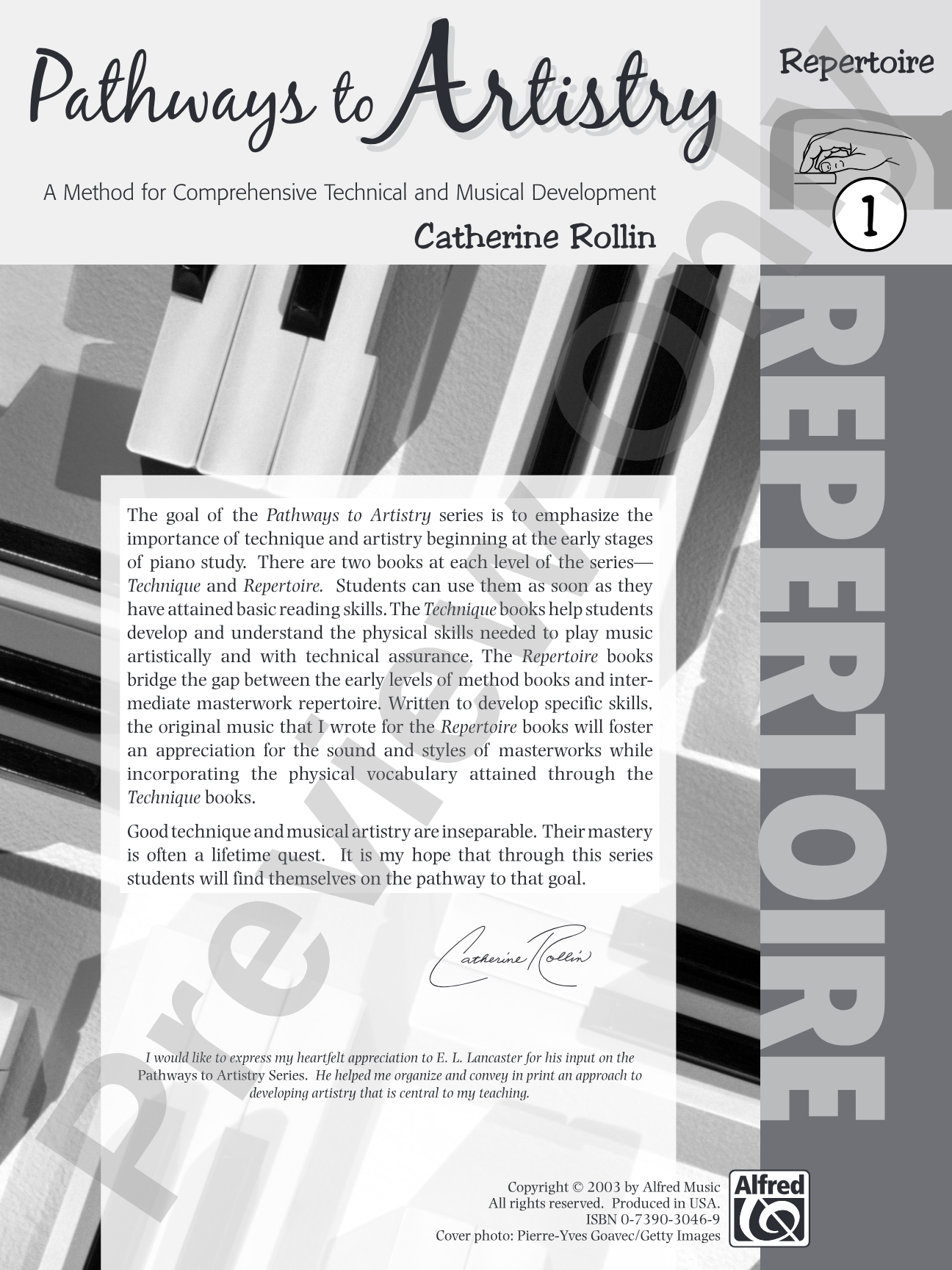

Pathways to Artistry: Repertoire, Book 1: A Method for Comprehensive Technical and Musical Development: Piano
A Method for Comprehensive Technical and Musical Development
By Catherine Rollin
Level: Late Elementary
Item: 00-PB-0001090
$7.99
Pickup currently not available
Related Items
Pathways to Artistry: Repertoire, Book 1: Piano Book |
$7.99
|
View |
Description
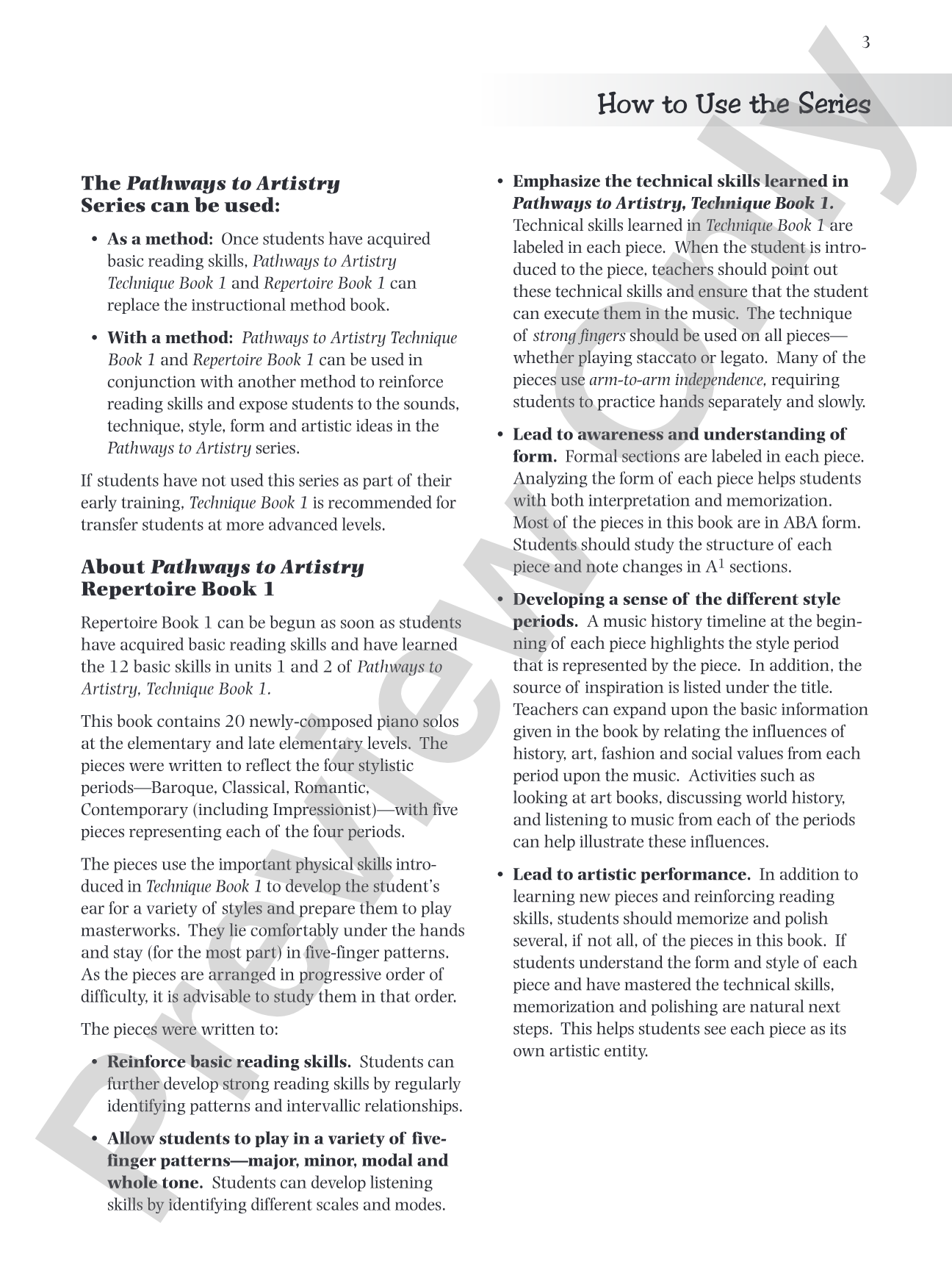
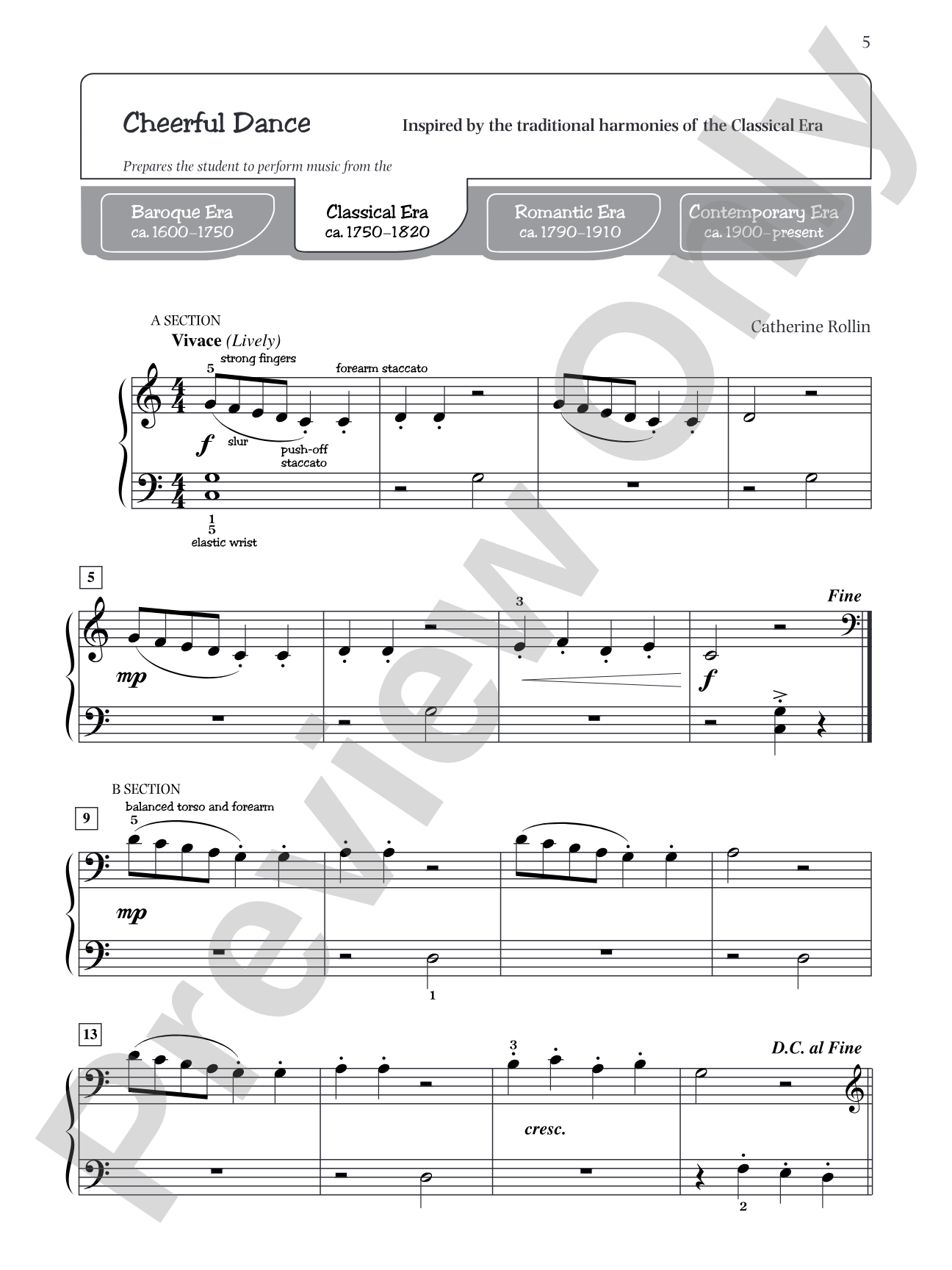
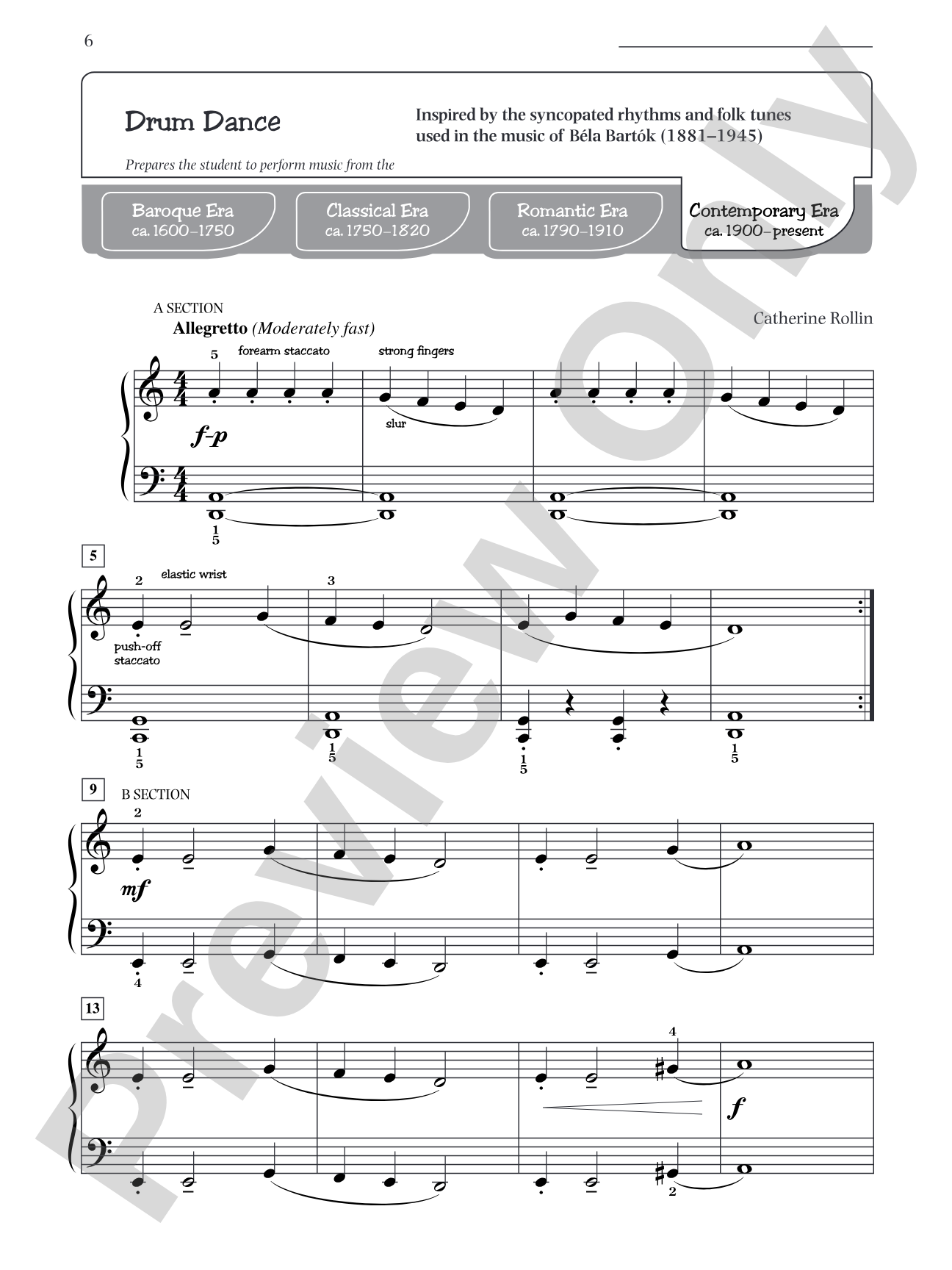
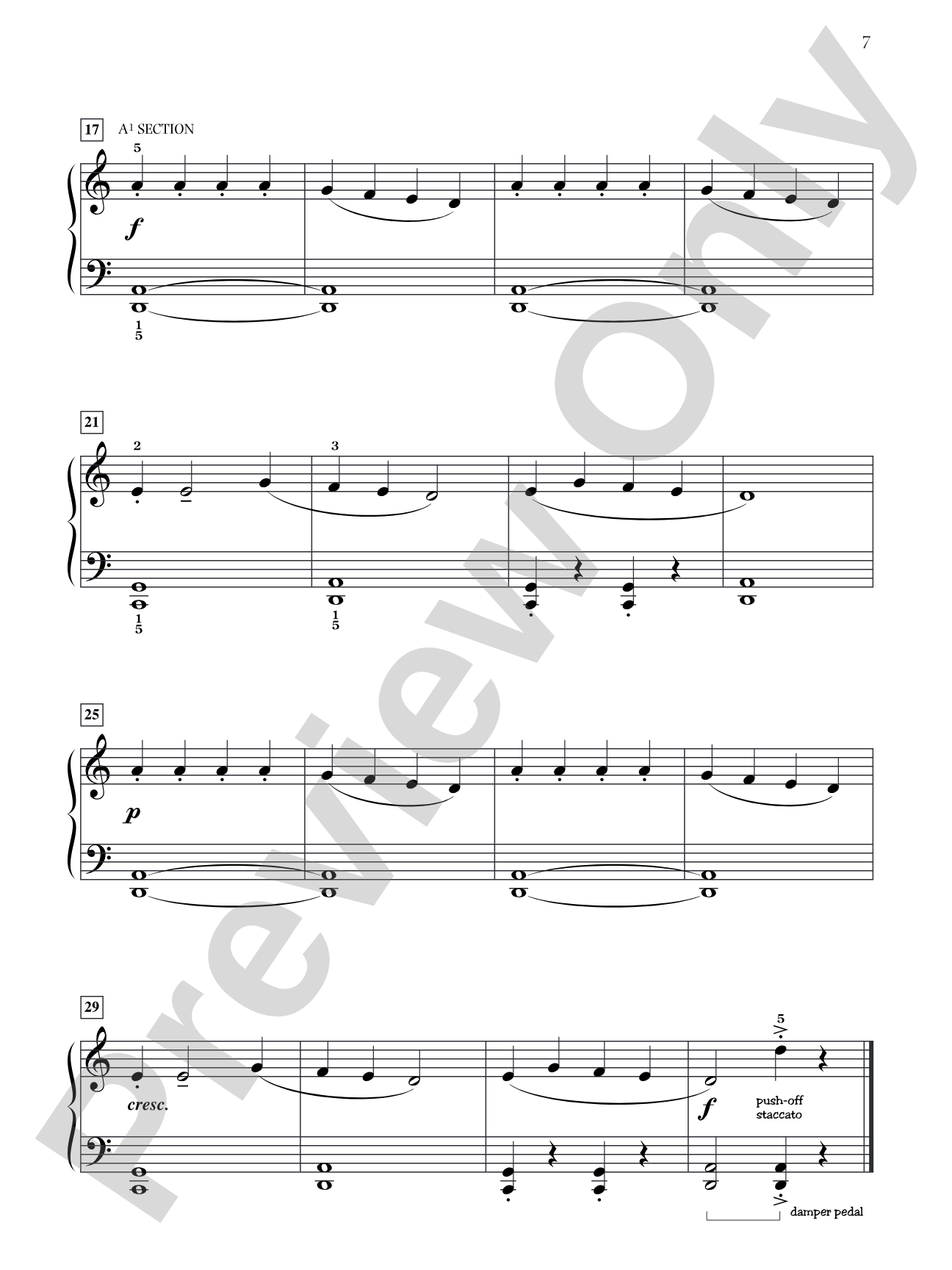
After acquiring the basic reading skills, students are ready to begin this innovative series designed to emphasize artistry in the early stages of piano study. The series introduces basic technical skills and expands the student's knowledge of style, form and artistic ideas. The Repertoire Book provides newly composed music which reviews the techniques being taught, and bridges the gap between early levels of method books and intermediate masterwork repertoire.


Pathways to Artistry: Repertoire, Book 1: A Method for Comprehensive Technical and Musical Development: Piano isn't in MakeMusic Cloud just yet...but it could be. Let us know you'd like to see it, and you'll help shape what comes next. In the meantime, start a free trial and dive into thousands of interactive titles your students can play along with today.
Request This Title
Tell us you want it.
Start Your Free Trial
Explore everything that's ready to play right now.
Sample Audio
No sample audio found.
Sample Video
No sample videos found.
Additional Details
Series:
Pathways to Artistry
Publisher:
Alfred Music
Page Count:
32
SKU:
00-PB-0001090
More about this title
About the Composer: Catherine Rollin

Catherine Rollin holds degrees from the University of Michigan (Bachelor of Musical Arts with distinction) and Oakland University School of Performing Arts (Master of Music). She balances an active performing career with private teaching, mentoring students who have won significant competitions and recognitions.
Rollin's compositional work has earned commissions from Clavier Companion magazine, the Music Teachers National Association (MTNA), the Michigan Music Teachers Association, and MTNA's prestigious From the Pen to the Premiere series. Her compositions have been featured in the National Federation of Music Clubs Festivals Bulletin, and she has served as a national judge for both the MTNA Student Composition Competition and the Lynn Freeman Olson Composition Contest. Her ASCAP award-winning series Museum Masterpieces and multimedia presentations have been showcased at Steinway Society concerts. She regularly travels across the United States, Canada, Japan, and Taiwan to present workshops and masterclasses.
Why we love this
Rollin designed this book to bridge the gap that many young pianists experience between early method work and intermediate repertoire, weaving together technical review, style exploration, and genuine artistic challenge in freshly composed pieces. The carefully sequenced content respects what students already know while pushing them toward independence and musical thinking. Every selection reinforces technique in a real musical context, eliminating the artificial separation between "drill" and "performance."
What to expect
These pieces invite students into the world of real composition without overwhelming them. The writing balances accessibility with genuine musicianship, offering moments of lyrical beauty alongside playful rhythmic discoveries. Each selection feels purposeful and complete, rewarding careful practice with satisfying results.
Who it's for
Late elementary pianists who have completed foundational reading and hand position work and are ready to explore music beyond basic technical etudes. This book works well for students preparing for early recitals, festival participation, or progression toward intermediate repertoire collections.
How to get the most out of it
- Treat each piece as a complete musical statement, not as an exercise. Even short works deserve attention to phrase shape, dynamic contrast, and storytelling intent.
- Identify the primary technical focus in each piece before practicing, then listen for how Rollin uses that technique as part of the musical fabric rather than as an isolated skill.
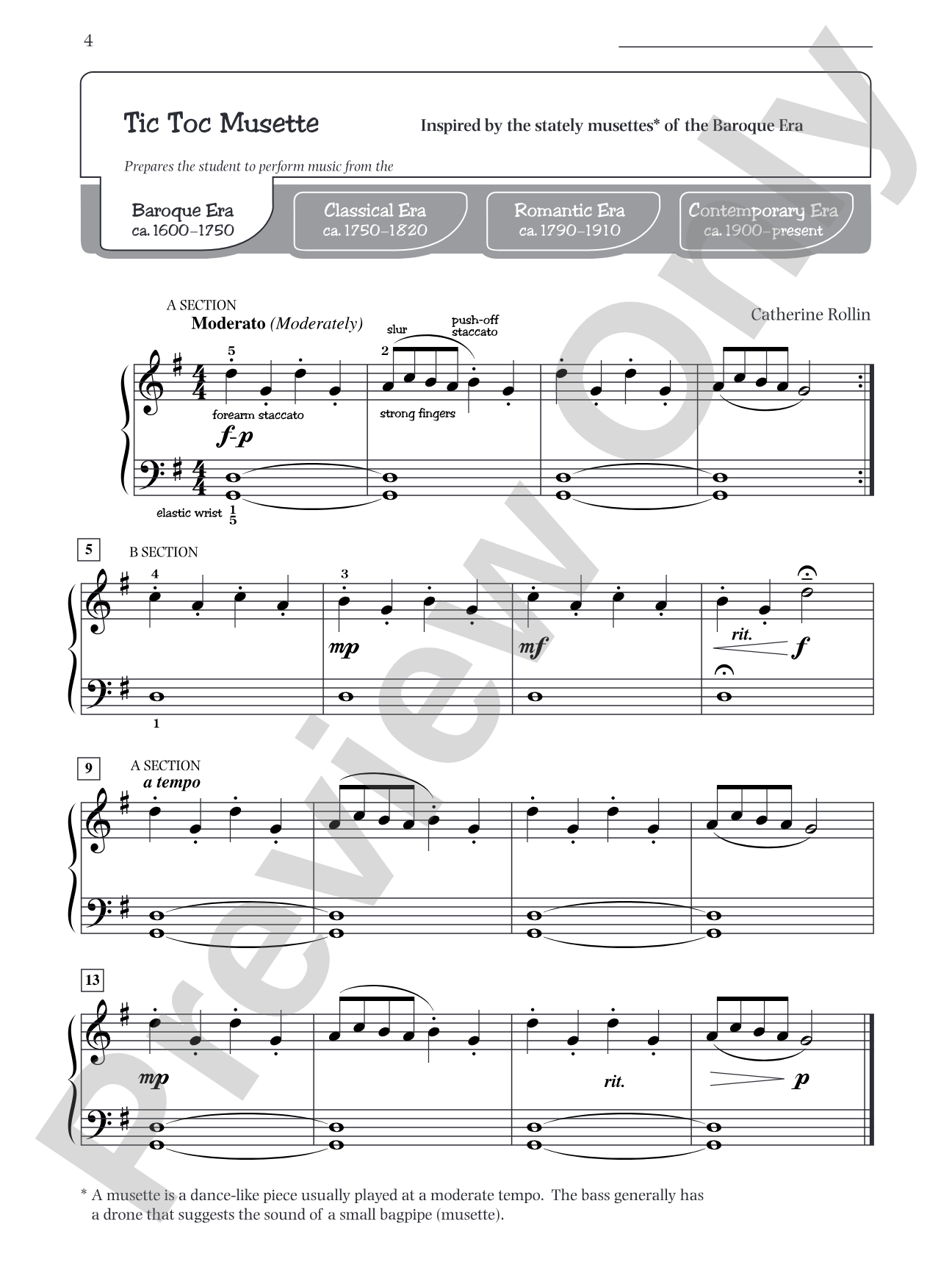
- Explore the style and form suggestions embedded in the score. Taking time to understand the context (whether a piece is dance-inspired, song-like, or stylized) deepens both musical understanding and technical motivation.
- Record yourself regularly. Hearing your own progress across the book's arc builds confidence and helps you recognize improvements in tone quality, rhythm accuracy, and musical maturity.
How to use it
Sequence this book alongside your late elementary method materials as the primary source for recital pieces and technical review. Its 32 pages of newly composed work offer enough variety to support a full semester of private lessons while introducing students to different musical styles and forms. Consider pairing selections with pieces from the next level to inspire progression and long-range artistic goals.
Skills your students will build
- Playing with consistent rhythm and pulse in various meters
- Recognizing and performing basic musical forms (phrase structure, repetition, contrast)
- Developing tone control and dynamic shaping across the range
- Understanding style through performance (dance rhythms, song-like lines, character pieces)
- Sight-reading at late elementary level with increased confidence
- Building hand independence and coordination in two-hand textures