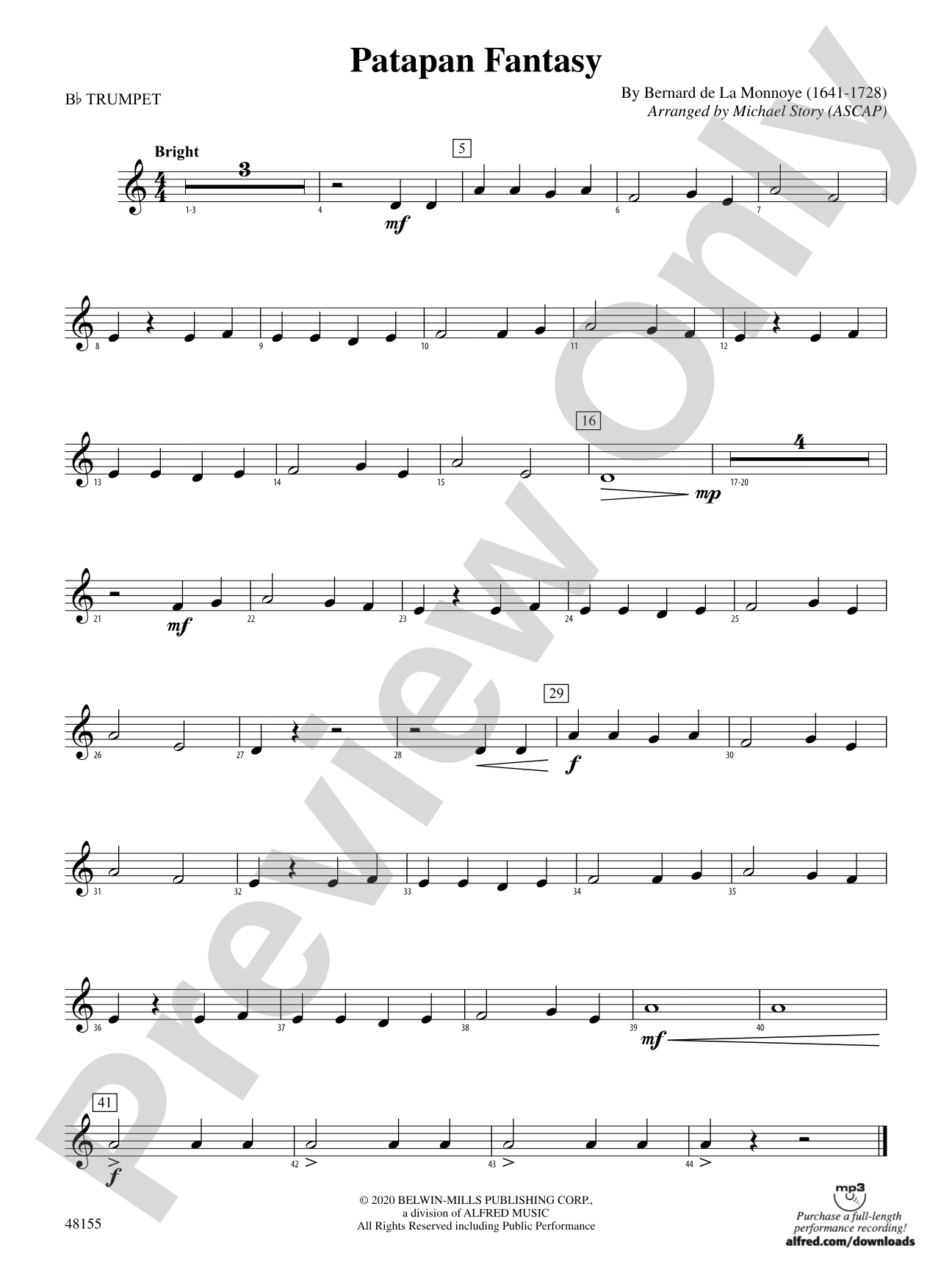
Patapan Fantasy: 1st B-flat Trumpet Sheet Music Preview

Patapan Fantasy: 1st B-flat Trumpet

By Bernard de La Monnoye / arr. Michael Story

Grade: 0.5 (Very Easy)

Item: 00-PC-0018573_T1

Digital Download
$3.00
Description
On the charts for 300 years, this classic French carol, written by Bernard de La Monnoye, was first published in 1720. Designed for students halfway through their first year in band using just the initial handful of notes presented in most beginning band methods and without a written key signature. Perfectly crafted for your students' first holiday performance! (1:30) This title is available in MakeMusic Cloud.

Don't just read it, hear it, play along with it, and watch your students grow with it. In MakeMusic Cloud, Patapan Fantasy: 1st B-flat Trumpet comes alive with professional accompaniment, adjustable tempo, and built-in practice tools that turn solo practice into real progress.

Sample Audio
0:00
0:00
Sample Video
Additional Details
Series: Belwin Very Beginning Band
Publisher: Alfred Music
Page Count: 138
SKU: 00-PC-0018573_T1

More about this title

About the Composer: Bernard de La Monnoye

Bernard de La Monnoye (1641-1728) was a French poet, musician, and antiquarian whose work shaped the musical landscape of 17th-century France. He composed and collected songs that reflected the life and culture of his native Burgundy, preserving folk melodies and festive music for generations to come.

Patapan stands among his most enduring contributions to music education. Written around 1720, this carol has maintained continuous presence in school and community music programs worldwide, making it one of the earliest examples of pedagogical genius in holiday repertoire. Its simplicity and charm have allowed countless young musicians their first experience with concert performance.

Why we love this

Michael Story's arrangement honors the carol's 300-year legacy while respecting the genuine constraints of your beginning ensemble. Built entirely from the first notes students learn, it feels neither dumbed-down nor condescending; instead, it trusts students to bring character and ensemble awareness to elegant simplicity. Your students will experience the satisfaction of performing a real piece with immediate success.

What to expect

Bright and celebratory without overwhelming. The carol carries warmth and festive character that feels earned through careful voicing rather than relying on novelty or arrangement flourishes. There's something timeless about it; students sense they're playing something that matters.

Who it's for

Conductors of first-year band students who have learned only the initial fingerings and note names from their method books. This piece gives them a genuine concert experience without requiring extended range, complex rhythms, or key signatures.

How to get the most out of it

  • Balance the melody across your band sections rather than featuring one group. This develops listening skills across the ensemble and prevents the familiar tone-matching problems that come from over-weighting parts early in the year.
  • Establish a clear pulse in rehearsal before adding the written notes. Students halfway through their first year benefit from explicit beat-keeping work, and this carol's straightforward phrasing makes that conductor communication transparent.
  • Shape the phrases with gentle dynamic inflection even though the score sits at one dynamic level. Inviting students to voice their parts with intent teaches them that simplicity and musicality coexist.

How to use it

Place this early in a holiday concert program or as a complete standalone performance for parents and families during a winter celebration. Its short duration (1:30) and accessible energy make it ideal for programs that blend beginning ensembles with more advanced groups, offering your youngest students a meaningful moment without derailing the flow of the concert.

Skills your students will build

  • Reading music without key signatures
  • Blending instrumental timbres within a limited note range
  • Responding to conductor direction for phrasing and dynamics
  • Sustaining ensemble rhythm across an entire piece
  • Connecting to historical musical tradition

You May Also Like