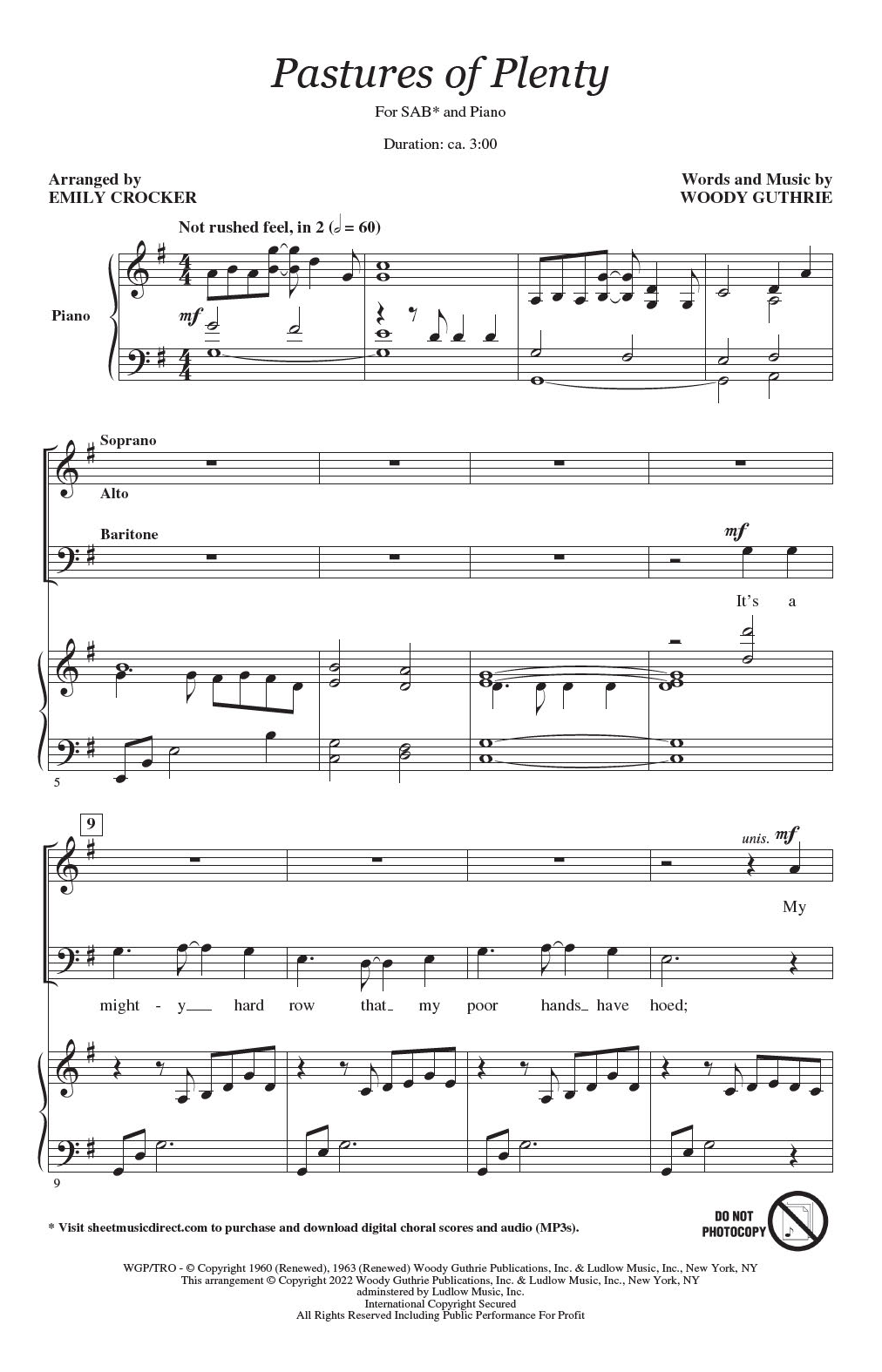
Pastures Of Plenty (arr. Emily Crocker) Sheet Music Preview

Pastures Of Plenty (arr. Emily Crocker): SAB Choral Octavo

As performed by Woody Guthrie / Arranged by Emily Crocker

Item: 35-DS01089343

Digital Download
$2.99
Description

Pastures Of Plenty (arr. Emily Crocker): SAB Choral Octavo isn't in MakeMusic Cloud just yet...but it could be. Let us know you'd like to see it, and you'll help shape what comes next. In the meantime, start a free trial and dive into thousands of interactive titles your students can play along with today.

Sample Audio
No sample audio found.
Sample Video
Additional Details
Publisher: Hal Leonard
Page Count: 11
SKU: 35-DS01089343

More about this title

About the Artist: Woody Guthrie

Woody Guthrie (1912-1967) was an American folk singer and songwriter whose work became the backbone of the modern folk tradition. Born in Oklahoma during the Great Depression, he witnessed firsthand the struggles of migrant workers, tenant farmers, and the dispossessed, experiences that shaped every song he wrote. His guitar bore the inscription "This machine kills fascists," a declaration of his belief that music could be a tool for social justice and human dignity.

Guthrie's catalog includes hundreds of songs that document American life with unflinching honesty and surprising tenderness. Pieces like "This Land Is Your Land" and "Pastures of Plenty" transcend their historical moment to speak directly to singers and listeners across generations. For music educators, his work offers students a direct connection between song, citizenship, and conscience.

Why we love this

Emily Crocker's arrangement opens this Dust Bowl narrative to three-part mixed voices without diluting its emotional core or historical weight. The SAB voicing sits comfortably for singers at various levels while preserving the song's folk integrity, making it a genuine educational experience rather than a watered-down version of the original.

What to expect

The arrangement carries the patient, determined quality of voices singing about work and survival. There's dignity in the melody and a quiet strength in the harmony that honors both Guthrie's original intention and the migrants whose lives inspired it.

Who it's for

This arrangement serves choirs wanting to engage with American social history through music, whether in school settings, community choirs, or concert programming that values authenticity. It works especially well for groups exploring folk traditions or programming concert themes centered on labor, migration, or social change.

How to get the most out of it

  • Anchor the piece in honest storytelling. These lyrics describe real hardship; singers should understand what they're singing about before rehearsal begins.
  • Keep the arrangement transparent. Let the words carry the weight rather than filling every moment with harmonic density.
  • Balance forward motion with space. Folk music breathes differently than classical material; allow singers room to phrase naturally without rigid conducting.

How to use it

Pair this with other folk arrangements or American roots music to create a concert section that teaches history through song. It also serves as an accessible entry point for choirs new to socially conscious repertoire, bridging standard concert fare with repertoire that matters.

Skills your students will build

  • Interpreting historical and lyrical content in musical context
  • Singing folk idioms with stylistic authenticity
  • Balancing part independence in three-part mixed voicing
  • Understanding how arrangement choices preserve or alter a song's character

You May Also Like