Pastels Sheet Music Preview

Pastels: Piano

By Myra Brooks-Turner

Item: 98-DP2022

Digital Download
$2.95
Description
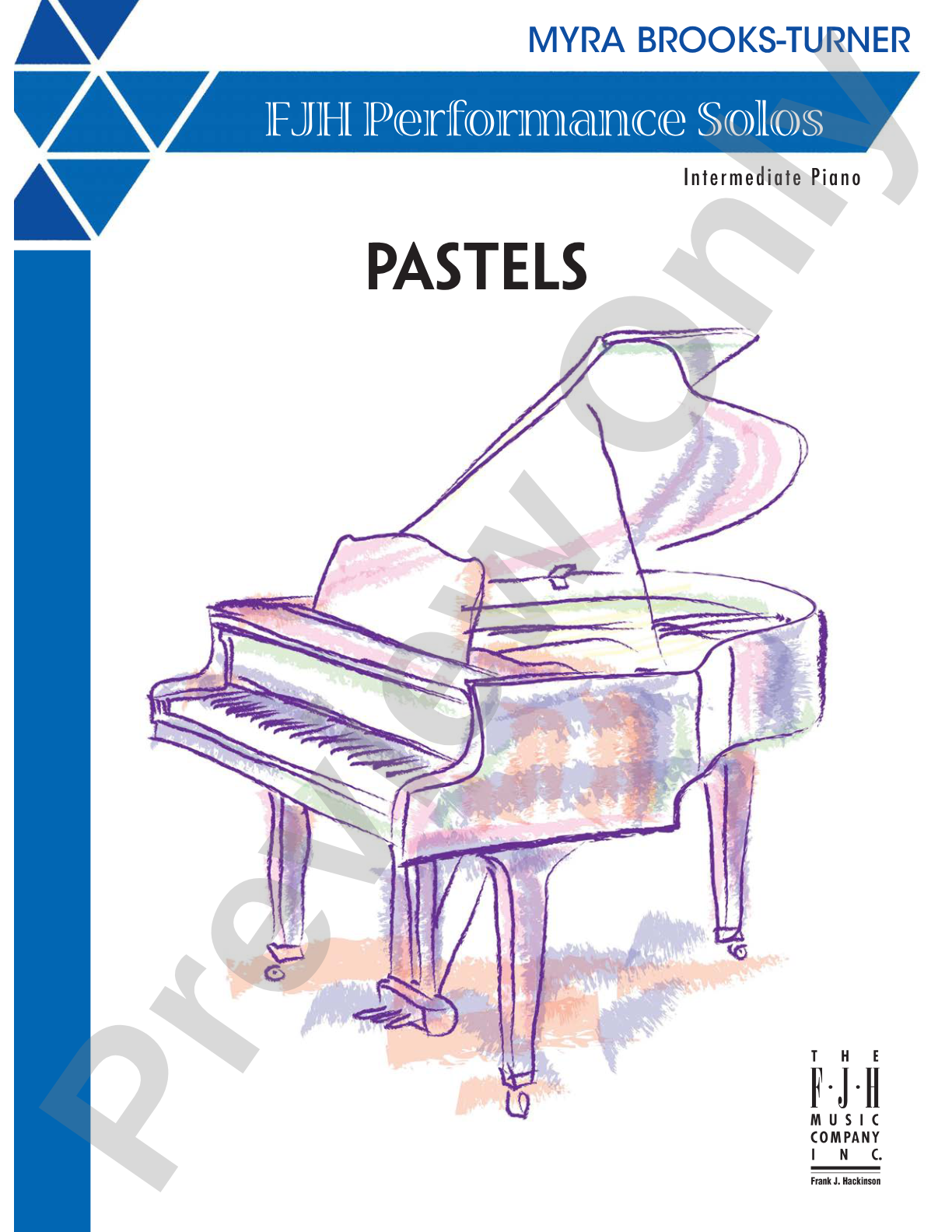
You may come up with your own favorite colors as you explore the timbres in this beautiful solo. A lyrical melody in F major is supported by arpeggiated chords in Section A and blocked chords in Section B. This piece calls for artistic use of pedal and reading inner ledger lines.

Pastels: Piano isn't in MakeMusic Cloud just yet...but it could be. Let us know you'd like to see it, and you'll help shape what comes next. In the meantime, start a free trial and dive into thousands of interactive titles your students can play along with today.

Sample Audio
No sample audio found.
Sample Video
Additional Details
Series: FJH Performance Solos
Publisher: The FJH Music Company, Inc.
SKU: 98-DP2022

More about this title

Why we love this

Brooks-Turner captures something essential about color and sound here. The contrast between arpeggiated and blocked textures gives intermediate pianists real interpretive choices, and the F major tonality sits naturally under the hands without feeling like a training-wheels key.

What to expect

Luminous and contemplative. The piece invites quiet attention to timbre and resonance rather than virtuosic display. Brooks-Turner's use of F major creates warmth without sentimentality.

Who it's for

Intermediate pianists ready to balance technical competence with expressive interpretation. This solo works well for students developing touch control and understanding how accompaniment texture affects overall mood.

How to get the most out of it

  • Experiment with pedal changes at structural boundaries (between Section A and B) rather than holding it continuously; this preserves clarity while honoring the piece's call for artistic pedal work.
  • Shape the arpeggiated chords in Section A to support the melody's phrasing, not compete with it; think of them as harmonic color, not accompaniment.
  • Read the inner ledger lines carefully during practice by isolating those passages separately before putting hands together.

How to use it

Include this as a lyrical contrast in a recital with more rhythmically driven pieces, or slot it into a spring concert exploring impressionistic approaches to classical forms. It works equally well as a solo or as part of a student showcase pairing complementary works.

Skills your students will build

  • Reading notes across inner ledger lines in both treble and bass clefs
  • Distinguishing between arpeggiated and blocked chord textures and their sonic effects
  • Controlling pedal changes to enhance resonance without muddying harmonic clarity
  • Shaping accompaniment patterns to support rather than overshadow melody

You May Also Like