
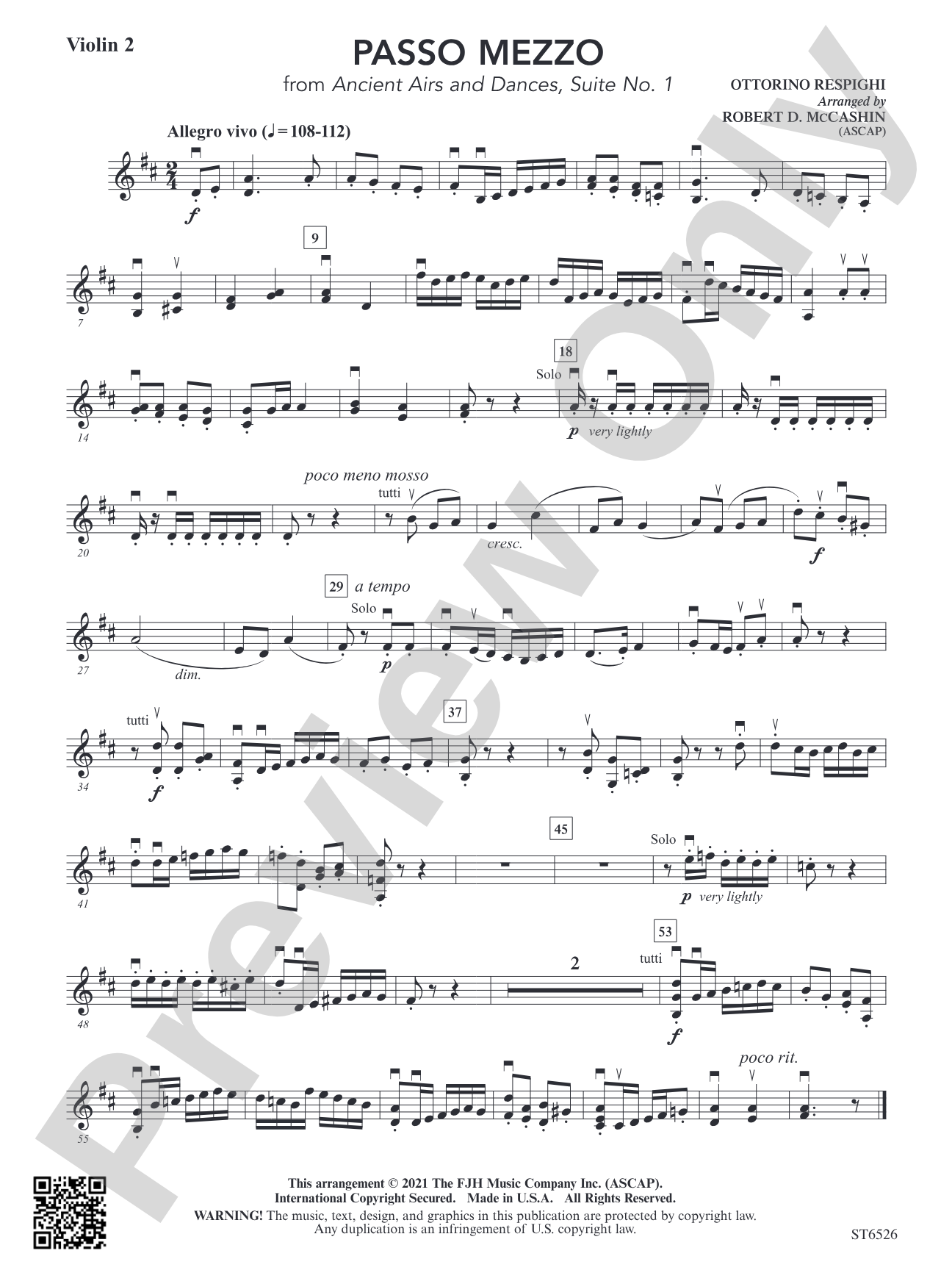

Passo Mezzo (from Ancient Airs and Dances, Suite No. 1): Violin 2
from Ancient Airs and Dances, Suite No. 1
By Ottorino Respighi / arr. Robert D. McCashin
Grade: 3.5
Item: 98-PC-DST6526_VN2
$7.00
Pickup currently not available
Description
The sprightly final movement of Respighi's Ancient Airs and Dances, Suite No. 1 is the perfect change of pace for any concert. Packing a ton of musicality in a short time, this arrangement is quite achievable yet incredible authentic. A wonderful way to let your principal section players shine while also engaging the entire orchestra.


Don't just read it, hear it, play along with it, and watch your students grow with it. In MakeMusic Cloud, Passo Mezzo (from Ancient Airs and Dances, Suite No. 1): Violin 2 comes alive with professional accompaniment, adjustable tempo, and built-in practice tools that turn solo practice into real progress.
Open in the Player
Jump straight in and assign it today.
Start Your Free Trial
Open this title and explore the full library in minutes.
Sample Audio
1
Audio File
--:--
0:00
0:00
Sample Video
Additional Details
Series:
FJH String Orchestra
Publisher:
The FJH Music Company, Inc.
SKU:
98-PC-DST6526_VN2
More about this title
About the Composer: Ottorino Respighi
Ottorino Respighi (1879-1936) was an Italian composer and musicologist whose fascination with Renaissance and Baroque music shaped his distinctive compositional voice. He spent years researching Italian instrumental works from the 16th and 17th centuries, mining archives and manuscripts for authentic melodies and harmonic idioms that he then wove into his own orchestral textures.
Respighi's approach to historical material was never merely antiquarian. His Ancient Airs and Dances suites, drawn from his scholarly discoveries, became some of his most performed works precisely because they balance scholarly authenticity with genuine musical drama. For music educators, his example demonstrates how deep research and artistic imagination can work together to create repertoire that feels both timeless and immediate.
Why we love this
Respighi's melodic gift shines brilliantly in this shorter arrangement, and McCashin's scoring respects the original's character while making it accessible for developing orchestras. The movement builds real momentum without requiring virtuosic technique, letting your ensemble sound polished and assured on concert.
What to expect
Passo Mezzo bounces with Renaissance vigor, its straightforward melodies and dancing rhythms evoking the courtly music of centuries past without sounding museum-bound. The movement sweeps from delicate passagework to fuller orchestral textures, building an infectious energy that feels fresh and alive in the hands of young players.
Who it's for
This arrangement suits Grade 3.5 string orchestras with solid intonation and rhythmic foundation. It works equally well for ensembles seeking to build confidence with masterwork literature and for programs that want to program shorter, high-impact movements alongside larger works.
How to get the most out of it
- Shape the opening section with clear articulation and even vibrato across the string sections; the sprightly character depends on rhythmic precision without rushing.
- Balance the principal parts prominently during the thematic passages, but ensure tutti sections feel unified rather than sectional.
- Attend carefully to dynamic contrasts and phrase shape; Respighi's 17th-century models often relied on subtle swells and releases to create momentum rather than dramatic tempo shifts.
- Let the cadences breathe slightly; resist the urge to accelerate into the final measures, which gain impact through clarity and control.
How to use it
Program this as a concert closer or as a palate-cleanser between heavier works; its brief duration and buoyant character make it ideal for shifting audience energy. It also pairs naturally with other Respighi arrangements or serves as an approachable entry point to suite literature for ensembles not yet ready for full Ancient Airs and Dances.
Skills your students will build
- Sustaining vibrato consistency across ensemble sections
- Playing authentic articulation and phrasing from Baroque and Renaissance models
- Balancing principal section solos within a full orchestral texture
- Managing rhythmic precision at moderate tempi without dragging or rushing
- Reading and executing dynamic contrast and phrase shaping from a conductor's interpretation