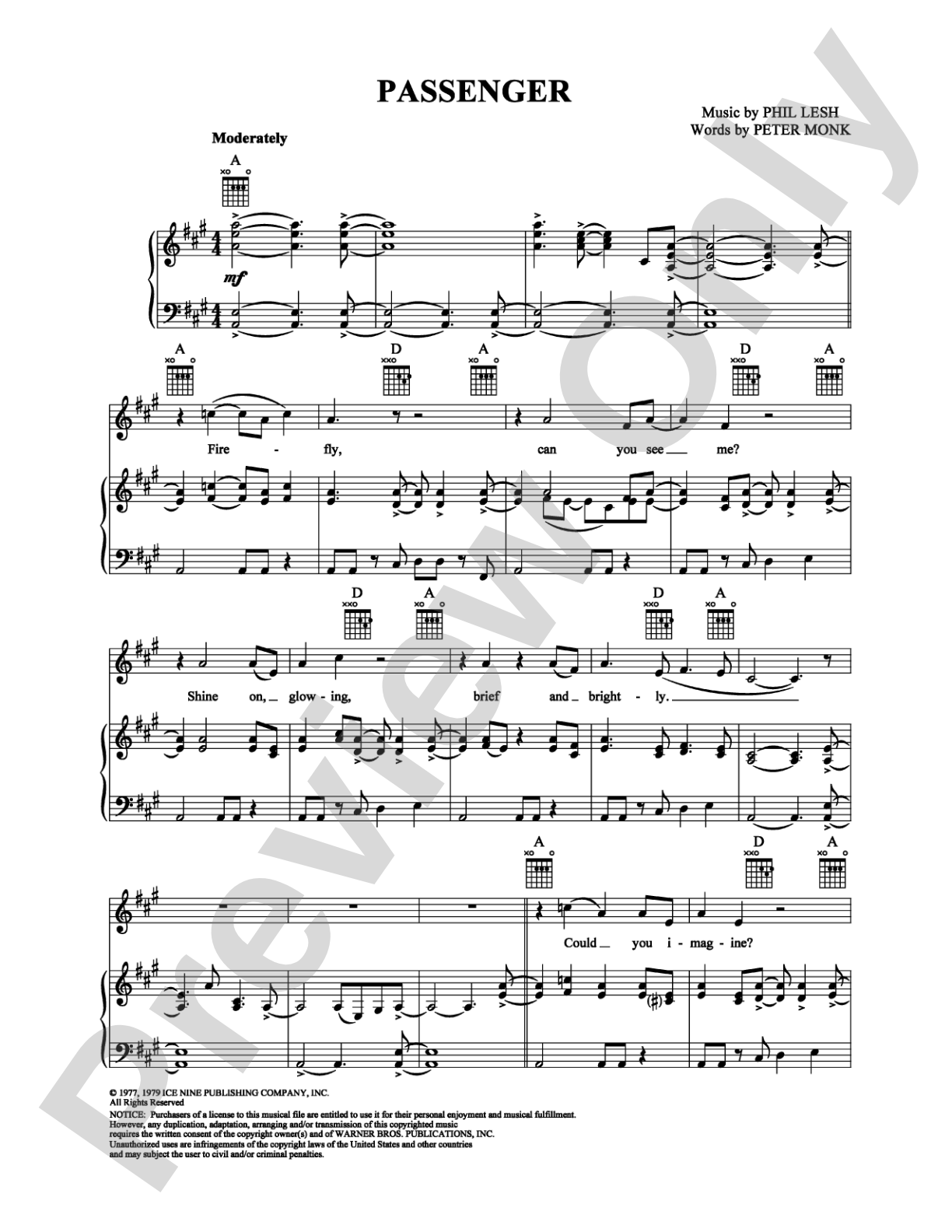
Passenger: Piano/Vocal/Chords Digital Sheet Music

Passenger: Piano/Vocal/Chords Digital Sheet Music

Grateful Dead, Phil Lesh

Item: 00-PS-0005492

Digital Download
$2.95
Description

Passenger: Piano/Vocal/Chords Digital Sheet Music isn't in MakeMusic Cloud just yet...but it could be. Let us know you'd like to see it, and you'll help shape what comes next. In the meantime, start a free trial and dive into thousands of interactive titles your students can play along with today.

Sample Audio
No sample audio found.
Sample Video
Additional Details
SKU: 00-PS-0005492

More about this title

About the Artist: Grateful Dead

The Grateful Dead emerged from the San Francisco Bay Area in the mid-1960s as pioneers of improvisational rock, blending folk, blues, country, and psychedelic influences into a singular sound. Their approach to live performance, emphasizing spontaneity, musical conversation between band members, and deep engagement with their audience, fundamentally changed how rock music could be experienced and taught. Decades after their formation, their catalog remains a cornerstone of American music education, offering musicians at all levels accessible entry points into sophisticated harmonic thinking and ensemble interplay.

Why we love this

Passenger works beautifully in a singer-pianist arrangement, with chord changes that reward harmonic awareness without demanding advanced technique. The song's introspective melody and accessible vocal range make it approachable for student singers while the piano part provides enough musical interest to keep intermediate pianists engaged.

What to expect

Passenger carries a wistful, introspective quality, there's warmth in the melody but also a sense of longing beneath the surface. The song unfolds like a conversation, intimate and conversational, with moments of unexpected harmonic tenderness that reward careful listening.

Who it's for

This arrangement suits singers and pianists working at the intermediate level who want to explore repertoire beyond classical standards. It's also valuable for music students interested in learning how popular and rock compositions translate to piano-vocal formats.

How to get the most out of it

  • Let the vocal line breathe over the piano accompaniment rather than rushing the tempo; the song benefits from a conversational pacing that allows the lyrics to land.
  • Use chord voicings that sit comfortably under the voice without muddying the vocal line; mid-range inversions often work better than open position chords.
  • Balance the dynamic relationship between voice and piano so the accompaniment supports rather than competes with the melody.

How to use it

Consider this for student recitals where you want to include contemporary American songwriting alongside traditional classical pieces. It also works well in special topics recitals, pop-rock showcases, or as a bridge piece that demonstrates how to approach non-classical repertoire with musical intention.

Skills your students will build

  • Reading chord symbols and understanding functional harmony in popular song contexts
  • Balancing vocal melody with piano accompaniment in a supported, conversational style
  • Interpreting and performing songs outside the classical tradition with artistic intention

You May Also Like