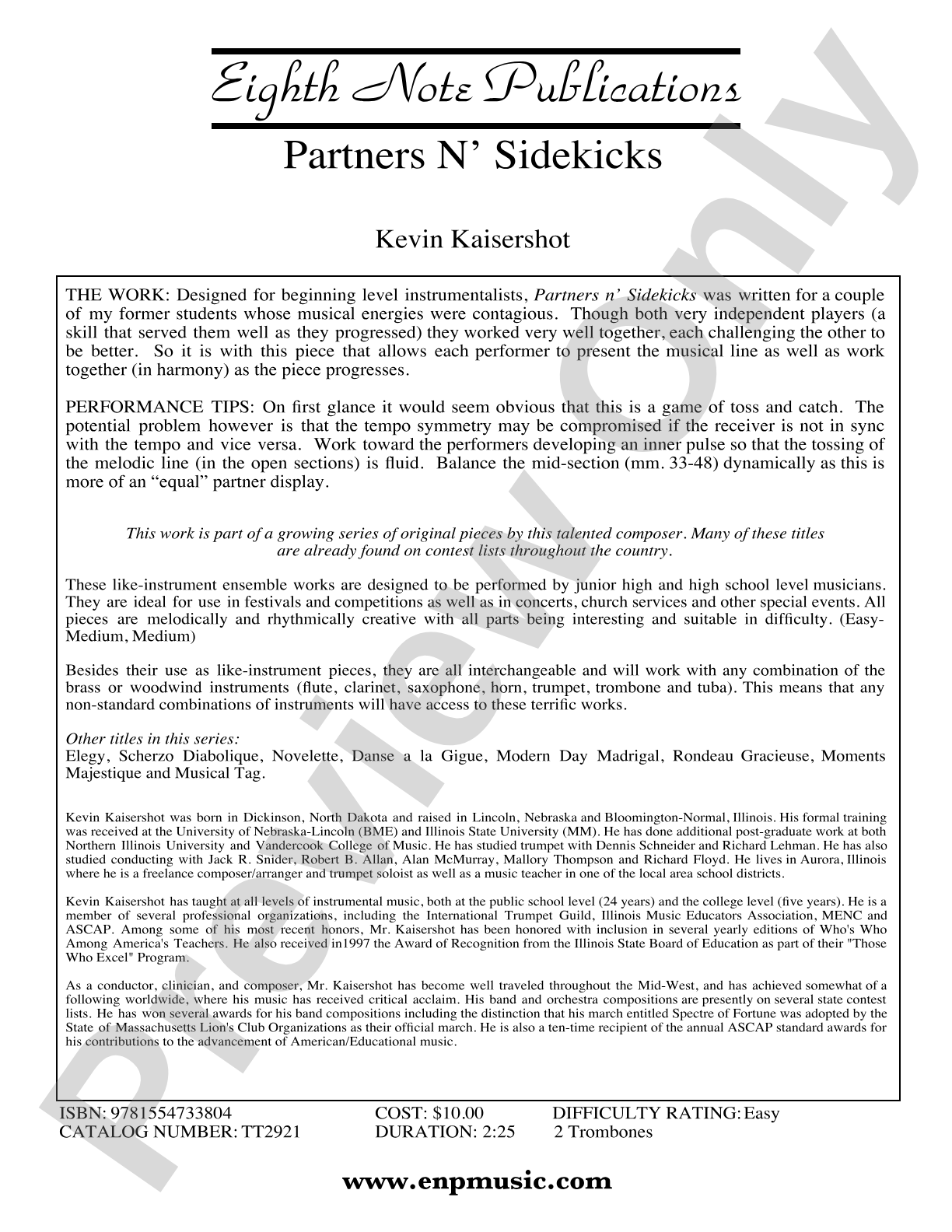
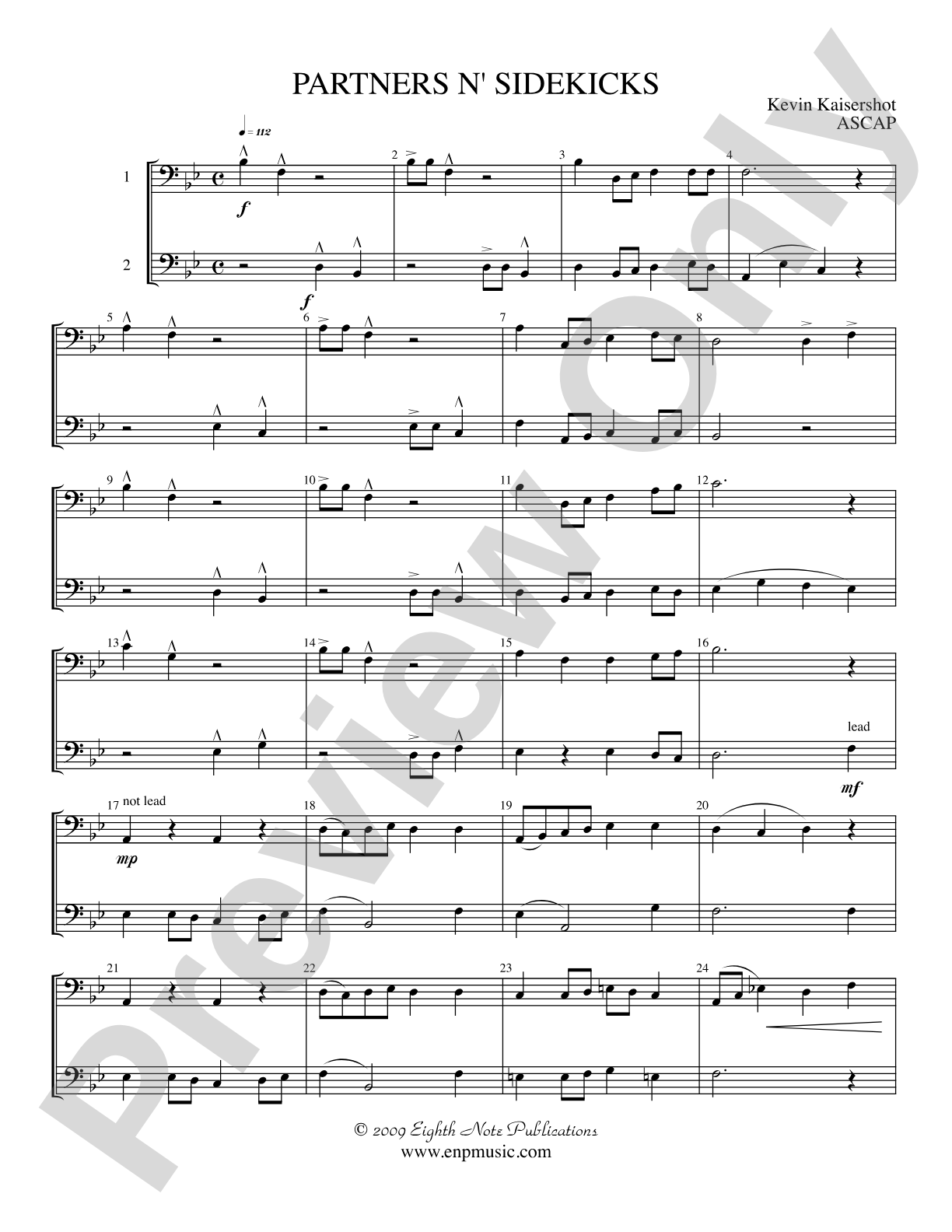
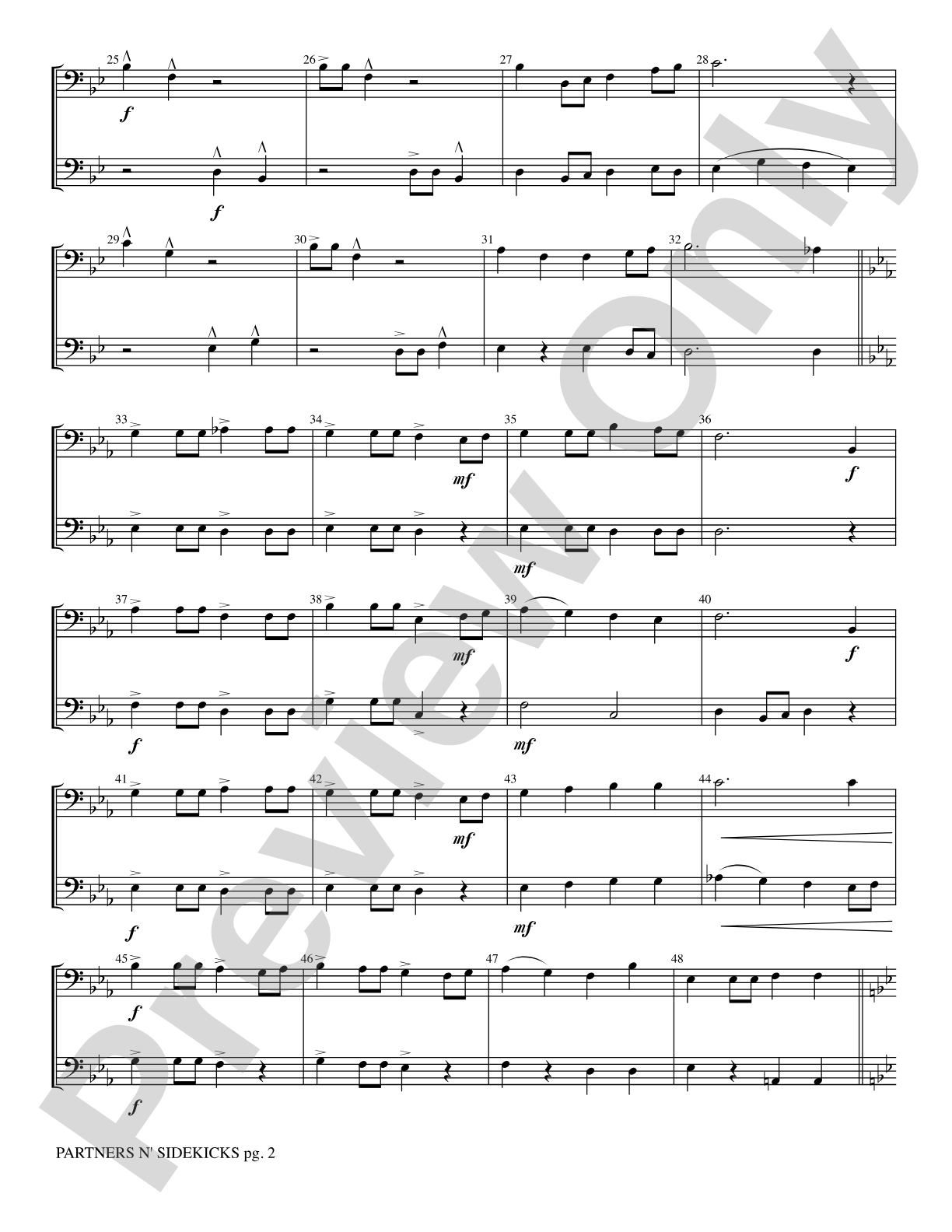
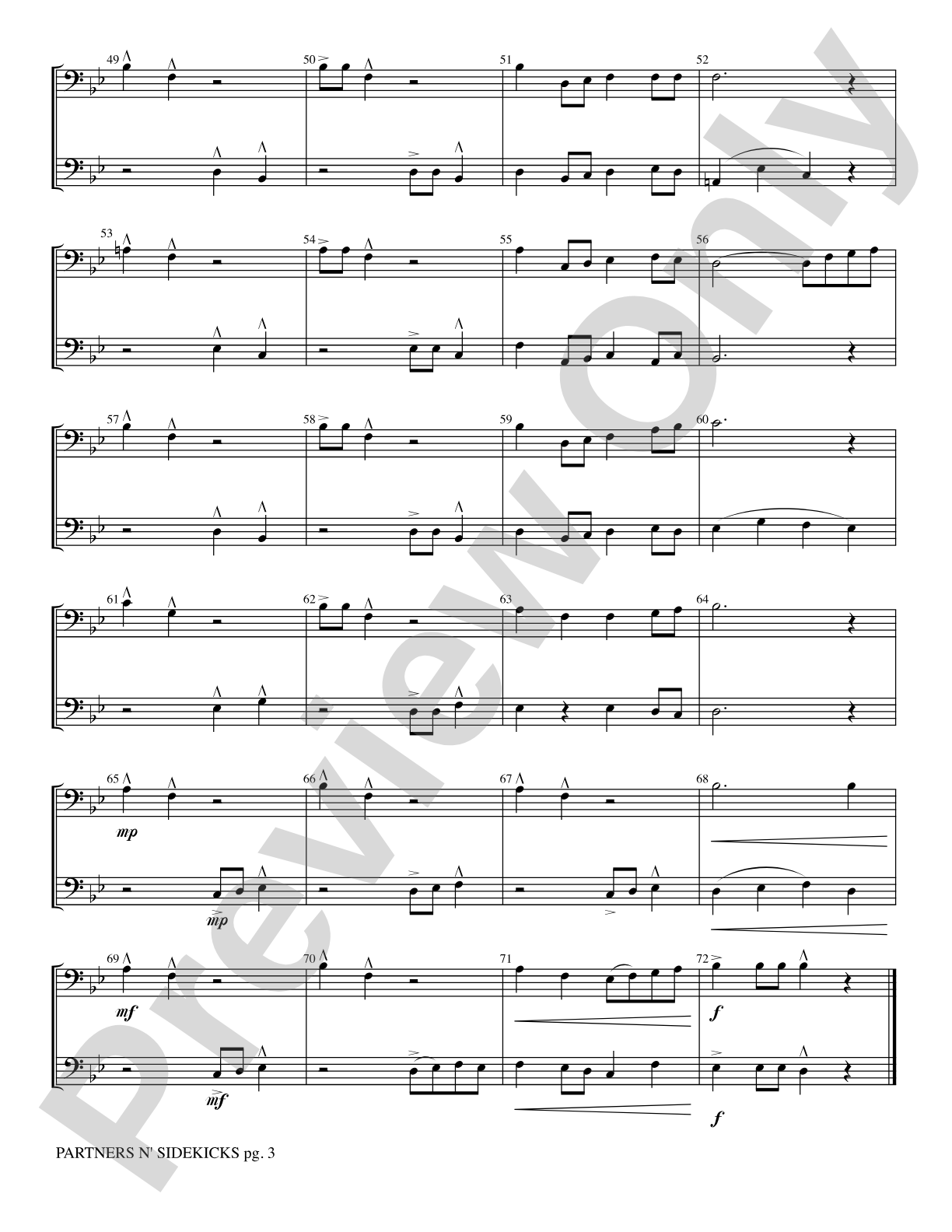
Designed for beginning level instrumentalists, Partners n' Sidekicks was written for a couple of my former students whose musical energies were contagious. Though both very independent players (a skill that served them well as they progressed), they worked very well together, each challenging the other to be better. So it is with this piece that allows each performer to present the musical line as well as work together (in harmony) as the piece progresses.
Discover MakeMusic Cloud: thousands of interactive titles your students can play along with today.
Kaisershot wrote this piece with genuine insight into what makes young trombonists tick: the desire to shine individually and the satisfaction of locking in with a partner. The score balances solo passages with moments where both players must listen closely and blend, making it as much about ensemble awareness as about personal musicianship.
What to expect
The piece captures the energy of two young musicians feeding off each other's enthusiasm. Solo sections give each player room to breathe and express themselves, while harmonized sections bring a satisfying sense of unity and shared musical purpose.
Who it's for
Beginning trombone students who have moved past the very basics and are ready to read simple harmonic structures and coordinate with another player. This works well for a student who benefits from the accountability and motivation that comes from playing alongside a peer.
How to get the most out of it
Establish clear character in the opening solos before the first harmonic passages arrive. Each player should own their melodic line, then adjust tone and dynamics to match when you come together.
Mark your entrances and be deliberate about rhythm. At the beginning level, precision in hitting the same note at the same time takes focused listening, not just counting.
Shape phrases together when you're in harmony. Decide on breath points and dynamic contours as a pair, not independently.
How to use it
Pair this with other beginning duet repertoire in a student recital or use it in studio group lessons to build ensemble awareness before moving students into larger ensembles. It works especially well as a confidence builder for trombonists in their first or second year.
Skills your students will build
Maintaining independence while listening to a partner
Matching tone and intonation in harmonic passages
Phrasing and shaping musical lines collaboratively
Reading and executing rhythmic precision in a two-part texture
You May Also Like
Scan to Complete Your Purchase
Use your phone's camera to scan the code below
You'll log in on your phone and the order will be added to your account