Partners! Cover Image

Partners!: SoundTrax Digital Audio Download

$39.99 USD
Sale price  $39.99 USD Regular price 
Skip to product information
Partners! Cover Image

Partners!: SoundTrax Digital Audio Download

10 Terrific Partner Songs for Young Singers

Arr., with new words and music, by Mary Donnelly and George L. O. Strid, orch. Tim Hayden

Grade: 2--7

Item: 00-A-00015231

$39.99
Digital Download
Description

Partners!: SoundTrax Digital Audio Download isn't in MakeMusic Cloud just yet...but it could be. Let us know you'd like to see it, and you'll help shape what comes next. In the meantime, start a free trial and dive into thousands of interactive titles your students can play along with today.

Sample Pages

No sample pages found.

Sample Audio
0:00
0:00
Sample Video
Additional Details
Series: Partner Songbooks
Publisher: Alfred Music
SKU: 00-A-00015231

More about this title

About the Arranger: Mary Donnelly
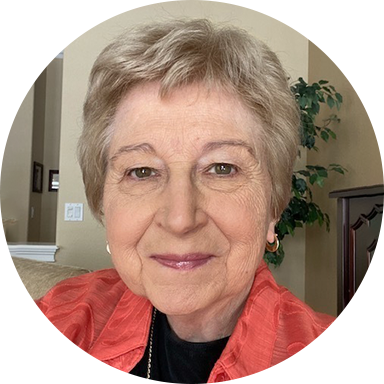
Mary Donnelly

Mary Donnelly grew up in Reno, Nevada, and studied English and French at the University of Nevada, Reno. During her undergraduate years, she helped establish two children's choruses, an experience that sparked her passion for music education. She pursued graduate studies in Education at Lesley College in Cambridge, Massachusetts, focusing on arts integration across the curriculum. Over thirty years, she taught general music and choir in elementary and middle schools throughout the Washoe County School District.

In 1985, Donnelly partnered with George Strid when their principal asked them to compose a musical for Reading Week. That first collaboration, The Million Dollar Mystery, launched a prolific writing partnership that has produced more than two hundred songs and twenty-five musicals. Donnelly remains active in ACDA, NEA, and ASCAP, and her work demonstrates a deep understanding of how young singers learn and thrive.

Why we love this

Partner songs let singers experience harmony without requiring advanced reading skills, and this collection uses that pedagogical strength to build confidence across a wide grade span. The recorded accompaniments make rehearsal efficient while freeing you to focus on blend, balance, and the joy of singing together. Donnelly's writing voice is direct and singable; these aren't exercises dressed as songs.

What to expect

Partner songs have an immediate, unpretentious warmth. Two melodies interlock without competing for attention; the effect is conversational, playful, sometimes call-and-response. Donnelly's arrangements feel natural to sing and genuinely enjoyable rather than pedagogically dutiful.

Who it's for

Classroom music teachers, choir directors, and music specialists working with students in grades 2 through 7 who want approachable two-part singing without complex harmony. These pieces work equally well in general music classes, beginning choir settings, and mixed-ability ensembles where singers are developing their part-singing foundation.

How to get the most out of it

  • Layer the parts gradually during rehearsal. Have one group sing the melody while the other learns their part separately, then combine them only after each part feels secure.
  • Use the recorded accompaniment to lock the tempo during early rehearsals, but consider eventually singing with a live pianist to develop ensemble independence.
  • Balance the two vocal lines by having singers listen across the room rather than down at their music. This trains them to hear the whole texture, not just their own part.
  • Emphasize the text and story in each song; partner songs often work best when both groups commit to their lyrical meaning, which naturally creates distinct character and color.

How to use it

Slot these into winter or spring concerts where you want to showcase ensemble singing without requiring months of rehearsal on a single piece. Partner songs also work beautifully in classroom performances, assemblies, and informal sharing sessions where the goal is participation and fun rather than technical display.

Skills your students will build

  • Singing in two independent parts simultaneously
  • Listening to and balancing with another vocal line
  • Following a recorded accompaniment
  • Building confidence in part-singing without advanced music reading
  • Maintaining steady rhythm while engaging with text and melody

You May Also Like