
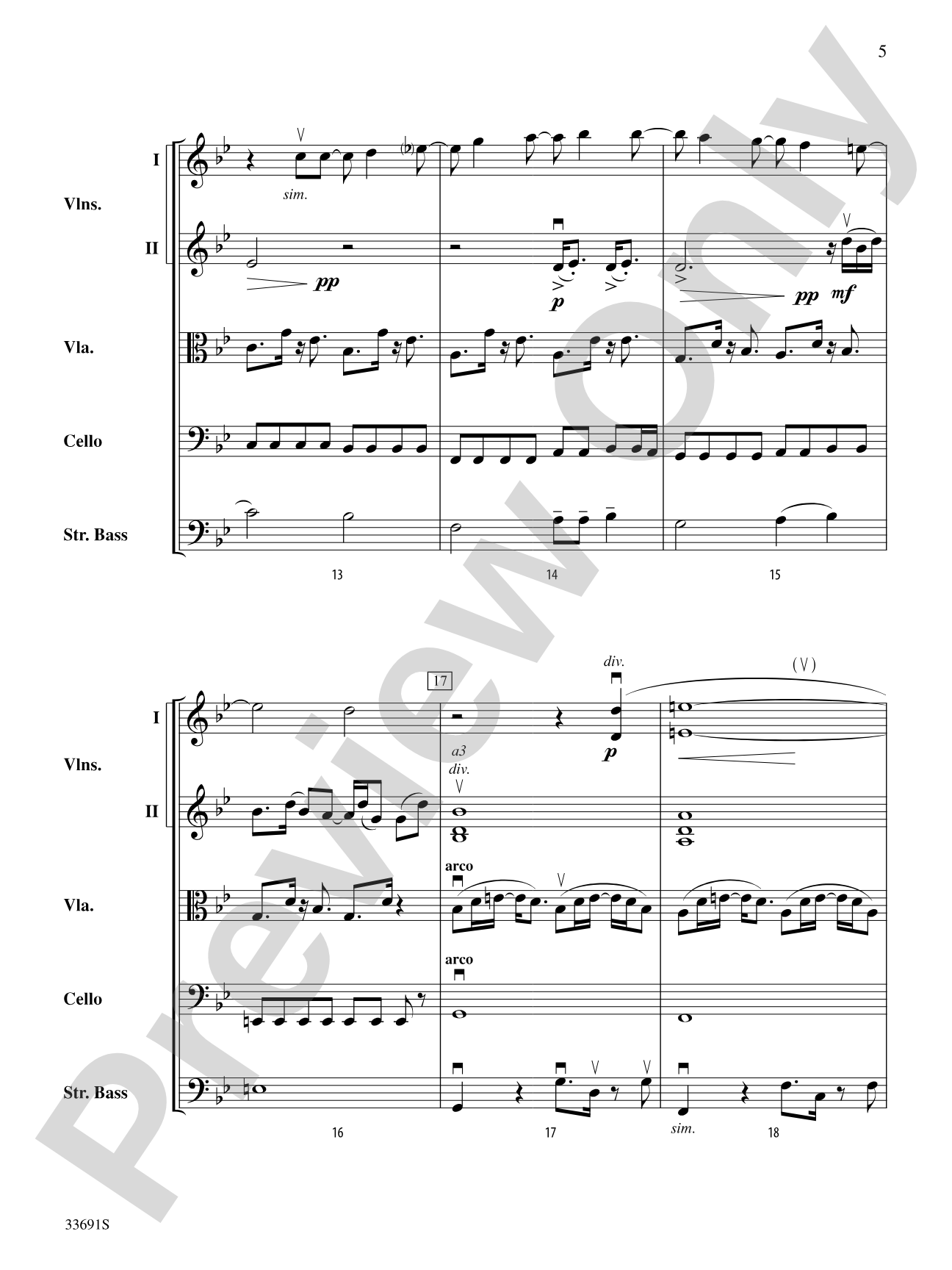
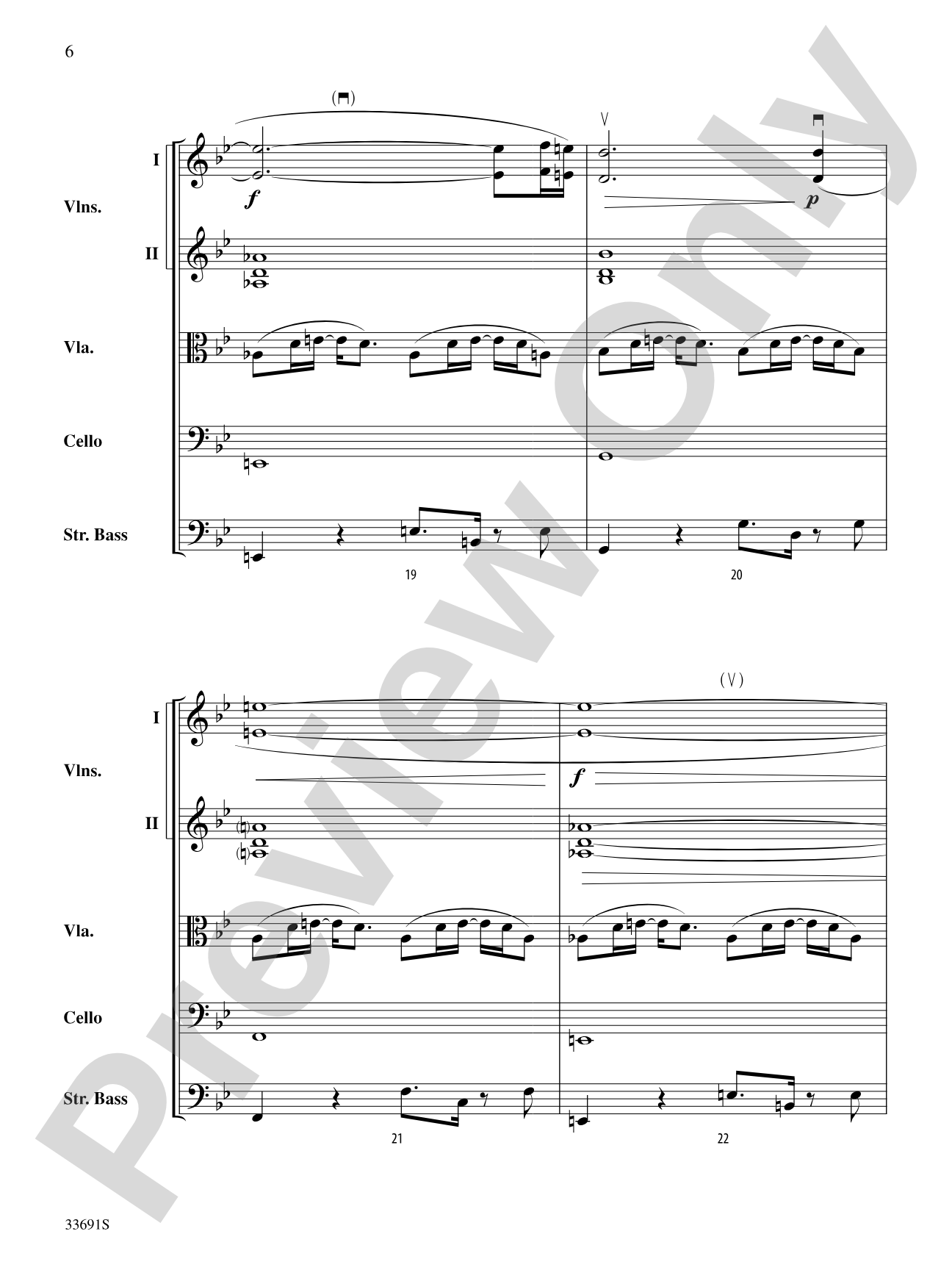
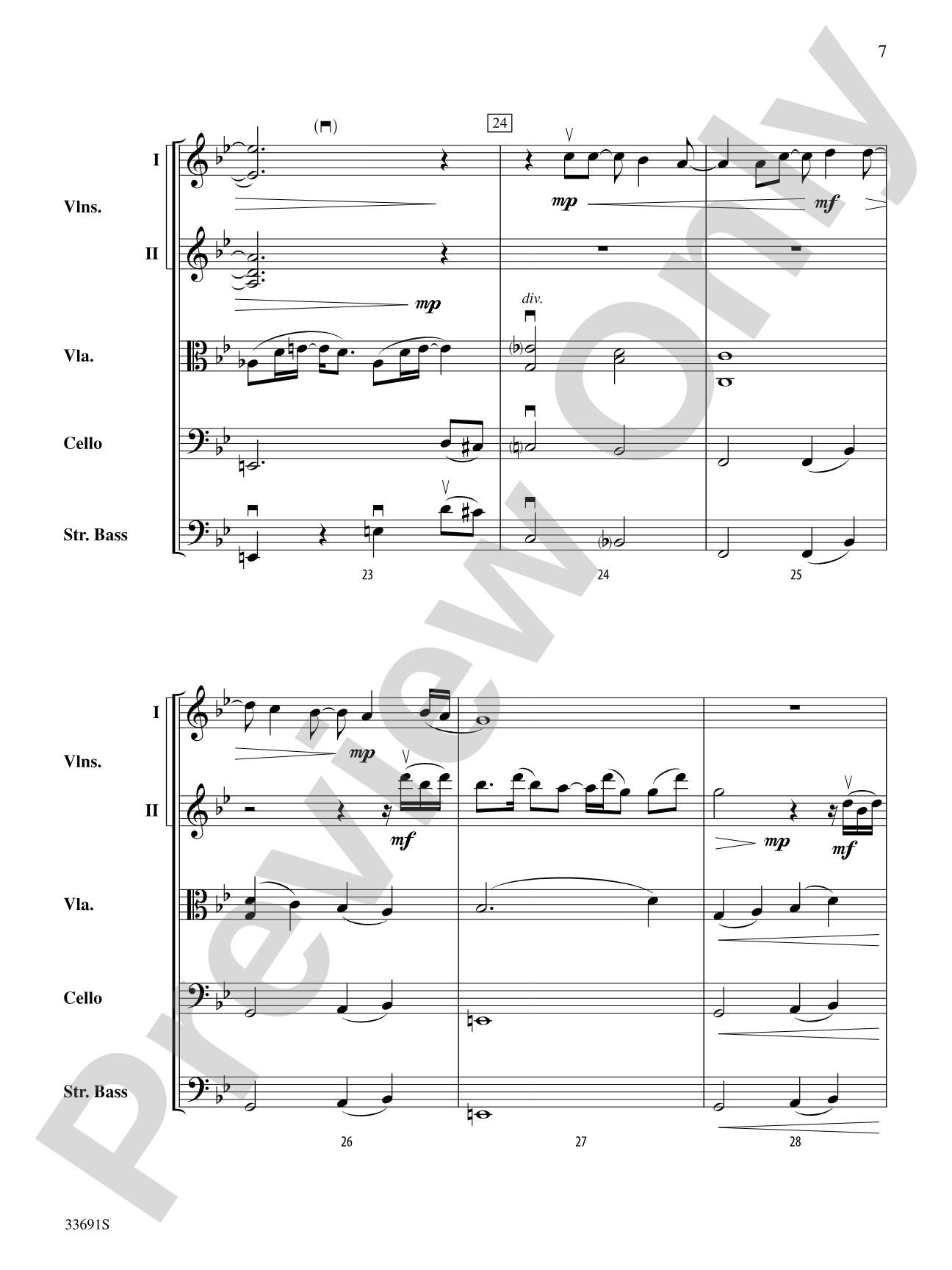
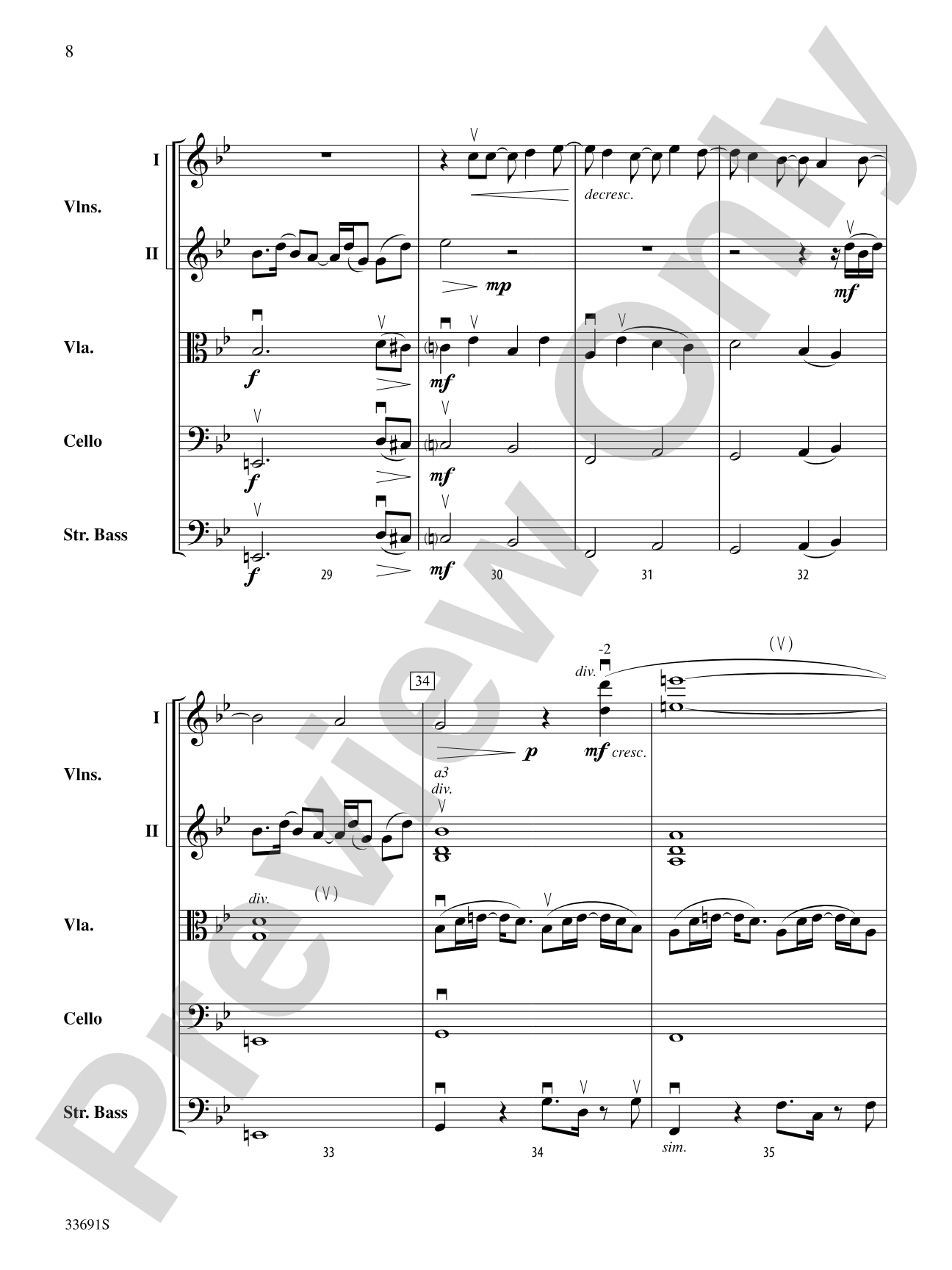
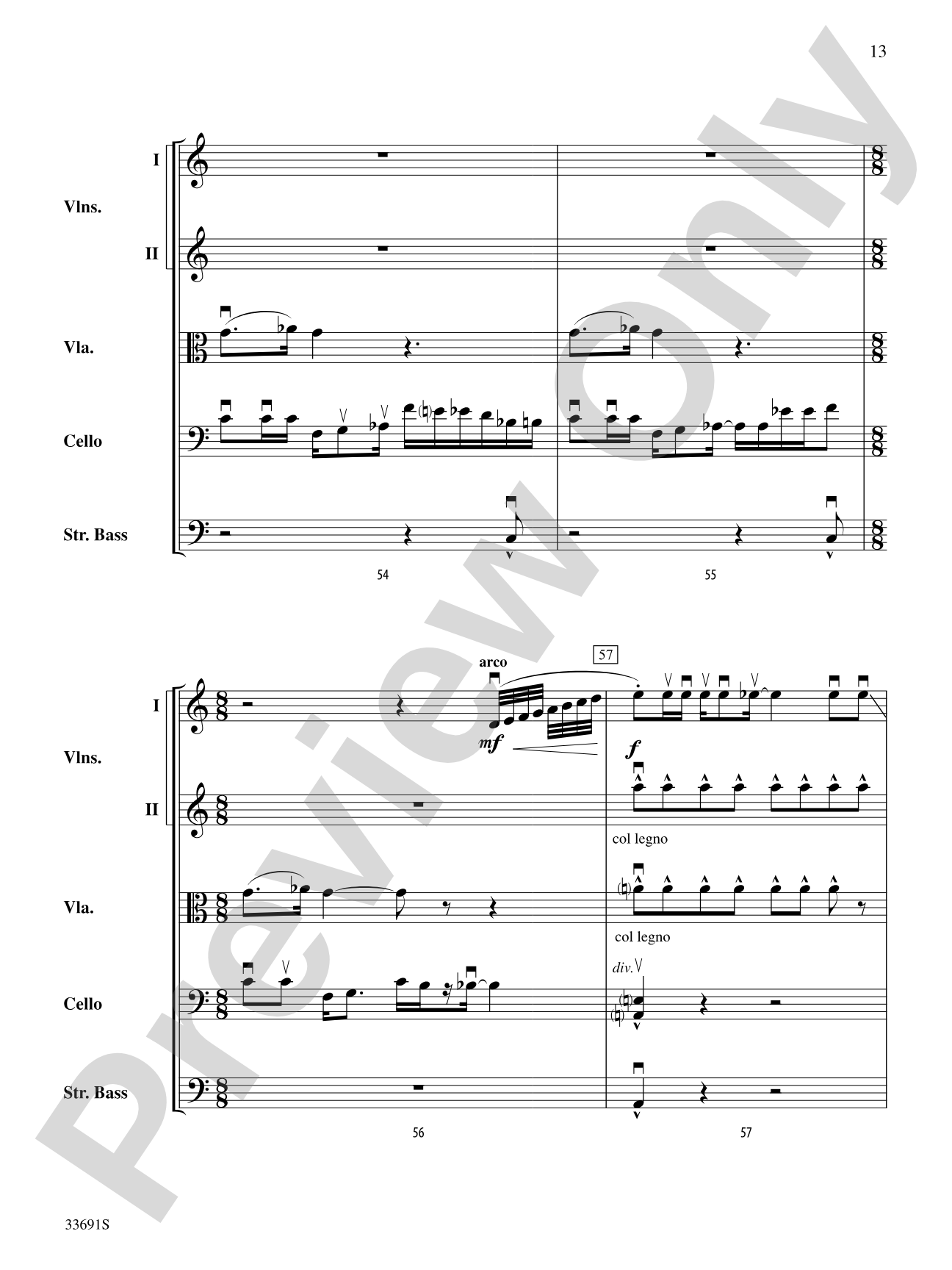
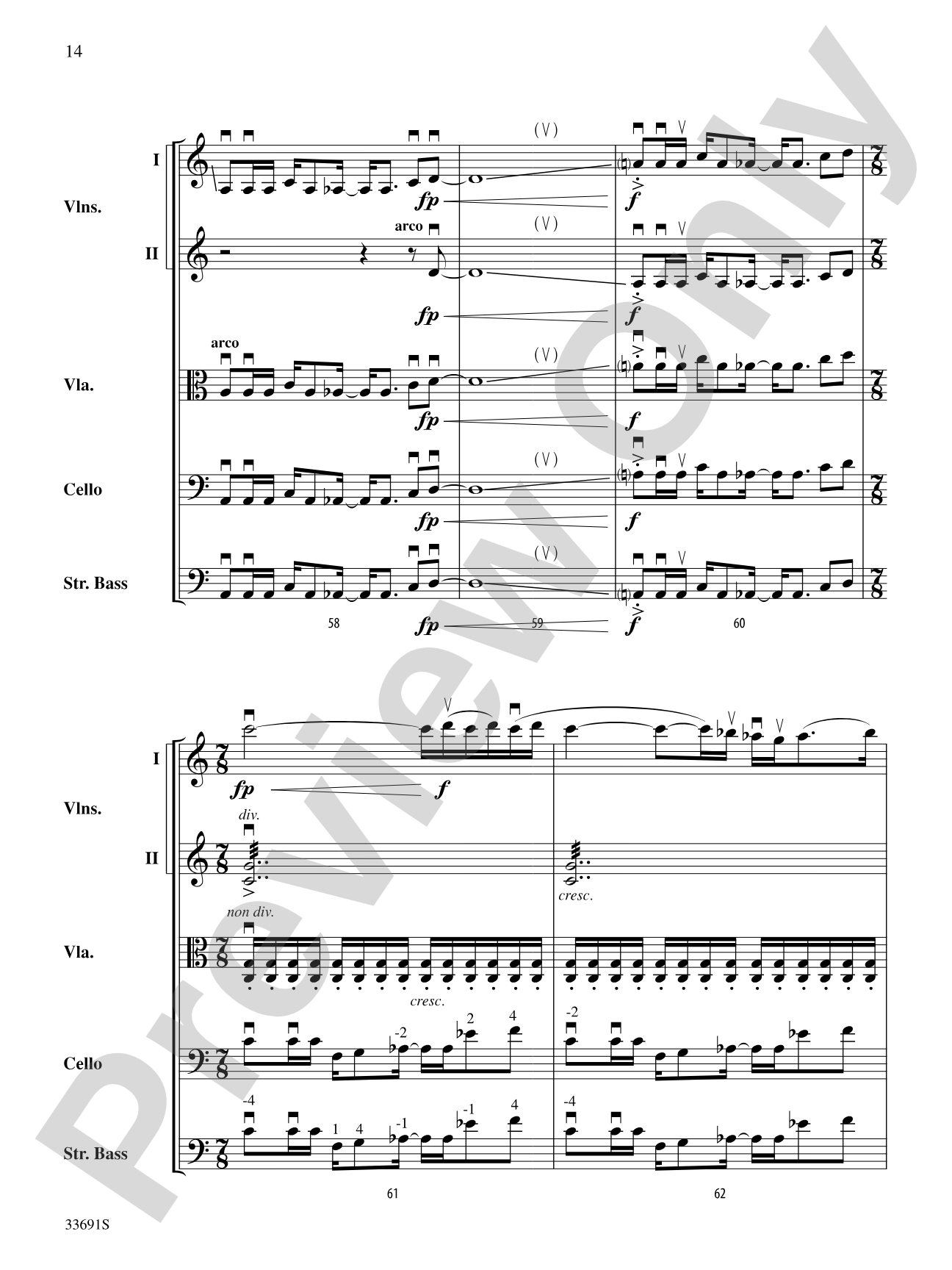
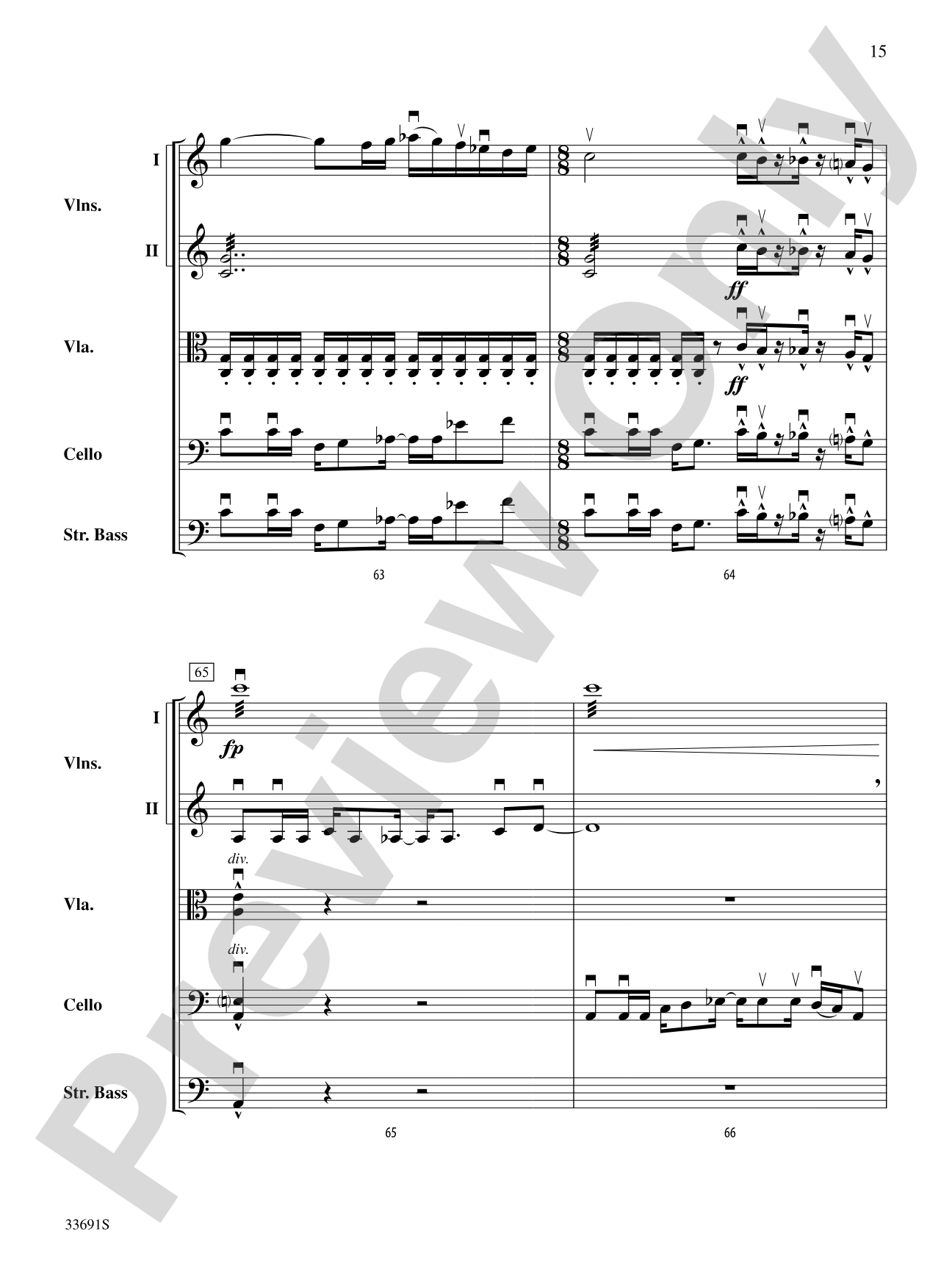
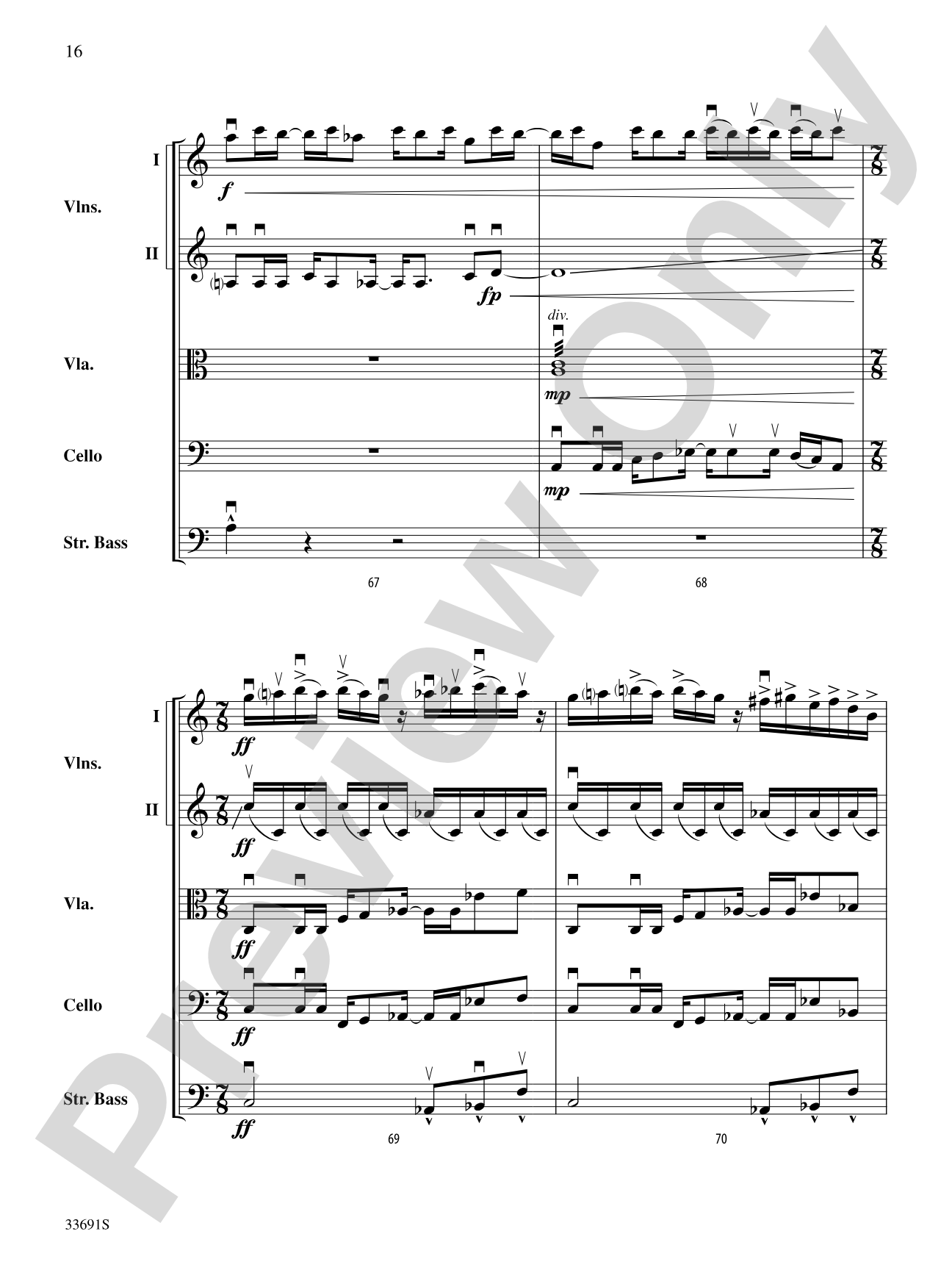
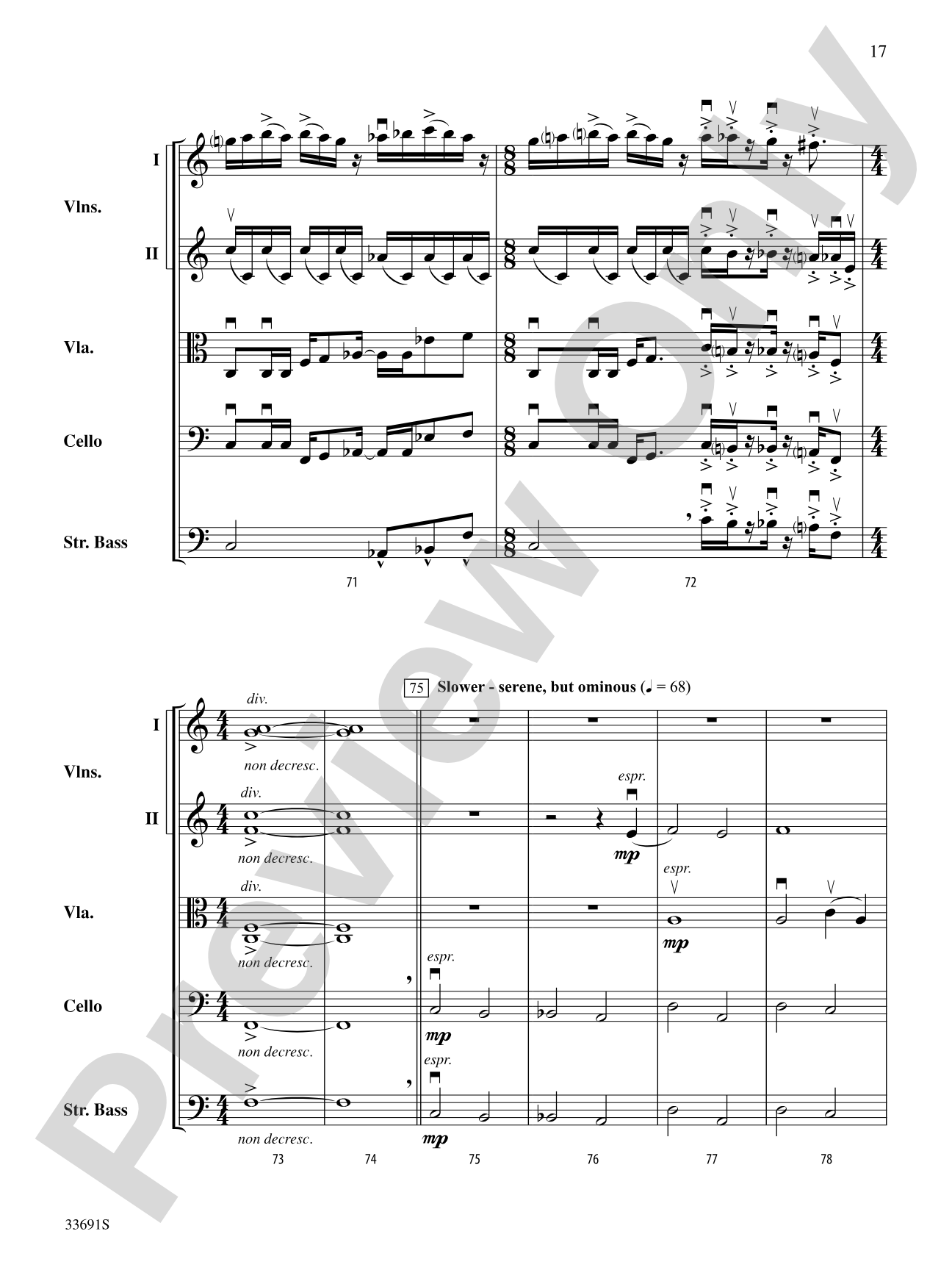
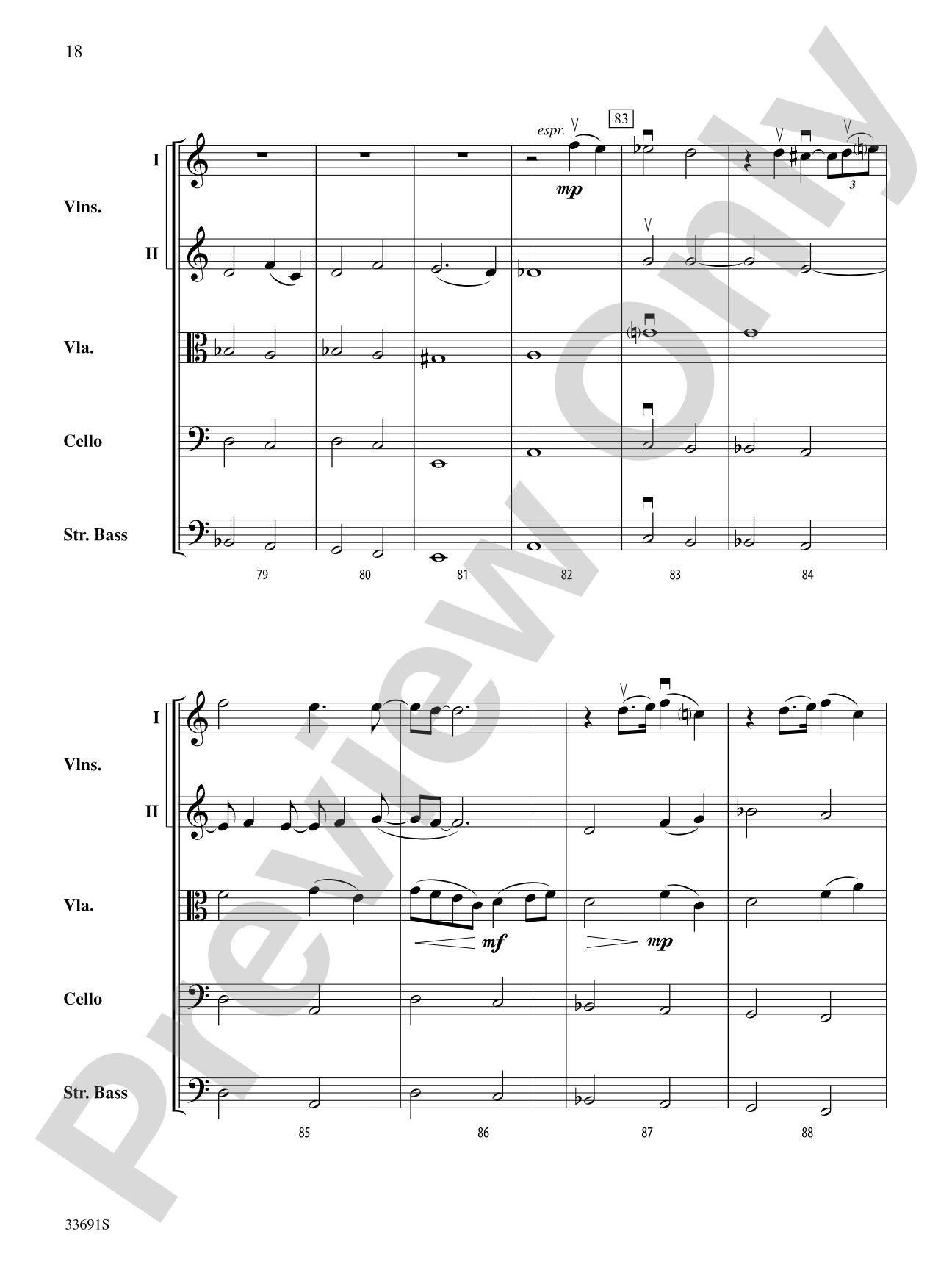
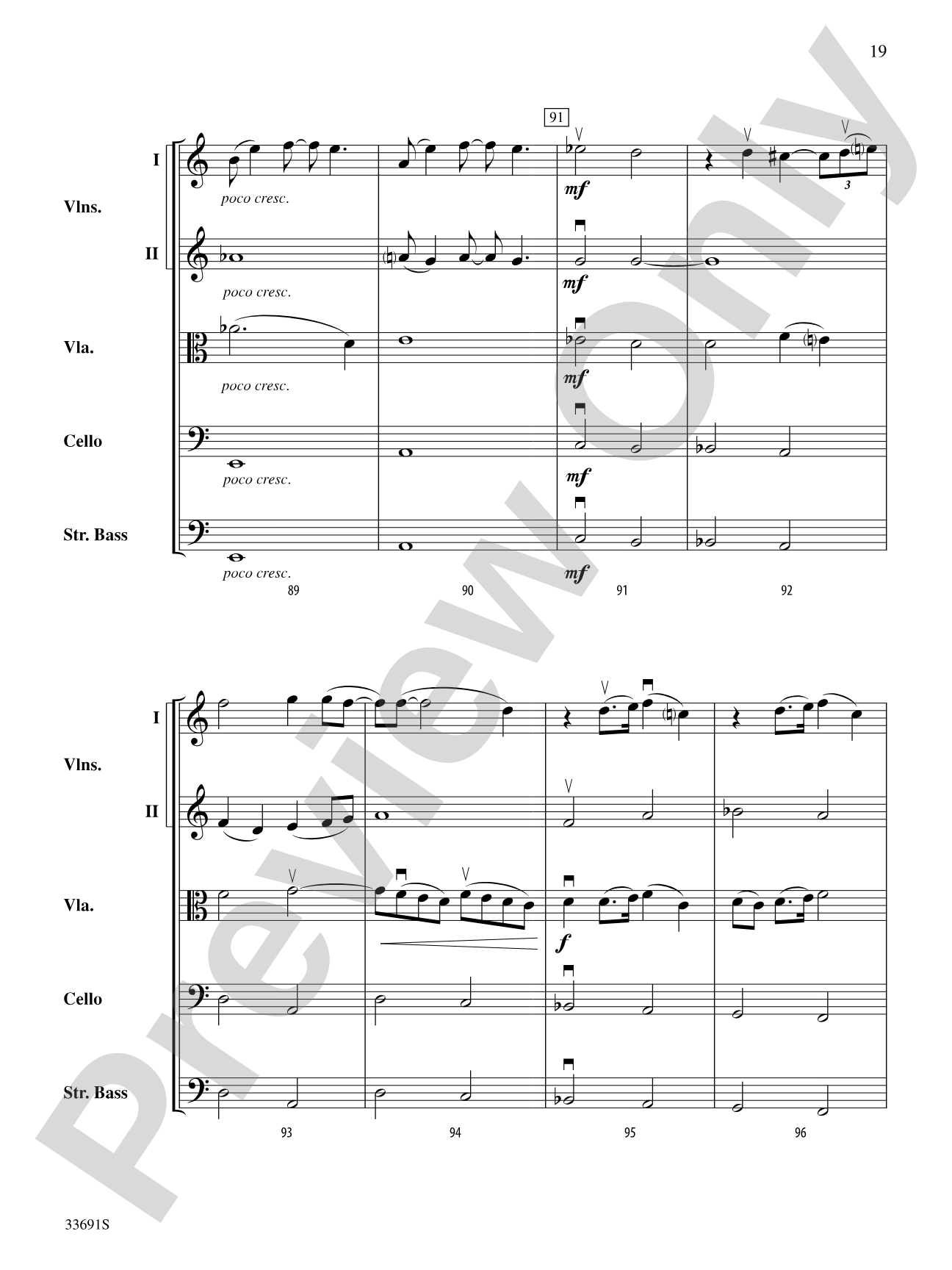
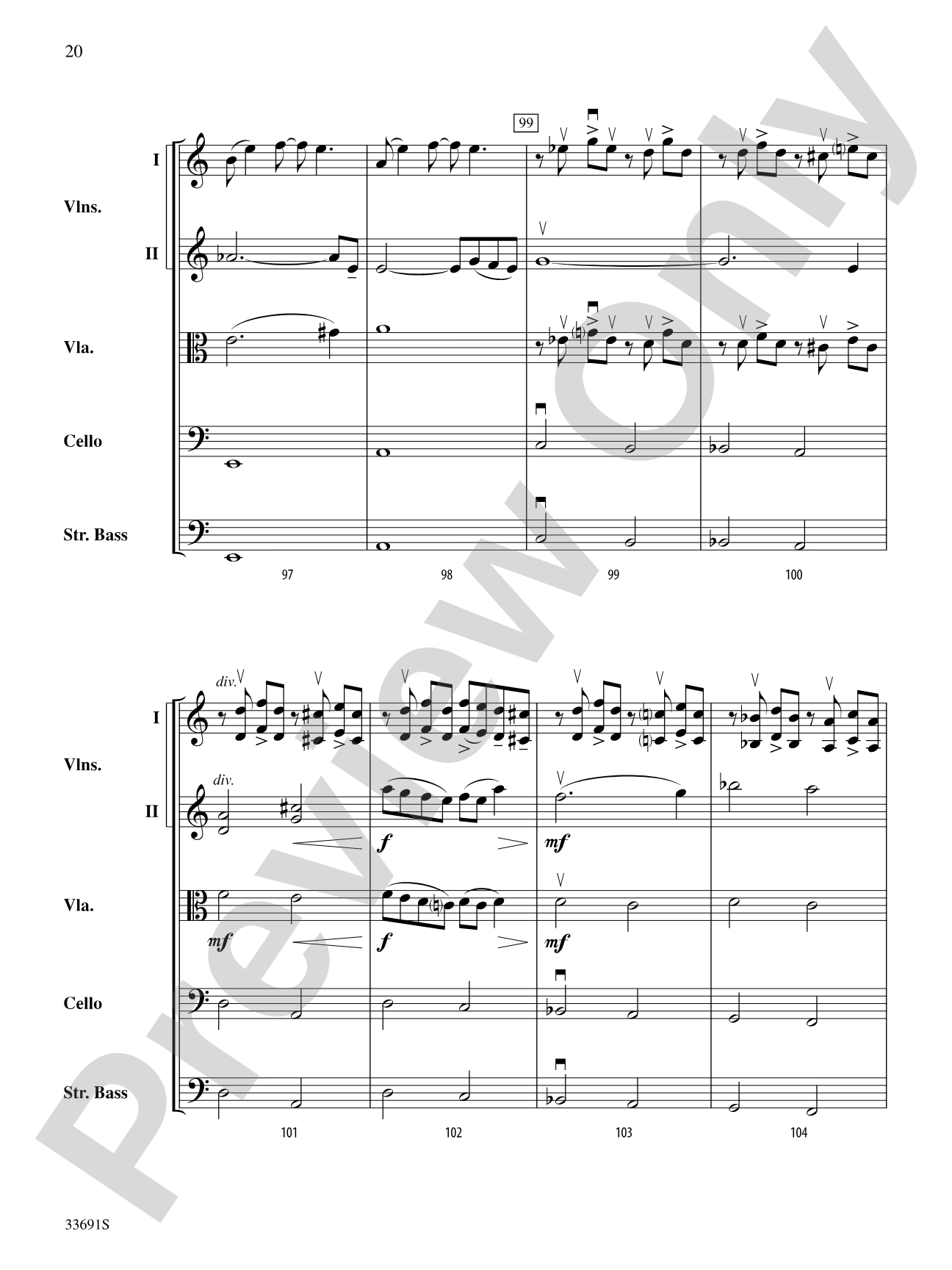
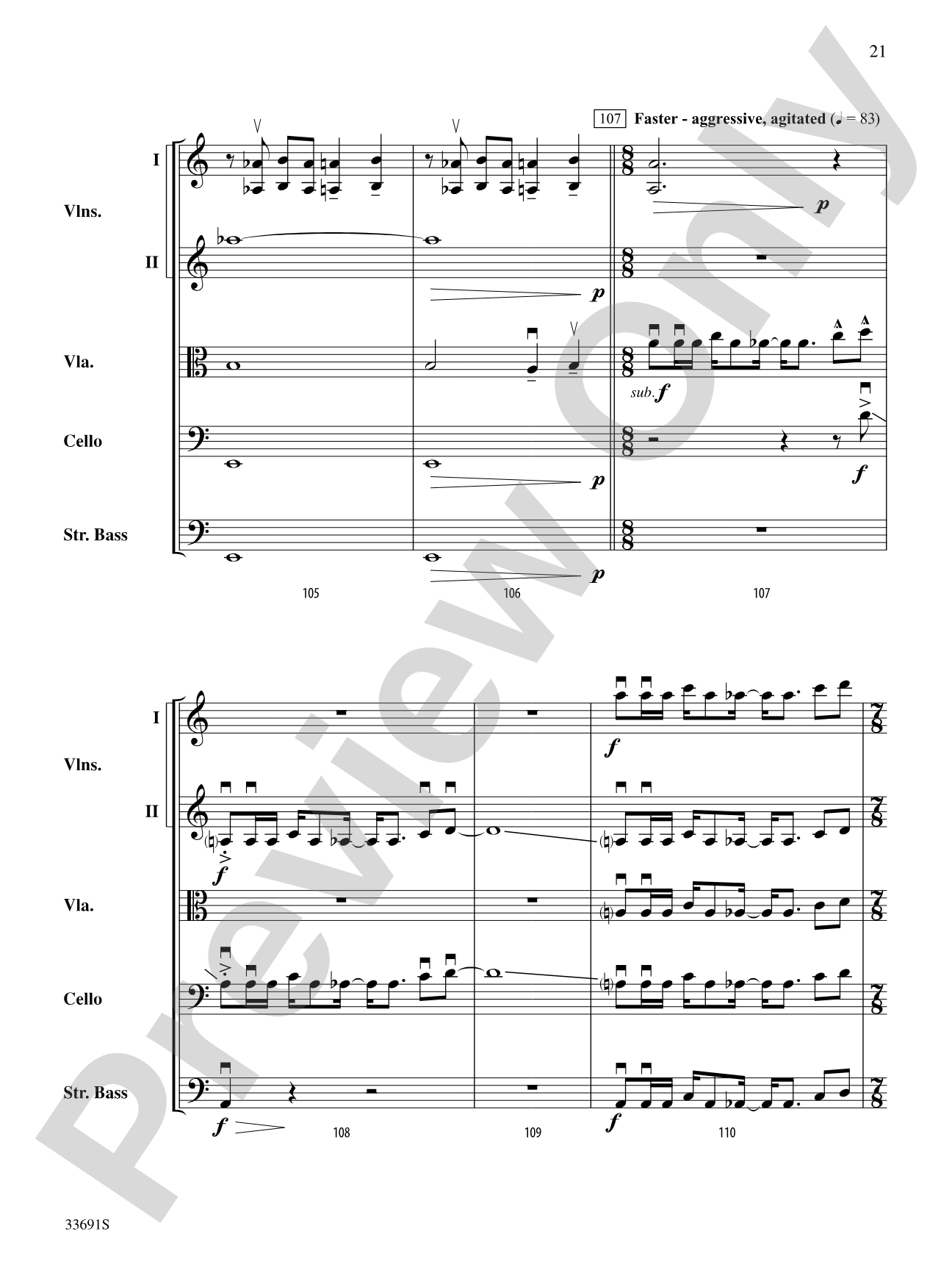
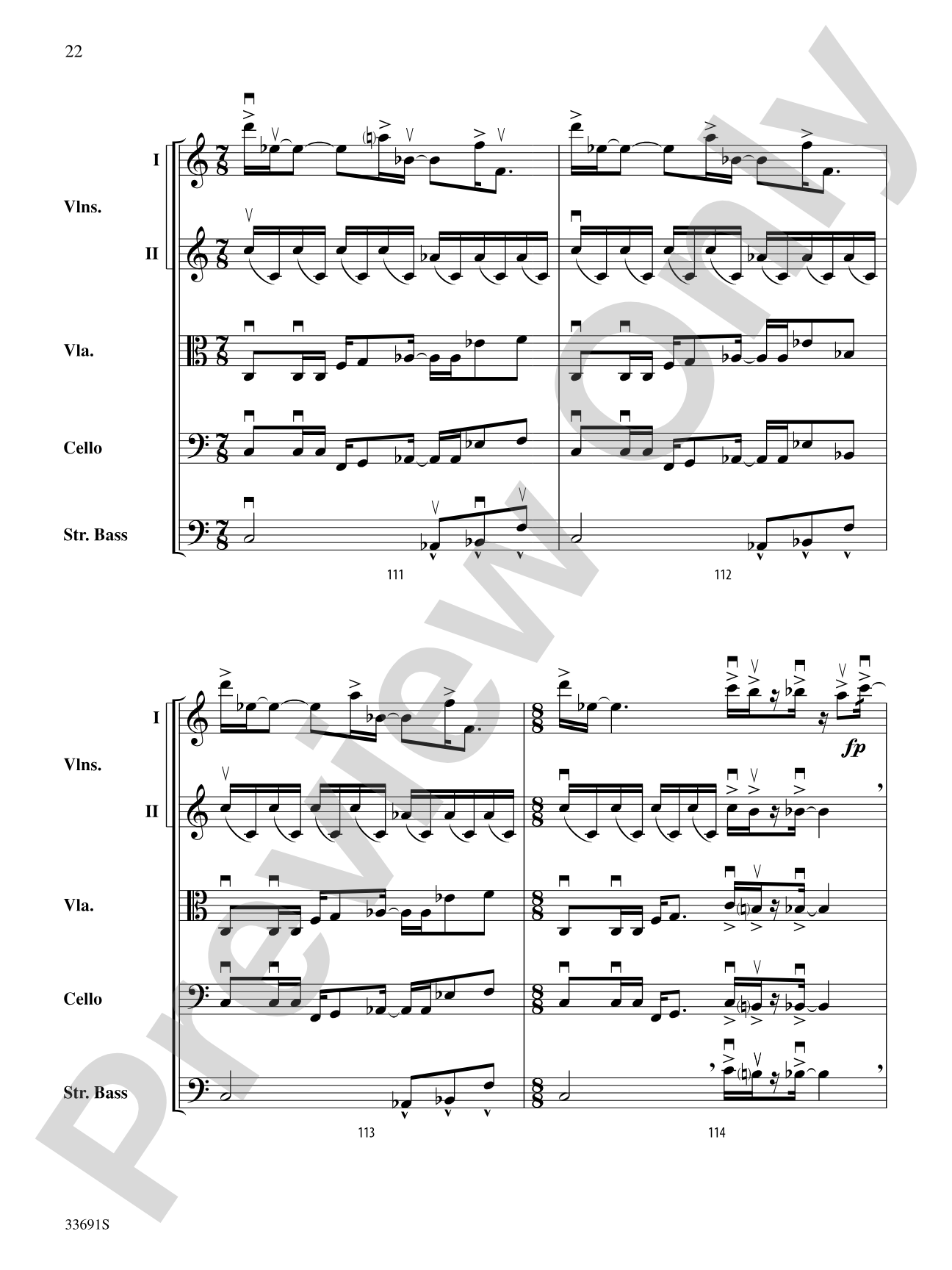
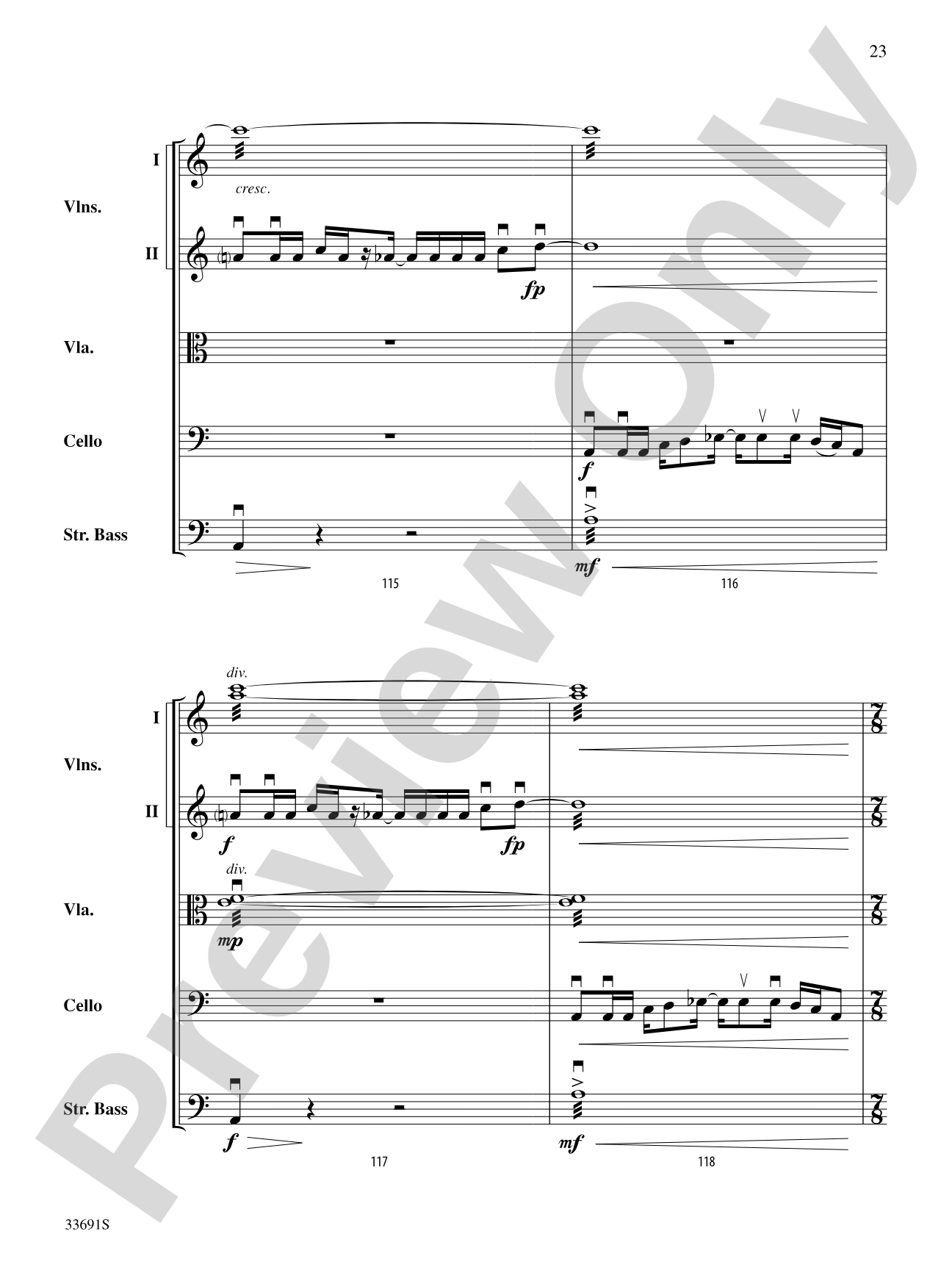
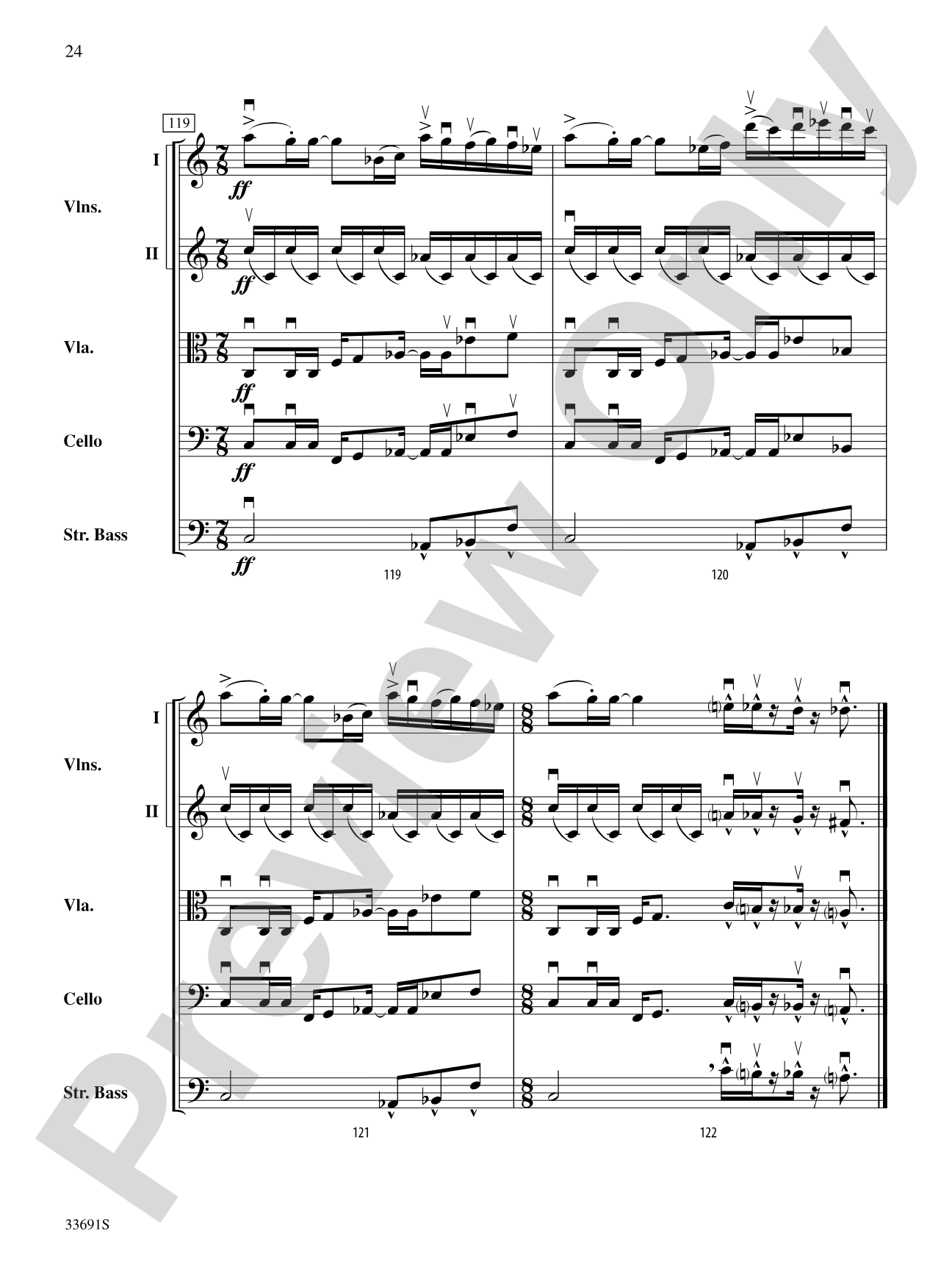

Paranoid Android (from OK Computer): String Orchestra Conductor Score & Parts
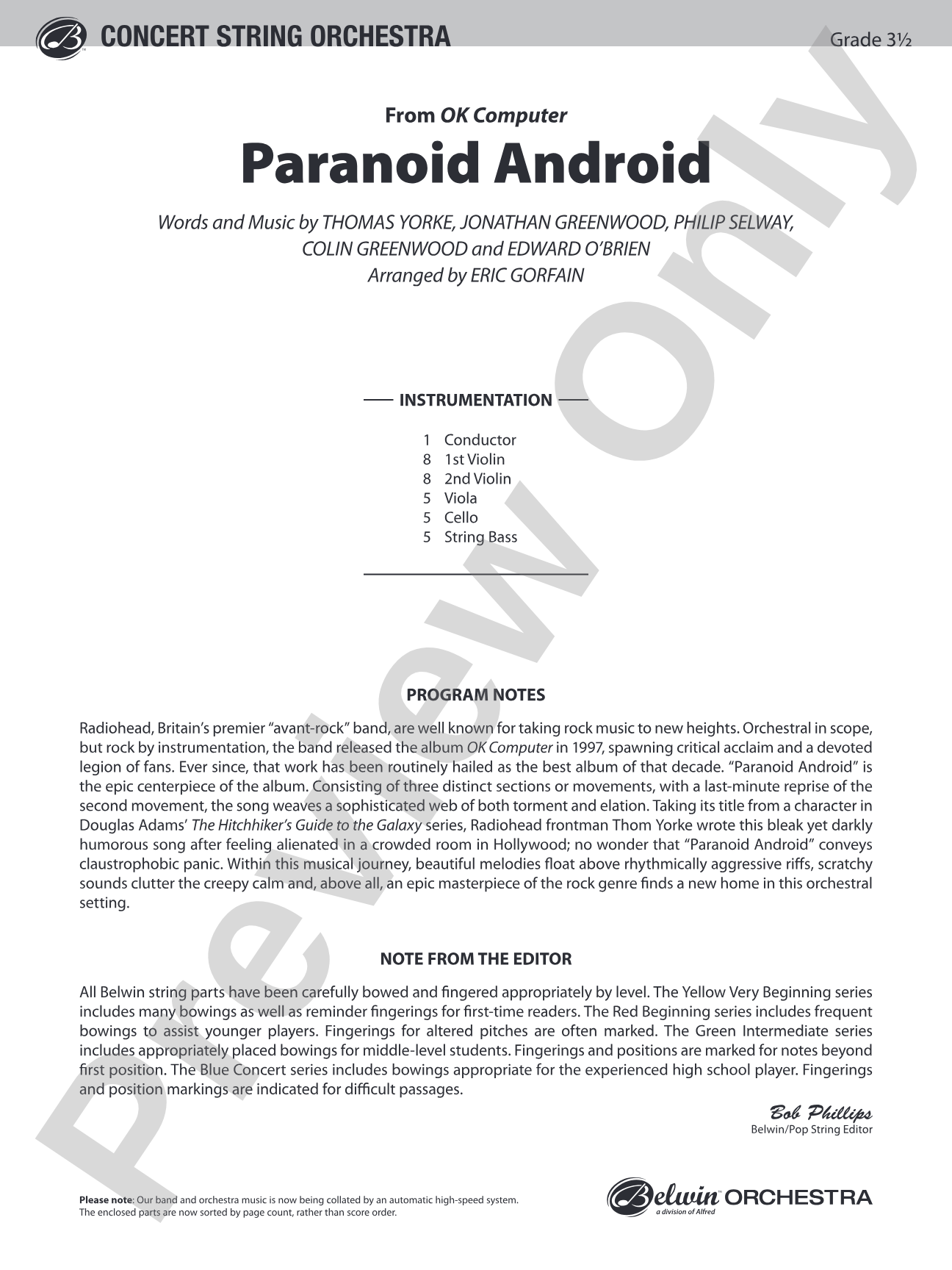
Words and music by Thomas Yorke, Jonathan Greenwood, Philip Selway, Colin Greenwood, and Edward O'Brien [Radiohead] / arr. Eric Gorfain
Grade: 3.5
Item: 00-PK-0004184

$64.00
One moment…
Related Items
Paranoid Android (from OK Computer): String Orchestra Conductor Score |
$9.00
|
View |
Description
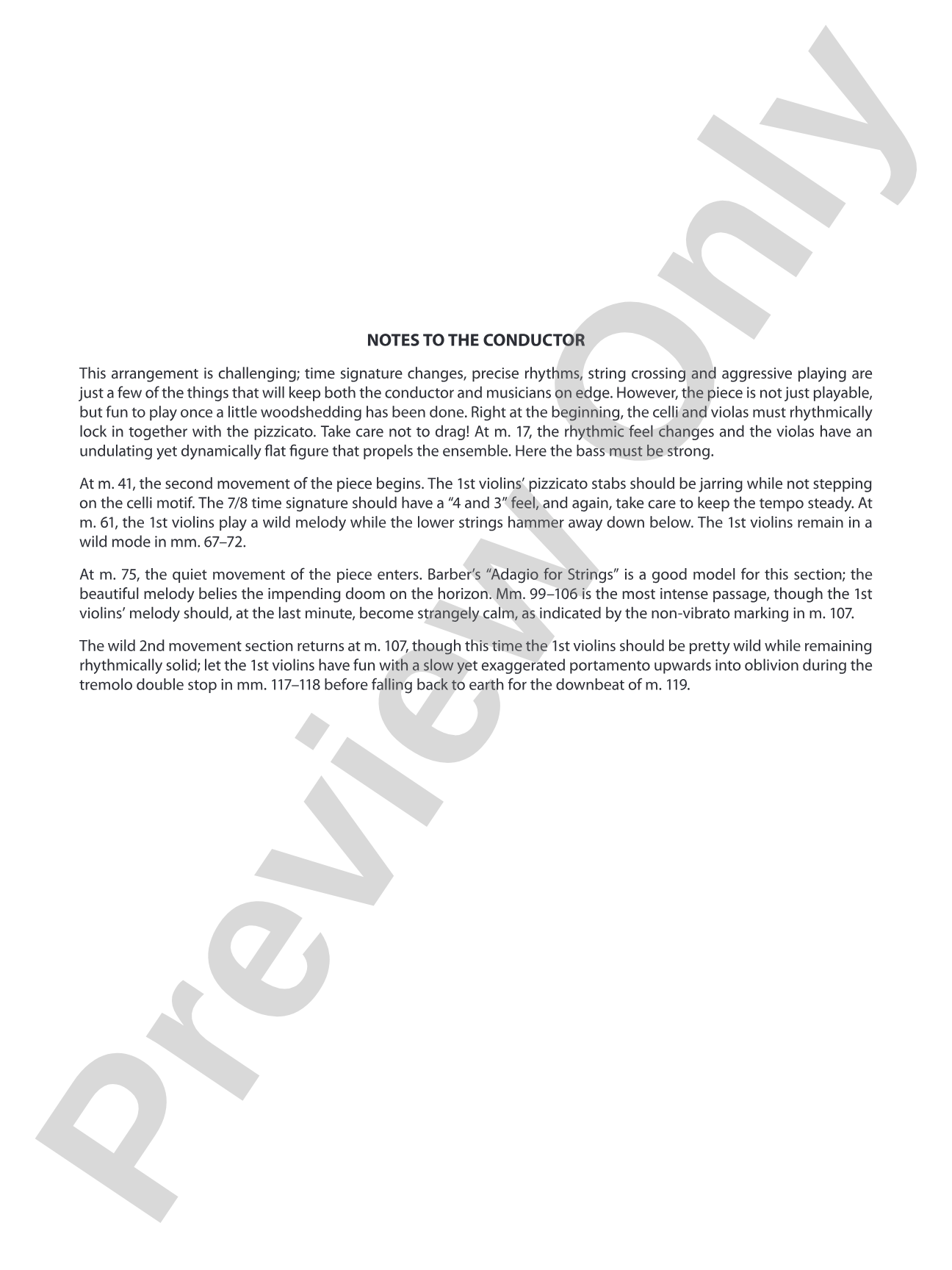
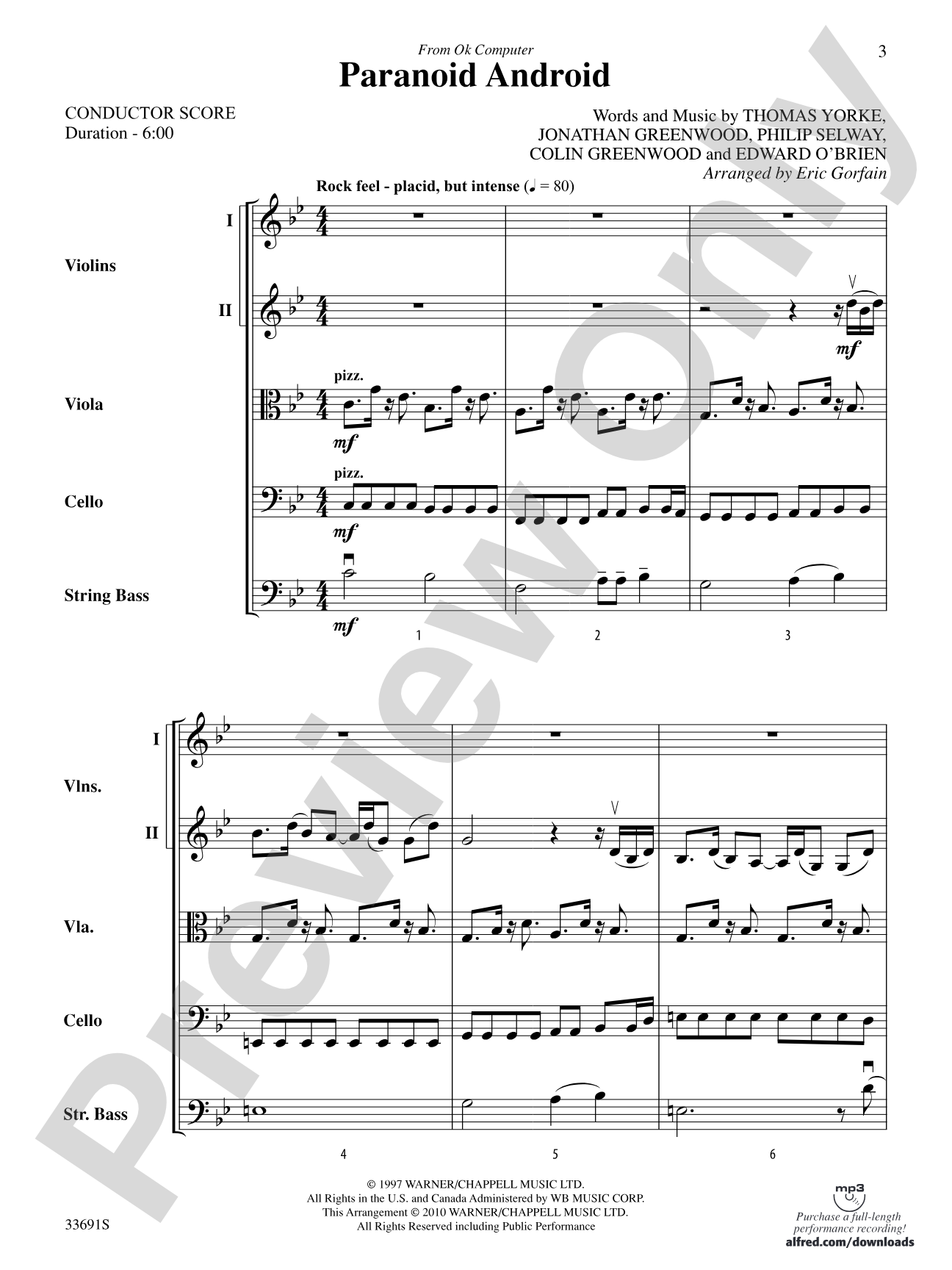
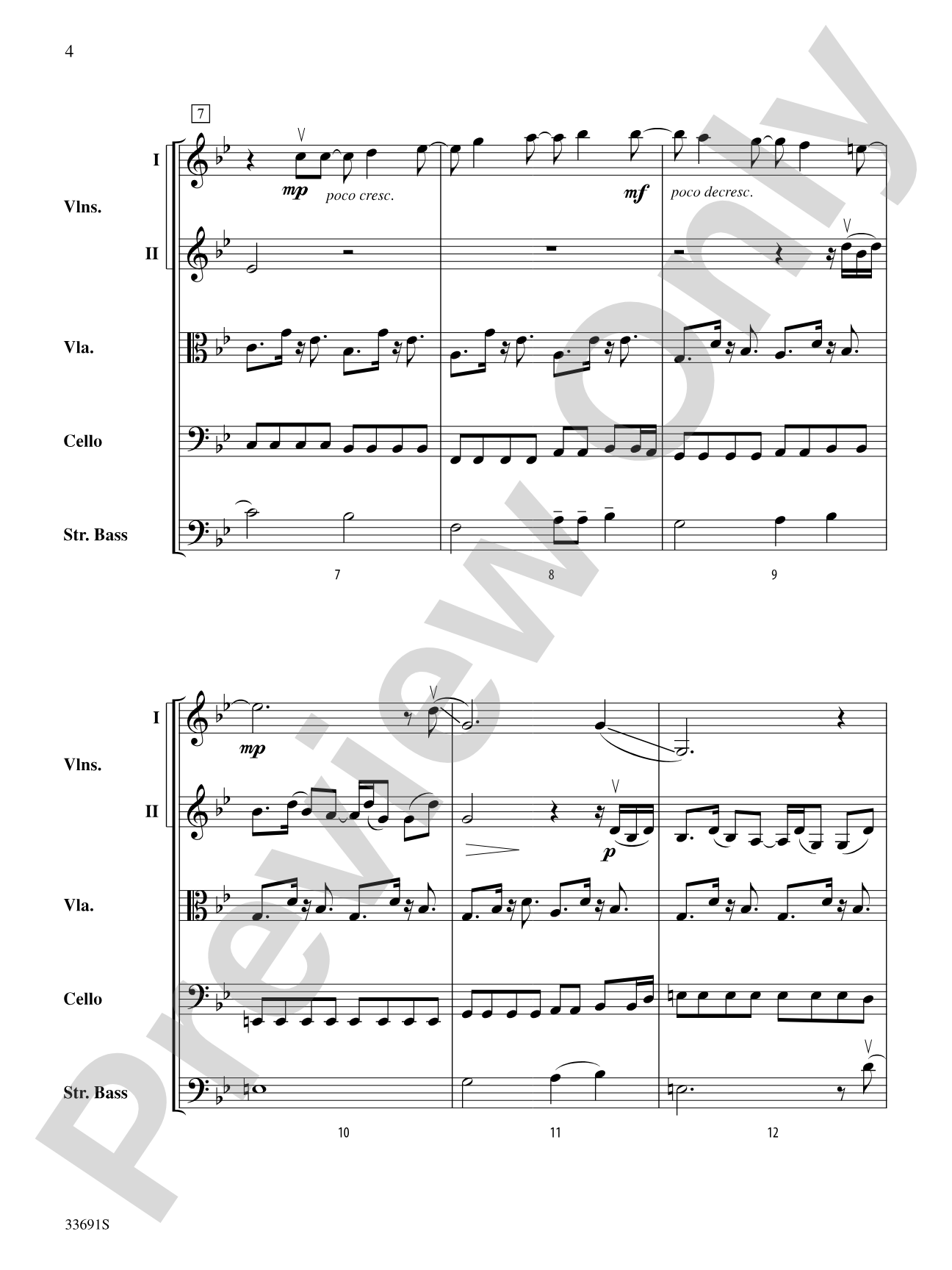
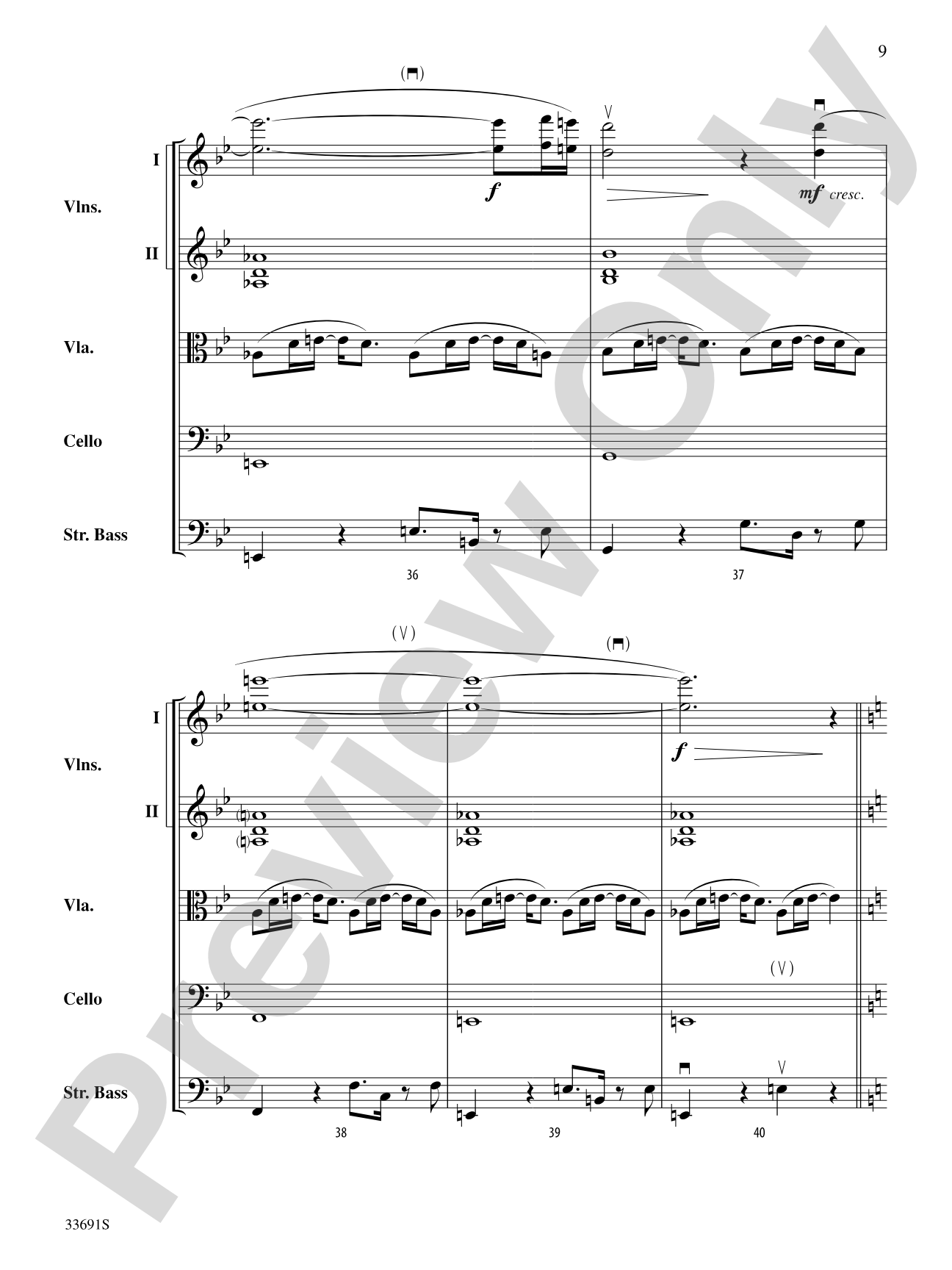
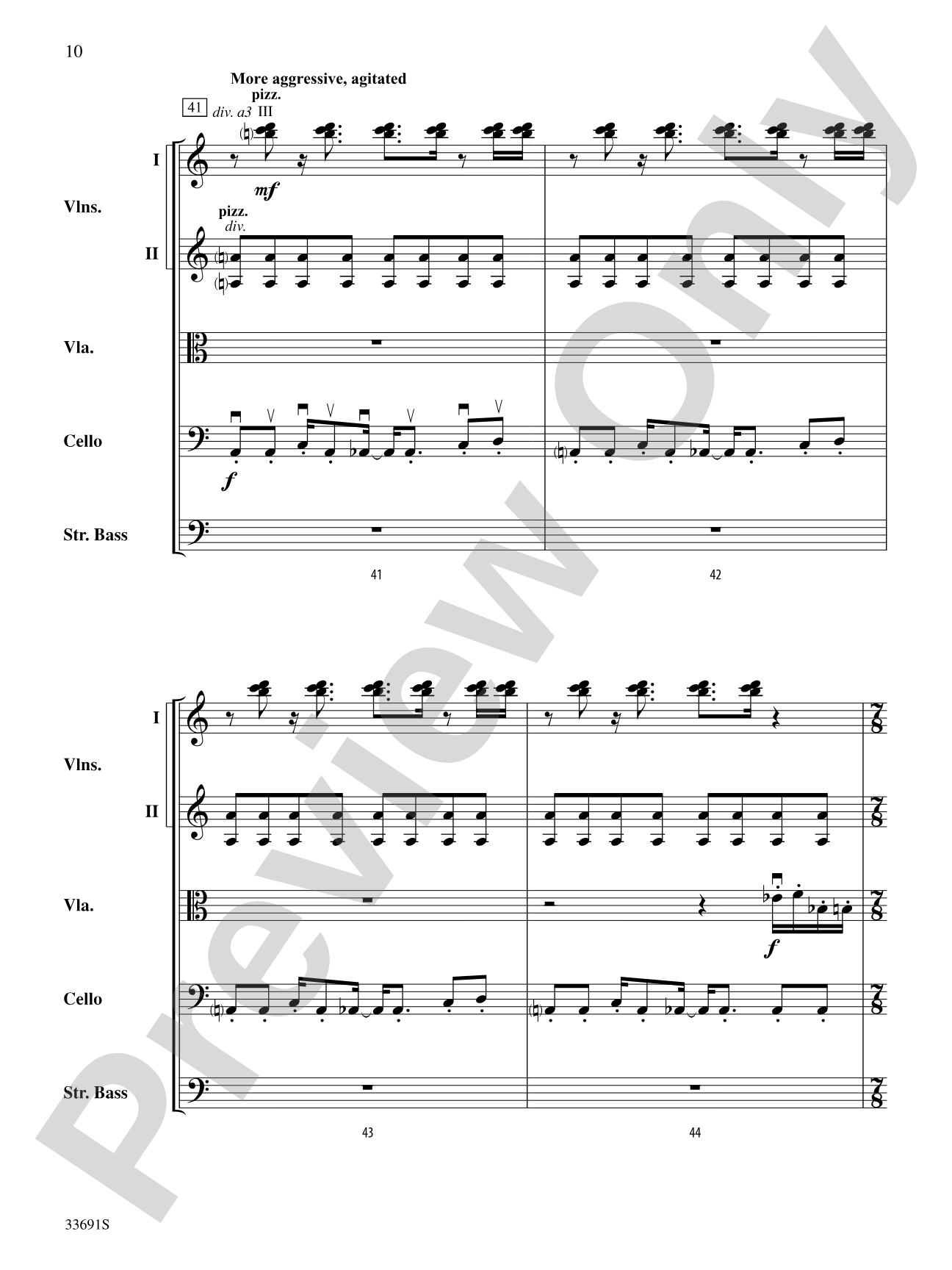
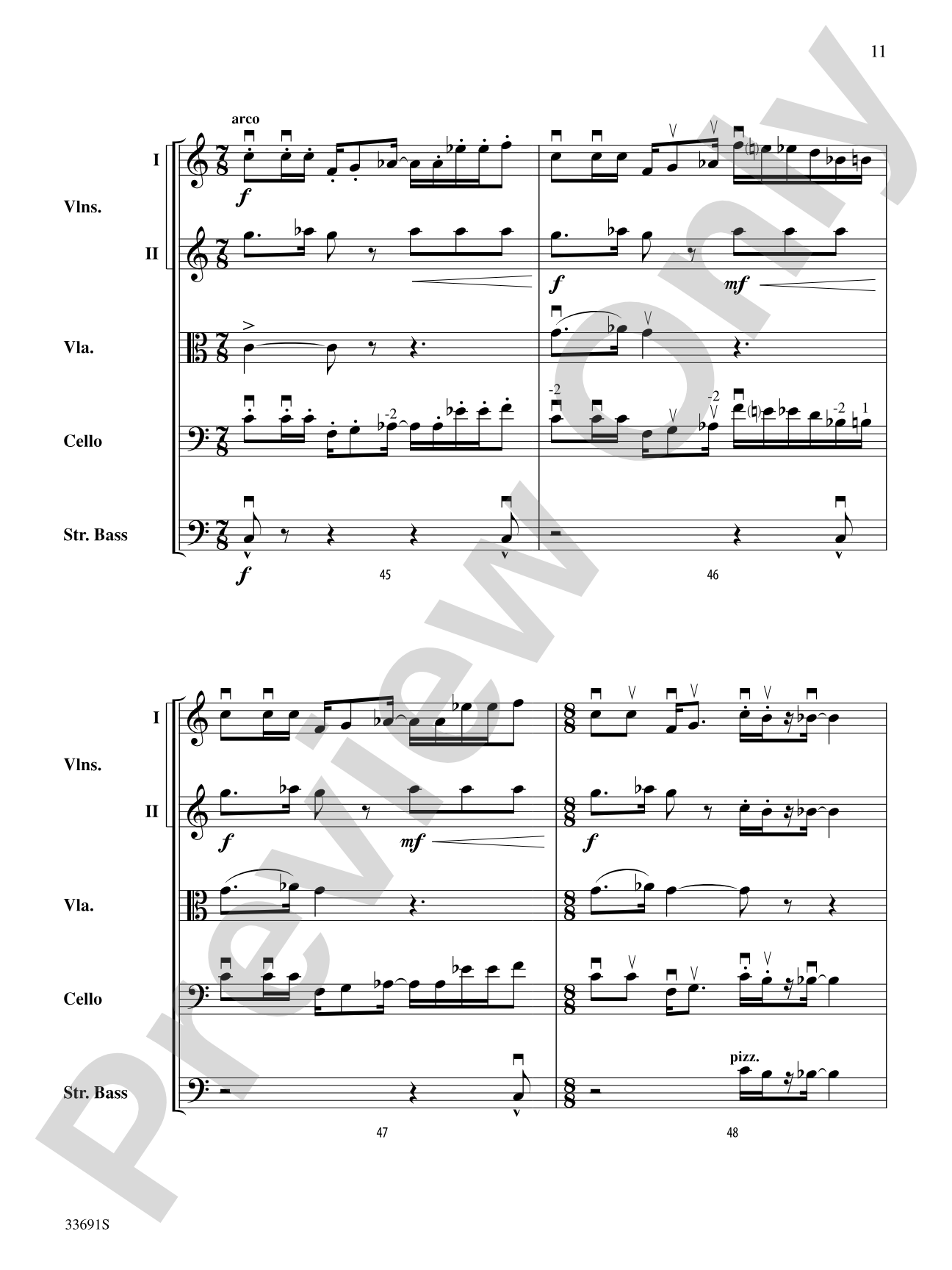
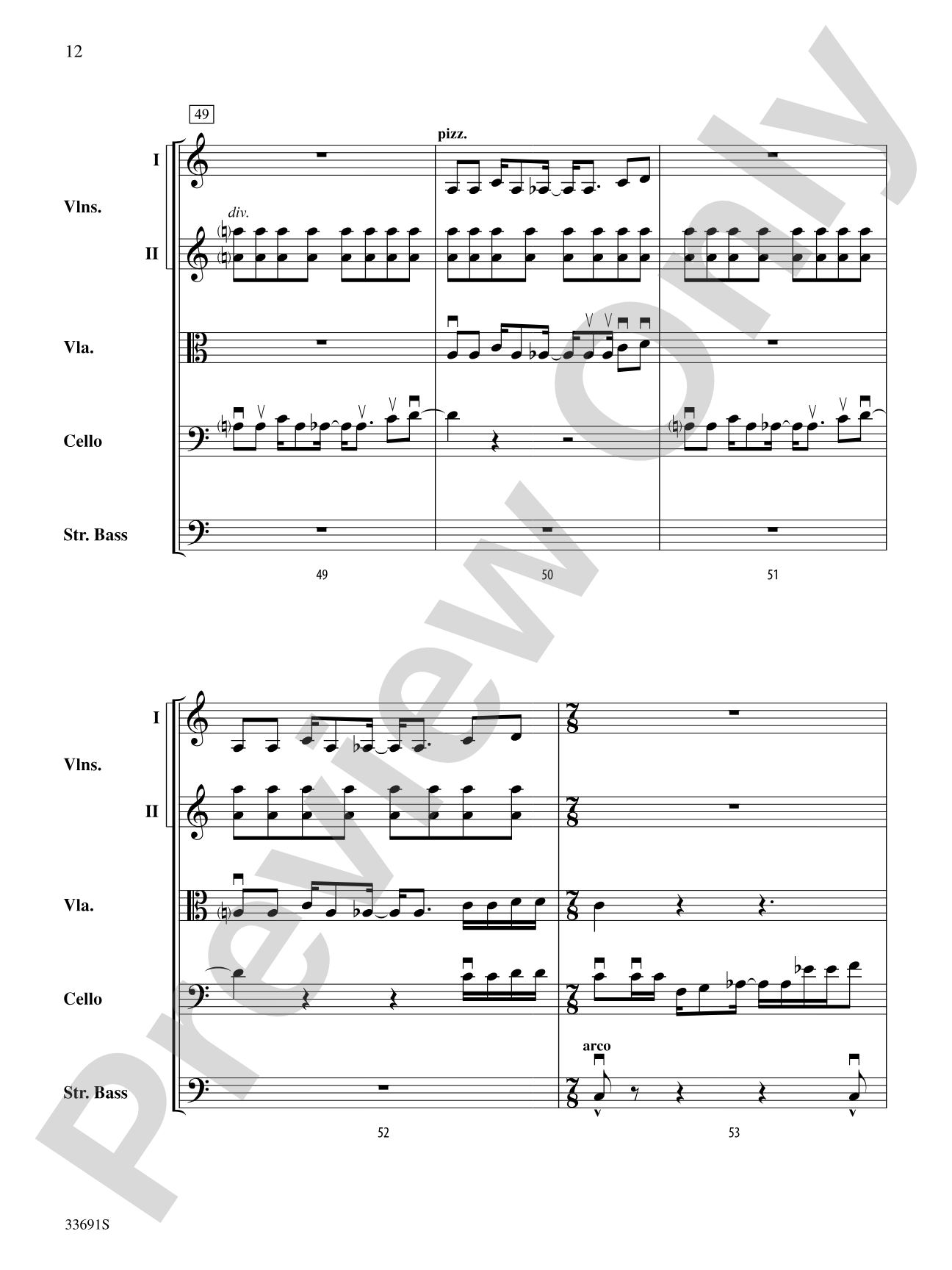
The centerpiece of Radiohead's OK Computer album, this work travels through several movements and weaves a sophisticated web of both torment and elation. A challenge for ensembles of all skill levels, this piece employs odd time signatures, col legno, snap pizzicato, and ponticello, in addition to other extended techniques that will provide a look at how the worlds of rock and classical music can collide with motivating results. An epic masterpiece of the rock genre finds a new home in this orchestral setting.


Don't just read it, hear it, play along with it, and watch your students grow with it. In MakeMusic Cloud, Paranoid Android (from OK Computer): String Orchestra Conductor Score & Parts comes alive with professional accompaniment, adjustable tempo, and built-in practice tools that turn solo practice into real progress.
Open in the Player
Jump straight in and assign it today.
Start Your Free Trial
Open this title and explore the full library in minutes.
Sample Audio
1
Audio File
--:--
0:00
0:00
Sample Video
No sample videos found.
Additional Details
Series:
Pop Concert String Orchestra
Publisher:
Alfred Music
Page Count:
124
SKU:
00-PK-0004184
More about this title
About the Composer: Thomas Yorke
Thomas Yorke is the lead vocalist and primary songwriter of Radiohead, the British rock band that emerged from Oxford in the 1990s. Beyond his work as a performer and composer, Yorke has demonstrated a keen interest in how rock music can engage with classical forms and orchestral textures, particularly evident in Radiohead's ambitious studio work and in pieces like this orchestration that bridge the sonic worlds of both traditions.
Why we love this
This is the rare orchestration that respects the architecture and emotional intensity of the original while genuinely expanding what string players can do. The extended techniques (col legno, snap pizzicato, ponticello) feel integral to the piece rather than decorative, and the odd meter changes teach ensemble precision in a context where students are motivated by a genuine rock masterpiece.
What to expect
Propulsive and unstable in the best way, this orchestration captures the original's lurching anxiety and moments of strange beauty. The extended techniques create textures that feel both vulnerable and unsettling, and the odd meters give the whole piece a rhythmic drift that pulls listeners into its paranoid emotional landscape.
Who it's for
Advanced middle school or high school string orchestras with directors who want to program music that speaks to students' own musical world while stretching their technical and interpretive range. This score works equally well for college orchestras and semi-professional ensembles seeking contemporary arrangements that challenge without overwhelming.
How to get the most out of it
- Pay close attention to the metric shifts throughout the piece. Lock these transitions in sectional rehearsals before running full sections, since the odd time signatures will destabilize rhythm sections that rely on feel rather than counting.
- Extended techniques require clear visual cues from the podium. Establish explicit hand signals for col legno, snap pizzicato, and ponticello passages so players can execute them decisively without breaking ensemble focus.
- The range of dynamic contrast from whisper-soft ponticello to aggressive col legno demands careful balance work. Use the digital score to isolate these textural layers and adjust volumes so the orchestration's depth remains audible rather than muddy.
- Build comfort with the extended techniques gradually in sectional rehearsals before full orchestra work. Many string players encounter snap pizzicato and col legno for the first time in pieces like this, so technique-specific practice will pay dividends in security and confidence.
How to use it
Position this as a centerpiece that bridges classical and contemporary worlds on a mixed concert. It pairs well alongside modern classical works or other rock orchestrations, and the epic scope justifies a full second-half program slot where students can showcase the technical and musical growth the rehearsal process demands.
Skills your students will build
- Reading and executing odd time signatures (primarily 4/4 and 7/8 patterns)
- Extended string techniques including col legno, snap pizzicato, and ponticello
- Rhythmic precision and metric transitions across large ensemble
- Dynamic contrast and orchestral balance across multiple textural layers
- Stylistic awareness of contemporary rock-classical fusion