
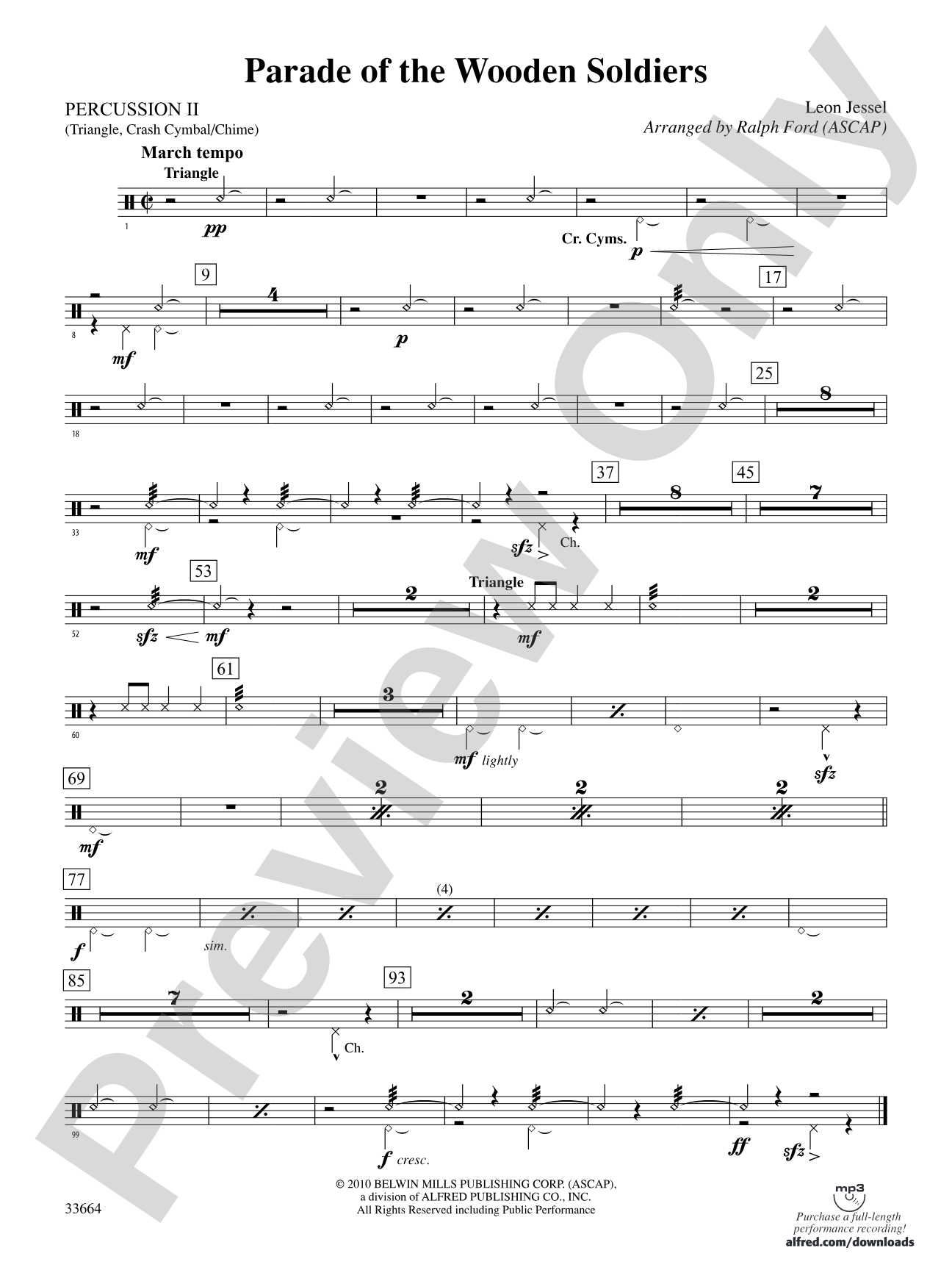

Parade of the Wooden Soldiers: 2nd Percussion
By Leon Jessel / arr. Ralph Ford
Grade: 3
Item: 00-PC-0014457_PC2
$5.99
Pickup currently not available
Description
Also known by the title, "Parade of the Tin Soldiers," this instrumental theme has become a favorite of the holiday season. It was utilized in a 1933 animated short starring Betty Boop and a parade of toys that magically come to life to crown their queen. Strong and steady, "British" in character, but with the added sounds of many magical and child-like imaginations sprinkled over the top, this piece is a true holiday gem.


Don't just read it, hear it, play along with it, and watch your students grow with it. In MakeMusic Cloud, Parade of the Wooden Soldiers: 2nd Percussion comes alive with professional accompaniment, adjustable tempo, and built-in practice tools that turn solo practice into real progress.
Open in the Player
Jump straight in and assign it today.
Start Your Free Trial
Open this title and explore the full library in minutes.
Sample Audio
1
Audio File
--:--
0:00
0:00
Sample Video
No sample videos found.
Additional Details
Series:
Belwin Concert Full Orchestra
Publisher:
Alfred Music
Page Count:
150
SKU:
00-PC-0014457_PC2
More about this title
About the Composer: Leon Jessel
Leon Jessel (1871-1942) was a German composer and conductor whose gift for melody and orchestration made him a fixture of early twentieth-century light music. He composed operettas, marches, and character pieces that balanced sophistication with immediate appeal, earning him performances across Europe and eventually in America. "Parade of the Wooden Soldiers" stands as his most enduring work, a perfect example of his ability to craft music that delights both concert audiences and the general public.
Jessel's orchestration style influenced how later composers approached holiday and theatrical music. His command of instrumental color and rhythmic drive made his pieces natural choices for arranged concert settings, from concert bands to full orchestras. The piece remains a staple of Christmas programming nearly a century after its composition.
Why we love this
This arrangement captures all the charm of a classic without requiring a massive rehearsal investment. Ralph Ford's orchestration maintains the melodic clarity and playful character of the original while distributing the musical ideas across the full orchestra in ways that keep every section engaged. It's the kind of piece that reminds audiences why holiday concerts matter: it's festive, accessible, and genuinely fun to perform.
What to expect
There's a spirited, almost theatrical energy to this music. Beneath the sturdy march rhythm runs a sense of childlike wonder and playfulness, as if toys are indeed marching across the stage with genuine personality. The orchestration sparkles at key moments, adding just enough magic and whimsy to justify the holiday setting without straying into saccharine territory.
Who it's for
This piece works beautifully for community orchestras, youth orchestras, and school symphony orchestras at the intermediate level. It's particularly valuable for ensembles balancing repertoire development with audience engagement, since it sits comfortably at Grade 3 while sounding far more polished than its technical demands suggest.
How to get the most out of it
- Keep the march character crisp and forward-moving. Wooden soldiers don't drag; they strut with purpose and precision.
- Balance the whimsical orchestral colors (chimes, triangle, xylophone effects) against the steady pulse of the march itself. These touches should enhance, not overshadow, the main melody.
- Work with your principal melodic voices (first violins, clarinets, flutes) to ensure the tune projects clearly above the accompaniment, especially through the busier sections.
- Use rehearsal letters or measure numbers aggressively when sectioning. With 150 pages of parts, coordinating entries and transitions across the full orchestra is essential.
How to use it
Program this as the anchor of a holiday concert's lighter half, or pair it with other Grade 3 orchestral works to build an entire set around seasonal themes. It also works as a strong closer to a concert focused on lighter fare, since audiences leave with infectious good humor. The piece's theatrical origins make it a natural fit alongside other novelty or character pieces.
Skills your students will build
- Sustaining steady rhythmic pulse in march time (2/4)
- Balancing melodic lines against accompaniment patterns
- Responding to clear conducting gestures in a multi-section ensemble
- Coordinating across instrument families to maintain unified tone
- Managing rhythmic precision in passages with busy articulation