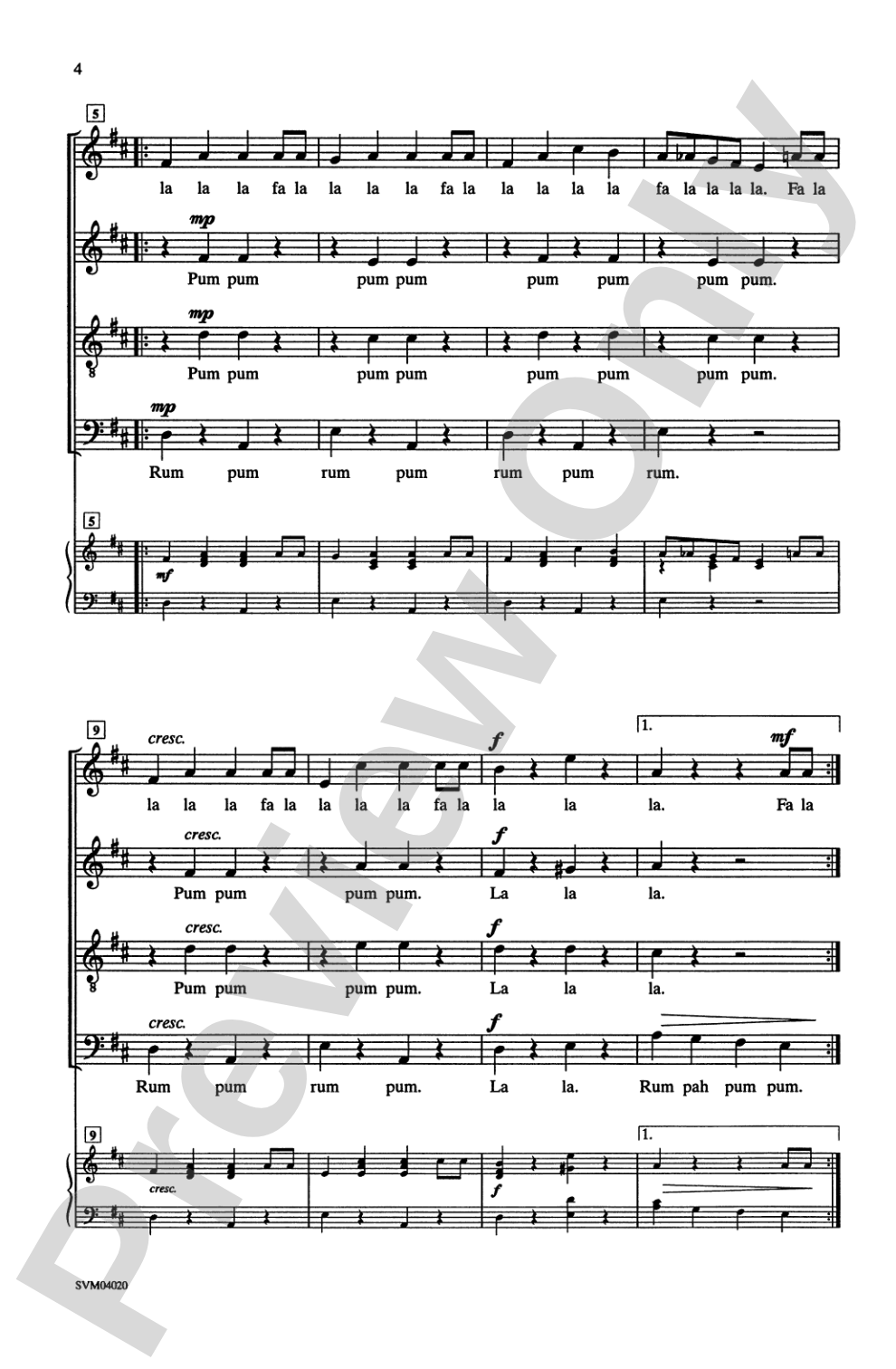
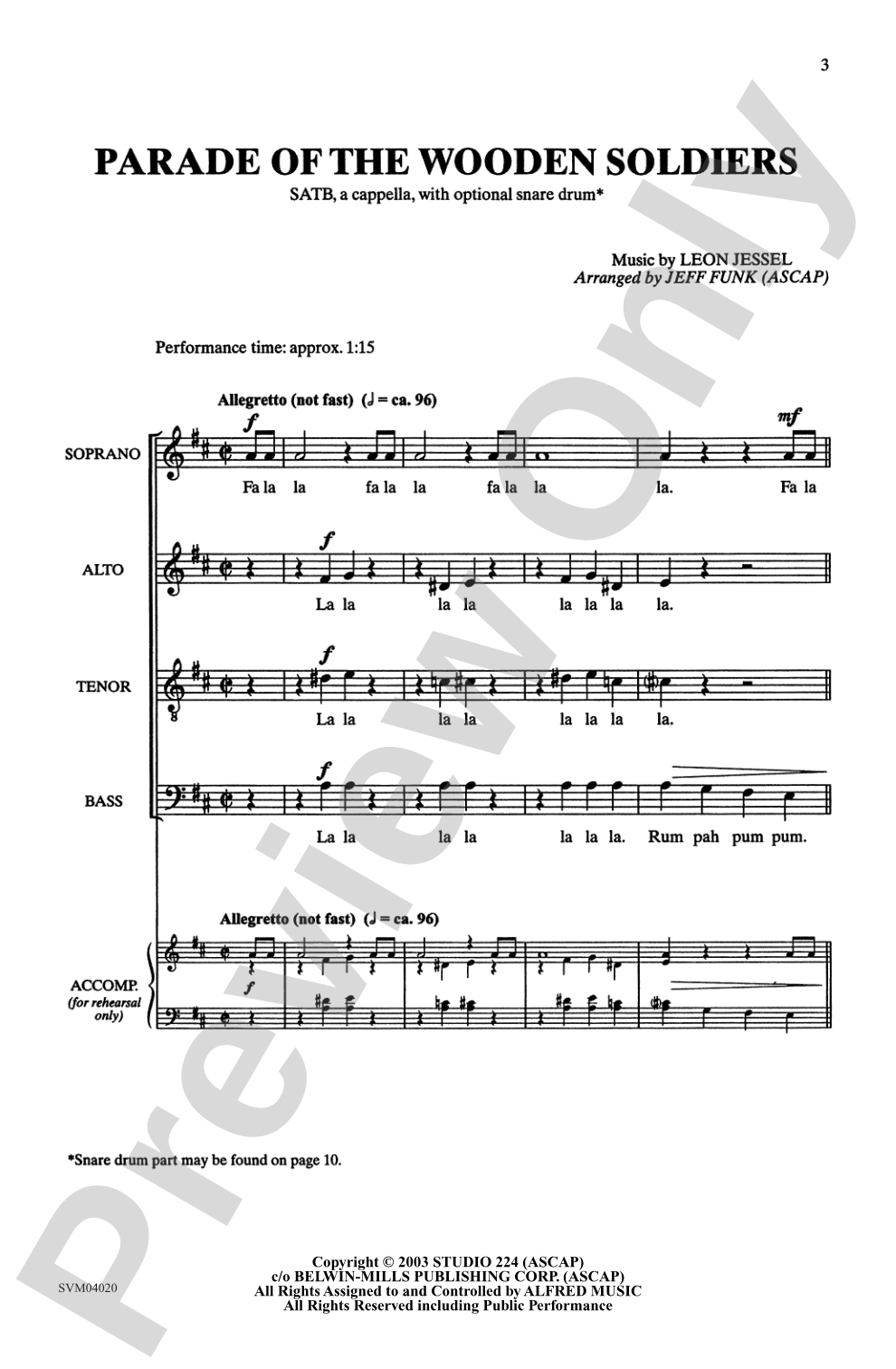
Parade of the Wooden Soldiers Sheet Music Preview

Parade of the Wooden Soldiers: SATB, a cappella Choral Octavo

Music by Leon Jessel / arr. Jeff Funk

Level: Moderate

Item: 00-PO-0007650

Digital Download
$2.05

Minimum order quantity: 20 copies

Description
This traditional holiday favorite comes alive in an exceptionally creative a cappella setting from Jeff Funk. It's the perfect sequel to Jeff's highly successful "Dance of the Sugar Plum Fairy." Sure to be a hit with both singers and audiences!

Parade of the Wooden Soldiers: SATB, a cappella Choral Octavo isn't in MakeMusic Cloud just yet...but it could be. Let us know you'd like to see it, and you'll help shape what comes next. In the meantime, start a free trial and dive into thousands of interactive titles your students can play along with today.

Sample Audio
No sample audio found.
Sample Video
Additional Details
Publisher: Alfred Music
Page Count: 12
SKU: 00-PO-0007650
Instrumentation: Opt. Snare Drum

More about this title

About the Composer: Leon Jessel

Leon Jessel (1871, 1942) was an operetta composer and conductor whose theatrical works defined early 20th-century light music in Europe. Best known for the march "Parade of the Wooden Soldiers" from his operetta "The Perils of Penelope," Jessel had a gift for crafting melodies that lodge themselves in the listener's memory with effortless charm.

His compositions remain staples in school and community music programs precisely because they balance sophistication with accessibility. Jessel understood what makes a tune singable and what makes an arrangement educational without sacrificing musicality.

Why we love this

Jeff Funk's arrangement captures the buoyant character of Jessel's original while creating genuine independence among the four voice parts. Rather than simply distributing a melody, Funk builds texture through interweaving lines and rhythmic counterpoint that keeps singers engaged without requiring extensive range or technical demands. The optional snare drum part adds percussion color without complicating rehearsal logistics.

What to expect

Spirited and whimsical, with the rhythmic bounce of a march and the theatrical wink of a character piece. Jessel's original humor and lightness shine through Funk's voicing, creating moments of surprising inner-part action that delight singers while the overall shape remains clear and inviting to listeners. The a cappella texture gives it an almost vaudeville quality, playful and self-contained.

Who it's for

This arrangement suits intermediate choirs (high school, college, adult community, or advanced middle school ensembles) that have basic blend and balance but need music that feels fresh without demanding solo-level vocal maturity. Directors seeking a holiday repertoire piece that avoids sentimentality while remaining immediately appealing to both performers and audiences will find this a natural fit.

How to get the most out of it

  • Shape the phrase endings with gentle dynamic pulls rather than hard stops; this maintains the character's playful momentum even in quieter passages.
  • Balance the soprano line against inner voices that carry substantial melodic material; ensemble clarity comes from each voice knowing its role in the texture.
  • If using the optional snare drum, keep articulation light and precise; the drum should enhance rhythmic clarity, not overshadow the voices.
  • Vowel consistency across all four parts in unison or homophonic moments prevents the a cappella texture from sounding thin or scattered.

How to use it

Program this as a first-half closer on a holiday concert to shift the mood from reverent to festive, or pair it with other secular seasonal works to build a lighter program segment. The moderate length and clear character make it an effective contrast when sandwiched between longer choral works or more serious repertoire.

Skills your students will build

  • Balancing independent melodic lines within a cappella texture
  • Maintaining rhythmic precision without instrumental support
  • Creating vocal percussion effects and rhythmic vitality through diction and articulation
  • Reading and performing non-traditional harmonic movement
  • Ensemble blend across four voice parts with varied textural densities

You May Also Like