Panis Angelicus (O Lord Most Holy) Sheet Music Preview

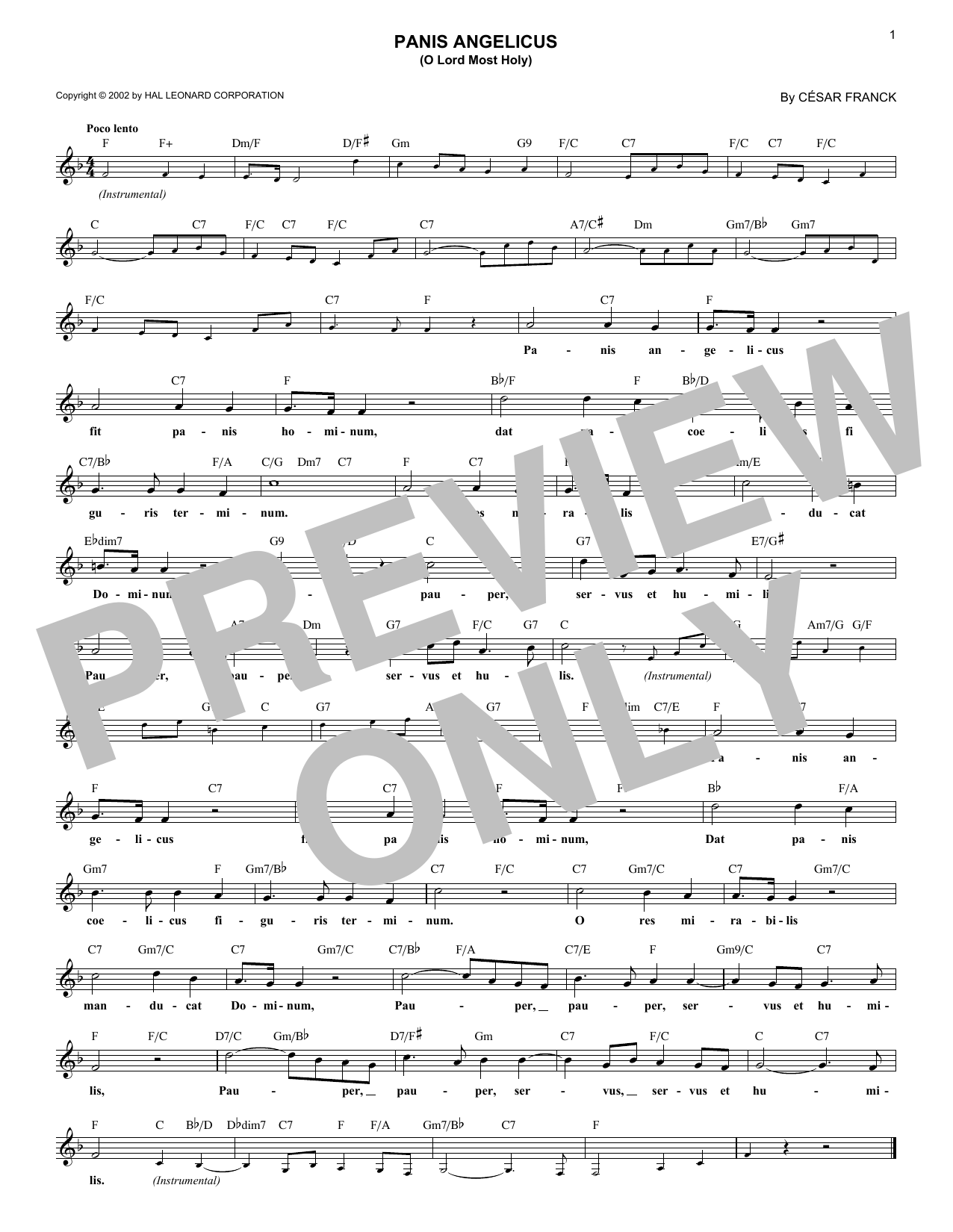
Panis Angelicus (O Lord Most Holy): Lead Sheet / Fake Book

Item: 35-DS00429573

Digital Download
$3.99
Description

Panis Angelicus (O Lord Most Holy): Lead Sheet / Fake Book isn't in MakeMusic Cloud just yet...but it could be. Let us know you'd like to see it, and you'll help shape what comes next. In the meantime, start a free trial and dive into thousands of interactive titles your students can play along with today.

Sample Audio
No sample audio found.
Sample Video
Additional Details
Publisher: Hal Leonard
Page Count: 1
SKU: 35-DS00429573

More about this title

About the Creator: César Franck

César Franck composed Panis Angelicus in 1872 as part of his larger work Messe à trois voix (Mass for Three Voices). The piece emerged during Franck's tenure as organist at Sainte-Clotilde in Paris, a period when he was deeply engaged in sacred music composition. His gift for melody and harmonic richness made this particular movement one of his most enduring contributions to liturgical and secular music repertoire alike.

Franck's approach to this text combines reverent simplicity with sophisticated harmonic language. The result is a piece that works equally well in formal worship settings and concert halls, which explains its nearly 150-year staying power in both contexts.

Why we love this

Franck's melodic gift shines brightly here, and the lead sheet format lets pianists and singers discover exactly why this piece has appeared at countless weddings and services. The harmonic movement is elegant without being showy, making it rewarding for musicians who care about supporting the text rather than overshadowing it.

What to expect

Panis Angelicus unfolds with quiet dignity, its melody moving gently through a harmonic landscape that feels both familiar and refined. There's a meditative quality here, a sense of devotion expressed through understatement rather than grandeur.

Who it's for

Pianists and keyboardists preparing accompaniments for vocalists in wedding, funeral, or concert settings will find this single-page lead sheet immediately useful. Singers working from a fake book will appreciate having the chord changes and melody clearly laid out for rehearsal and performance.

How to get the most out of it

  • Shape the melody with a singing tone throughout, imagining you're accompanying a vocalist even if you're performing solo. The line needs space to breathe.
  • Allow the harmonic progressions to unfold naturally; Franck's chord choices guide the emotional arc, so resist the urge to rush between changes.
  • Consider the dynamic arc across the full phrase rather than treating each measure in isolation. This piece benefits from gentle building and releasing of tension.
  • If accompanying a vocalist, lock into their phrasing first and let the harmony support their choices around breath and emphasis.

How to use it

This works beautifully as an offertory or recessional in wedding or memorial services. Pianists can also pair it with other Franck sacred works in a concert program, or use it as a companion piece to other Romantic-era religious music.

Skills your students will build

  • Accompanying vocalists with attentive harmonic support
  • Interpreting lead sheet notation and chord symbols
  • Shaping longer melodic lines through harmonic architecture
  • Balancing accompaniment texture with vocal prominence

You May Also Like