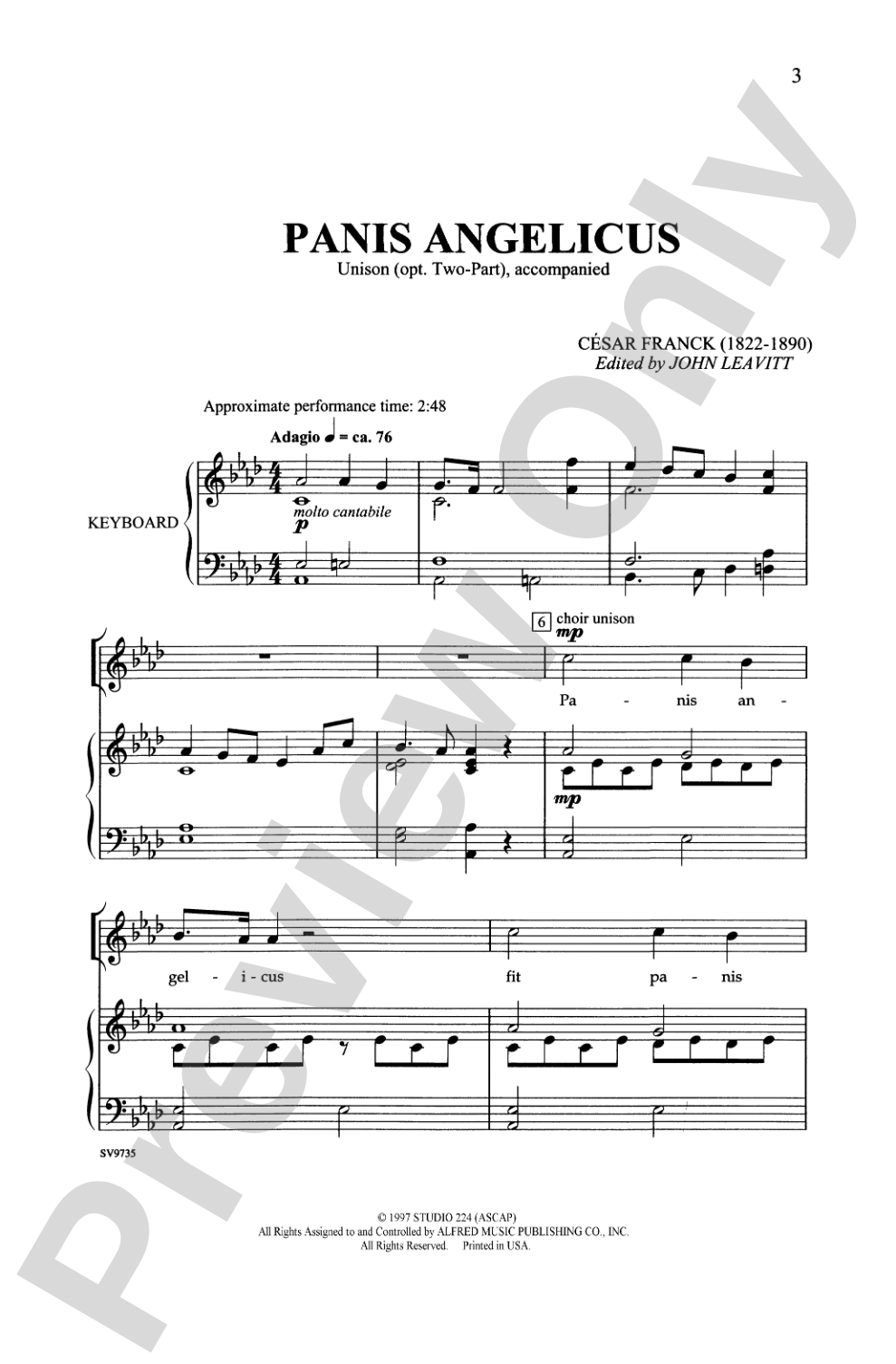
Panis Angelicus Sheet Music Preview

Panis Angelicus: Unison (Opt. 2-Part) Choral Octavo

Words and music by César Franck / ed. John Leavitt

Item: 00-PO-0005265

Digital Download
$2.25

Minimum order quantity: 20 copies

Description
This outstanding two-part setting of the Franck masterpiece is the perfect way to introduce classic repertoire to your developing choirs. John Leavitt's skill and sensitivity to the choral art come through even in the simplicity of this edition. Exceptionally well done!

Panis Angelicus: Unison (Opt. 2-Part) Choral Octavo isn't in MakeMusic Cloud just yet...but it could be. Let us know you'd like to see it, and you'll help shape what comes next. In the meantime, start a free trial and dive into thousands of interactive titles your students can play along with today.

Sample Audio
No sample audio found.
Sample Video
Additional Details
Series: Alfred Archive Edition: Studio PR Catalog
Publisher: Alfred Music
Page Count: 8
SKU: 00-PO-0005265

More about this title

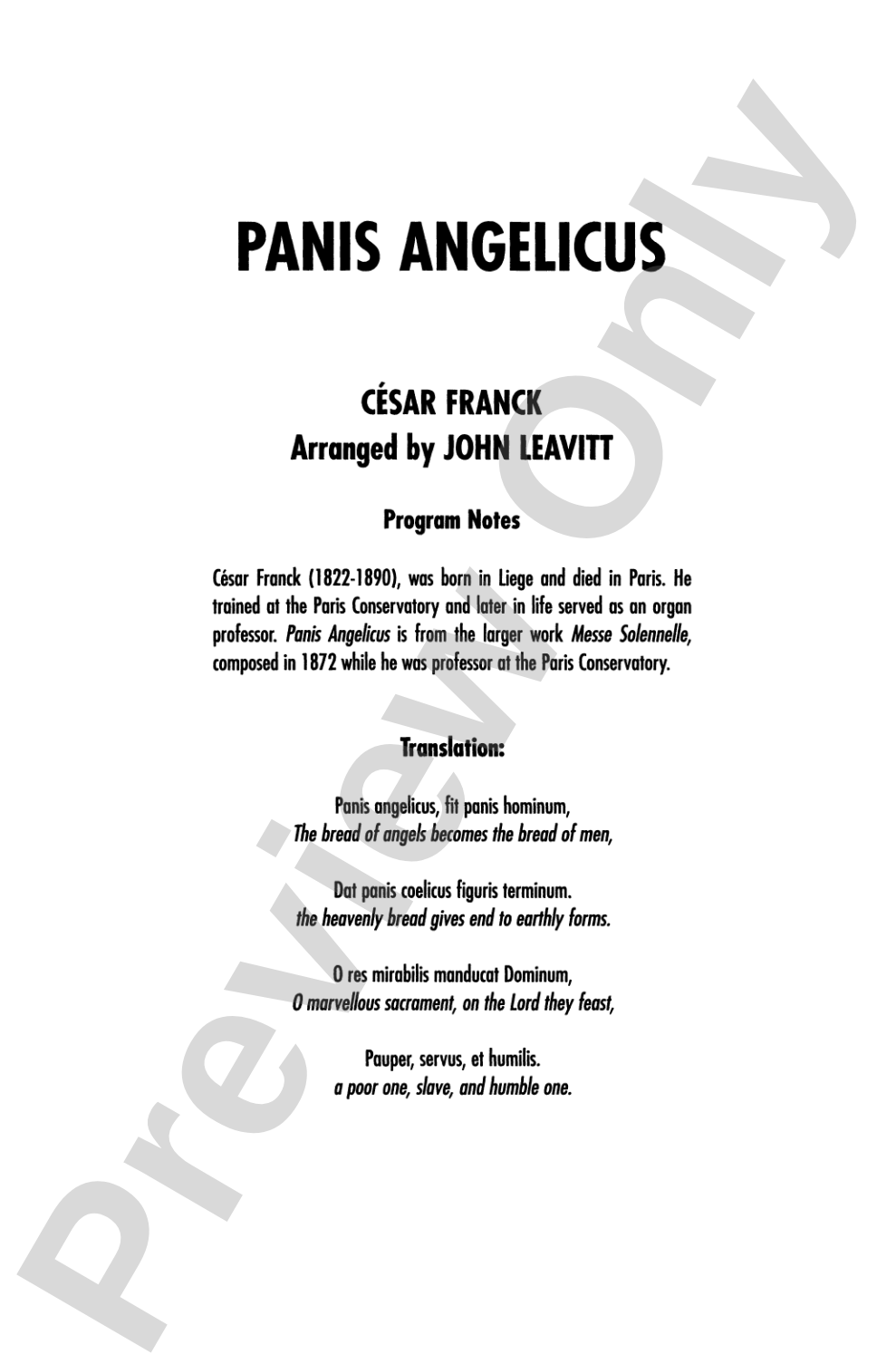
About the Composer: César Franck

César Franck (1822-1890) was a Belgian-born organist and composer who spent most of his career in Paris, where he became one of the most influential figures in French music of the late Romantic era. His deep spirituality infused his compositions, particularly his sacred works, which combined the contrapuntal rigor of Bach with the harmonic language of his contemporaries. Franck's organ music and choral works remain central to the liturgical and concert repertoire, and his approach to melody and orchestration profoundly shaped French compositional practice.

As a teacher at the Paris Conservatoire, Franck mentored a generation of composers and organists, emphasizing both technical mastery and emotional authenticity. His sacred output includes masses, motets, and larger choral works that treat the text with reverence while exploring rich harmonic territories. Panis Angelicus stands among his most enduring works, valued for its spiritual depth and musical craftsmanship.

Why we love this

Franck's original is musically substantial enough to demand respect, yet John Leavitt's unison setting with optional divisi strips away unnecessary complexity without sacrificing the piece's soul. Your singers will connect immediately with a melody this singable, while you retain access to genuine Romantic sacred literature. This is how you build young singers' confidence with real music.

What to expect

Panis Angelicus unfolds with quiet devotion, its simple melody carrying profound weight. The harmonic setting creates an atmosphere of peace and reverence, inviting singers and listeners into a moment of spiritual contemplation that feels both timeless and immediate.

Who it's for

Developing choirs ready to explore meaningful sacred repertoire without overwhelming technical demands. This setting works equally well for high school treble choirs, younger mixed groups finding their voice, and adult community choirs seeking accessible yet artistically satisfying material.

How to get the most out of it

  • Shape the phrase with consistent, forward-moving breath support; resist the temptation to fragment this long melodic line into choppy sections.
  • Balance text clarity with the sustained, lyrical quality the piece demands; overemphasizing consonants will undermine the prayer-like character.
  • When moving to the optional two-part divisi, maintain blend between the parts by ensuring both voices carry the same weight and legit tone.
  • Use the harmonic changes as signposts for subtle dynamic shaping rather than dramatic shifts; let the organ or accompaniment drive the architecture.

How to use it

Place this as a centerpiece in a sacred concert or festival program where it can breathe alongside other shorter choral works. It works beautifully in a liturgical context, and the unison voicing makes it accessible for massed choir performances or honor choir reading sessions at festivals.

Skills your students will build

  • Sustaining long melodic phrases with consistent breath and legit tone
  • Singing with text expression and spiritual authenticity
  • Blending unison and optional two-part harmonies
  • Recognizing and interpreting Romantic-era harmonic movement

You May Also Like