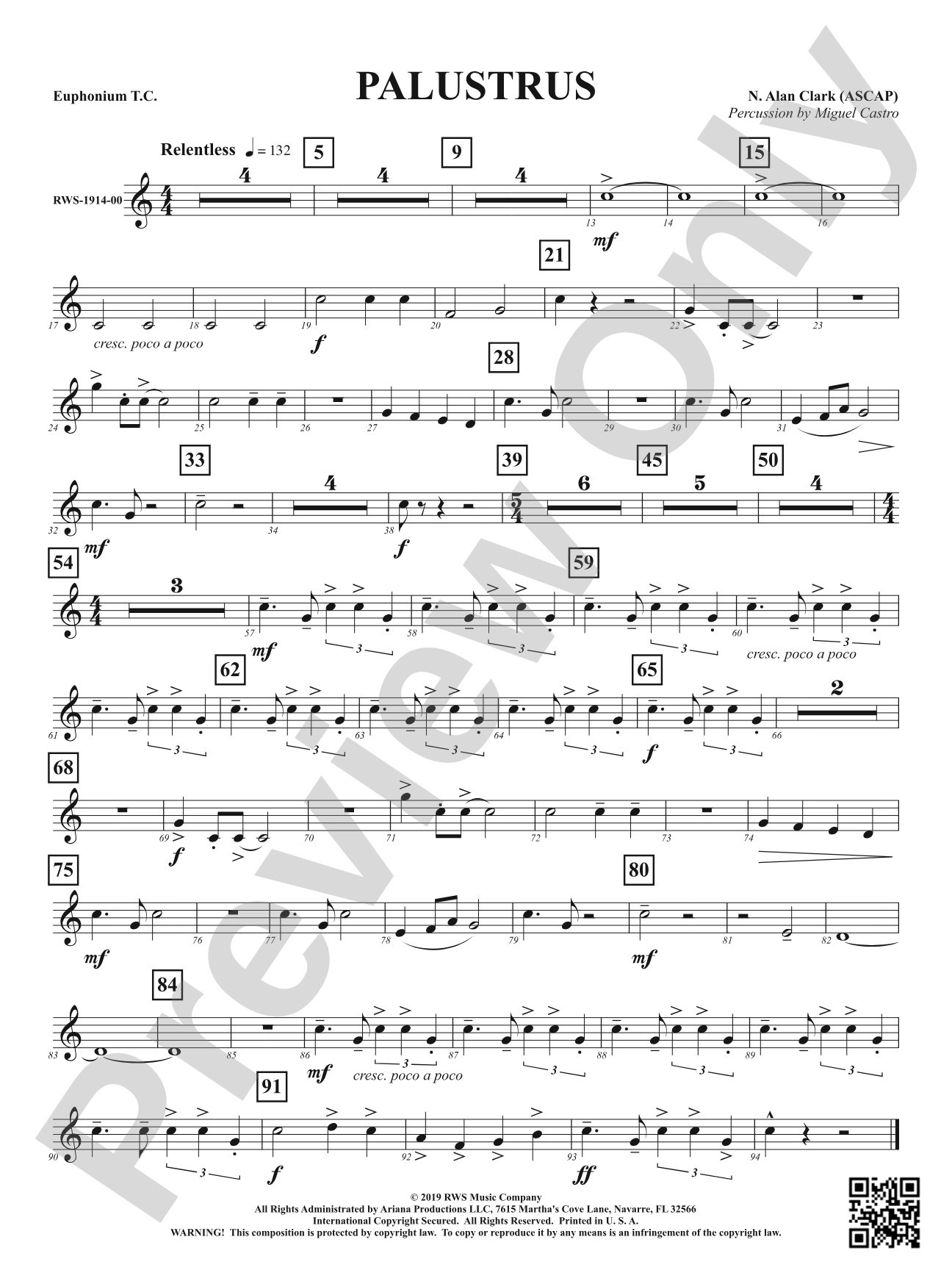
"Palustrus", for percussion ensemble and band, is based on two musical ideas. The first, a figure of two 16th notes, is introduced alluding to tiny seedlings as they sprout from the fertile earth. This figure quickly grows in frequency and density, then spreads into the second idea using a series of diatonic patterns. "Palustrus" is a medium-difficult, but attainable technical challenge in a diatonic setting. Splashes of dissonance in the winds support the active and exciting percussion ensemble statements throughout. Highly recommended for programs with a larger percussion section!
Original Item#: RWS-1914-00
Discover MakeMusic Cloud: thousands of interactive titles your students can play along with today.
N. Alan Clark is a composer and arranger whose concert band works balance accessibility with musical substance. His writing for percussion has earned particular recognition in educational settings, where his ability to craft engaging parts for expanded percussion sections sets his work apart from standard Grade 3 repertoire.
Why we love this
Clark builds this piece from two deceptively simple ideas—a pair of 16th notes and a diatonic pattern—then lets them expand organically into something genuinely exciting. The percussion writing is active and inventive without becoming gratuitous, giving programs with robust percussion sections a rare opportunity to showcase those players' musicality rather than just their technical chops. At Grade 3.5, the challenge sits right at that sweet spot where students stretch themselves within a musical framework that actually rewards their effort.
What to expect
The piece evokes natural growth and vitality: tiny seeds stirring, then unfurling into lush, layered vegetation. Energy builds deliberately rather than through bombast. There's an organic quality to how ideas multiply and interweave, supported by splashes of harmonic color that suggest movement through a living landscape rather than a static scene.
Who it's for
Conductors building programs with strong percussion sections who need repertoire that treats those players as essential to the musical argument rather than as decorative accompaniment. Grade 3.5 bands ready to tackle contemporary language and active ensemble writing.
How to get the most out of it
Establish the rhythmic precision of that two-note figure early in rehearsals; it's the DNA of the entire piece, and clarity here pays dividends when it migrates throughout the band.
Shape the diatonic patterns with phrase awareness rather than uniform articulation. Let the sequential motion breathe as it passes between sections.
Balance the wind dissonance carefully so it supports rather than overwhelms the percussion ensemble. These moments create color and tension, not mud.
Give the percussion section rehearsal time beyond full band call-throughs. The ensemble writing is sophisticated enough to deserve sectional work on voicing and blend.
How to use it
Program this as the heart of a concert exploring nature or growth themes, or as a contemporary selection that demonstrates your band's rhythmic sophistication and ability to balance ensemble playing across multiple families. It works equally well in a contest setting, where the balance of technical challenge and clear musicality appeals to adjudicators.
Skills your students will build
Executing rapid rhythmic figures with precision and independence
Reading and responding to contemporary compositional language (dissonance, non-traditional harmonic progression)
Maintaining ensemble balance across multiple active musical lines
Interpreting diatonic melodic sequences with shape and direction
Coordinating with percussion ensemble to support rather than compete with their statements
You May Also Like
Scan to Complete Your Purchase
Use your phone's camera to scan the code below
You'll log in on your phone and the order will be added to your account