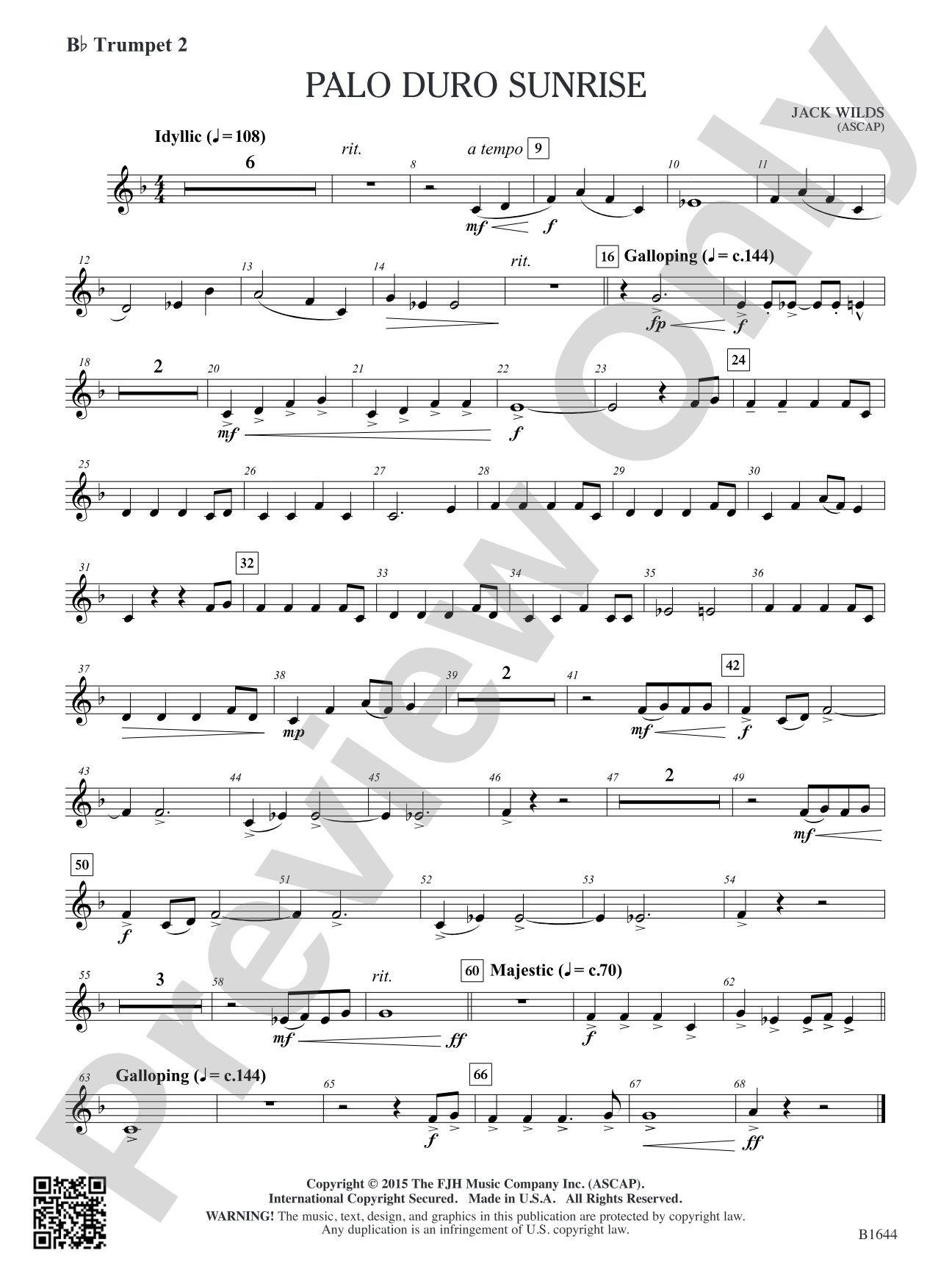
Palo Duro Sunrise: B-flat Trumpet 2 Sheet Music Preview

Palo Duro Sunrise: B-flat Trumpet 2

By Jack Wilds

Grade: 1.5

Item: 98-PC-DB1644_T2

Digital Download
$7.00
Description
Experience an idyllic sunrise over Palo Duro Canyon in Texas, the second largest painted canyon in the United States. A gentle melody in the flute depicts the first rays of sunlight peaking over the edges of the canyon before the music builds, becoming an exciting depiction of the landscape at a faster tempo. A wonderful opportunity to play with musicality and confidence in an exciting piece with Americana flavor.

Palo Duro Sunrise: B-flat Trumpet 2 isn't in MakeMusic Cloud just yet...but it could be. Let us know you'd like to see it, and you'll help shape what comes next. In the meantime, start a free trial and dive into thousands of interactive titles your students can play along with today.

Sample Audio
0:00
0:00
Sample Video
Additional Details
Series: FJH Developing Band
Publisher: The FJH Music Company, Inc.
SKU: 98-PC-DB1644_T2

More about this title

About the Composer: Jack Wilds

Jack Wilds

Jack Wilds composes across genres and ensembles with equal fluency, from children's choirs to professional orchestras. His catalog spans over 40 publications for developing musicians, and his wind band works appear on festival required repertoire lists across multiple continents. He has worked with the Attacca Quartet, members of the New York Philharmonic and Atlanta Symphony, and presented his music at venues including the Midwest Clinic, the International Trombone Festival, and New Music on the Bayou.

Wilds draws inspiration from visual art, literature, philosophy, and pure musical thinking to craft works that honor where performers are while challenging them toward growth. A former public school band director, he now teaches composition, music theory, and music technology at Texas State University and serves as Co-Director of Music at First Presbyterian Church in San Marcos. He regularly adjudicates and clinics with bands across the country.

Why we love this

Wilds captures a genuine sense of place without relying on cliché or overstatement. The writing sits comfortably at 1.5, allowing younger bands to focus on the musical storytelling (dynamic shape, sustained tone, tempo control) rather than wrestling with technical demands. The gentle opening and energetic build make this a natural opener or closer that audiences genuinely enjoy.

What to expect

The piece opens with quiet wonder, as if light is just beginning to touch the canyon's rim. The mood shifts as the landscape fully awakens, moving into bright, forward-moving music that captures the scale and drama of the terrain. Throughout, there's an Americana sensibility that feels rooted in the Texas landscape itself.

Who it's for

Concert bands at Grade 1.5 seeking accessible but musically rewarding repertoire that develops ensemble listening and dynamic control. This works equally well for festivals, contests, or concert programming where directors want pieces that engage audiences while remaining technically approachable.

How to get the most out of it

  • Shape the flute melody in the opening section with careful attention to breath placement and dynamic contour. The sunrise image should emerge gradually, not arrive all at once.
  • Balance the ensemble during transitions to the faster section. Maintain ensemble cohesion through the tempo shift by locking in with the rhythmic foundation early in rehearsal.
  • Emphasize the Americana character through articulation choices. Let the band discover what "frontier" style suggests in the faster section, rather than imposing a single interpretation.

How to use it

Open a concert with this to set an engaging, accessible tone that draws listeners in immediately. The visual narrative and moderate length make it ideal for educational concerts where you want the audience to hear specific musical ideas at work. It also pairs well in a program exploring regional or Americana themes.

Skills your students will build

  • Dynamic shaping and control across phrase arcs
  • Blending and balance during ensemble transitions
  • Sustaining tone quality during soft playing
  • Ensemble rhythmic precision through tempo changes
  • Interpreting programmatic intent through musical choices

You May Also Like