Palmer-Hughes Accordion Course Reading, Writing, Rhythm (Note Speller, Book 1) Cover Image

Palmer-Hughes Accordion Course Reading, Writing, Rhythm (Note Speller, Book 1): Accordion Book

$9.95 USD
Sale price  $9.95 USD Regular price 
Skip to product information
Palmer-Hughes Accordion Course Reading, Writing, Rhythm (Note Speller, Book 1) Cover Image

Palmer-Hughes Accordion Course Reading, Writing, Rhythm (Note Speller, Book 1): Accordion Book

For Individual or Class Instruction

By Willard A. Palmer and Bill Hughes

Item: 00-240

$9.95
Shipped

One moment…

Description
The supplement to the Palmer-Hughes Accordion Course, Lesson Books. Effective exercises for developing reading, writing and rhythm skills.

Palmer-Hughes Accordion Course Reading, Writing, Rhythm (Note Speller, Book 1): Accordion Book isn't in MakeMusic Cloud just yet...but it could be. Let us know you'd like to see it, and you'll help shape what comes next. In the meantime, start a free trial and dive into thousands of interactive titles your students can play along with today.

Sample Pages

No sample pages found.

Sample Audio
No sample audio found.
Sample Video
Additional Details
Series: Palmer-Hughes Accordion Course
Publisher: Alfred Music
Page Count: 48
ISBN10: 0-7390-0938-9
ISBN13: 978-0-7390-0938-3
UPC: 038081019819
SKU: 00-240

More about this title

About the Author: Willard A. Palmer
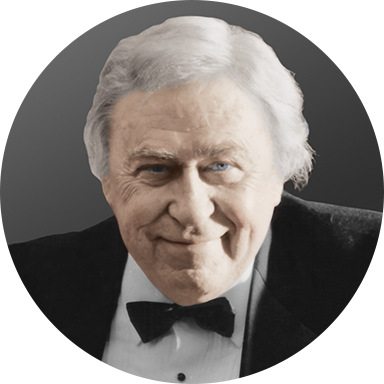
Willard A. Palmer

Willard A. Palmer stands as one of the most prolific and influential accordion pedagogues of the 20th century, having composed and arranged over 789 published works across multiple instruments and ensembles. A former faculty member at the University of Houston, where he taught accordion for 18 years, Palmer brought the same scholarly rigor and methodical approach to keyboard instruction that earned him international recognition as a Baroque music authority. His research on ornamentation and classical performance practice informed not only his own compositions but the entire Alfred Masterworks series, cementing his legacy as both a musician and a meticulous educator.

Palmer's foundation in keyboard technique came early; he was a radio performer by age 13 and studied under Mae Vardeman, whose emphasis on proper technique and improvisation shaped his teaching philosophy. After earning his Bachelor's degree from Millsaps College in Jackson, Mississippi, he pursued advanced study at the Conservatory of Leipzig on scholarship, then completed post-graduate work at the University of Houston. His contributions to music education and scholarship were recognized with a Doctor of Humanities degree in 1971 and a Doctor of Music degree in 1983.

Why we love this

This workbook distills Palmer's decades of teaching experience into focused, sequential exercises that actually build musicianship rather than just filling pages. It pairs perfectly with the Lesson Books and ensures students develop solid literacy skills without sacrificing musical engagement.

What to expect

Purposeful and straightforward, with no wasted space. Each exercise has a clear job to do, and the cumulative design means students feel genuine progress from one page to the next.

Who it's for

Accordion students working through the Palmer-Hughes Lesson Books who need targeted, supplemental work in note reading, staff notation, and rhythmic accuracy. This workbook serves students of all ages who benefit from structured practice beyond the repertoire itself.

How to get the most out of it

  • Work through the reading exercises in order; each page builds on notation and interval recognition from the previous one, so skipping ahead undermines the progression.
  • Use the writing activities to reinforce what students have just learned through reading; the connection between seeing, writing, and understanding notation is where real fluency develops.
  • Incorporate the rhythm exercises into your weekly warm-ups, treating them as short, focused drills rather than lengthy theory sessions.

How to use it

Assign this workbook as weekly homework alongside the corresponding Lesson Book unit. The reading and writing exercises work independently from performance, so students can complete them even when practice time is limited.

Skills your students will build

  • Note and interval identification on the treble staff
  • Writing and spelling notes in both treble and bass clefs
  • Reading and notating rhythmic patterns in common time signatures
  • Understanding accidentals and their function in context

You May Also Like