
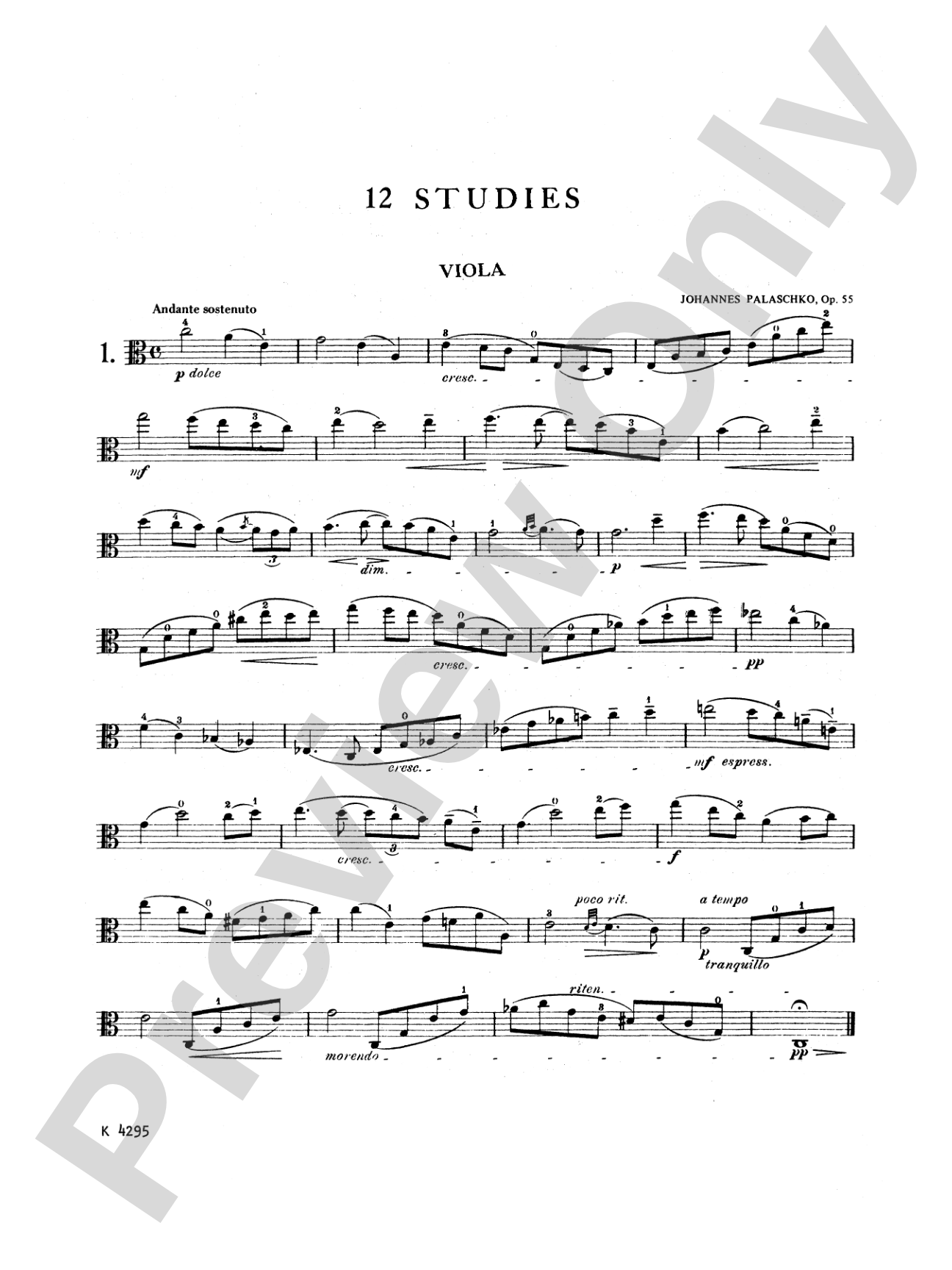

Palaschko: Twelve Studies, Op. 55: Viola Book
By Johannes Palaschko
Item: 00-PK-0003456

$8.99
Pickup currently not available
Buy Extra Parts (Digital PDF Download)
| Product | Price | Quantity |
|---|---|---|
| Palaschko: Twelve Studies, Op. 55 | $0.99 | |
| Palaschko: Twelve Studies, Op. 55 | $0.99 | |
| Palaschko: Twelve Studies, Op. 55 | $0.99 | |
| Palaschko: Twelve Studies, Op. 55 | $0.99 | |
| Palaschko: Twelve Studies, Op. 55 | $0.99 | |
| Palaschko: Twelve Studies, Op. 55 | $0.99 | |
| Palaschko: Twelve Studies, Op. 55 | $0.99 | |
| Palaschko: Twelve Studies, Op. 55 | $0.99 | |
| Palaschko: Twelve Studies, Op. 55 | $0.99 | |
| Palaschko: Twelve Studies, Op. 55 | $0.99 | |
| Palaschko: Twelve Studies, Op. 55 | $0.99 | |
| Palaschko: Twelve Studies, Op. 55 | $0.99 |
Parts Added to Cart!
Related Items
Twelve Studies, Opus 55: Viola Book |
$8.95
|
View |
Description
A solo, for Viola, composed by Johannes Palaschko.


Don't just read it, hear it, play along with it, and watch your students grow with it. In MakeMusic Cloud, Palaschko: Twelve Studies, Op. 55: Viola Book comes alive with professional accompaniment, adjustable tempo, and built-in practice tools that turn solo practice into real progress.
Open in the Player
Jump straight in and assign it today.
Start Your Free Trial
Open this title and explore the full library in minutes.
Sample Audio
No sample audio found.
Sample Video
No sample videos found.
Additional Details
Series:
Kalmus Edition
Publisher:
Alfred Music
Page Count:
16
SKU:
00-PK-0003456
More about this title
About the Composer: Johannes Palaschko
Johannes Palaschko (1859-1920) was an Austrian violist and composer whose chamber works and solo pieces earned respect across European concert halls. His studies and compositions for strings reflect a deep understanding of the instrument's expressive range, combining Romantic melodic sensibility with exacting technical demands.
Why we love this
These studies strike an uncommon balance: they're substantial enough to command respect in a recital program, yet they don't require the virtuosic extremes that can overwhelm student violists. Palaschko writes idiomatically for the viola, treating it as a lyrical voice rather than a downsized violin, which makes this collection feel genuinely composed for the instrument.
What to expect
The collection balances introspection with moments of energetic drive. Palaschko's Romantic sensibility emerges through singing melodic lines and rich harmonic implications, while the technical writing keeps the mind engaged with rhythmic variety and intervallic interest.
Who it's for
Violists preparing for upper-level jury performances, chamber music auditions, or solo recital offerings will find serious, musical studies that demonstrate control and expressivity. Advanced high school violists and undergraduate music majors can use these to develop tone, intonation, and interpretive maturity.
How to get the most out of it
- Shape each study's phrasing from a full phrase perspective rather than measure to measure; Palaschko's lines often span multiple bars and deserve breath and momentum even at moderate tempos.
- Approach the double-stop passages with careful voicing of each note, ensuring the lower voice is heard as a foundation rather than crushed beneath the upper voice.
- Use vibrato deliberately in slower passages to warm the tone, but pull back in faster figurations to maintain clarity and articulation.
- Attend to dynamic markings with precision; they often define the character of a study as much as the technical content does.
How to use it
Feature one or two studies in a solo recital among other Romantic-era viola repertoire, or program them as contrasting short works between larger chamber pieces. They also serve as springboards for developing interpretation and personal musicianship outside a structured method book framework.
Skills your students will build
- Sustaining long phrases with consistent tone quality and vibrato control
- Executing double-stop intonation and balanced voicing
- Reading and executing rhythmic variety and syncopation
- Interpreting dynamic and expressive markings as structural tools
- Building recital-ready solo repertoire at the advanced intermediate level