
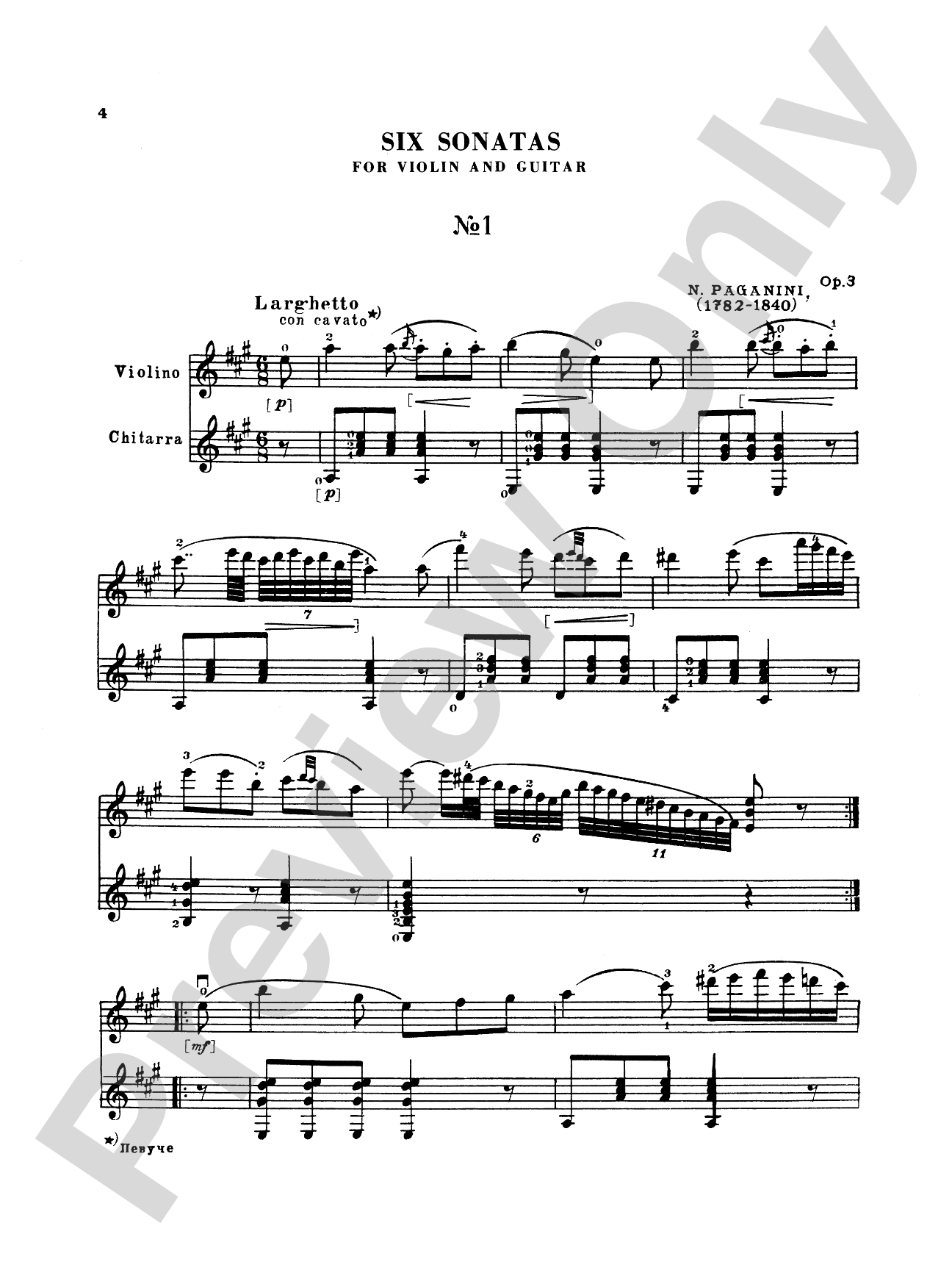
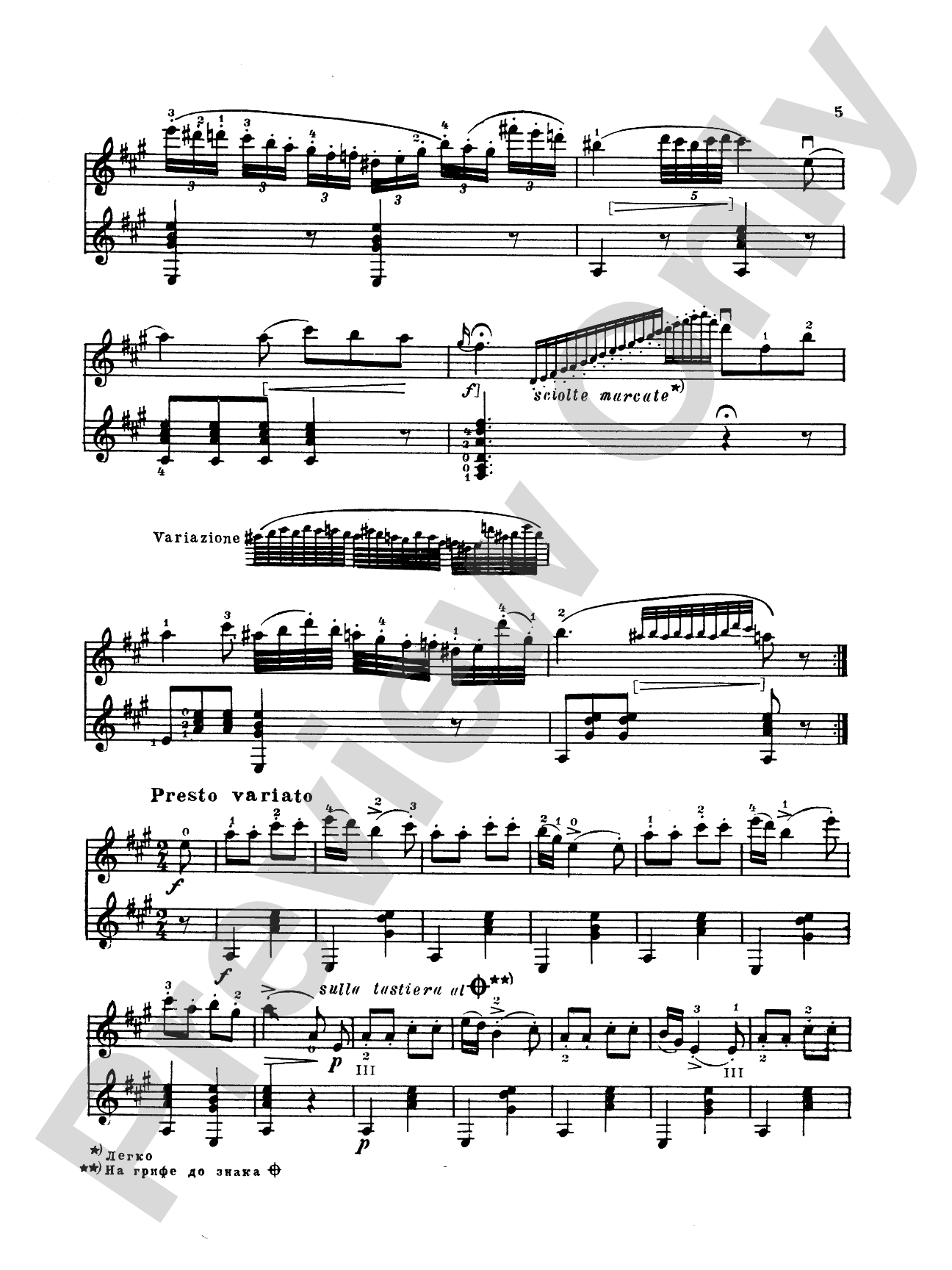
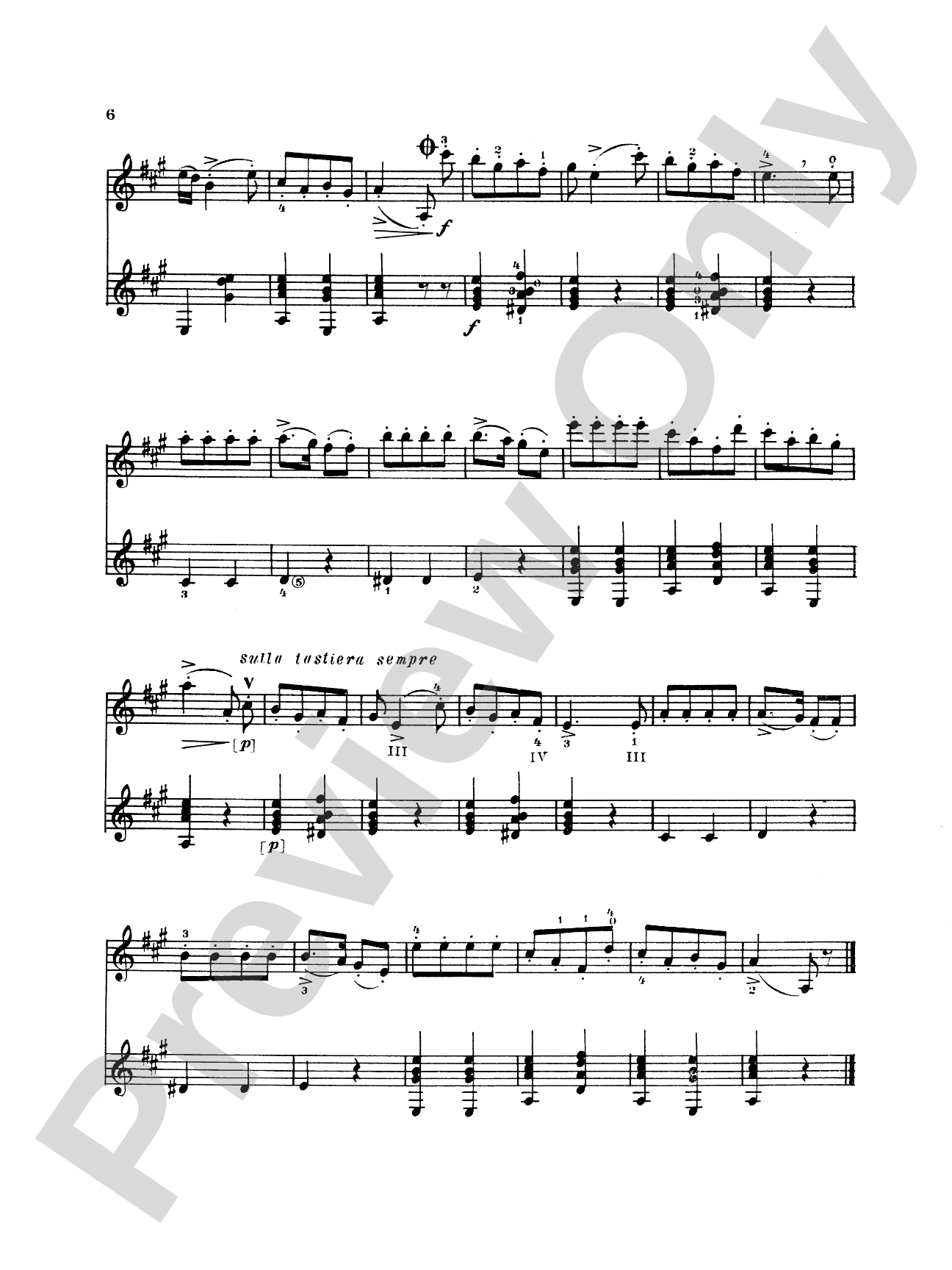
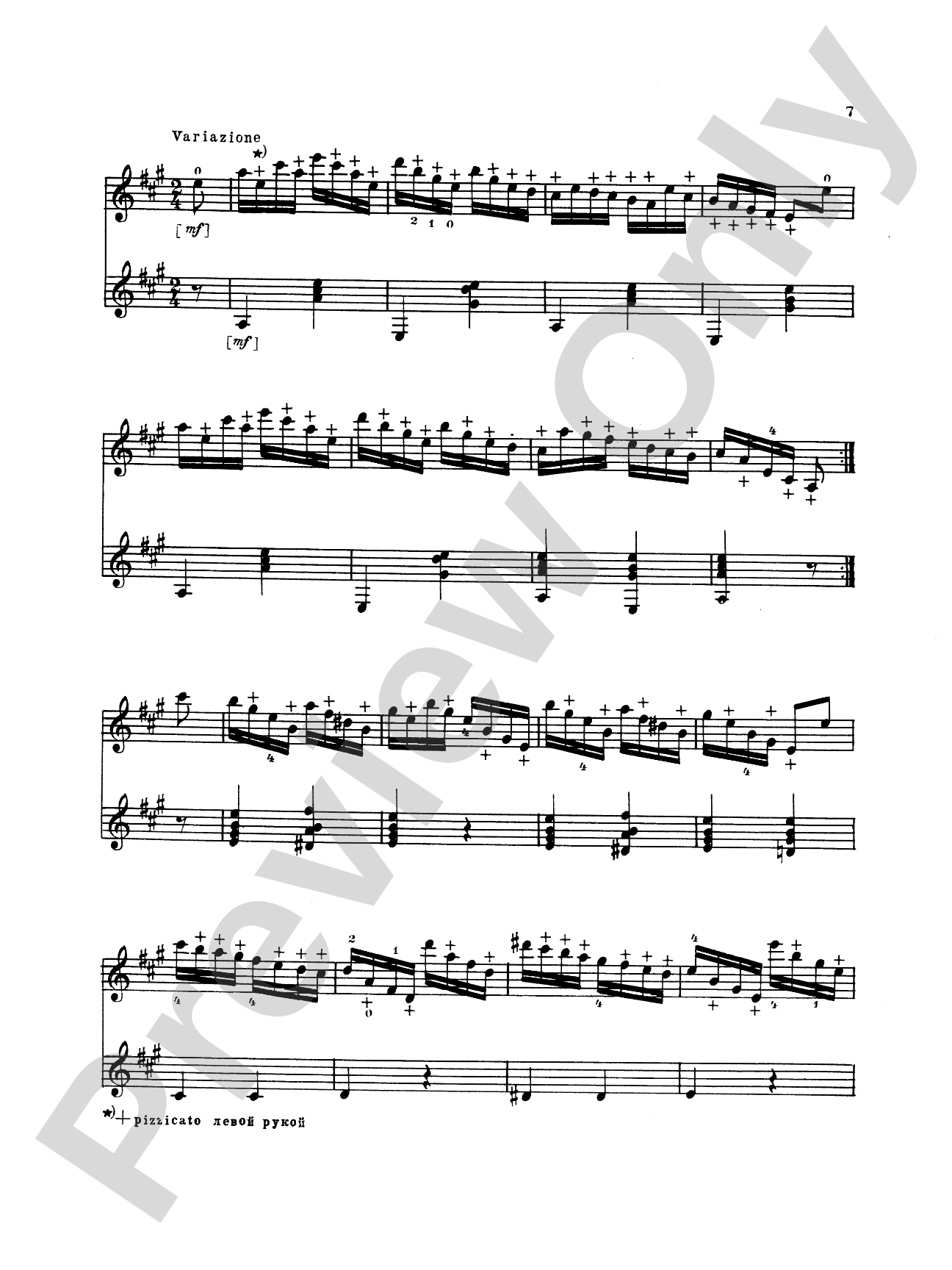
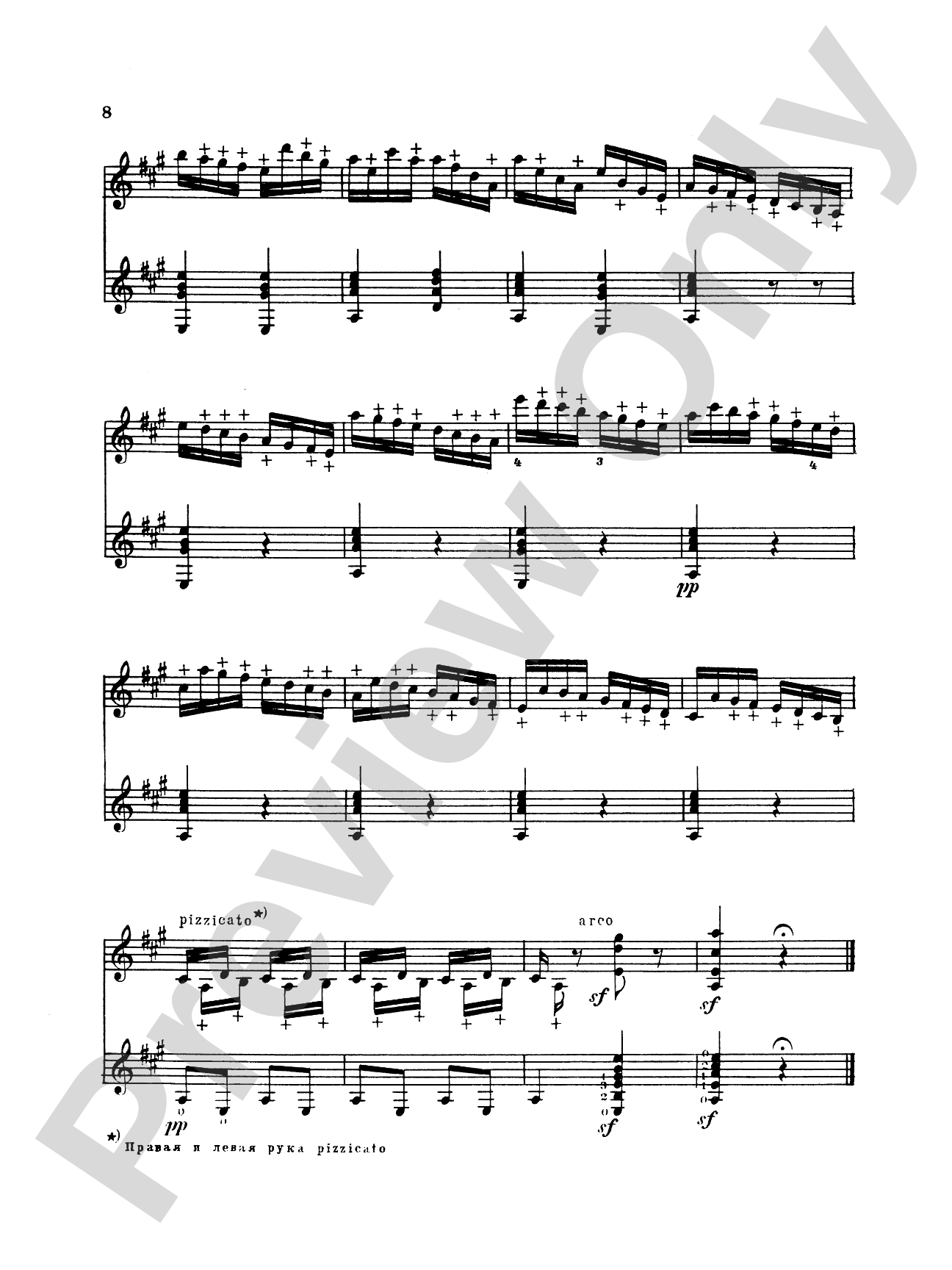

Paganini: Six Sonatas for Violin and Guitar, Op. 3: Guitar Book
By Niccolò Paganini
Item: 00-PK-0003591

$8.99
Pickup currently not available
Buy Extra Parts (Digital PDF Download)
Parts Added to Cart!
Related Items
Six Sonatas for Violin and Guitar, Opus 3: Guitar Book |
$8.95
|
View |
Description
Expertly arranged Classical Guitar Ensemble by Niccolò Paganini from the Kalmus Edition series. This is from the Romantic era.


Don't just read it, hear it, play along with it, and watch your students grow with it. In MakeMusic Cloud, Paganini: Six Sonatas for Violin and Guitar, Op. 3: Guitar Book comes alive with professional accompaniment, adjustable tempo, and built-in practice tools that turn solo practice into real progress.
Open in the Player
Jump straight in and assign it today.
Start Your Free Trial
Open this title and explore the full library in minutes.
Sample Audio
No sample audio found.
Sample Video
No sample videos found.
Additional Details
Series:
Kalmus Edition
Publisher:
Alfred Music
Page Count:
52
SKU:
00-PK-0003591
More about this title
About the Composer: Niccolò Paganini
Niccolò Paganini (1782-1840) fundamentally changed what was possible on the violin. His virtuosic innovations—double stops, rapid string crossings, harmonics, and left-hand techniques—pushed the instrument to its limits and beyond. As a composer, he created works that demanded technical mastery while maintaining genuine musical substance, influencing generations of violinists and composers who followed.
Paganini's Op. 3 sonatas represent his engagement with chamber music and his willingness to collaborate across instruments. These works reveal a composer who understood not just the violin's capabilities but also how to write idiomatically for guitar, creating music that showcases both instruments equally rather than relegating one to accompaniment.
Why we love this
These sonatas occupy rare territory: they're substantial enough to demand serious musicianship yet intimate enough for duet settings where both players matter equally. The guitar writing here moves far beyond strumming, offering genuine counterpoint and melodic interest that keeps ensemble members engaged rather than subordinated.
What to expect
These sonatas combine the elegance and clarity of Classical form with the emotional depth and technical brilliance of early Romanticism. There's an intimacy here alongside virtuosity; you're not performing for spectacle but engaging in a genuine musical conversation between two capable voices.
Who it's for
Intermediate to advanced classical guitarists looking to explore duet repertoire that treats the guitar as an equal partner rather than a supporting voice. This book also serves violinists seeking chamber music options that feature collaborative writing between instruments of equal musical standing.
How to get the most out of it
- Balance tone production between instruments so the guitar's voice cuts through without either player forcing. Paganini's textures rely on clarity of line rather than volume.
- Pay close attention to phrase endings and breathing points. Though both instruments are fretted, treating the phrases as vocal lines helps shape musical direction and prevents monotony.
- Work the rhythmic precision carefully in passages where the instruments move in shorter note values. Paganini's figuration can blur if ensemble members aren't locked together.
- Approach the more virtuosic passages as musical statements, not technical showcases. Tempo and articulation choices should serve the phrase shape rather than highlight difficulty.
How to use it
These works suit recital programs that showcase chamber music depth or concert contexts where you want to highlight classical guitar alongside another solo instrument. The substantial page count and musical substance make them compelling standalone program pieces or thoughtful bridges between larger ensemble works.
Skills your students will build
- Reading and executing idiomatic guitar writing across multiple positions and string registers
- Ensemble balance and blend between two melodically active instruments
- Phrasing and interpretation of Romantic-era chamber music
- Rhythmic precision in fast passages and complex rhythmic figures
- Collaborative musicianship where both players share equal musical responsibility