Paean: 2nd Violin Sheet Music Preview

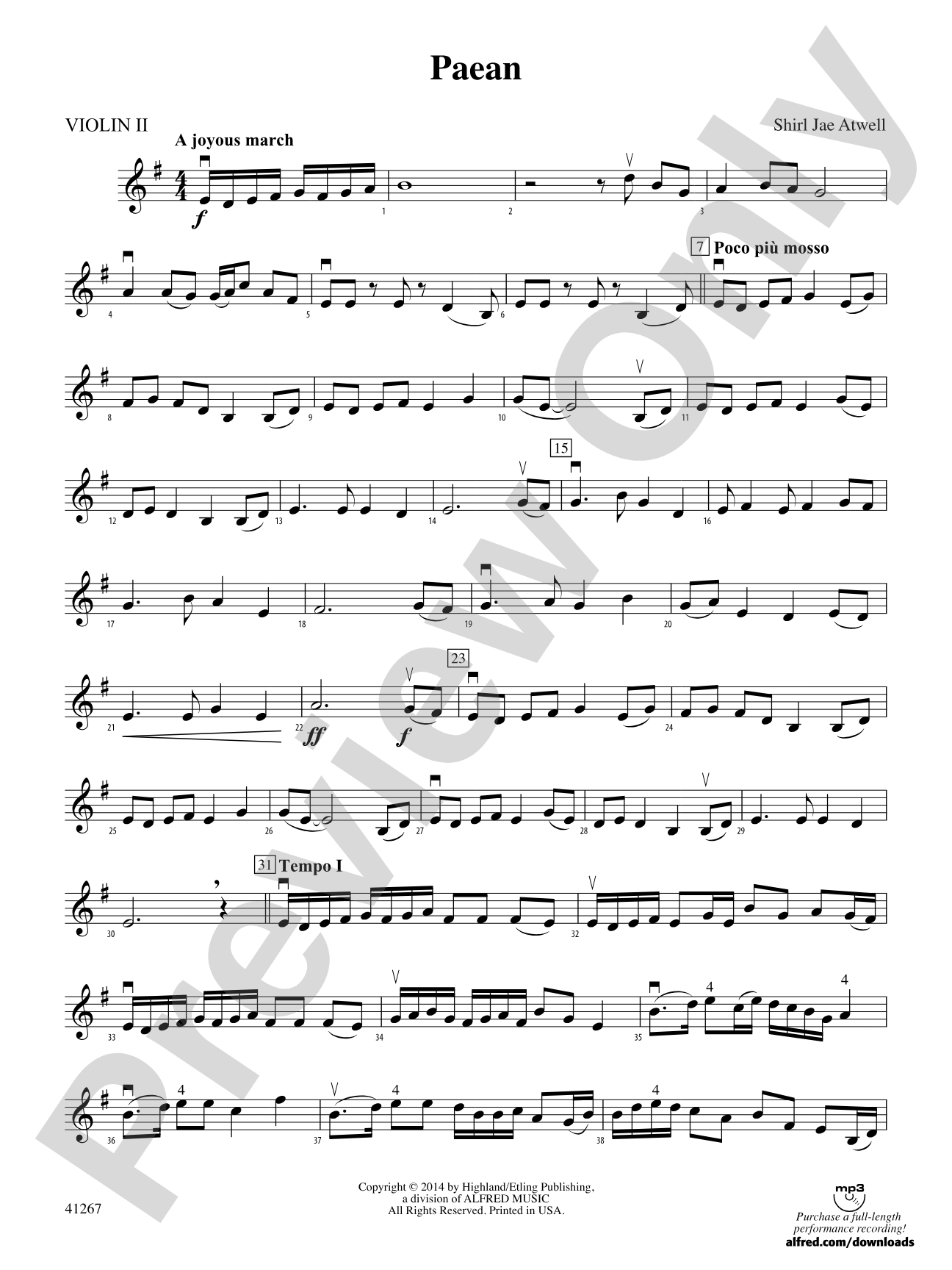
Paean: 2nd Violin

By Shirl Jae Atwell

Grade: 2.5

Item: 00-PC-0016384_VN2

Digital Download
$5.99
Description
A paean is a joyous song or hymn of praise, tribute, thanksgiving, or triumph, and very much in keeping with the feeling of a jubilant march. Get in the spirit and celebrate life. (2:40) This title is available in MakeMusic Cloud.

Don't just read it, hear it, play along with it, and watch your students grow with it. In MakeMusic Cloud, Paean: 2nd Violin comes alive with professional accompaniment, adjustable tempo, and built-in practice tools that turn solo practice into real progress.

Sample Audio
0:00
0:00
Sample Video
Additional Details
Series: Highland/Etling String Orchestra
Publisher: Alfred Music
Page Count: 124
SKU: 00-PC-0016384_VN2

More about this title

About the Composer: Shirl Jae Atwell

Shirl Jae Atwell

Shirl Jae Atwell holds degrees from Kansas State Teachers College and the University of Louisville, where she earned her Master of Music Theory/Composition degree. She completed four years of advanced study in composition at the University of South Carolina, establishing herself as a versatile composer across multiple genres including orchestral works, operas, and ballets.

Atwell's recognition in the field spans decades. She won the Clifford Shaw Memorial Award for Kentucky Composers in 1984 and claimed first place in the National School Orchestra Association composition contest in 1996 with her string orchestra piece Modus á Four. Her opera Sagegrass debuted in New York City in 1984, followed by Esta Hargis at Emporia State University in 1991. The Louisville Ballet premiered her ballet Lucy in 1999, a work that went on to win an Emmy Award for its televised production. Six of her scores were placed in the permanent collection of the Paris Bibliothèque Internationale de Musique Contemporaine, reflecting her standing in contemporary classical music.

Why we love this

Atwell delivers exactly what a jubilant celebration needs: clear melodic lines, straightforward harmonic language, and a march-like pulse that keeps young orchestras engaged without overwhelming them. At Grade 2.5, the writing respects the technical abilities of developing players while refusing to compromise on musical substance or character.

What to expect

This is music that smiles. Paean moves forward with the optimistic energy of a hymn of praise, built on clean melodic writing and harmonic clarity that lets young players hear themselves contributing to something joyful and coherent. At two minutes and forty seconds, it lands with impact without overstaying its welcome.

Who it's for

Young string orchestras in Grades 4-6 that have developed basic ensemble skills and are ready to tackle pieces with genuine musical purpose. Directors seeking accessible yet rewarding concert repertoire will find Paean equally suited to holiday performances, spring concerts, or festival settings.

How to get the most out of it

  • Keep the march rhythm crisp and even throughout; let the natural forward momentum of the piece carry the emotional arc rather than dragging for sentiment.
  • Balance the melodic material between sections generously. String orchestra writing at this level often benefits from slightly favoring the violins when multiple lines share thematic importance.
  • Shape phrases with gentle dynamic pushes rather than dramatic swells, which helps maintain the sense of buoyant celebration without technical strain.
  • Anchor the ensemble with a steady conducting beat; young orchestras thrive when the pulse is clear and predictable, freeing them to focus on tone and blend.

How to use it

Program this as an opening or closing piece for a fall concert or Thanksgiving assembly, where its celebratory character and accessible difficulty make it ideal for building confidence before more challenging repertoire. It also works beautifully as a festival showcase piece, demonstrating what developing orchestras can achieve musically.

Skills your students will build

  • Executing steady rhythmic patterns in march tempo
  • Maintaining blend and balance while supporting a melodic line
  • Reading and responding to conductor cues in a structured harmonic framework
  • Shaping musical phrases as an ensemble without excessive technical complexity

You May Also Like