
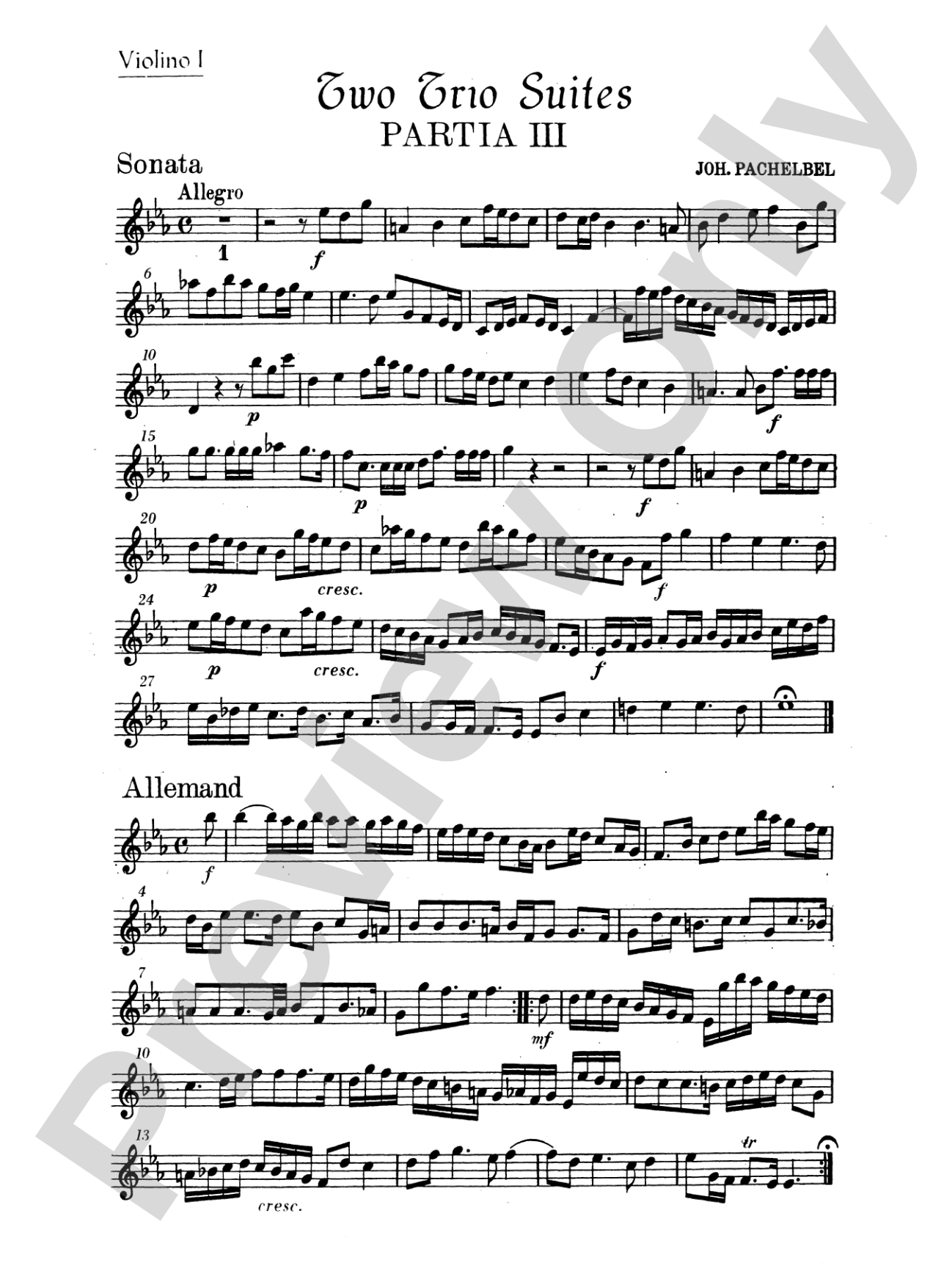
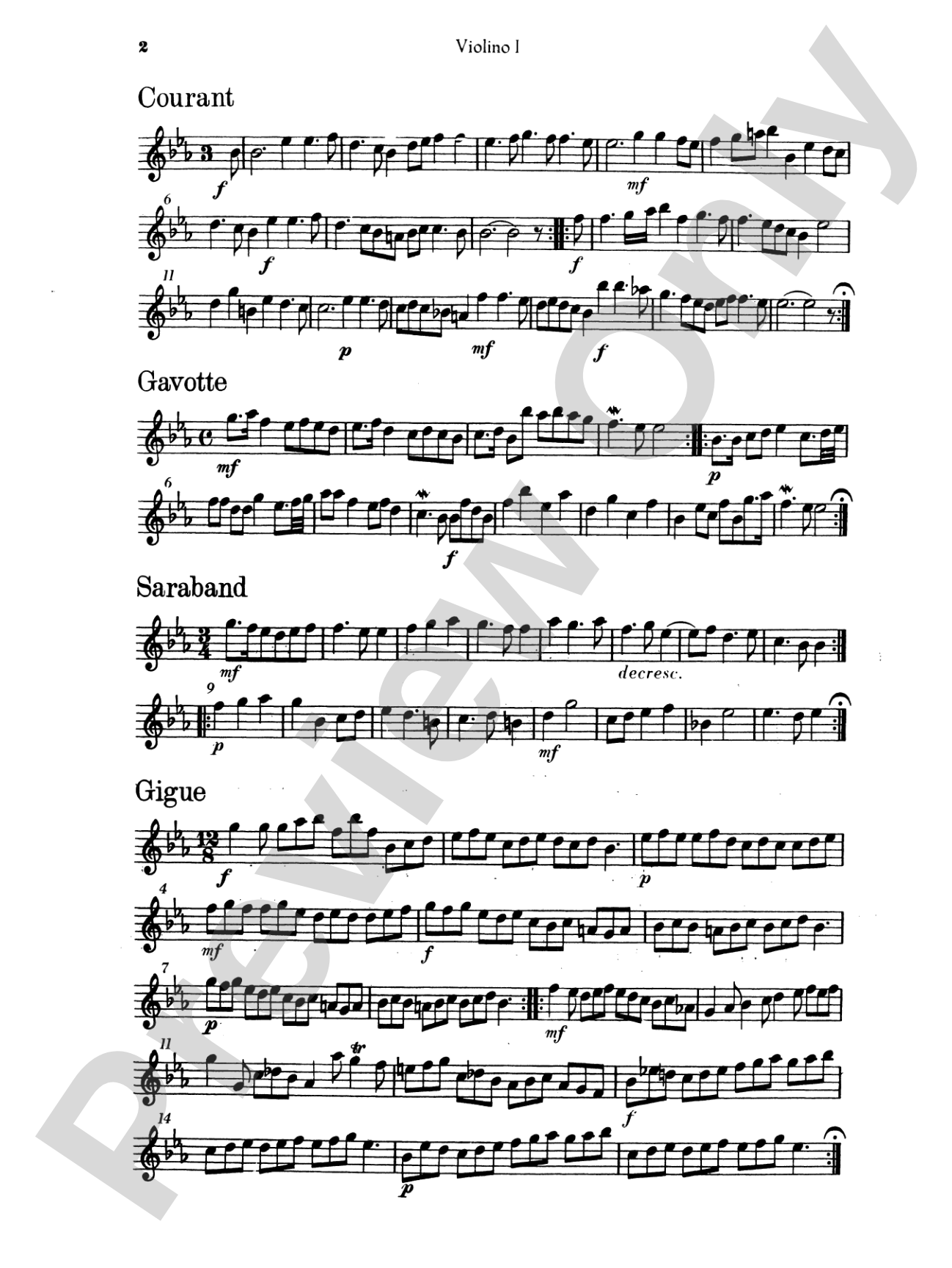

Pachelbel: Two Trio Suites: String Trio Book
By Johann Pachelbel
Item: 00-PK-0003613

$12.99
Pickup currently not available
Buy Extra Parts (Digital PDF Download)
| Product | Price | Quantity |
|---|---|---|
| Pachelbel: Two Trio Suites | $0.99 | |
| Pachelbel: Two Trio Suites | $0.99 | |
| Pachelbel: Two Trio Suites | $0.99 | |
| Pachelbel: Two Trio Suites | $0.99 | |
| Pachelbel: Two Trio Suites | $0.99 | |
| Pachelbel: Two Trio Suites | $0.99 | |
| Pachelbel: Two Trio Suites | $0.99 | |
| Pachelbel: Two Trio Suites | $0.99 |
Parts Added to Cart!
Related Items
Two Trio Suites (E-flat Major, E Minor): String Trio Book |
$12.95
|
View |
Description
Two string trios for 2 Violins and Cellocomposed by Johann Pachelbel.


Don't just read it, hear it, play along with it, and watch your students grow with it. In MakeMusic Cloud, Pachelbel: Two Trio Suites: String Trio Book comes alive with professional accompaniment, adjustable tempo, and built-in practice tools that turn solo practice into real progress.
Open in the Player
Jump straight in and assign it today.
Start Your Free Trial
Open this title and explore the full library in minutes.
Sample Audio
No sample audio found.
Sample Video
No sample videos found.
Additional Details
Series:
Kalmus Edition
Publisher:
Alfred Music
Page Count:
36
SKU:
00-PK-0003613
More about this title
About the Composer: Johann Pachelbel
Johann Pachelbel (1653-1706) stands as one of the most influential composers of the late Baroque era, yet his reputation rests largely on a single work: the Canon in D. His legacy extends far beyond that famous piece, however. Pachelbel was a master of counterpoint and harmonic innovation, serving as court organist and kapellmeister in Vienna, Eisenach, and Stuttgart. His output spans keyboard music, sacred vocal works, and chamber compositions that showcase rigorous compositional technique alongside genuine melodic appeal.
For string players, Pachelbel's chamber works reveal a composer who understood the voice-leading possibilities of small ensembles. His trio suites demonstrate the German Baroque tradition at its most elegant: clear textures, memorable themes, and harmonic progressions that feel both structured and expressive. These pieces remain essential repertoire for understanding how Baroque composers balanced formal constraint with musical communication.
Why we love this
These suites sit in an ideal pedagogical sweet spot. They demand real musicianship—careful attention to voice leading, rhythmic precision, and phrase shaping—without the technical pyrotechnics that can overwhelm younger ensembles. The two trio format works beautifully for festival programming because it offers substantive Baroque literature while remaining accessible to developing musicians. String players gain authentic period experience and build ensemble awareness through works that have stood the test of centuries.
What to expect
These suites unfold with the elegance and restraint characteristic of German Baroque court music. Melodic lines interweave in patterns that feel both logical and singing, supported by harmonic progressions that are predictable enough to feel satisfying yet crafted with genuine artistry. The overall effect is one of polish and refinement, with moments of genuine lyrical beauty emerging from carefully balanced counterpoint.
Who it's for
String trios at the intermediate to early advanced level who are ready for authentic Baroque chamber repertoire. These suites suit ensembles preparing for festival or competition performance, or those seeking to expand beyond the limited standard trio repertoire. Violinists developing ear training and ensemble listening benefit greatly from the contrapuntal clarity Pachelbel demands.
How to get the most out of it
- Shape each melodic line as if it were sung; Baroque trio writing depends on individual voices remaining audible and expressive rather than blending into harmony.
- Approach the figured bass harmonies as anchor points rather than rigid harmonic blocks. Slight flexibility in tempo and dynamics between the melodic voices and harmonic foundation creates breathing room in the texture.
- Mark entrances and phrase boundaries clearly in rehearsal, especially where voices pass themes or imitative material between instruments. String trios need transparent communication about who leads at any given moment.
- Use vibrato sparingly and in service of phrase contour rather than constant vibrato; this keeps the texture bright and true to period style without sounding thin or colorless.
How to use it
Program these suites as a contrasting block within a larger chamber music concert, or pair them with other Baroque trio literature to create a focused thematic program. They work especially well as standalone contest pieces, allowing adjudicators to hear how young ensembles interpret period style and manage baroque conventions like ornamentation and phrasing. The 36-page collection offers enough substance to anchor a chamber recital dedicated to early string ensemble repertoire.
Skills your students will build
- Voice independence and contrapuntal listening within a three-voice texture
- Baroque phrasing conventions and understanding of harmonic rhythm
- Ensemble balance and transparency, particularly keeping melodic lines audible without overpowering harmonic support
- Reading and interpreting figured bass notation
- Period-appropriate articulation, vibrato, and ornamentation choices