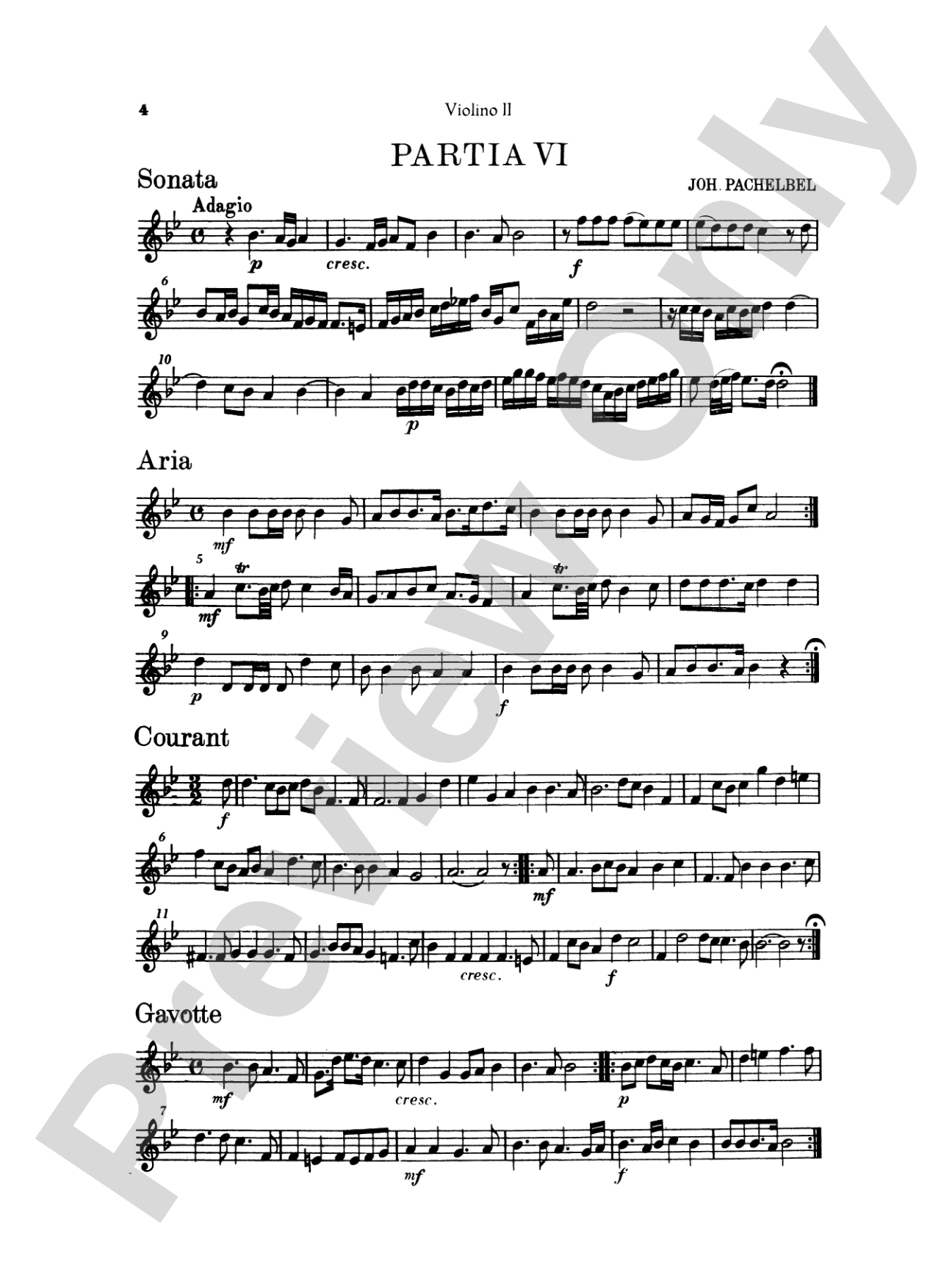
Pachelbel: Two Trio Suites Sheet Music Preview

Pachelbel: Two Trio Suites

By Johann Pachelbel

Item: 00-PC-0011073

Digital Download
$0.99
Description

Don't just read it, hear it, play along with it, and watch your students grow with it. In MakeMusic Cloud, Pachelbel: Two Trio Suites comes alive with professional accompaniment, adjustable tempo, and built-in practice tools that turn solo practice into real progress.

Sample Audio
No sample audio found.
Sample Video
Additional Details
Series: Kalmus Edition
Publisher: Alfred Music
Page Count: 36
SKU: 00-PC-0011073
Instrumentation: Basso Continuo (with Piano)

More about this title

About the Composer: Johann Pachelbel

Johann Pachelbel (1653-1706) was a central figure in the development of Baroque keyboard music and instrumental composition. His mastery of counterpoint and harmonic language made him one of the most influential composers of his generation, particularly in Germany and Austria, where he held positions as court organist and kapellmeister in major cities including Vienna, Erfurt, and Nuremberg.

While Pachelbel is often remembered for his Canon in D, his compositional output was remarkably diverse. He wrote extensively for string ensemble, keyboard, and voice, and his chamber works demonstrate the same architectural clarity and contrapuntal sophistication that defines his keyboard output. These trio suites reflect the elegant instrumental writing that established him as a model for later Baroque composers.

Why we love this

These suites offer string trios a chance to engage with authentic Baroque chamber writing that balances technical demands with genuine musical substance. The basso continuo part allows pianists and cellists to collaborate in an idiomatically rich way, and the works sit comfortably in festival and recital contexts without requiring the orchestral forces of a full suite arrangement.

What to expect

Pachelbel's writing unfolds with courtly grace and transparent harmonic logic. Each movement breathes with the formal clarity of dance forms, yet beneath the elegant surfaces lies intricate counterpoint that reveals new details in repeated hearings. The suites evoke the refined instrumental culture of the German Baroque, where craft and accessibility were not opposing values.

Who it's for

String trios seeking substantial Baroque repertoire for contests, festivals, or chamber recitals will find these suites immediately rewarding. They work equally well for advanced high school ensembles and college-level chamber groups, and they bridge the gap between baroque dance suites and more complex contrapuntal works.

How to get the most out of it

  • Establish the continuo relationship early in rehearsal. The cello and piano should lock in as a unified harmonic foundation before the violins add their lines; this clarity will support cleaner ensemble intonation.
  • Shape phrases through selective vibrato rather than relying on dynamic swells. Baroque string writing benefits from strategic vibrato intensity that defines formal sections without losing the classical restraint Pachelbel intended.
  • Balance the two violin parts as equal conversational voices. Avoid the temptation to let the first violin dominate; these suites reward counterpoint that treats both instruments as melodic partners.

How to use it

Program these as a complete suite offering on a chamber recital, or select individual movements to complement other Baroque string works. They pair naturally with sonatas and other trio literature from the same era, making them ideal anchor pieces for a Baroque-focused concert program.

Skills your students will build

  • Baroque counterpoint and voice independence across two violins and cello
  • Continuo realization and basso continuo collaboration
  • Period-appropriate phrasing and articulation in dance forms
  • Harmonic clarity and intonation across ensemble parts
  • Formal analysis of suite movements and sectional structure

You May Also Like