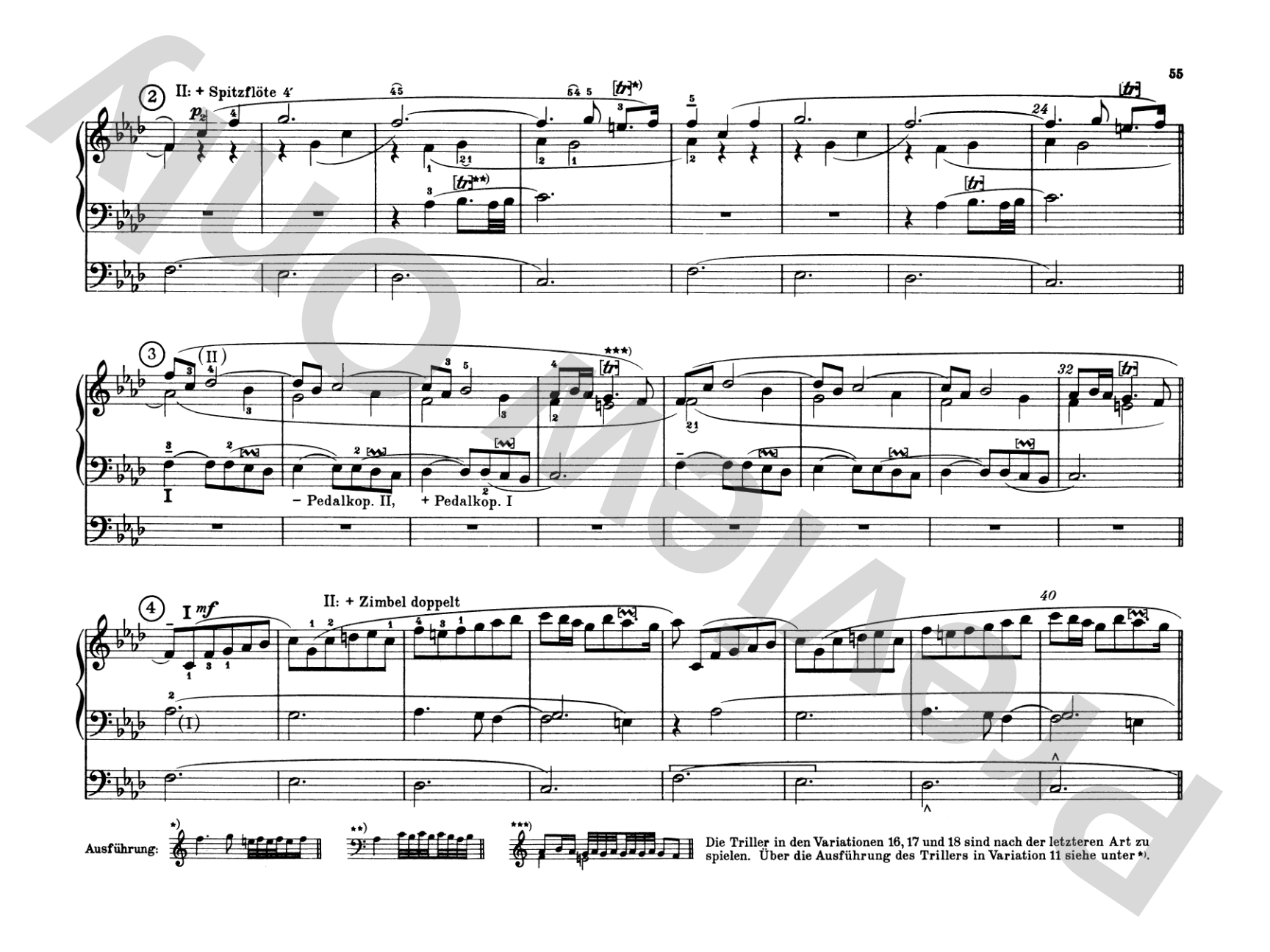
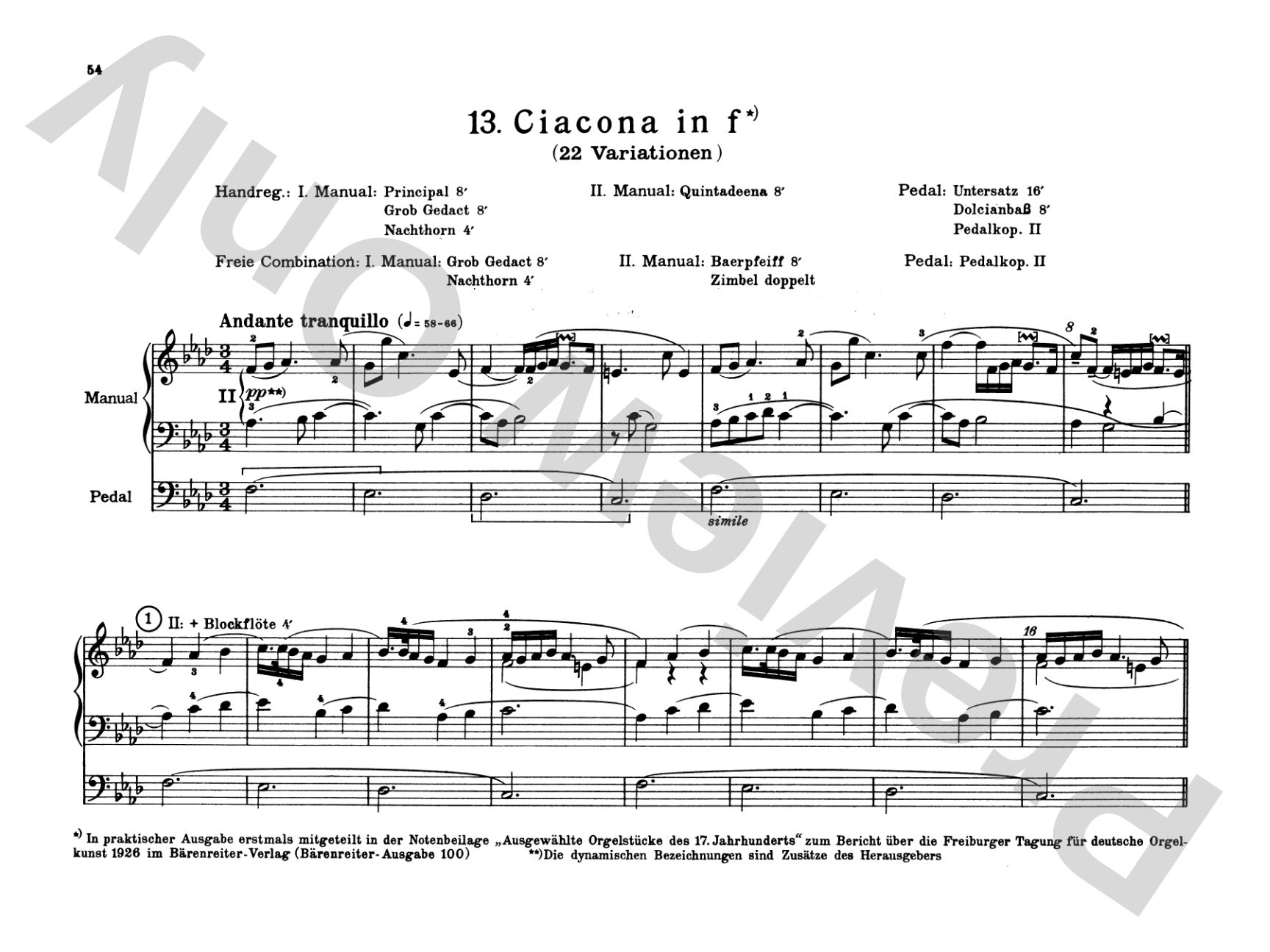
Pachelbel: Selected Organ Works, Volume I Sheet Music Preview

Pachelbel: Selected Organ Works, Volume I

By Johann Pachelbel

Item: 00-PC-0008800

Digital Download
$0.99
Description
Praeludium, 5 Toccatas, 3 Fugues, Ricercari, Ciacona. The comb binding creates a lay-flat book that is perfect for study and performance.

Don't just read it, hear it, play along with it, and watch your students grow with it. In MakeMusic Cloud, Pachelbel: Selected Organ Works, Volume I comes alive with professional accompaniment, adjustable tempo, and built-in practice tools that turn solo practice into real progress.

Sample Audio
No sample audio found.
Sample Video
Additional Details
Series: Kalmus Edition
Publisher: Alfred Music
Page Count: 64
SKU: 00-PC-0008800

More about this title

About the Composer: Johann Pachelbel

Johann Pachelbel (1653-1706) was a German Baroque composer and organist whose harmonic innovations and prolific output shaped keyboard music across Europe. He served as court organist in Eisenach, Stuttgart, and Gotha, and later as Kapellmeister in Nuremberg, roles that gave him access to some of the finest organs of his era. His music bridges Italian and German traditions, combining the contrapuntal rigor of the North with the lyrical sensibility of the South.

Pachelbel's reputation rests primarily on his Canon in D, yet his organ works represent the full measure of his compositional achievement. His toccatas, fugues, and ricercari demonstrate mastery of keyboard texture and form, and they remain essential repertoire for organists seeking both technical command and musical substance. His influence extended directly to Bach, who knew Pachelbel's work and absorbed his approach to fugal writing and harmonic clarity.

Why we love this

This collection gathers some of Pachelbel's most substantial keyboard writing in a single, practical volume. The lay-flat comb binding is a genuine gift for organists managing the page turns and hand positions required by these works, and the selection spans the full range of his organ output from intimate ricercari to imposing toccatas and fugues. Teaching these pieces opens doors to understanding Baroque form and voice-leading that translate directly to the music students encounter in later repertoire.

What to expect

These works balance architectural precision with genuine lyrical warmth. The toccatas sparkle with virtuosic figuration anchored by solid harmonic foundations, while the fugues unfold with inexorable logic. The ricercari and ciacona offer contemplative moments, allowing both player and listener to experience the clarity and purposefulness that defines Pachelbel's voice.

Who it's for

This volume serves organists preparing for recitals, church performances, or study of Baroque keyboard practice. It is equally valuable for students of music history or theory who want to trace harmonic development and fugal technique through the work of a composer who directly influenced Bach.

How to get the most out of it

  • Shape each phrase according to the harmonic rhythm rather than mere surface figuration; Pachelbel's organ writing often disguises structural points beneath decorative passage work, so listen through the details to the underlying argument.
  • Differentiate the manual divisions cleanly, especially in the toccatas where textural contrast between hands (or hands and pedals) carries the musical meaning.
  • Allow the fugal subjects room to breathe; resist the urge to rush into the dense contrapuntal writing. Pachelbel builds his fugues through clarity and inevitability, not speed.
  • Employ the organ's full color palette across this collection. The prelude and ricercari benefit from warmer, more restrained registrations, while the toccatas demand brighter, more assertive voices.

How to use it

Program a toccata or fugue from this collection as a solo recital opener or interlude; Pachelbel's music commands attention without demanding excessive performance time. The ricercari work beautifully in liturgical contexts, and the ciacona makes a substantial standalone conclusion. Pairing selections from this volume with works by Buxtehude or Froberger illustrates the breadth of North German organ music.

Skills your students will build

  • Baroque fugal form and voice independence
  • Harmonic analysis within tonal frameworks
  • Articulation and phrasing in keyboard counterpoint
  • Pedal coordination in service of contrapuntal texture
  • Registration choices and tonal shaping across multiple manual divisions
  • Rhythmic precision in ornamental figuration

You May Also Like