Pachelbel Canon: Oboe Sheet Music Preview

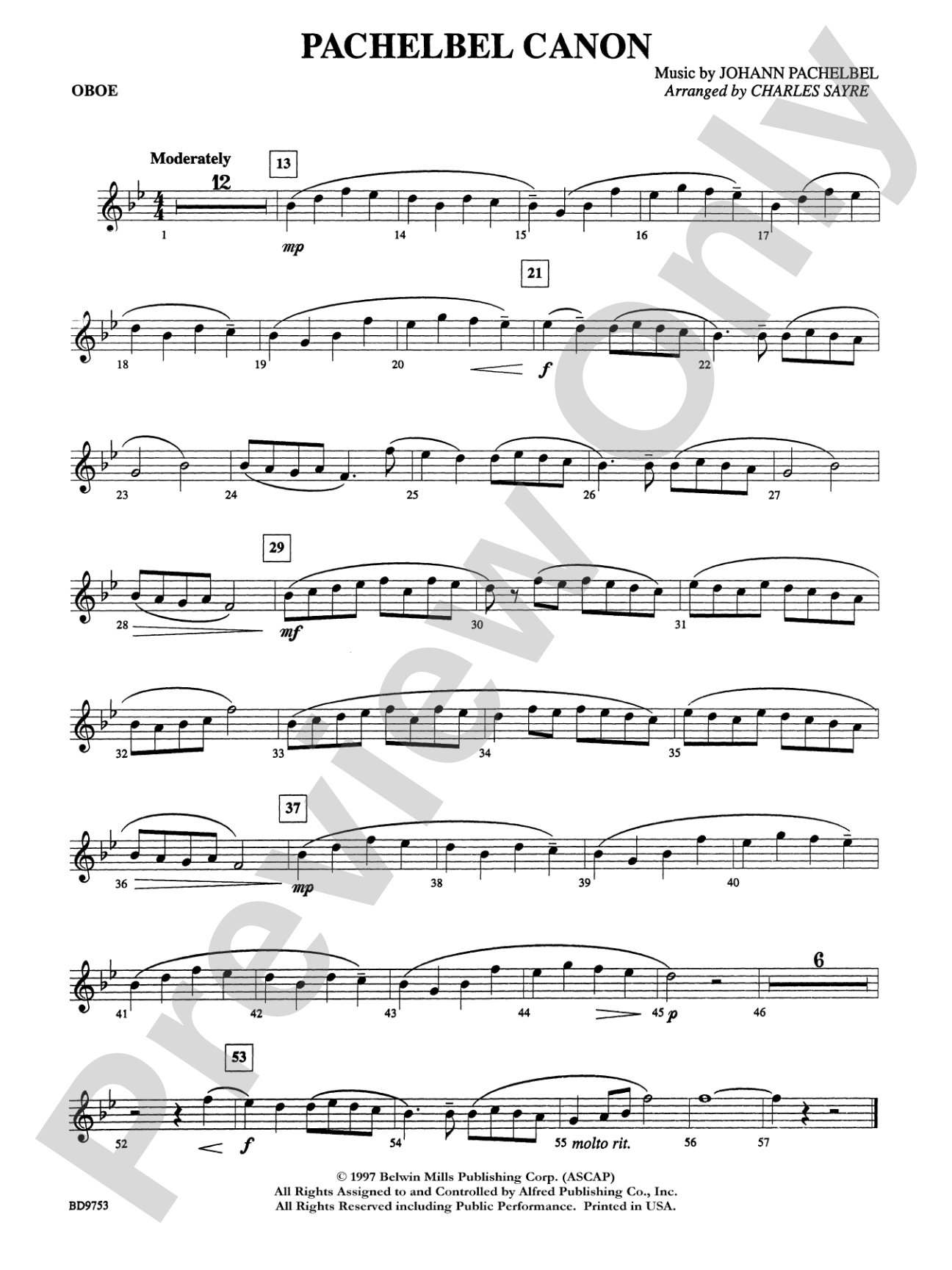
Pachelbel Canon: Oboe

By Johann Pachelbel / arr. Charles Sayre

Grade: 2 (Easy)

Item: 00-PC-0002059_O1

Digital Download
$3.00
Description
The canon is a contrapuntal device that has been used by composers throughout the history of music. From the seventeenth century comes this canon, Johann Pachelbel's best-known work. This beautiful piece has found its way into literally hundreds of venues, from the concert hall to the soundtracks of television commercials and movies. This dignified setting begins quietly, and as voices echo the melodic line, it builds to a fitting finale. This is quality scoring of a world-famous melody. (duration 2:50)

Don't just read it, hear it, play along with it, and watch your students grow with it. In MakeMusic Cloud, Pachelbel Canon: Oboe comes alive with professional accompaniment, adjustable tempo, and built-in practice tools that turn solo practice into real progress.

Sample Audio
No sample audio found.
Sample Video
Additional Details
Series: Belwin Young Band
Publisher: Alfred Music
Page Count: 130
SKU: 00-PC-0002059_O1

More about this title

About the Composer: Johann Pachelbel

Johann Pachelbel (1653-1706) was a German Baroque composer whose influence on the development of keyboard music and counterpoint remains significant in music education. Though he composed in many forms including fugues, suites, and sacred works, his Canon in D has become the most widely recognized piece from the Baroque era, transcending classical concert halls to reach popular culture and modern audiences. Pachelbel's mastery of harmonic progression and contrapuntal technique makes his work particularly valuable for teaching foundational compositional principles.

Why we love this

Charles Sayre's arrangement preserves the elegant simplicity of Pachelbel's original harmonic progression while giving every section of your band a meaningful role. The Grade 2 scoring builds naturally from quiet entrance to rich full sound, making it an ideal showcase for students who are just beginning to understand how layered textures create musical sophistication. You'll find this piece rewarding both to rehearse and to perform because the melody speaks for itself, allowing you to focus on blend, balance, and the contrapuntal interplay that makes a canon work.

What to expect

The opening unfolds with quiet dignity, almost reverent in its restraint. As each voice enters and echoes the melodic line, the texture gradually thickens into a warm, luminous sound that feels inevitable and complete. The carefully controlled build to the finale conveys both elegance and emotional clarity, leaving listeners with a sense of resolution and peace.

Who it's for

Young band directors leading ensembles at the Grade 2 level will find this arrangement accessible for developing musicians while preserving the musical integrity that makes Pachelbel's work enduring. Students benefit from experiencing a genuine masterwork early in their musicianship journey, and the familiar melody often engages audiences who might not otherwise attend a school band concert.

How to get the most out of it

  • Establish the ground bass pattern clearly in the first rehearsals so that all accompanying voices understand their rhythmic and harmonic foundation. This stability will allow the melodic lines to float naturally above it.
  • Shape the entrance of each new voice as it enters the canon, slightly bringing each forward so listeners can track the independent lines without losing the overall harmonic coherence.
  • Control the dynamic buildup across the full duration. The piece moves from quiet to fitting finale, so map out your crescendo points during early rehearsals to avoid peaking too soon.
  • Balance the principal melody against the harmonic accompaniment. Pachelbel's progression is hypnotic; make sure it remains audible and unhurried even as other voices accumulate around it.

How to use it

Program this as a centerpiece for concert-opening positions where you want to establish sophistication and musicianship early in your event. It also works beautifully as a bridge piece between contrasting selections on a concert, or as the anchor of a themed program exploring Baroque music across different ensembles.

Skills your students will build

  • Understanding contrapuntal texture and voice independence
  • Executing sustained dynamic control and gradual crescendos
  • Balancing melodic lines against harmonic accompaniment
  • Playing with attention to ensemble blend across multiple sustained passages
  • Recognizing and responding to the harmonic progression underlying the canon

You May Also Like