
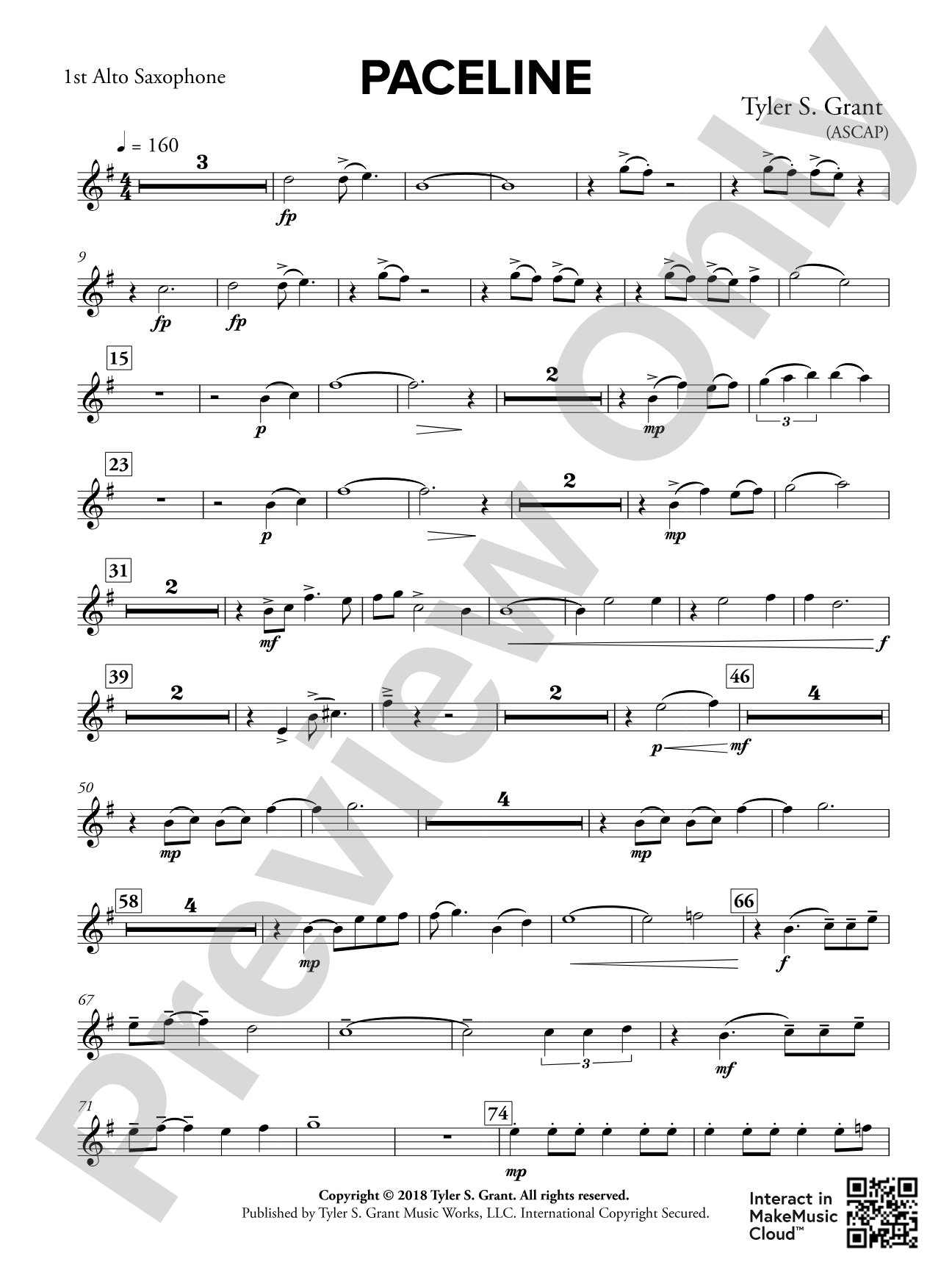

Paceline: 1st E-flat Alto Saxophone
For Solo Trombone & Young Band
By Tyler S. Grant
Grade: 3
Item: 98-PC-TGB011_AX1
$4.50
Pickup currently not available
Description
Feature a local trombonist with your ensemble! Written for internationally acclaimed trombonist Jon Whitaker, Paceline by Tyler S. Grant is a 4-minute show piece designed to feature the virtuosic range and skills of a trombone soloist while accompanied by developing musicians in a scholastic ensemble. (4:15)


Paceline: 1st E-flat Alto Saxophone isn't in MakeMusic Cloud just yet...but it could be. Let us know you'd like to see it, and you'll help shape what comes next. In the meantime, start a free trial and dive into thousands of interactive titles your students can play along with today.
Request This Title
Tell us you want it.
Start Your Free Trial
Explore everything that's ready to play right now.
Sample Audio
1
Audio File
--:--
0:00
0:00
Sample Video
Additional Details
Series:
Tyler S. Grant Music Works
Publisher:
Tyler S. Grant Music Works, LLC.
SKU:
98-PC-TGB011_AX1
More about this title
About the Composer: Tyler S. Grant

Tyler S. Grant has built a reputation as a composer and arranger whose music appears regularly on honor ensemble programs and repertoire lists nationwide. His works have been performed at major venues including Carnegie Hall, the Meyerson Symphony Center, and the Bands of America Grand Nationals. He earned his bachelor's degree in instrumental music education from the University of Alabama, where he studied conducting with Randall Coleman, and has served as a clinician with over 100 school music programs across 15 states.
Since 2010, Grant has maintained a steady schedule of commissions and new publications for bands and orchestras at all levels. His composition Panoramic Fanfare won the Dallas Wind Symphony's 2014 "Call for Fanfares" Competition and has since circulated among collegiate and professional ensembles throughout North America. He has also contributed to Alfred Music's Sound Innovations: Ensemble Development series and regularly conducts at regional and all-state festivals.
Why we love this
Grant strikes a balance that's genuinely difficult to achieve: Paceline demands serious musicianship from your featured trombonist while keeping the accompanying band part grounded in Grade 3 accessibility. The piece gives developing musicians a genuine ensemble role—not padding—which means your whole group benefits from the rehearsal process, not just the soloist. Programming this tells your audience you're nurturing young talent while maintaining artistic ambition.
What to expect
Paceline captures the focused energy of movement and momentum, with the trombone voice cutting through a supportive harmonic foundation. The piece balances virtuosic display with accessible ensemble writing, creating moments where the soloist soars and moments where the full band drives the narrative forward.
Who it's for
This is written for directors with a strong trombonist in their band who want a legitimate spotlight piece that doesn't compromise the ensemble's development. The Grade 3 band parts mean your section and less experienced players get real musical responsibilities, making this a teaching opportunity alongside a performance showcase.
How to get the most out of it
- Shape the accompaniment parts with clear phrasing so the trombone soloist never fights the band for musical focus. Your supporting voices should breathe with the featured part, not against it.
- Isolate the trombone solo line in sectional rehearsals before combining it with full band. This allows your trombonist to develop confidence with the piece's technical demands without the pressure of balancing with the ensemble.
- Mark the dynamic and tempo relationships between trombone cadenzas and band tutti passages; these transitions define the piece's architecture and need crisp execution.
How to use it
Program Paceline as a spring festival or end-of-year feature when your trombonist has had time to develop the solo line and your band is strong enough to support sustained musical engagement. This works equally well as a concert opener that establishes your ensemble's capabilities or a mid-program centerpiece that spotlights individual musicianship within a collaborative context.
Skills your students will build
- Accompanying a solo voice while maintaining ensemble balance and precision
- Sustaining musical momentum through Grade 3 harmonic progression
- Responding dynamically and with clarity to a featured soloist's phrasing choices
- Reading standard concert band voicing and articulation in supporting parts