
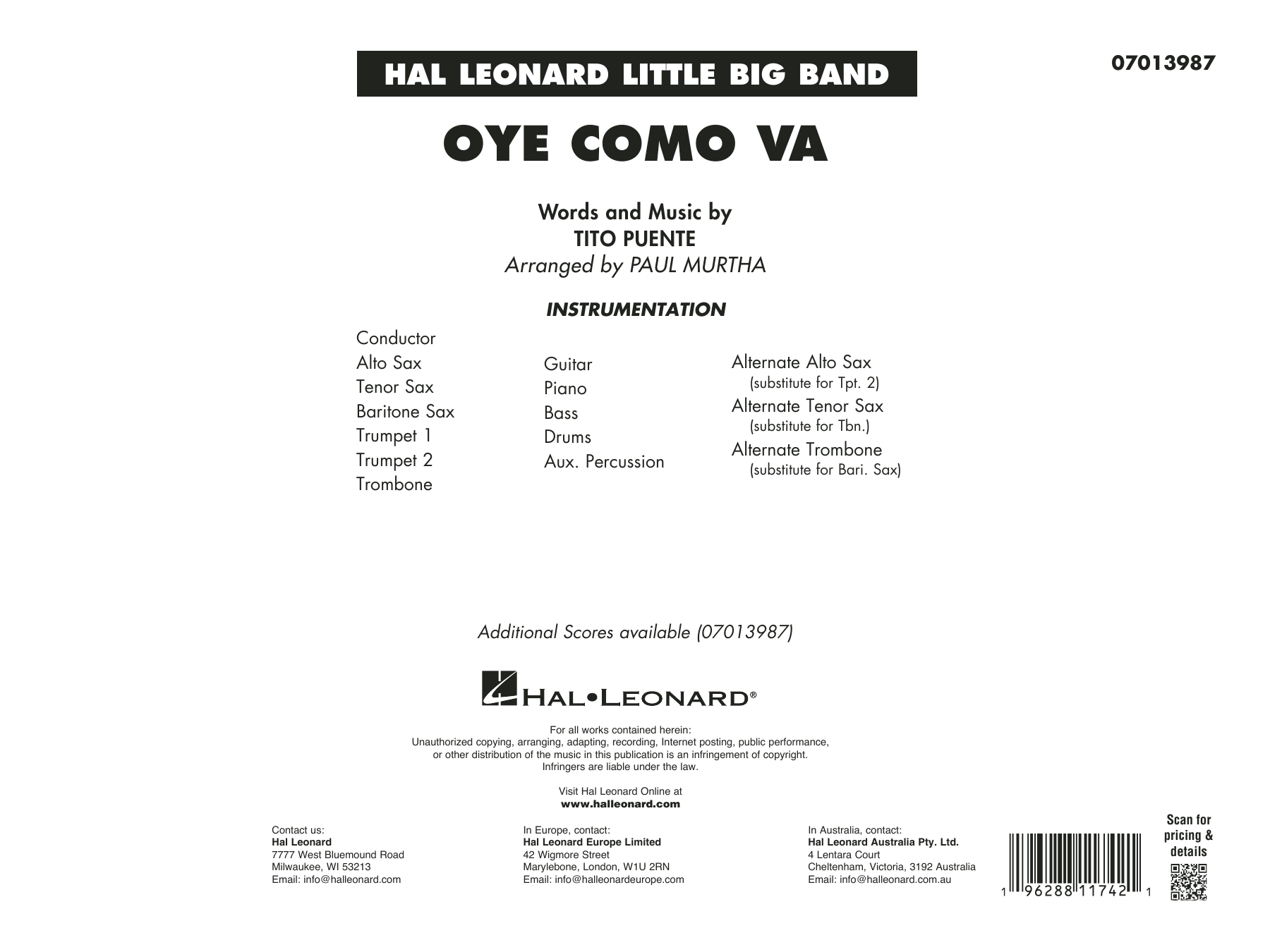

Oye Como Va (arr. Paul Murtha): Jazz Ensemble Conductor Score & Parts
By Tito Puente / As performed by Santana / Arranged by Paul Murtha
Grade: 2
Item: 35-PK01288332
$45.00
Pickup currently not available
Buy Extra Parts (Digital PDF Download)
Parts Added to Cart!
Description
One of the best-known Latin tunes ever written, Tito Puente's hit is arranged here in a medium Latin rock style skillfully scored in the 6-horn format. With easy rhythms and modest ranges, this chart also includes written or ad lib. solos for alto sax and trumpet.


Discover MakeMusic Cloud: thousands of interactive titles your students can play along with today.
Sample Audio
No sample audio found.
Sample Video
Additional Details
Publisher:
Hal Leonard
SKU:
35-PK01288332
More about this title
About the Composer: Tito Puente
Tito Puerte revolutionized Latin music in the mid-20th century, establishing himself as the "King of the Timbales" through virtuosic percussion playing and a gift for composing instantly recognizable melodies. His prolific output spanned decades and genres, from mambo to salsa to Latin jazz, influencing generations of musicians across Latin, pop, and jazz traditions. For music educators, Puente represents the bridge between authentic Latin traditions and contemporary ensemble arranging, making his works invaluable teaching tools for students learning to navigate cross-cultural musical traditions with respect and energy.
Why we love this
Paul Murtha's arrangement preserves the infectious groove that made this tune a standard while making it entirely accessible to developing players. The straightforward rhythmic language and moderate ranges mean students focus on lock-in and pocket rather than fighting their instruments, and the optional solos create natural performance opportunities without high-stakes technical demands. This is the kind of chart that builds genuine musical confidence because players can sound professional from day one.
What to expect
Propulsive and warm, built on the kind of groove that makes bodies move without feeling heavy or overwrought. The arrangement sits somewhere between a salsa club and a modern rock concert, balancing the crisp articulation of Latin percussion with the looser phrasing of contemporary jazz.
Who it's for
Grade 2 jazz ensembles ready to add Latin repertoire to their library without sacrificing musical authenticity or quality. Directors seeking a chart that builds foundational jazz concepts like soloing, ensemble blend, and rhythm section independence while working from material students actually want to play.
How to get the most out of it
- Anchor the rhythmic foundation by having the rhythm section practice separately first; the Latin clave pattern underneath everything drives the entire feel, and rushing here will muddy the groove.
- Shape the horn sections with dynamic restraint in the verses to let the solos breathe, then build intensity when the full ensemble enters for statement choruses.
- Encourage soloists to play to the recorded track beforehand so they internalize the groove before standing up in front of the ensemble; confidence in Latin feels develops best when the pulse is already lived-in.
- Balance the timbale sound in your head even without a dedicated timbale player; the drum kit articulation should suggest that crisp, cut-through quality that makes Latin rock sit just right in the pocket.
How to use it
Place this as an opener or closer on a concert celebrating Latin and world music, where it anchors your programming with immediate audience recognition and energy. It pairs naturally with other Puente arrangements or with contemporary Latin jazz titles, and its accessibility makes it an excellent mid-year piece to build ensemble cohesion before tackling more demanding material.
Skills your students will build
- Latin rhythmic figures and clave patterns
- Ensemble lock and groove-based pocket playing
- Solo composition and improvisation with written or ad lib options
- Listening skills across ensemble sections to maintain cohesion
- Reading articulation marks that define the Latin rock aesthetic
- Dynamic shaping within repeated harmonic frameworks