
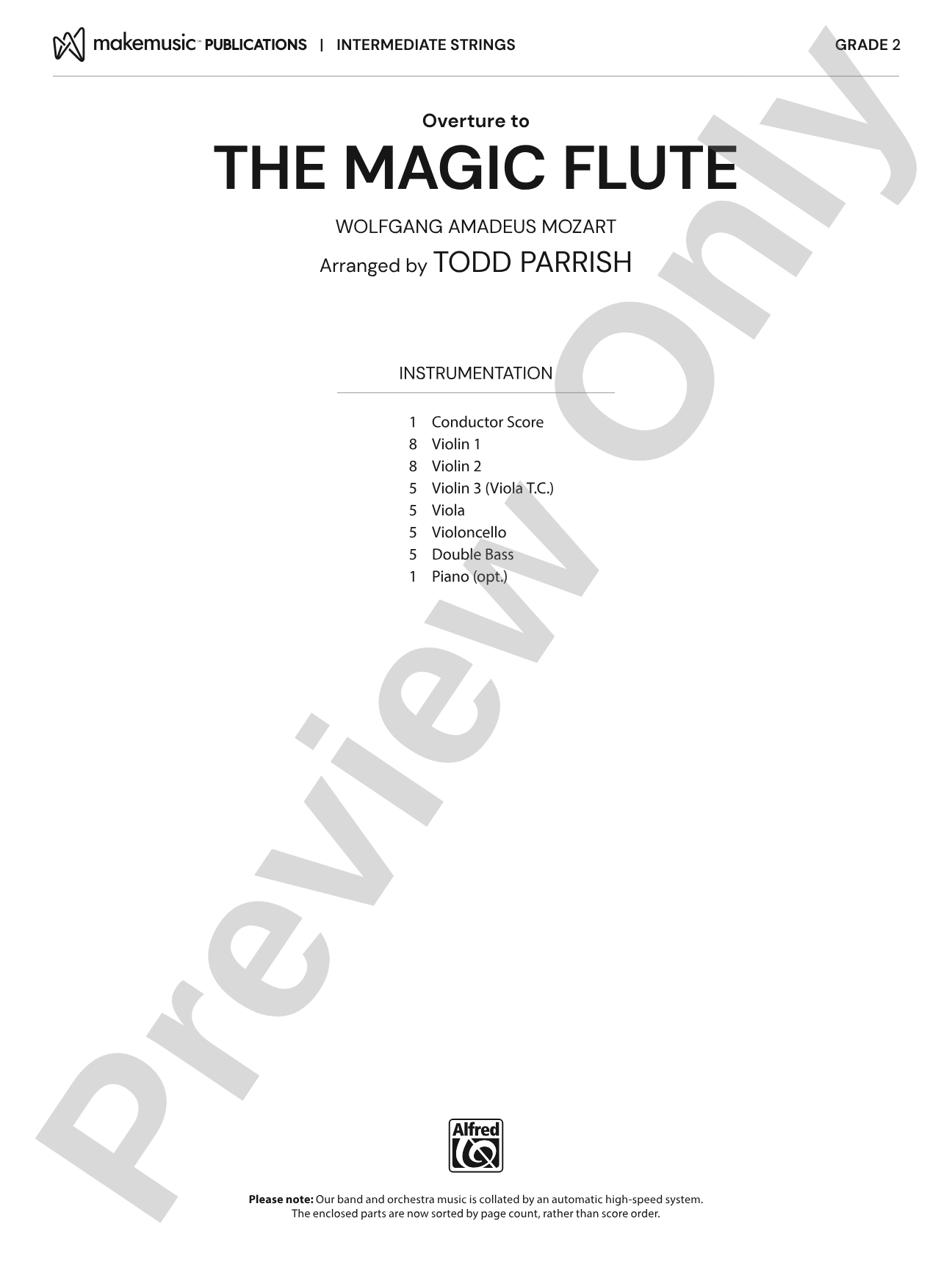
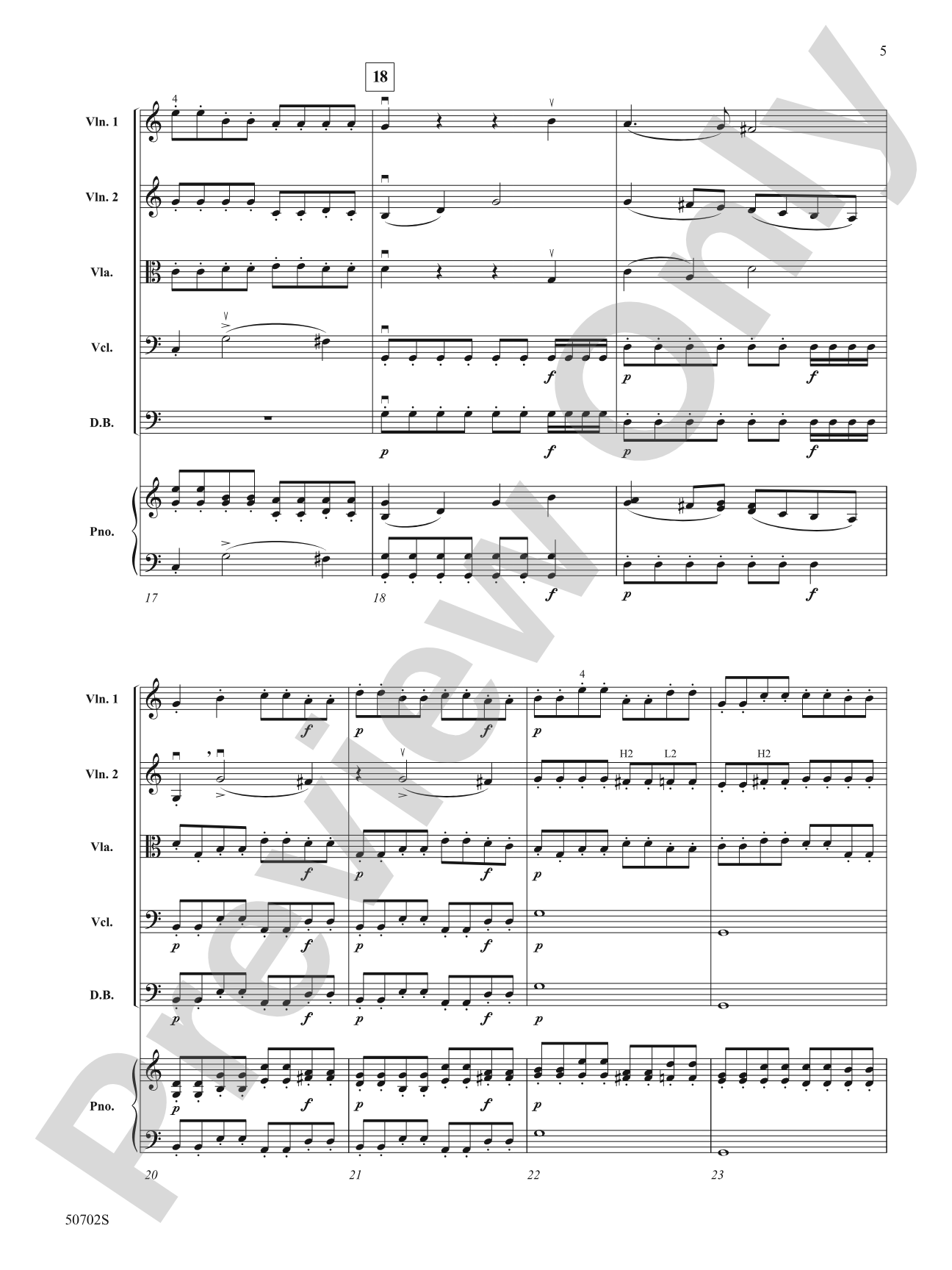
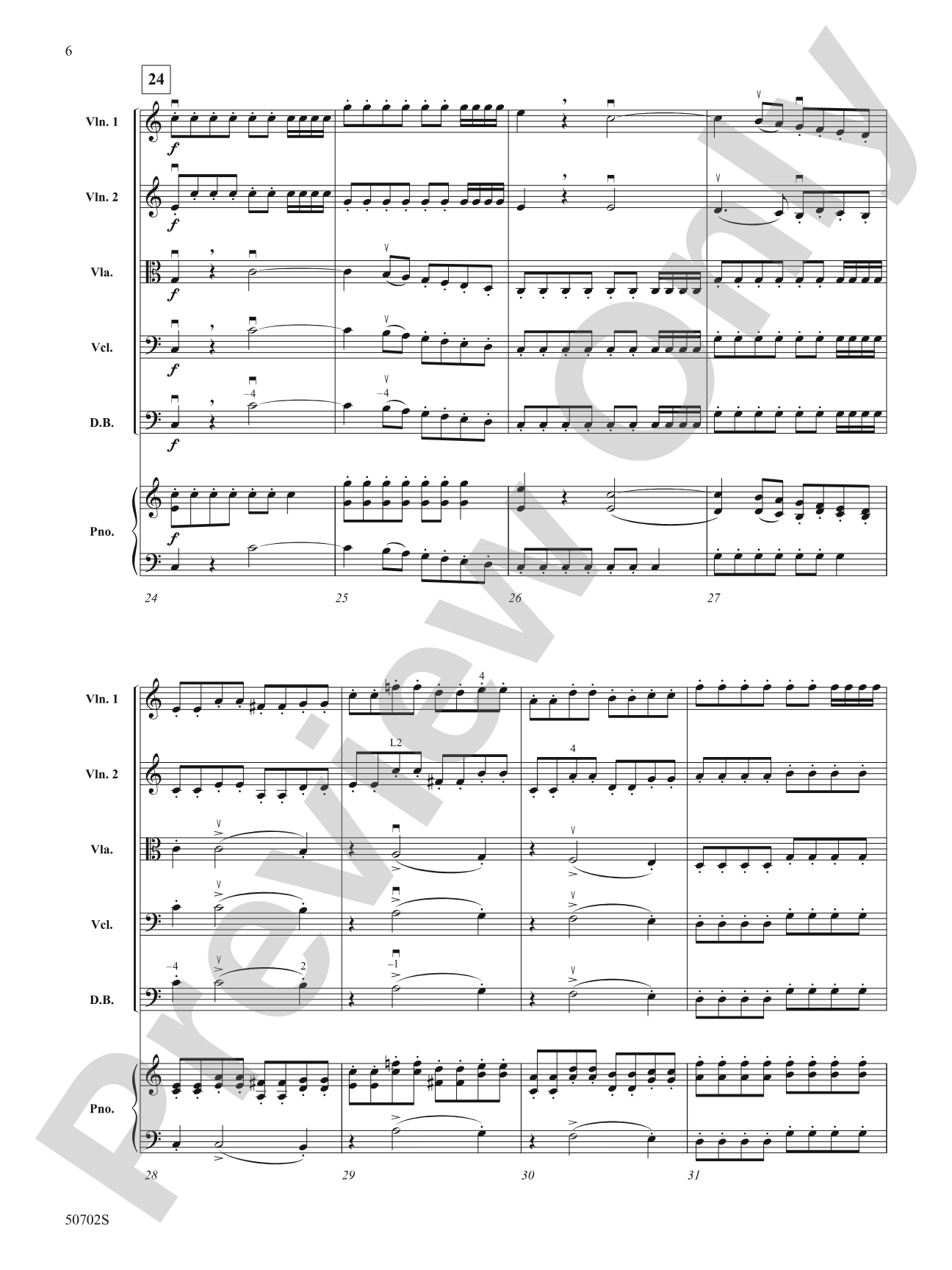
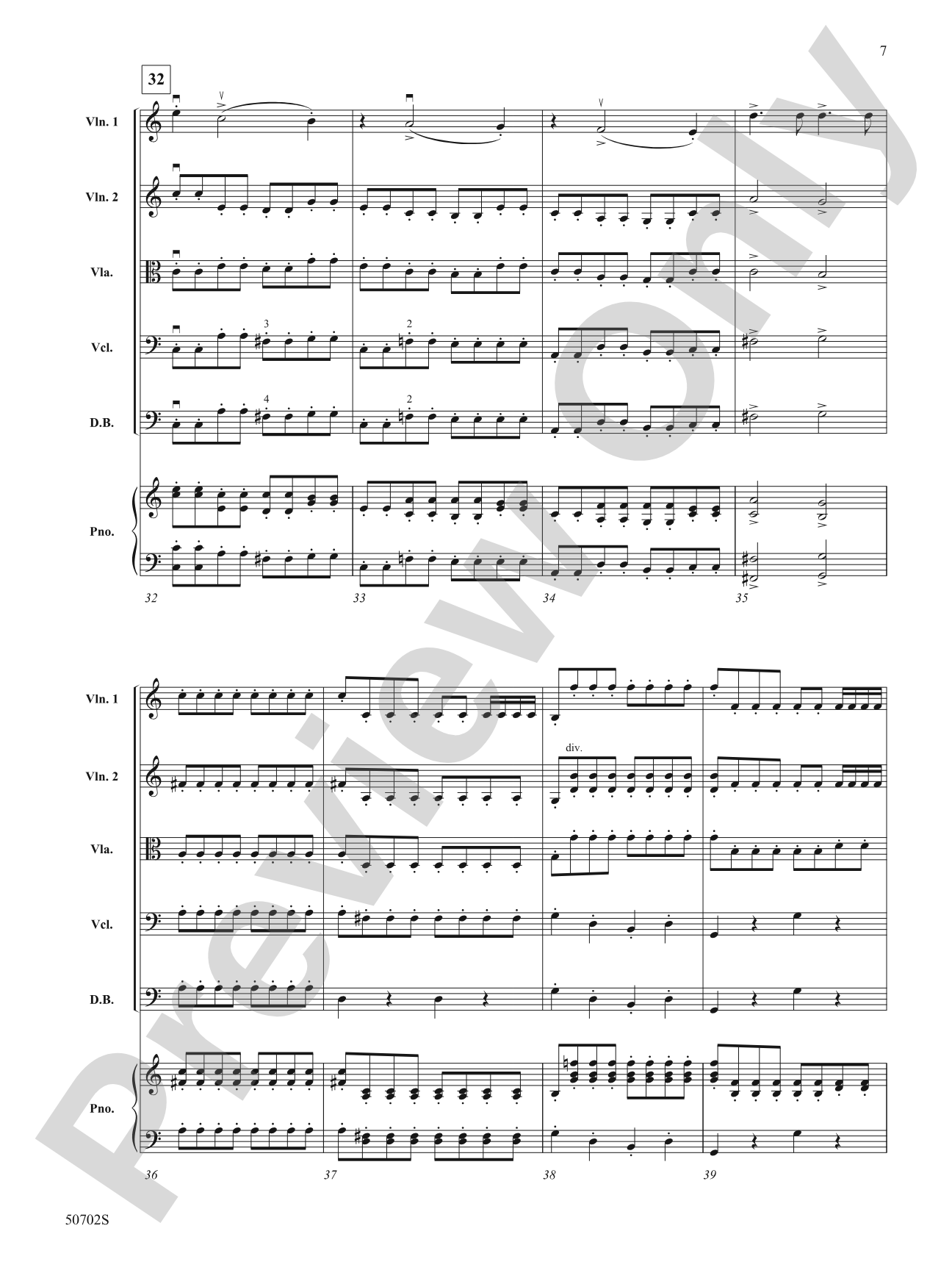
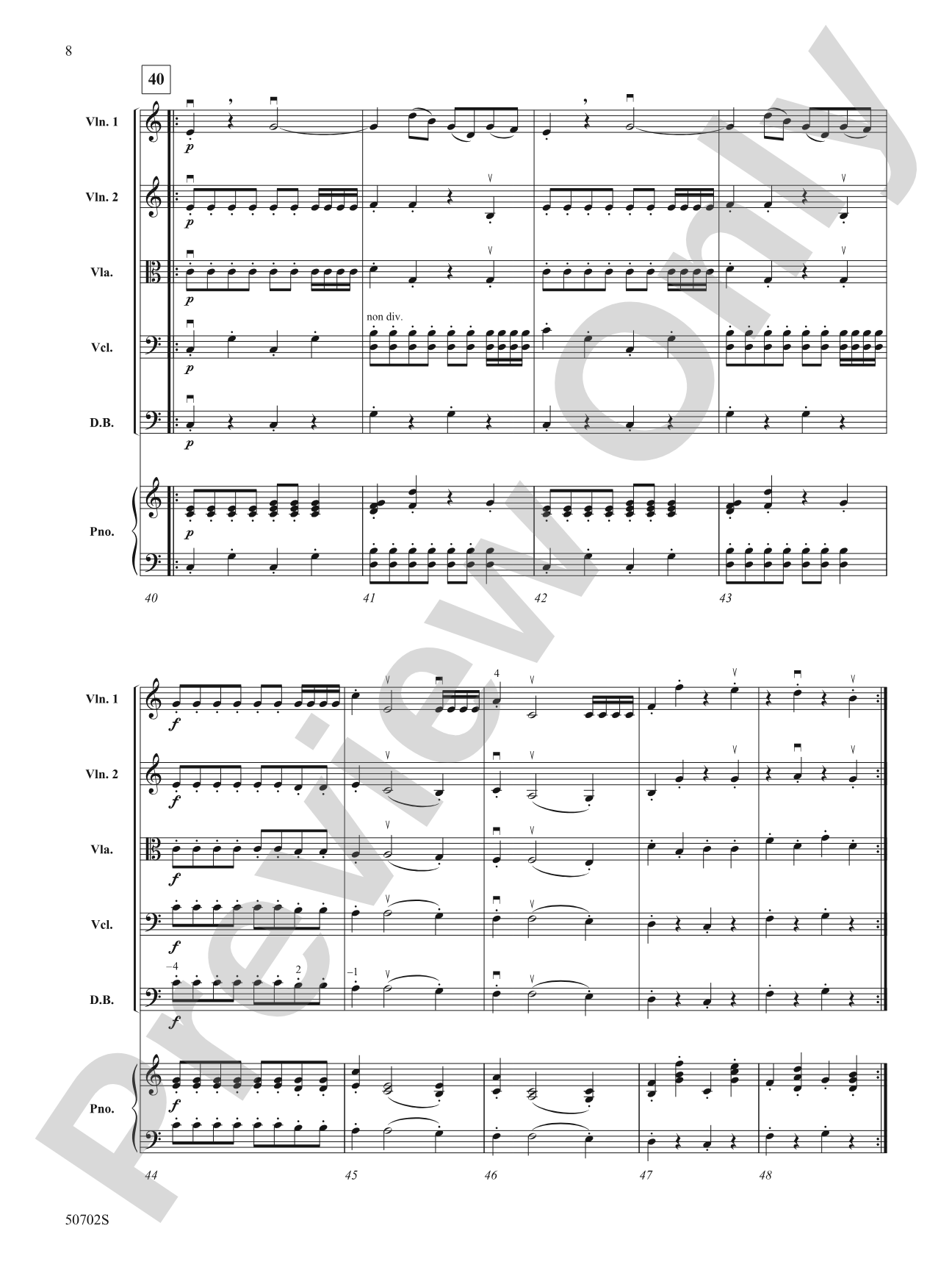
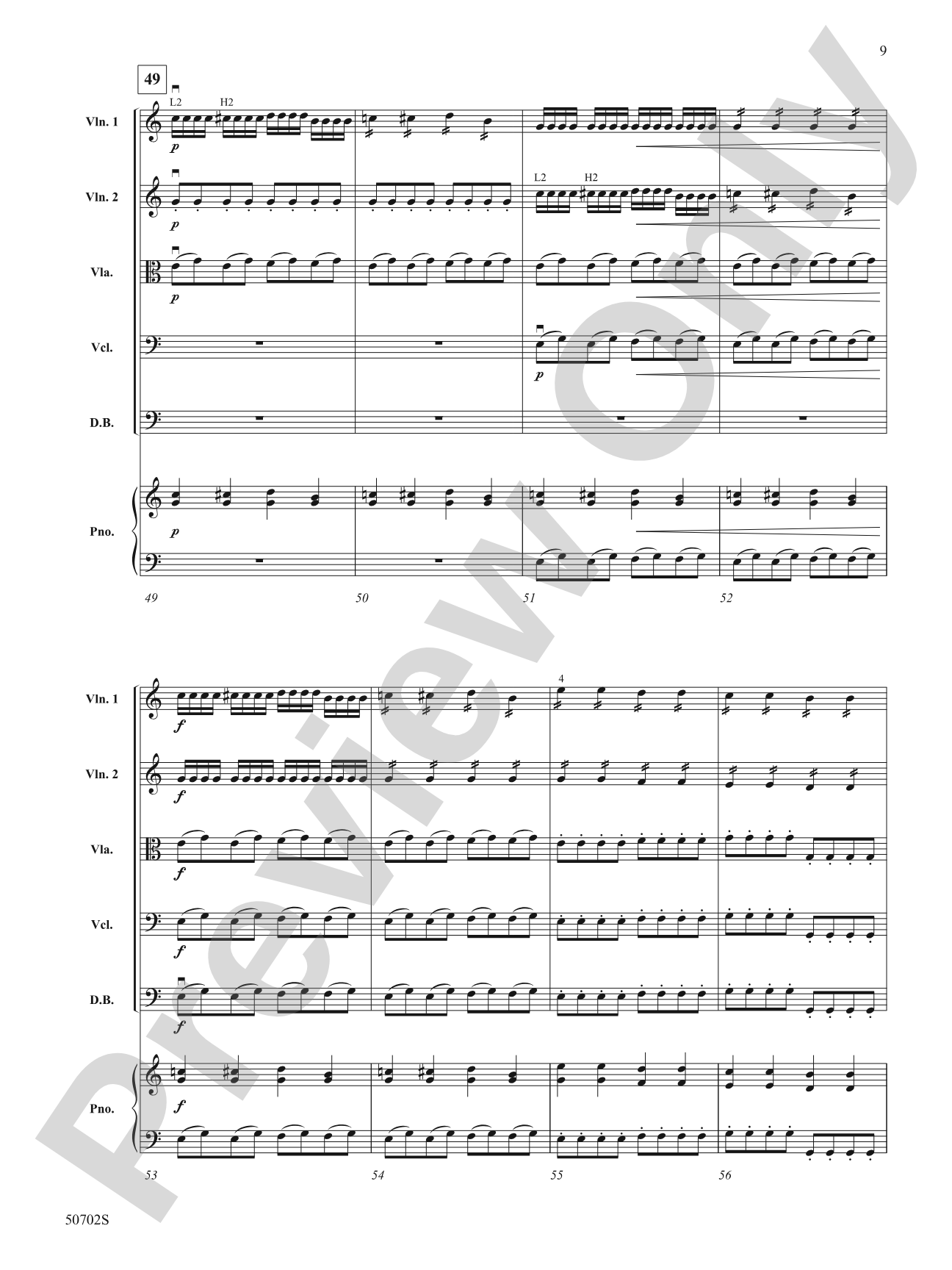
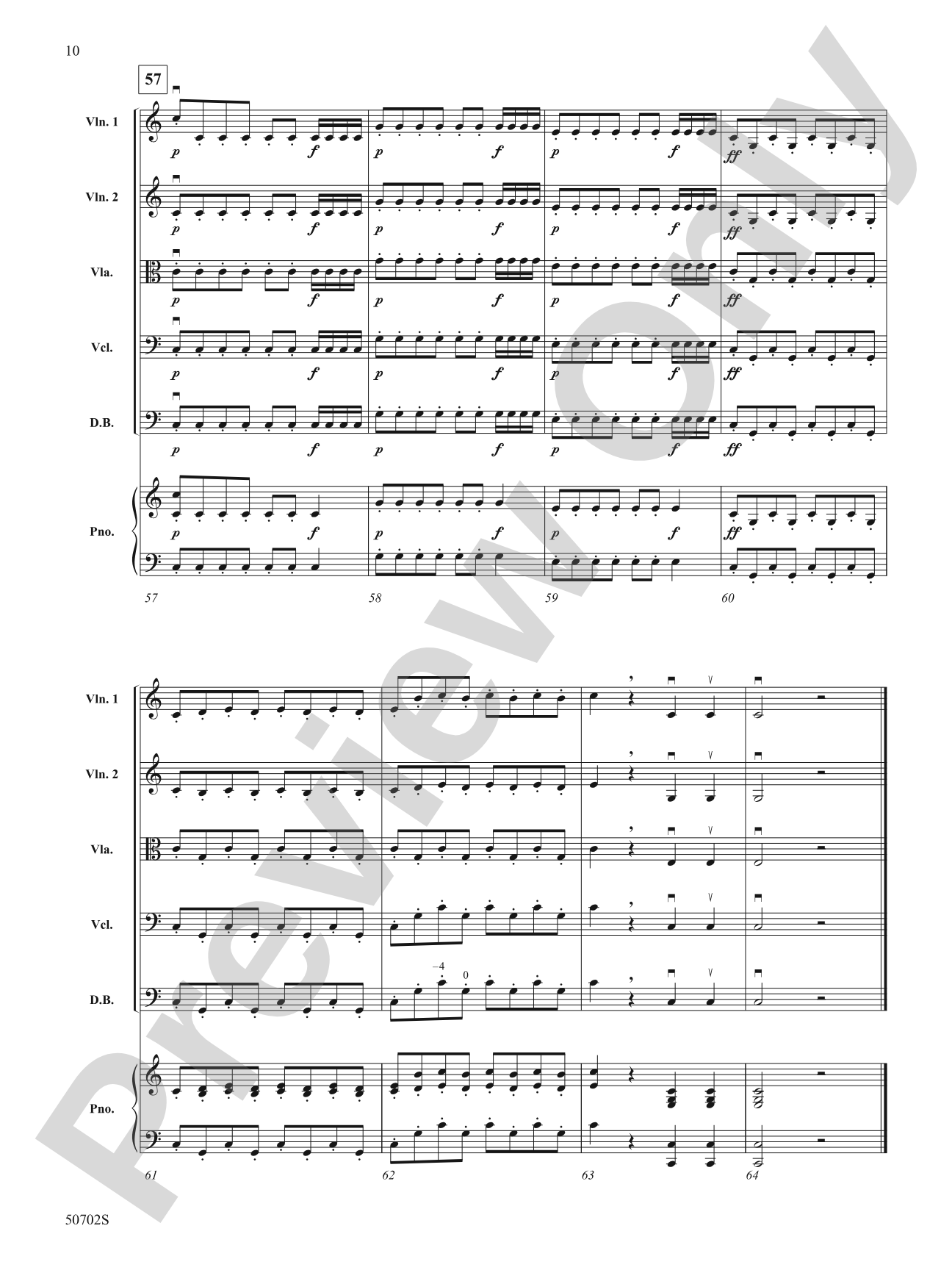

Overture to The Magic Flute: String Orchestra Conductor Score & Parts
By Wolfgang Amadeus Mozart / arr. Todd Parrish
Grade: 2
Item: 00-PK-0008714

$60.00
One moment…
Description
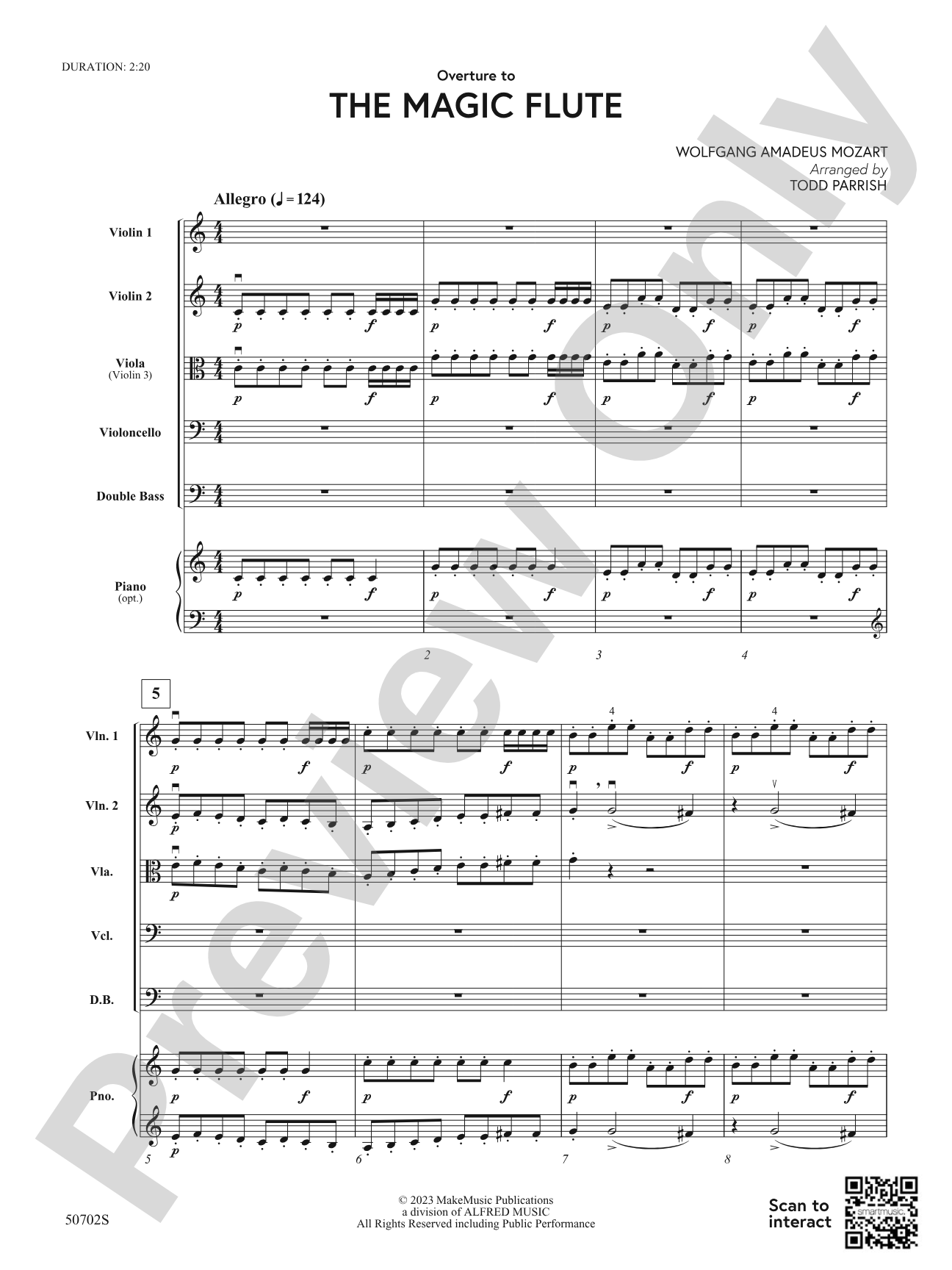
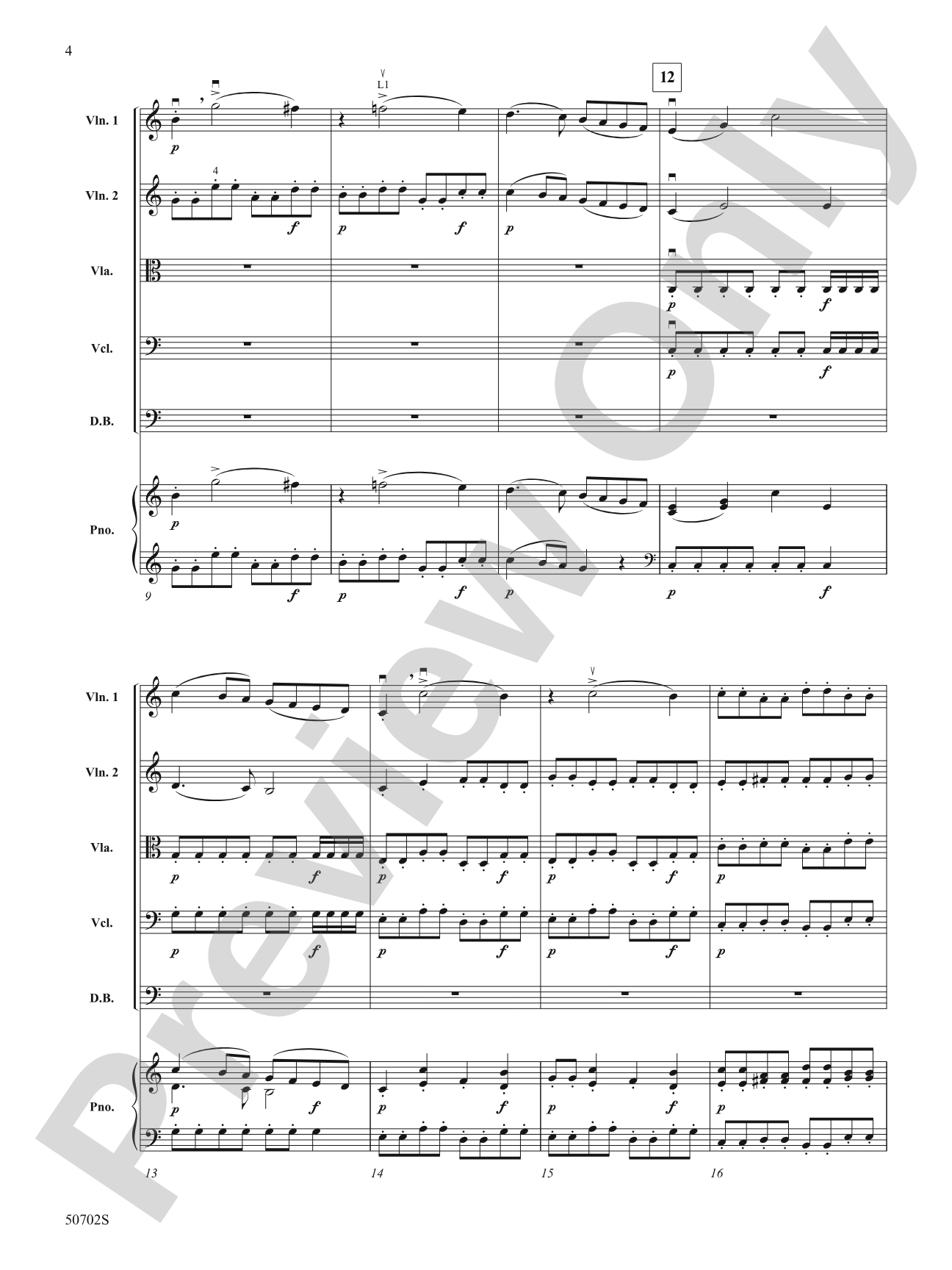
This fantastic arrangement of Wolfgang Amadeus Mozart's Overture to The Magic Flute focuses on the overture's fast section, transposed to the more accessible key of C major. Arranger Todd Parrish ensures that all sections get interesting parts without the tricky left-hand work in the original. Extremely approachable with a big, authentic sound, this is an ideal concert or festival addition! (2:20)


Don't just read it, hear it, play along with it, and watch your students grow with it. In MakeMusic Cloud, Overture to The Magic Flute: String Orchestra Conductor Score & Parts comes alive with professional accompaniment, adjustable tempo, and built-in practice tools that turn solo practice into real progress.
Open in the Player
Jump straight in and assign it today.
Start Your Free Trial
Open this title and explore the full library in minutes.
Sample Audio
1
Audio File
--:--
0:00
0:00
Sample Video
Additional Details
Series:
MakeMusic Intermediate Strings
Publisher:
MakeMusic Publications
SKU:
00-PK-0008714
More about this title
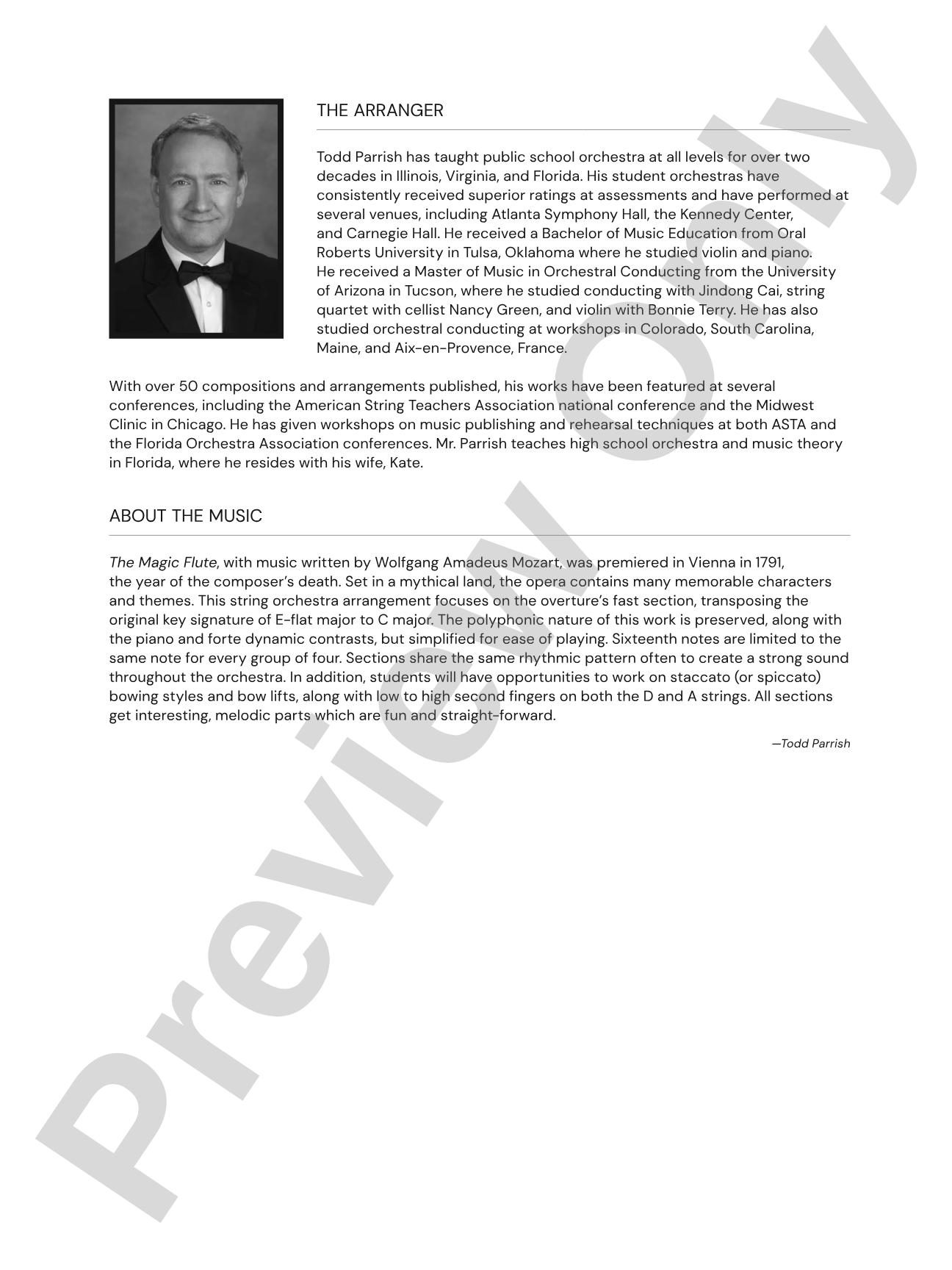
About the Composer: Wolfgang Amadeus Mozart
Wolfgang Amadeus Mozart (1756-1791) composed across every major genre of his time, from operas and symphonies to chamber music and concertos. Born in Salzburg, Austria, he began performing and composing by age five and created over 600 works before his death at 35. His ability to write idiomatically for every instrument and voice type makes his music enduringly teachable.
The Overture to The Magic Flute stands among Mozart's most recognizable works. Written for the 1791 premiere of Emanuel Schikaneder's singspiel, the overture captures the work's blend of mystery, drama, and brilliance in a single orchestral statement. Its structural clarity and memorable themes make it an ideal introduction to large-scale instrumental forms.
Why we love this
Todd Parrish's arrangement strips away the keyboard complexities of the original while keeping the overture's infectious energy and bright orchestration intact. Grade 2 students get a genuine Mozartian masterwork that sounds polished and professional in performance, making this an exceptional choice for building confidence and demonstrating that great music belongs in every rehearsal room.
What to expect
Brilliant and celebratory, the music tumbles forward with the confidence of Mozart's original conception. Energetic passages alternate with moments of harmonic elegance, creating a performance that feels both sophisticated and joyful. Audiences recognize the melody instantly, and students feel the pride of executing a genuine classical masterwork.
Who it's for
Grade 2 string orchestras seeking a substantial, recognizable masterwork that delivers professional sound without requiring advanced technical demands. Directors who want to program music students actually know and audiences genuinely enjoy will find this arrangement opens doors for authentic concert programming at an appropriate challenge level.
How to get the most out of it
- Shape the opening theme with clear dynamic contrast. Mozart's opening fanfare announces the piece; let it speak before transitioning into the faster section. Avoid letting excitement flatten the expressive contour.
- Balance the string sections carefully during fast passagework. Each part carries melodic material; make sure no section overwhelms the others so the contrapuntal texture remains transparent.
- Maintain steady rhythmic precision in the fast section without pushing the tempo. Grade 2 orchestras often rush when energy builds. A secure conductor beat helps ensemble confidence and allows musical shapes to emerge.
- Bring out the articulation patterns that define the character. Mozart's rhythmic figures are playful and precise; clean attacks and releases give the music its characteristic sparkle.
How to use it
This works beautifully as a concert opener or festival showcase piece that grabs attention immediately. Pair it with a slower classical excerpt to demonstrate student versatility, or use it as a capstone performance late in the school year when ensemble balance and rhythmic security have developed fully.
Skills your students will build
- Balancing multiple melodic lines within the string section
- Playing fast passagework with rhythmic precision and articulation clarity
- Reading mixed meter and rhythmic figures characteristic of classical style
- Responding to conductor gesture for tempo control and dynamic shaping
- Understanding sectional form and thematic development in a masterwork context