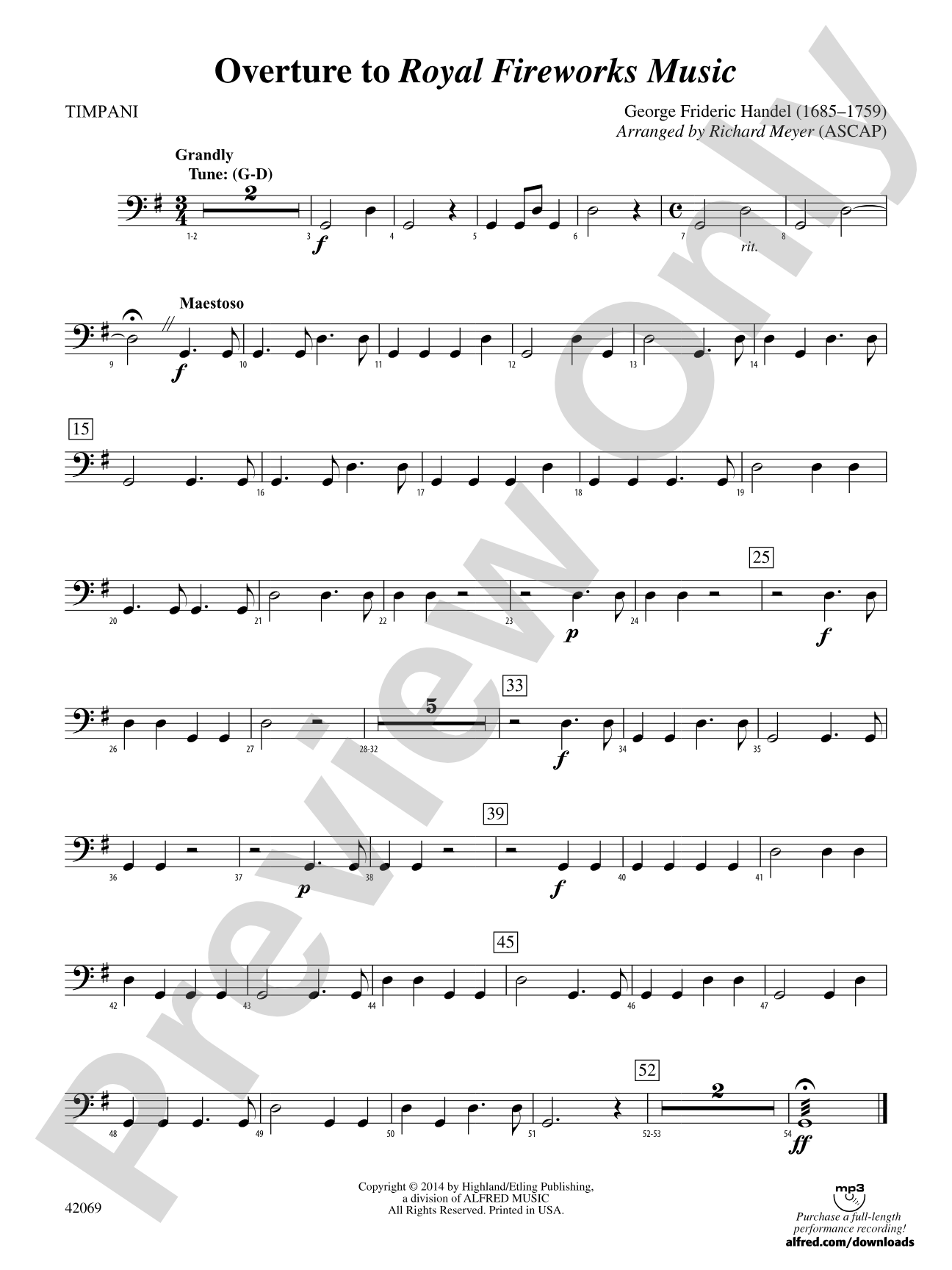
Overture to Royal Fireworks Music: Timpani Sheet Music Preview

Overture to Royal Fireworks Music: Timpani

By George Frideric Handel / arr. Richard Meyer

Grade: 2

Item: 00-PC-0016461_TMP

Digital Download
$3.00
Description
Combined with an introductory theme from the suite, the overture is among the most majestic Baroque music ever written. Perfectly set as a first full orchestra experience, the contrasting statements of the themes are regal and fun to play. (2:45) This title is available in MakeMusic Cloud.

Don't just read it, hear it, play along with it, and watch your students grow with it. In MakeMusic Cloud, Overture to Royal Fireworks Music: Timpani comes alive with professional accompaniment, adjustable tempo, and built-in practice tools that turn solo practice into real progress.

Sample Audio
0:00
0:00
Sample Video
Additional Details
Series: Highland/Etling First Philharmonic
Publisher: Alfred Music
Page Count: 102
SKU: 00-PC-0016461_TMP

More about this title

About the Composer: George Frideric Handel

George Frideric Handel (1685-1759) was a German-born composer who spent most of his career in England, where he became the dominant figure in Baroque opera and instrumental music. His gift for memorable melody and grand orchestration made his works immediately accessible to audiences while maintaining the sophistication that pleased court musicians and critics alike.

Handel's music defined the sound of 18th-century royal pageantry. His works for ensemble and orchestra remain foundational repertoire in music education because they combine structural clarity with genuine joy. Teachers recognize in pieces like the Royal Fireworks Music a composer who understood how to write for young and developing ensembles without sacrificing musical substance.

Why we love this

Arranger Richard Meyer has captured the ceremonial splendor of Handel's original without overwhelming a developing orchestra. The interplay between contrasting themes gives every section moments to shine, and the Grade 2 setting makes this achievable for groups that may still be building technical confidence. This is majestic music that students genuinely feel proud to perform.

What to expect

Ceremonial and grand, yet spirited. The opening theme is bold and direct, announcing itself without apology, while the secondary material dances with elegance and wit. There's something inherently fun about playing Baroque music this well-crafted: the phrases are clear, the rhythms are secure, and the sense of forward momentum never falters.

Who it's for

Full orchestras in Grades 2-4 looking for a Baroque showpiece that builds confidence without requiring advanced technical facility. This works equally well for a school ensemble making its first serious concert statement and for a community orchestra wanting to demonstrate musical literacy alongside accessibility.

How to get the most out of it

  • Balance the brass section carefully during the regal theme statements. Young trumpet and horn players tend to play at full volume; shape these passages dynamically so the opening theme breathes and the secondary melody can answer clearly.
  • Establish the tempo before the downbeat and maintain it steadily. This is ceremonial music, not a march, so resist the urge to push forward during excitement.
  • Listen for the woodwind countermelodies during orchestral passages. They deserve to be heard, particularly in the flute and oboe lines that weave through the texture.
  • Let the articulation patterns match the Baroque style. Crisp, clean attacks on principal themes contrast beautifully with longer note values in supporting voices.

How to use it

Open a concert with this piece to set a formal, confident tone that gives younger musicians a strong platform. It pairs beautifully with lighter or more contemporary works later in the program, creating a sense of musical journey. This is also a natural choice for festival appearances where you want to demonstrate both musicianship and crowd appeal.

Skills your students will build

  • Sustained dynamic control through longer sections
  • Balance and blend within an ensemble texture
  • Baroque articulation and phrasing conventions
  • Reading a full orchestral score from a conductor's perspective
  • Ensemble precision with contrasting thematic material

You May Also Like