
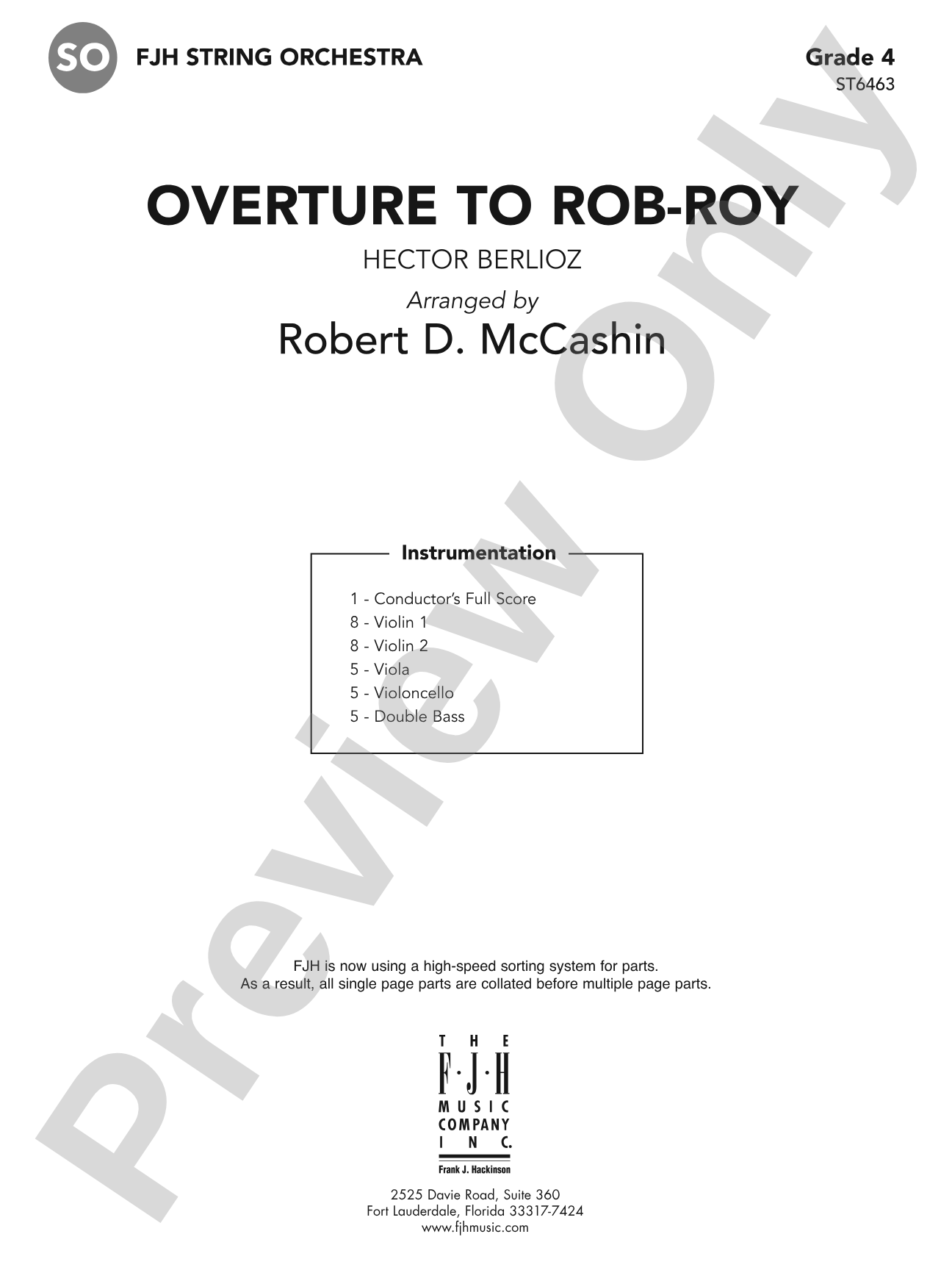
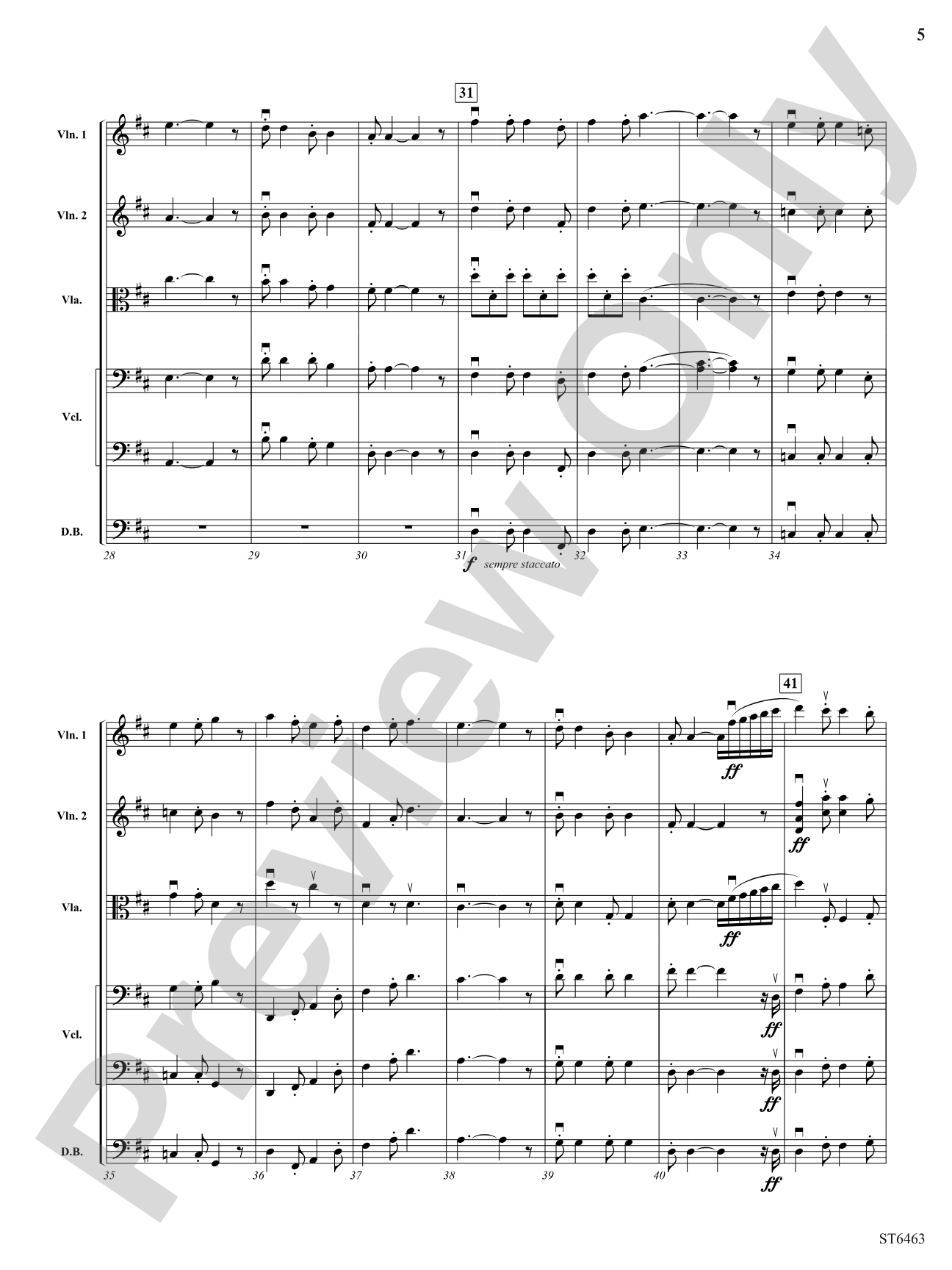
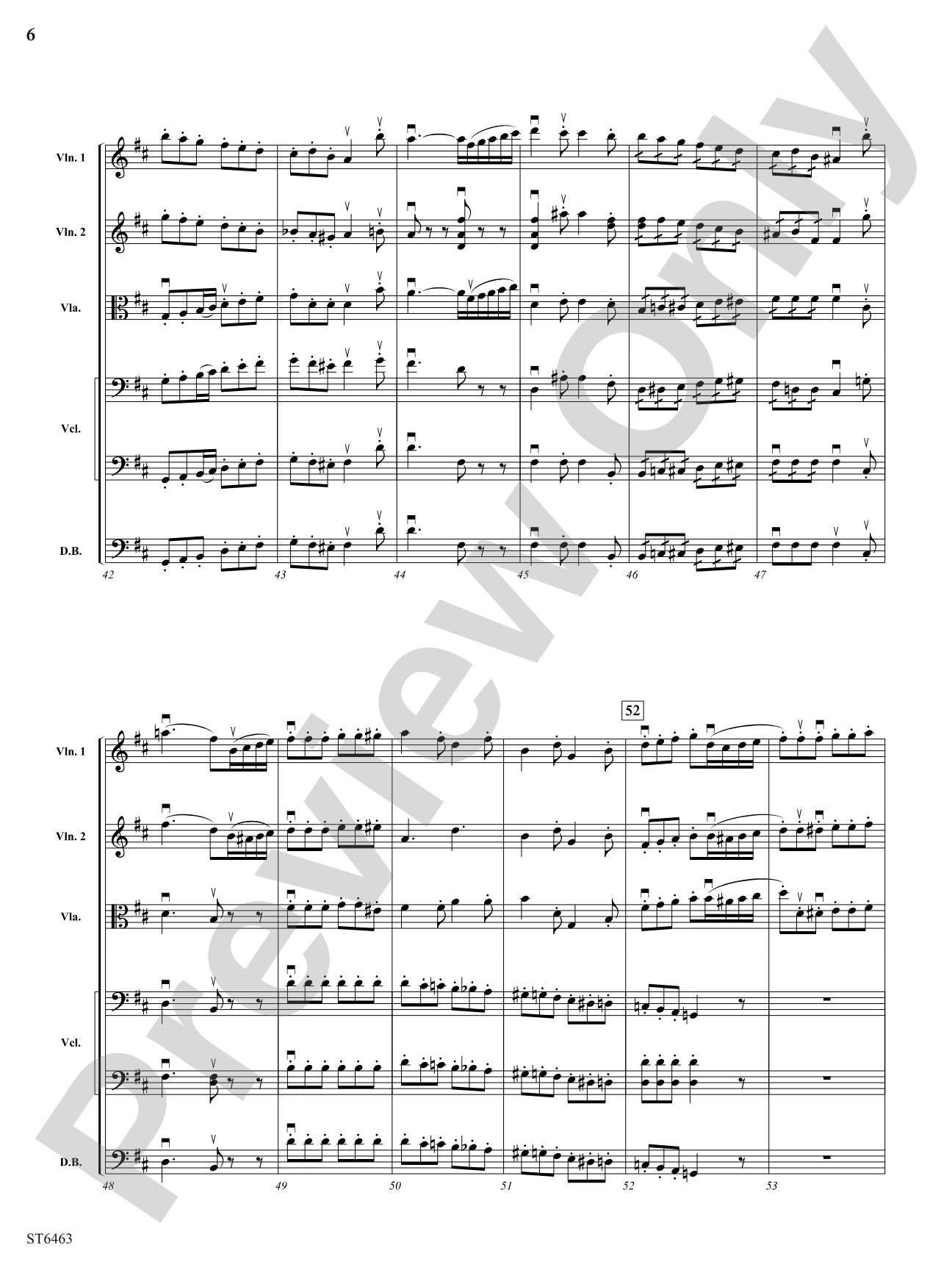
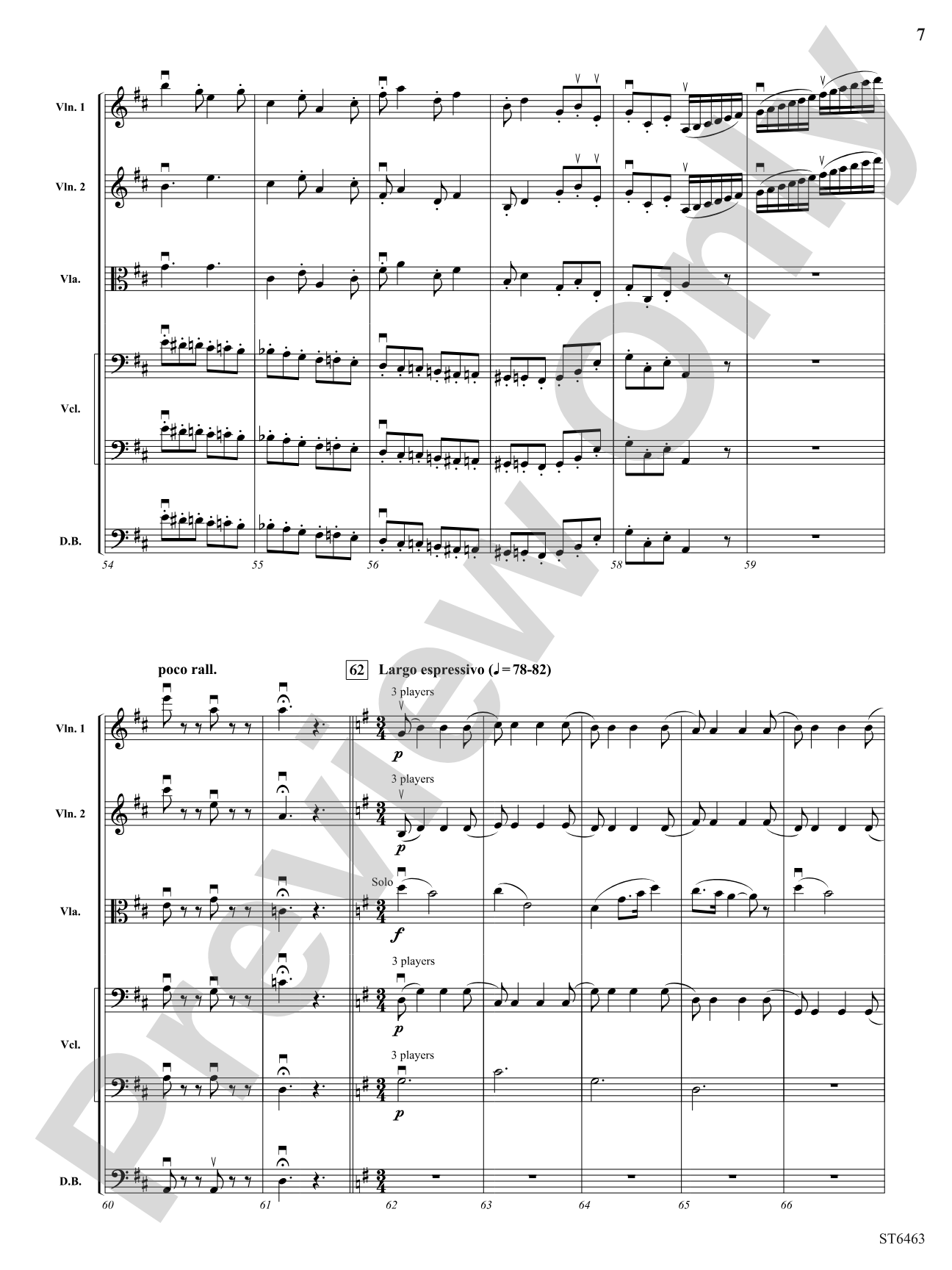
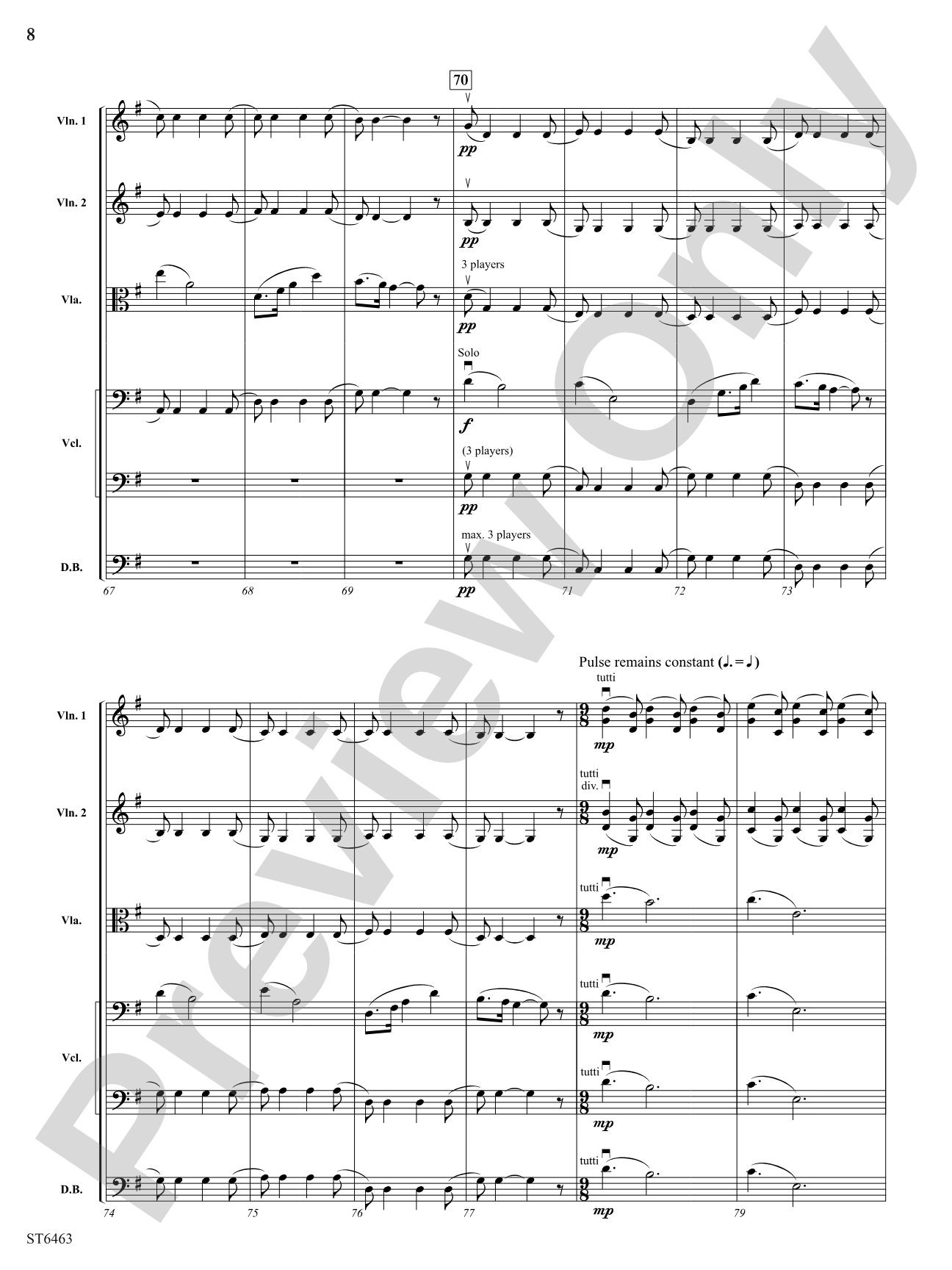
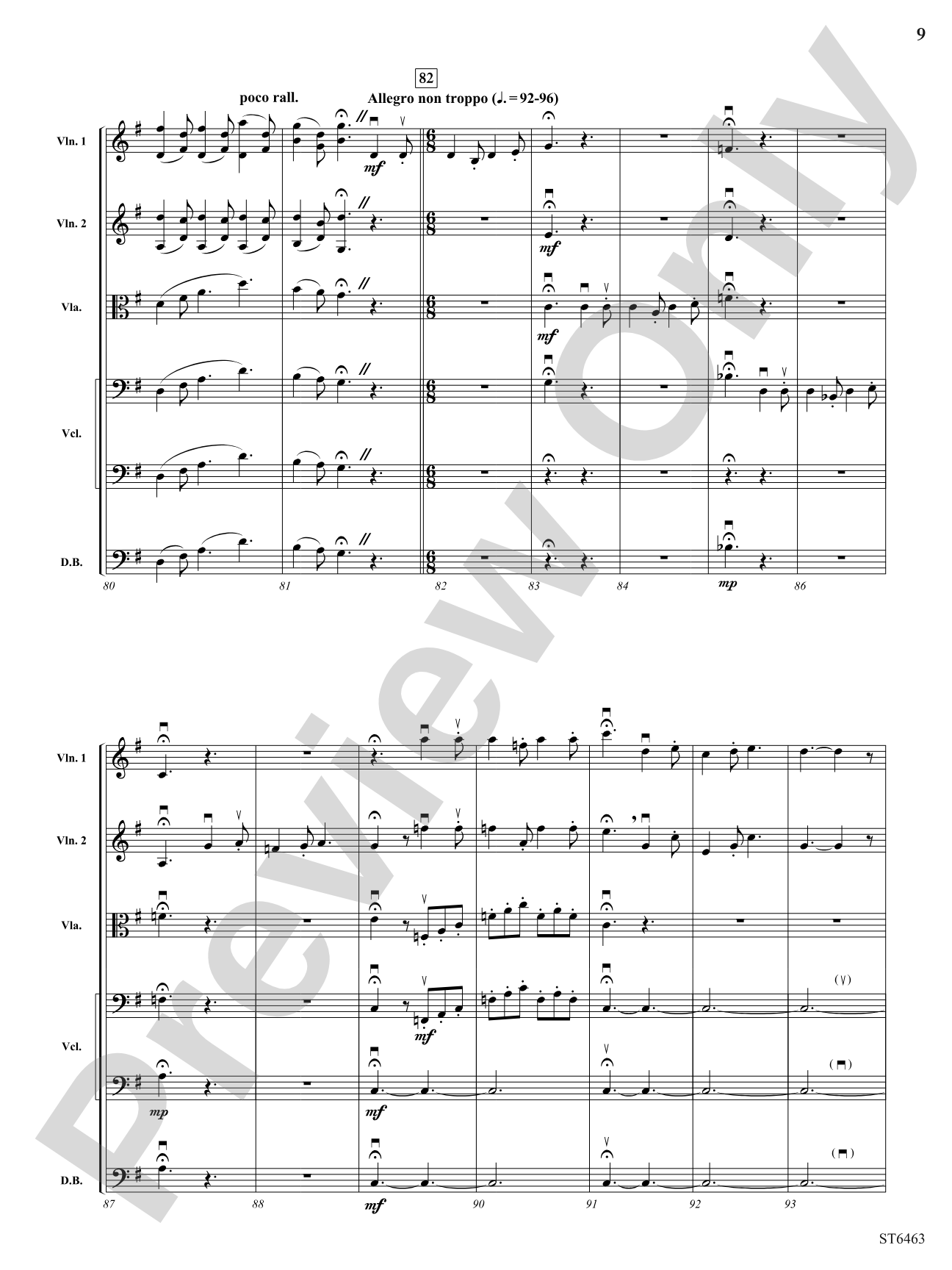
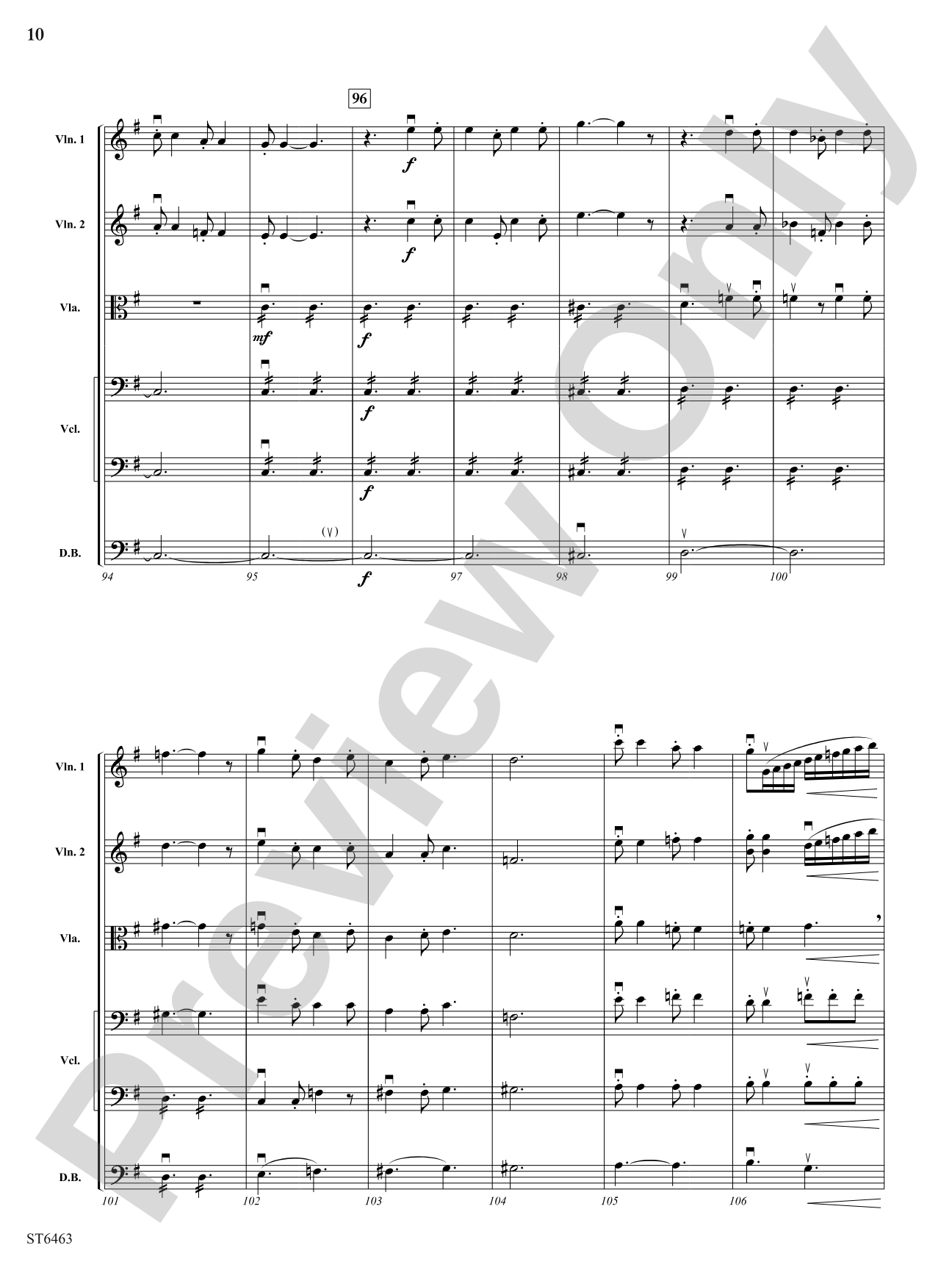
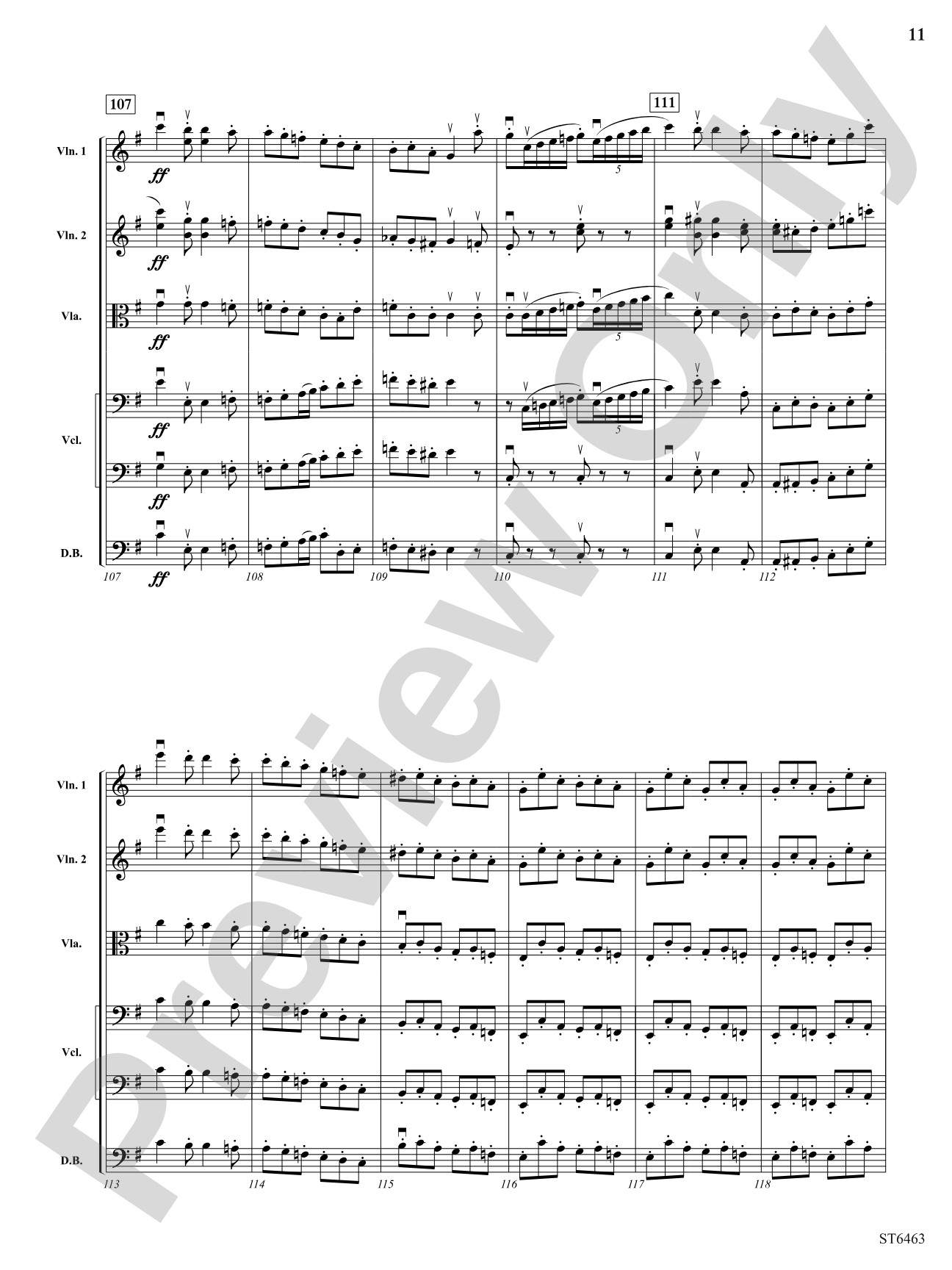
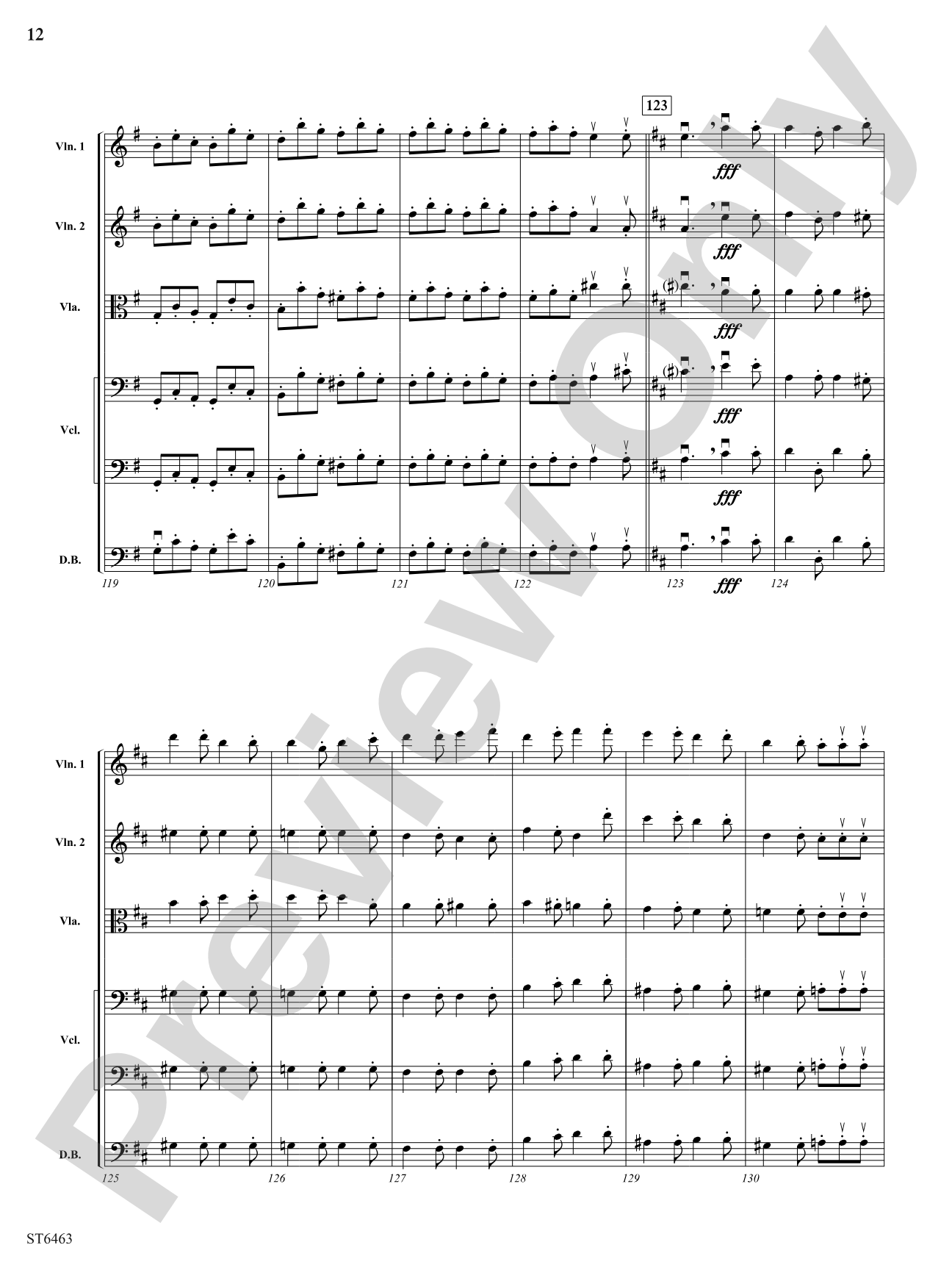
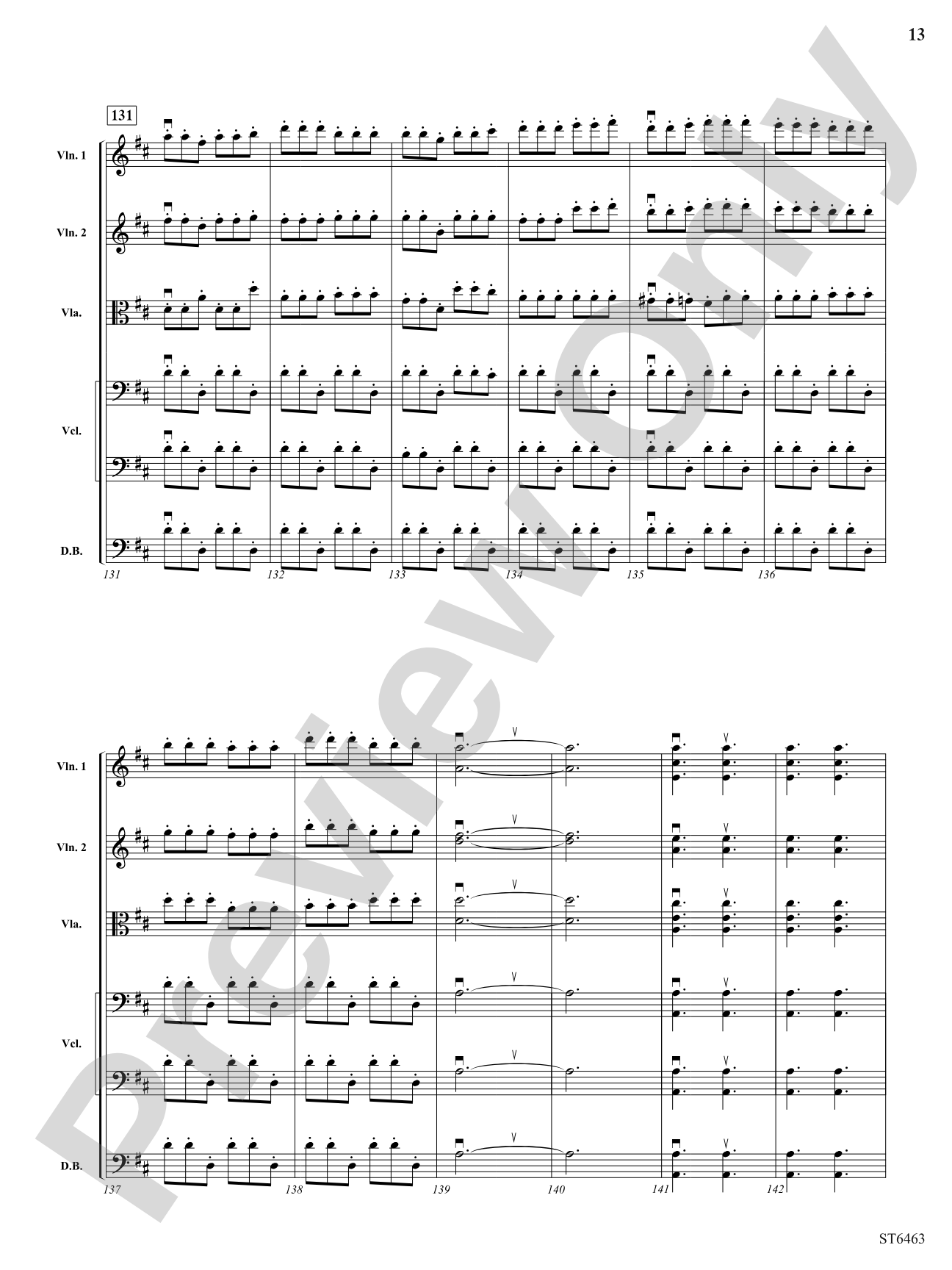
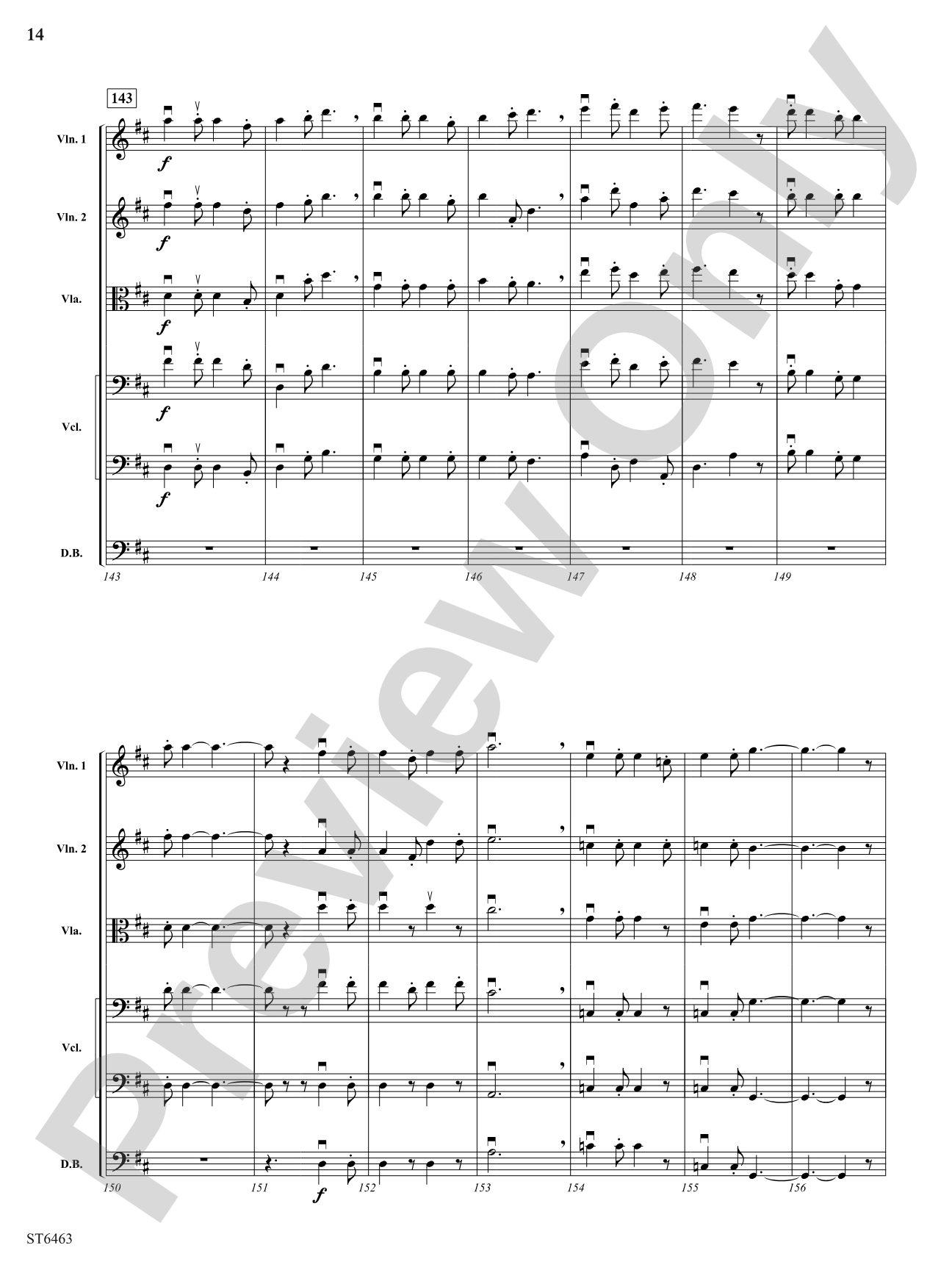
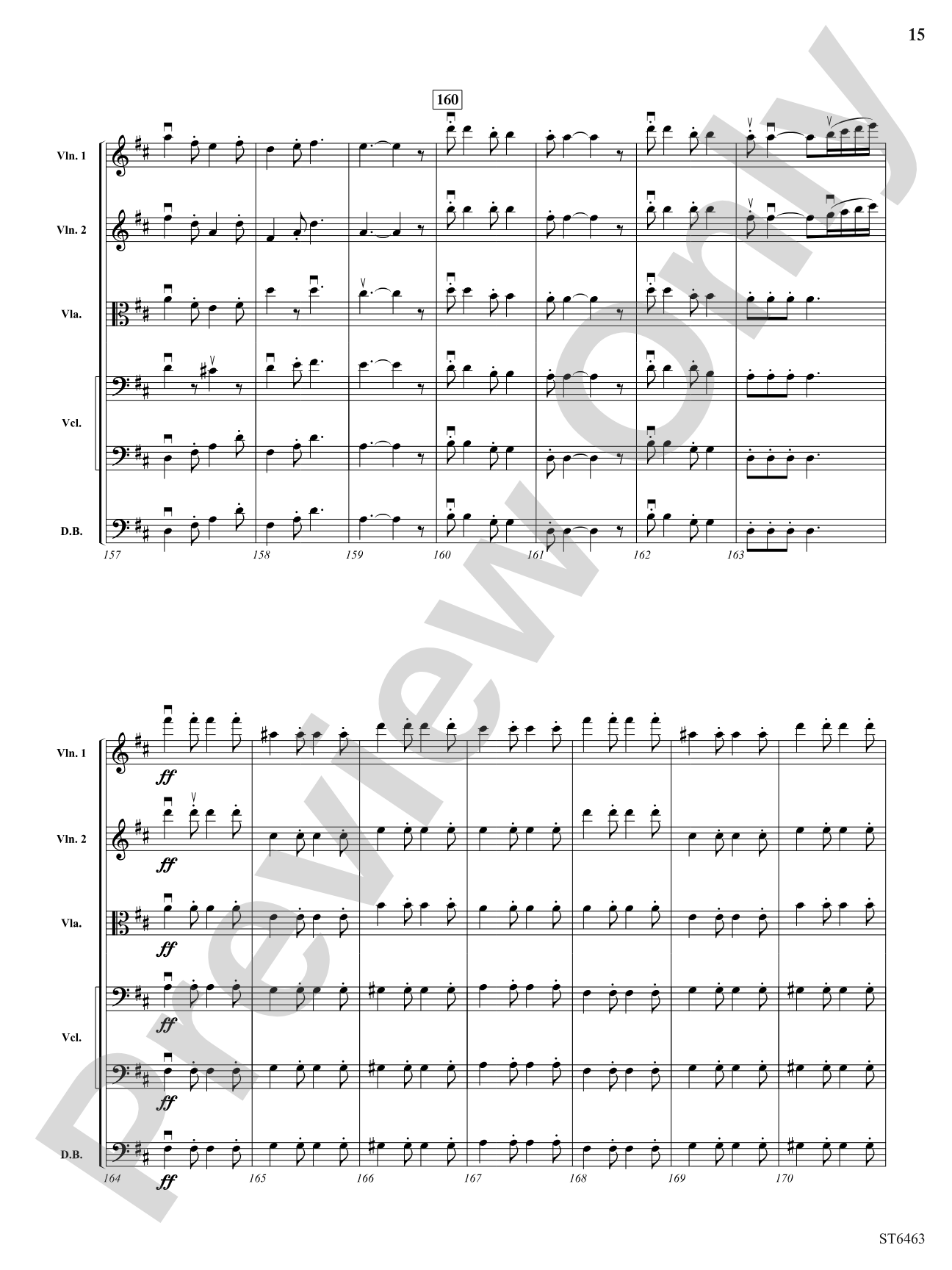
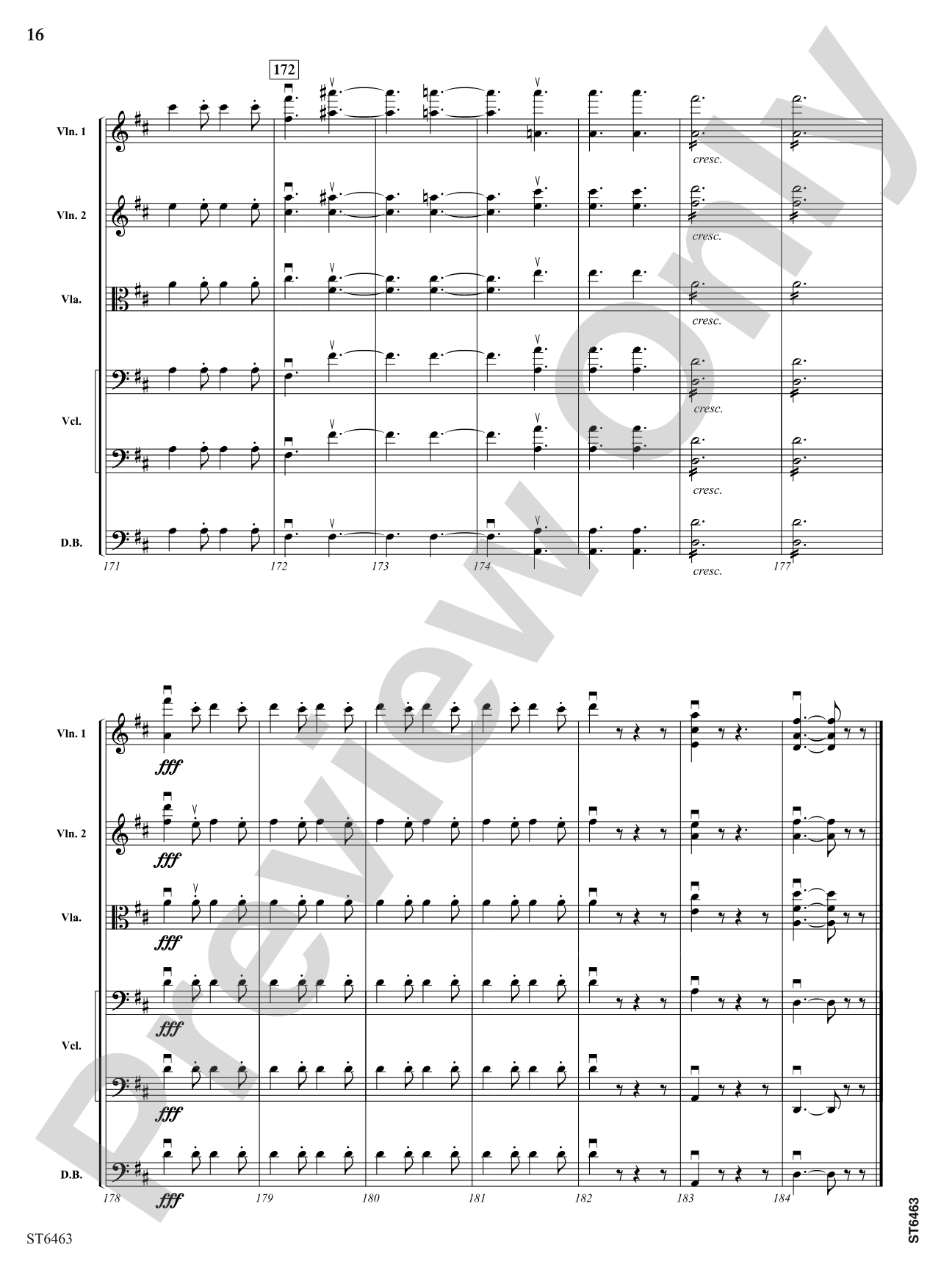

Overture to Rob-Roy: String Orchestra Conductor Score & Parts
By Hector Berlioz / arr. Robert D McCashin
Grade: 4
Item: 98-DST6463
$65.00
Pickup currently not available
Buy Extra Parts (Digital PDF Download)
| Product | Price | Quantity |
|---|---|---|
| Overture to Rob-Roy: Score | $6.00 | |
| Overture to Rob-Roy: Violin 1 | $7.00 | |
| Overture to Rob-Roy: Violin 2 | $7.00 | |
| Overture to Rob-Roy: Viola | $7.00 | |
| Overture to Rob-Roy: Violoncello | $7.00 | |
| Overture to Rob-Roy: Double Bass | $7.00 |
Parts Added to Cart!
Description
This exciting and rewarding overture is well at home as an opener or closer. Offering challenging material for every section of the ensemble, the music covers a wide gamut of styles and is an excellent way to showcase your ensemble and feature the stunning music of Berlioz in the process.


Overture to Rob-Roy: String Orchestra Conductor Score & Parts isn't in MakeMusic Cloud just yet...but it could be. Let us know you'd like to see it, and you'll help shape what comes next. In the meantime, start a free trial and dive into thousands of interactive titles your students can play along with today.
Request This Title
Tell us you want it.
Start Your Free Trial
Explore everything that's ready to play right now.
Sample Audio
1
Audio File
--:--
0:00
0:00
Sample Video
Additional Details
Series:
FJH String Orchestra
Publisher:
The FJH Music Company, Inc.
SKU:
98-DST6463
More about this title
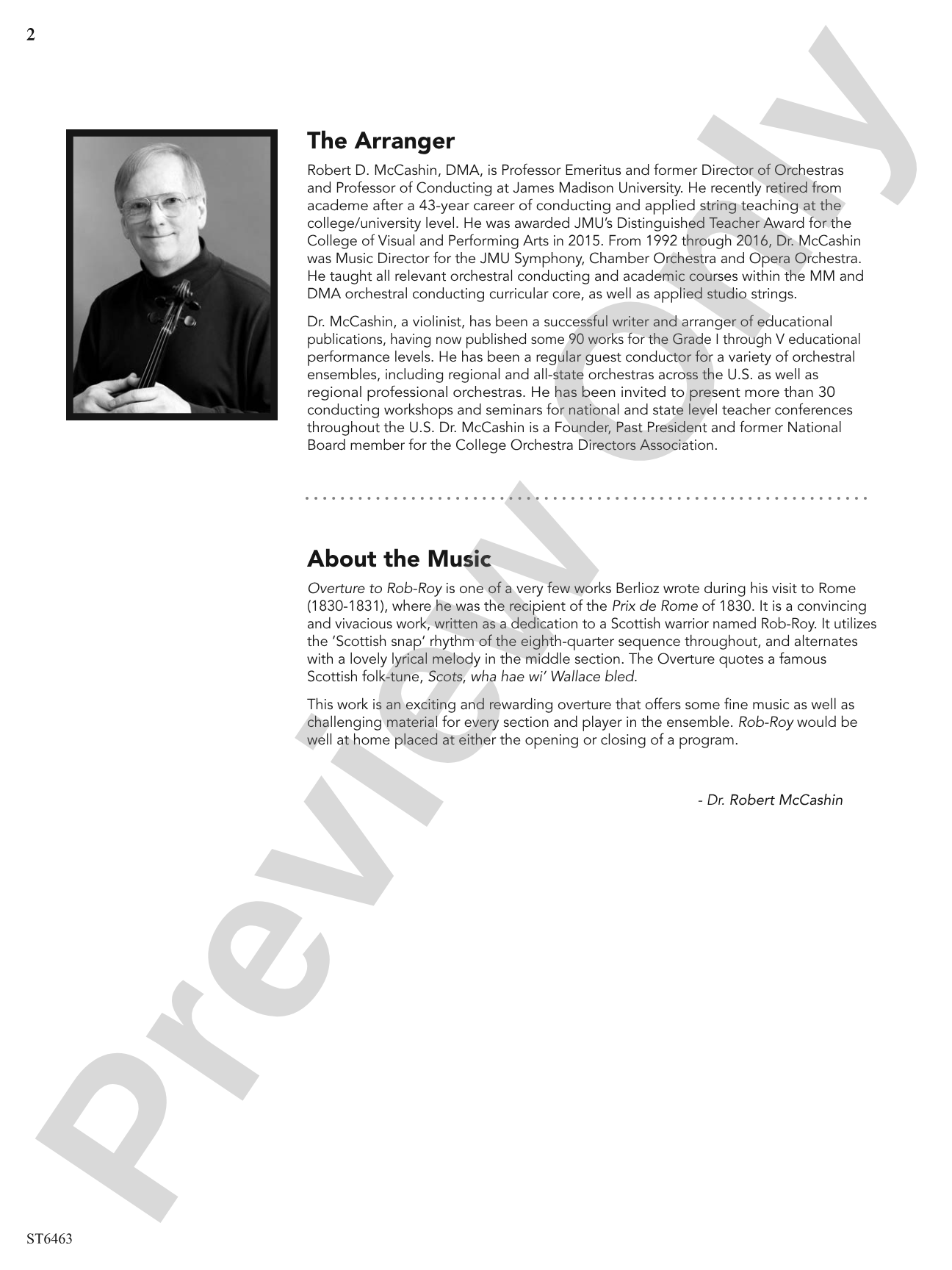
About the Composer: Hector Berlioz
Hector Berlioz (1803-1869) stands as one of the nineteenth century's most inventive orchestrators and a foundational figure in Romantic music. His innovations in instrumental color, harmonic language, and dramatic form shaped how composers thought about the orchestra itself. Berlioz brought a literary sensibility to instrumental music, drawing inspiration from poetry, drama, and visual art to create works of sweeping imagination and structural boldness.
Why we love this
Berlioz's Rob-Roy Overture arrives with immediate dramatic momentum and genuine orchestral color, making it a natural fit for ensembles ready to tackle substantive concert repertoire. Every string section gets meaningful material to play rather than serving as harmonic filler, so your musicians stay engaged throughout. The work announces your group's capabilities without requiring the resources of a full symphony orchestra.
What to expect
Dramatic energy surges through this overture, driven by Berlioz's gift for orchestral storytelling and his restless harmonic language. The writing captures the Scottish landscapes and narrative drama that inspired it, with moments of lyrical beauty interspersed among bolder, more urgent passages that demand full ensemble commitment.
Who it's for
String orchestras at the intermediate-advanced level who have mastered fundamental ensemble balance and are ready for music with genuine compositional substance. Directors seeking a statement piece that demonstrates their group's technical range and musical maturity will find this Berlioz arrangement both rewarding to prepare and impressive to program.
How to get the most out of it
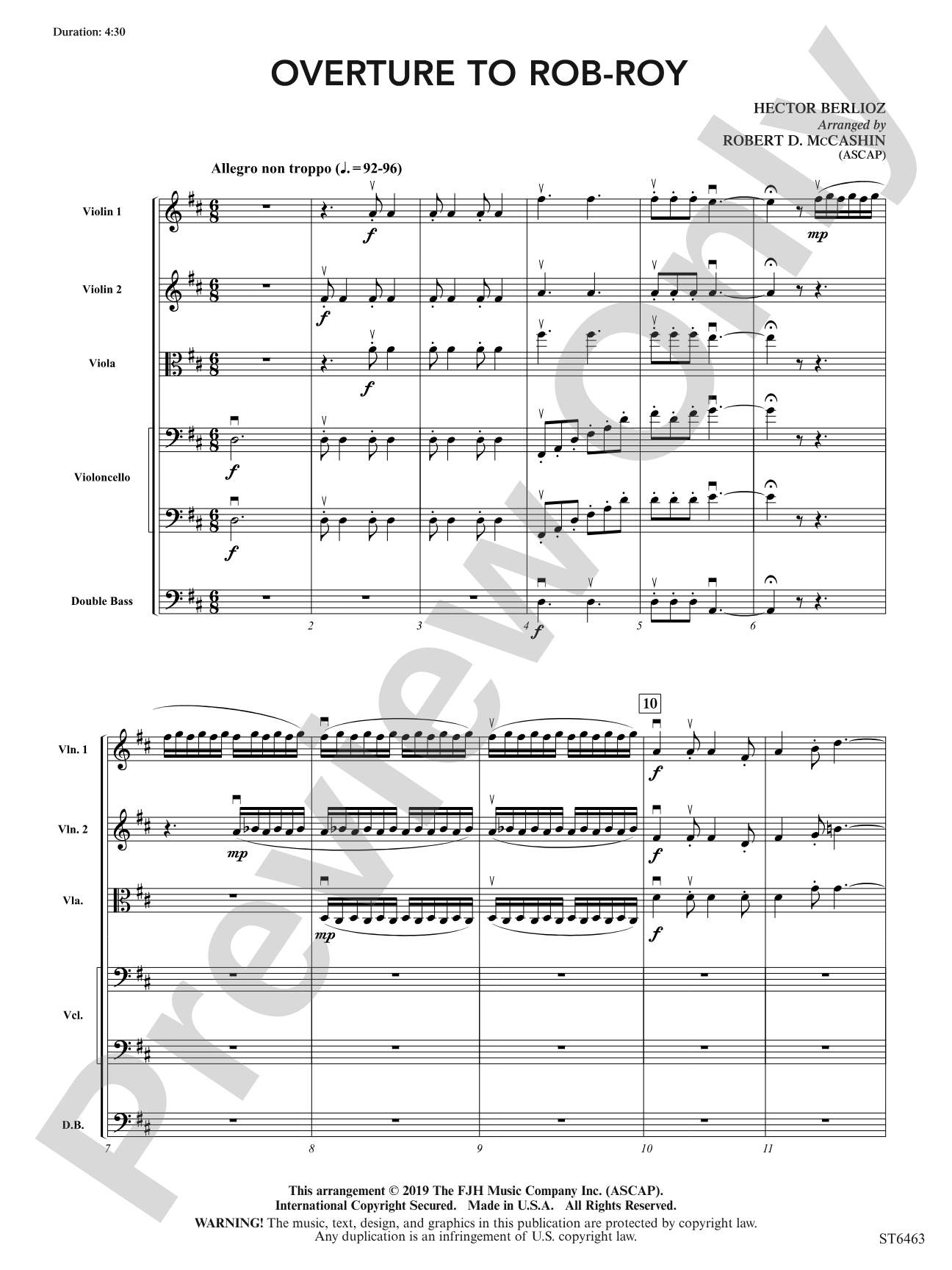
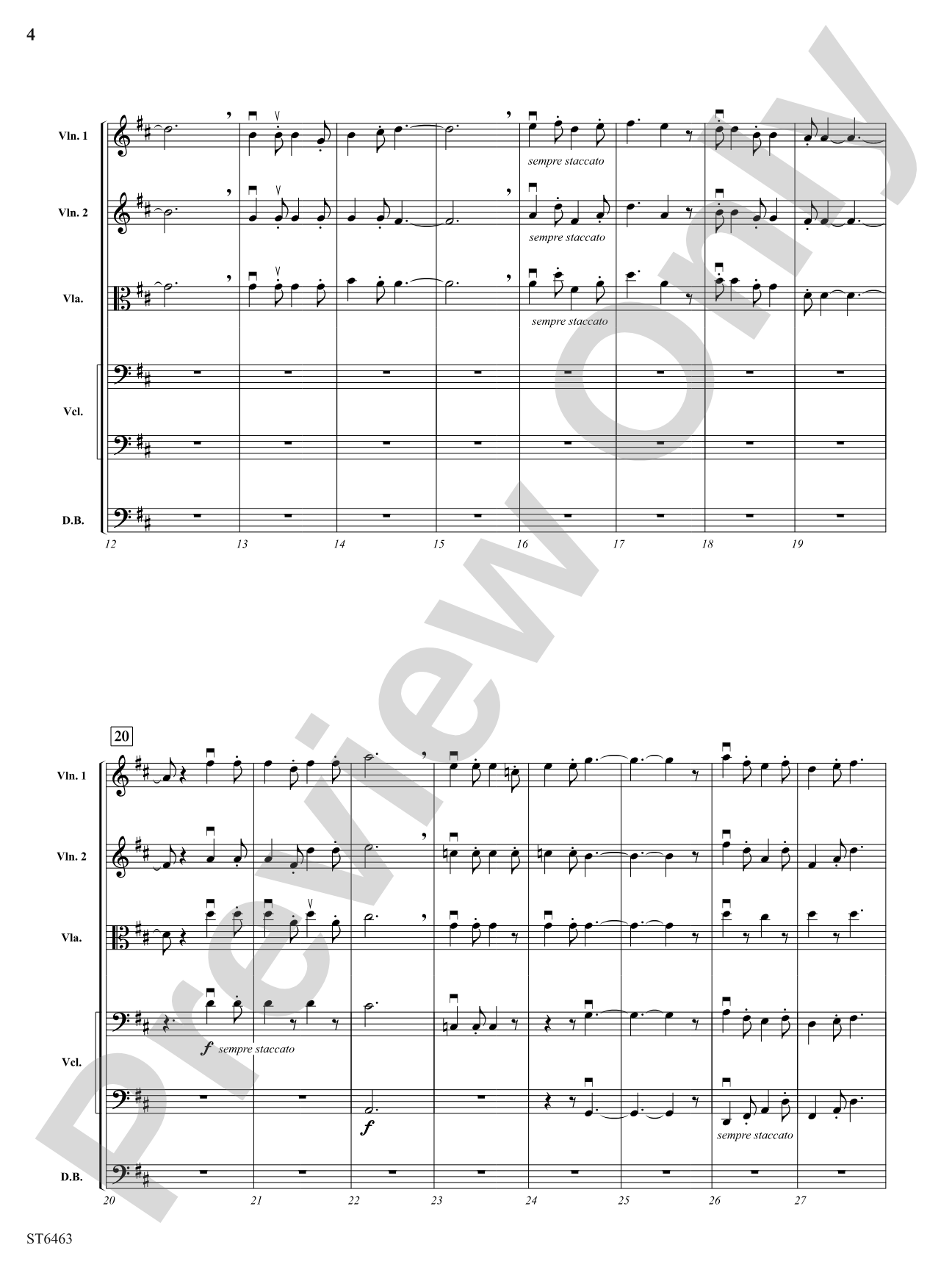
- Shape the opening theme with clear dynamic contrasts and rhythmic vitality; avoid letting sustained passages become static by maintaining forward motion through the phrase arcs.
- Balance the often-independent cello and bass lines so they support rather than overpower the melodic voices above them, especially in busier passages.
- Attend to Berlioz's articulation markings and bowing indications carefully, as they define the character of each musical section and prevent sections from bleeding together.
- Use rehearsal markings as structural landmarks and call them out frequently so all sections understand where they sit within the larger form and how their entrances align with material in other voices.
How to use it
Position this as an opening number to establish your concert's energy and artistic ambition from the first notes. Alternatively, it serves as a powerful closer that leaves the audience with a memorable final impression of your ensemble's capabilities.
Skills your students will build
- Reading and executing articulation markings and bowing conventions from the Romantic era
- Balancing independent contrapuntal lines within a string texture
- Sustaining musical momentum across longer formal structures
- Responding to detailed conductor gestures that shape harmonic and rhythmic nuance
- Projecting tone and character across a wide dynamic range