
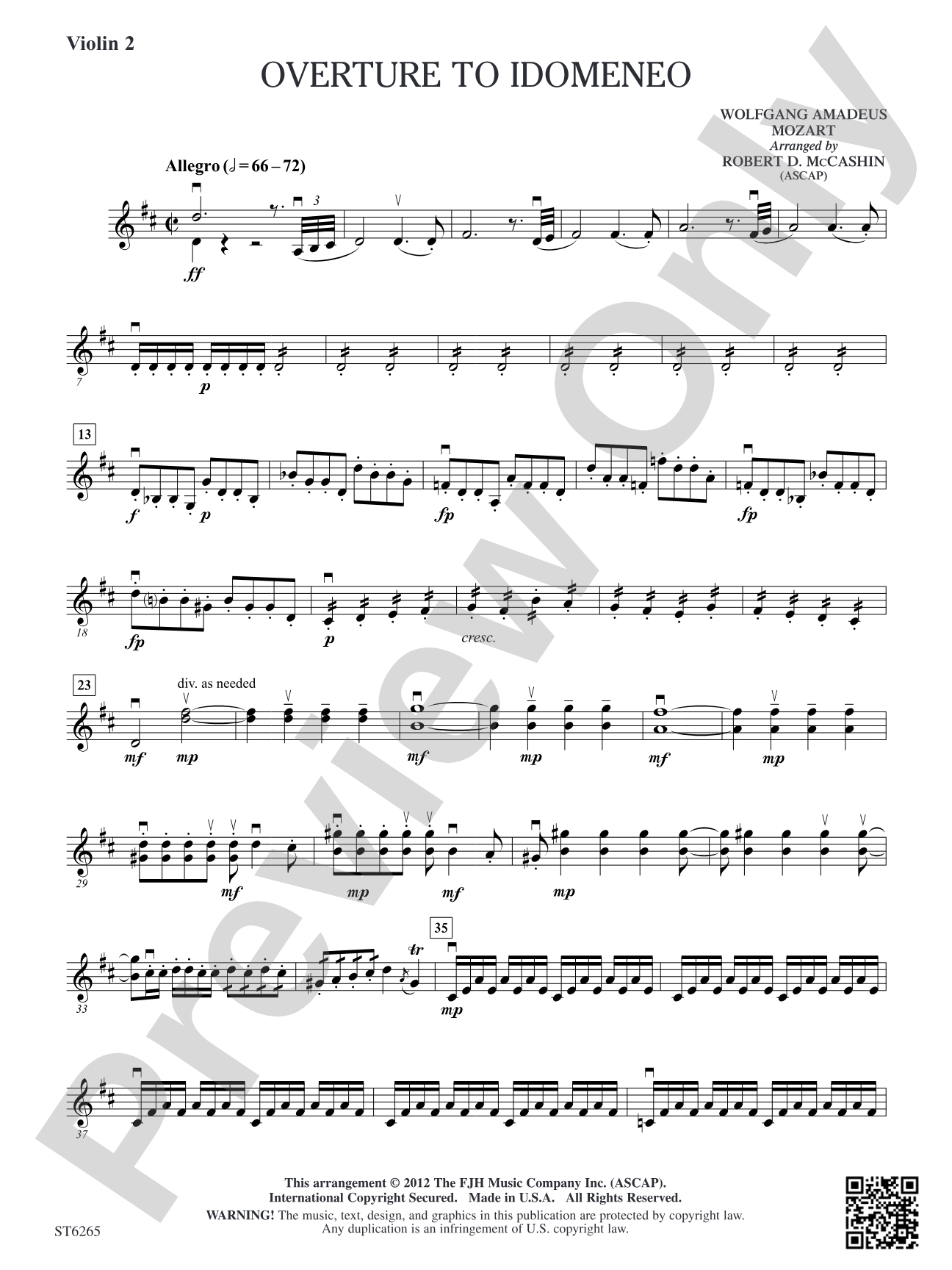

Overture to Idomeneo: Violin 2
Arranged by Robert D. McCashin
Grade: 4
Item: 98-PC-DST6265_VN2
$7.00
Pickup currently not available
Description
This terrific concert opener is considered by many to be Mozart's first mature work in the operatic medium. Retaining all the depth and nobility of the original, this arrangement also remains musically and structurally true to the harmonic and melodic spirit of Mozart's original opus. Engaging and musically satisfying!


Don't just read it, hear it, play along with it, and watch your students grow with it. In MakeMusic Cloud, Overture to Idomeneo: Violin 2 comes alive with professional accompaniment, adjustable tempo, and built-in practice tools that turn solo practice into real progress.
Open in the Player
Jump straight in and assign it today.
Start Your Free Trial
Open this title and explore the full library in minutes.
Sample Audio
1
Audio File
--:--
0:00
0:00
Sample Video
No sample videos found.
Additional Details
Series:
FJH String Orchestra
Publisher:
The FJH Music Company, Inc.
SKU:
98-PC-DST6265_VN2
More about this title
About the Arranger: Robert D. McCashin
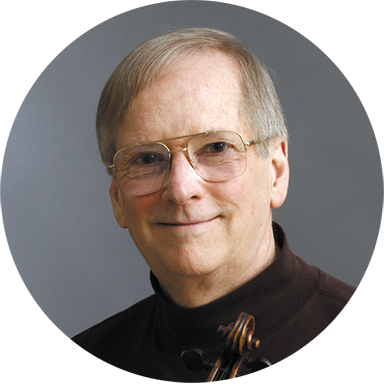
Robert D. McCashin holds a DMA in conducting from the University of Arizona and spent 43 years on university faculties, most notably as Director of Orchestras and Professor of Conducting at James Madison University, where he led the Symphony, Chamber Orchestra, and Opera Orchestras from 1992 to 2016. He earned his Bachelor and Master degrees in violin performance from Louisiana State University and was honored with JMU's Distinguished Teacher Award in 2015.
As a violinist and conductor with deep roots in both academia and ensemble performance, McCashin has established himself as a prolific arranger for educational orchestras, publishing nearly 80 works across grades 1 through 5. His arrangements have earned recognition as bestsellers and Editors' Choice selections in educational music publishing. Before joining JMU, he taught at the University of Texas at Arlington and Texas Wesleyan University, where he also founded the Arlington Youth Symphony and performed with regional orchestras including the Fort Worth Symphony and Fort Worth Opera Orchestra.
Why we love this
McCashin's arrangement captures the ceremonial grandeur and architectural elegance of Mozart's original without compromising the score for younger players. Grade 4 orchestras rarely encounter Mozart at this level of harmonic and structural authenticity, making this overture a genuine musical education rather than a simplified approximation. It's a concert opener that commands attention from the first notes.
What to expect
Stately and ceremonial, with the courtly elegance of an 18th-century opera house. The overture unfolds with structural clarity and harmonic richness that feels substantial and dignified, yet accessible enough for young players to feel the authentic grandeur beneath their fingers.
Who it's for
String orchestras at the Grade 4 level ready to engage mature operatic repertoire, and directors seeking contest or festival material that honors Mozart's compositional voice. This arrangement works for ensembles with solid fundamentals in intonation, rhythmic independence, and sustained tone production.
How to get the most out of it
- Balance the lyrical opening theme between first and second violins; the melody carries weight when both parts maintain equal clarity rather than ceding to the firsts.
- Shape the harmonic progression in the development section by adjusting bow weight slightly at key harmonic shifts, allowing listeners to hear the modulation without explicit tempo changes.
- Establish a steady, unhurried pulse in the first movement; Mozart's formal structures are more effective when phrase architecture is allowed to breathe rather than pushed forward.
- Tune the final tutti carefully; rapid section changes and shifting harmonic densities expose intonation issues, so check unison passages and fourths/fifths between parts before performance.
How to use it
Open a concert or festival performance with this overture to establish an elegant tone and signal that the evening will feature serious musical content. Pair it with Baroque or Classical-era works to create thematic coherence, or use it as a contrast before programming Romantic or contemporary pieces.
Skills your students will build
- Reading and performing sustained harmonic progressions with accurate intonation
- Executing rapid section changes and textural shifts between tutti and solo passages
- Shaping Classical-era phrasing with attention to harmonic arrival points
- Balancing independent voice parts while maintaining ensemble unity in polyphonic textures