
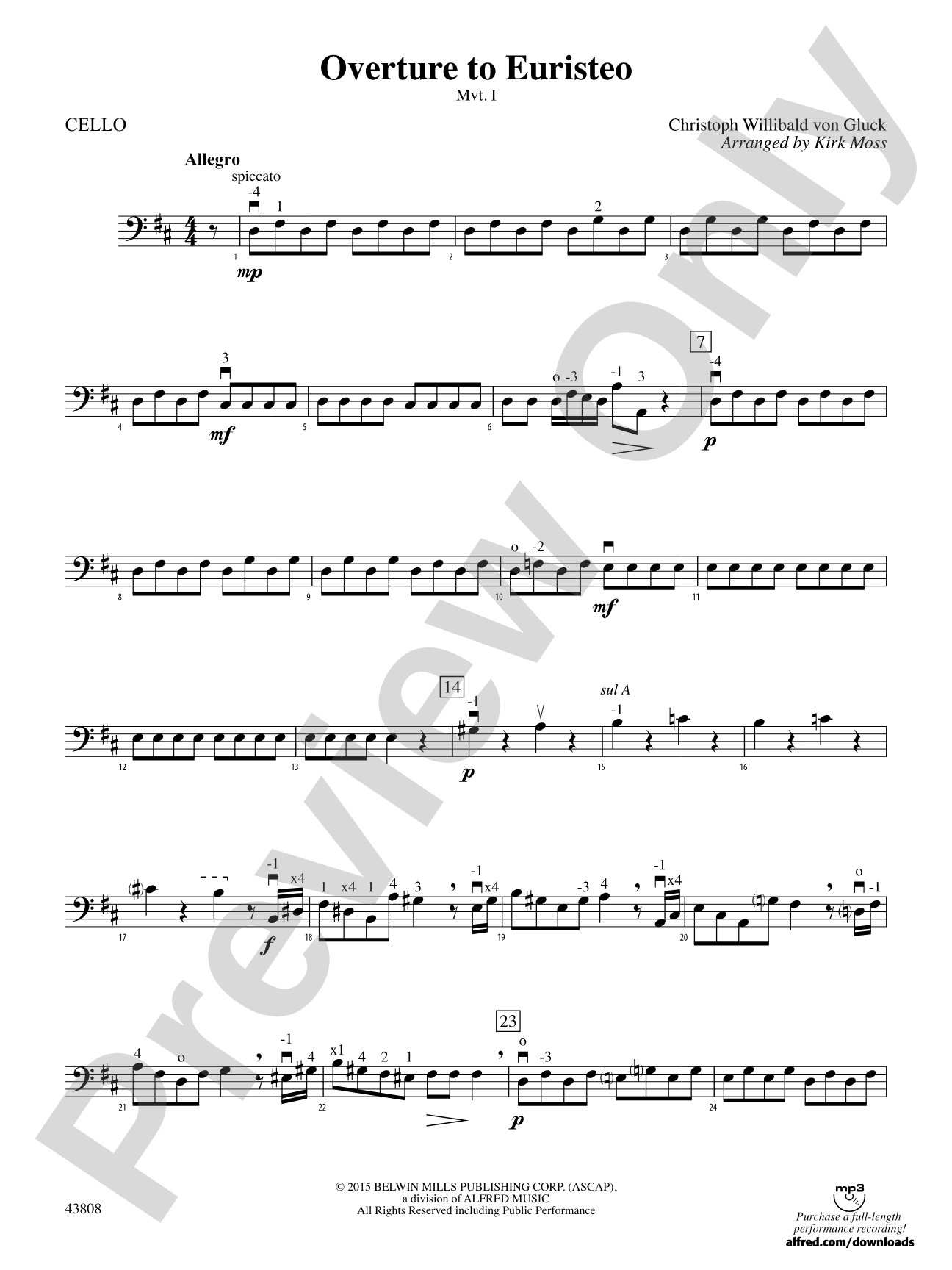

Overture to Euristeo: Cello
Mvt. I
By Christoph Willibald von Gluck / arr. Kirk Moss
Grade: 4
Item: 00-PC-0016908_VC1
$5.99
Pickup currently not available
Description
This brisk, cheerful Allegro can open any concert in style. The clearly marked bowings and fingerings in this original literature will save precious rehearsal time and lead to a more professional sound. (2:05)


Don't just read it, hear it, play along with it, and watch your students grow with it. In MakeMusic Cloud, Overture to Euristeo: Cello comes alive with professional accompaniment, adjustable tempo, and built-in practice tools that turn solo practice into real progress.
Open in the Player
Jump straight in and assign it today.
Start Your Free Trial
Open this title and explore the full library in minutes.
Sample Audio
1
Audio File
--:--
0:00
0:00
Sample Video
No sample videos found.
Additional Details
Series:
Belwin Symphonic String Orchestra
Publisher:
Alfred Music
Page Count:
144
SKU:
00-PC-0016908_VC1
More about this title
About the Composer: Christoph Willibald von Gluck
Christoph Willuck von Gluck (1714-1787) fundamentally reshaped opera by prioritizing clarity, emotional directness, and dramatic truth over virtuosic display. His reform operas, including Orfeo ed Euridice and Alceste, stripped away ornamental excess and aligned music with text and action in ways that influenced composers for generations. Beyond the opera house, Gluck's instrumental works demonstrate the same commitment to elegant structure and communicative grace that defined his theatrical innovations.
As a conductor and teacher, Gluck shaped the musical institutions of Vienna and Paris during the late eighteenth century. His influence extended far beyond his lifetime; his principles of musical clarity and dramatic purpose became foundational to the Classical idiom itself. String orchestras continue to find in his works a perfect bridge between Baroque complexity and the streamlined elegance of the Classical style.
Why we love this
Kirk Moss's arrangement captures the infectious forward momentum of Gluck's original while providing the detailed bowings and fingerings that Grade 4 ensembles need to sound polished without exhausting rehearsal time on technique troubleshooting. The brisk Allegro character makes it an ideal concert opener, and the straightforward harmonic language lets students focus on ensemble blend and articulation rather than getting lost in complex voices.
What to expect
Bright, purposeful, and refreshingly direct. The music moves with theatrical confidence; you hear the classical elegance and formal clarity that defined Gluck's era, yet the piece feels immediate and accessible rather than precious. It's the sound of an eighteenth-century stage opening with a gesture of welcome.
Who it's for
Grade 4 string orchestras ready to tackle meaningful Classical repertoire with professional results. This arrangement serves ensembles that want concert-ready literature without the rehearsal burden of extreme technical demands, making it ideal for programs balancing ambitious repertoire with realistic preparation time.
How to get the most out of it
- Keep the tempo moving steadily; resist the urge to drag. This piece thrives on its lightness and forward energy, so maintain consistent tempo through any tricky passages.
- Shape individual phrases even within the Allegro flow. Small dynamic swells at phrase arrivals and gentle releases at cadences add character without disrupting the overall briskness.
- Balance the arrangement so that melodic voices rise above accompaniment. Moss's scoring likely features principal melody and supporting texture; ensure that priority is clear to the ear.
- Observe the marked bowings precisely. They're designed not just for intonation and tone, but to unify the section's articulation and create a cohesive sound quality.
How to use it
Open a concert with this piece to set a spirited, professional tone from the very first note. Its two-minute-plus duration works well in a mixed program where you want a substantial classical anchor without the length commitment of a full multi-movement work. It also pairs naturally with other eighteenth-century orchestral literature or serves as a bridge between romantic repertoire and contemporary works.
Skills your students will build
- Unified bowing across a section for consistent articulation and tone quality
- Phrasing and dynamic shaping at Allegro tempo without rushing or dragging
- Balance between principal melody and accompaniment texture
- Intonation in rapid harmonic passages characteristic of Classical style
- Reading clearly marked fingerings and applying them musically rather than mechanically