
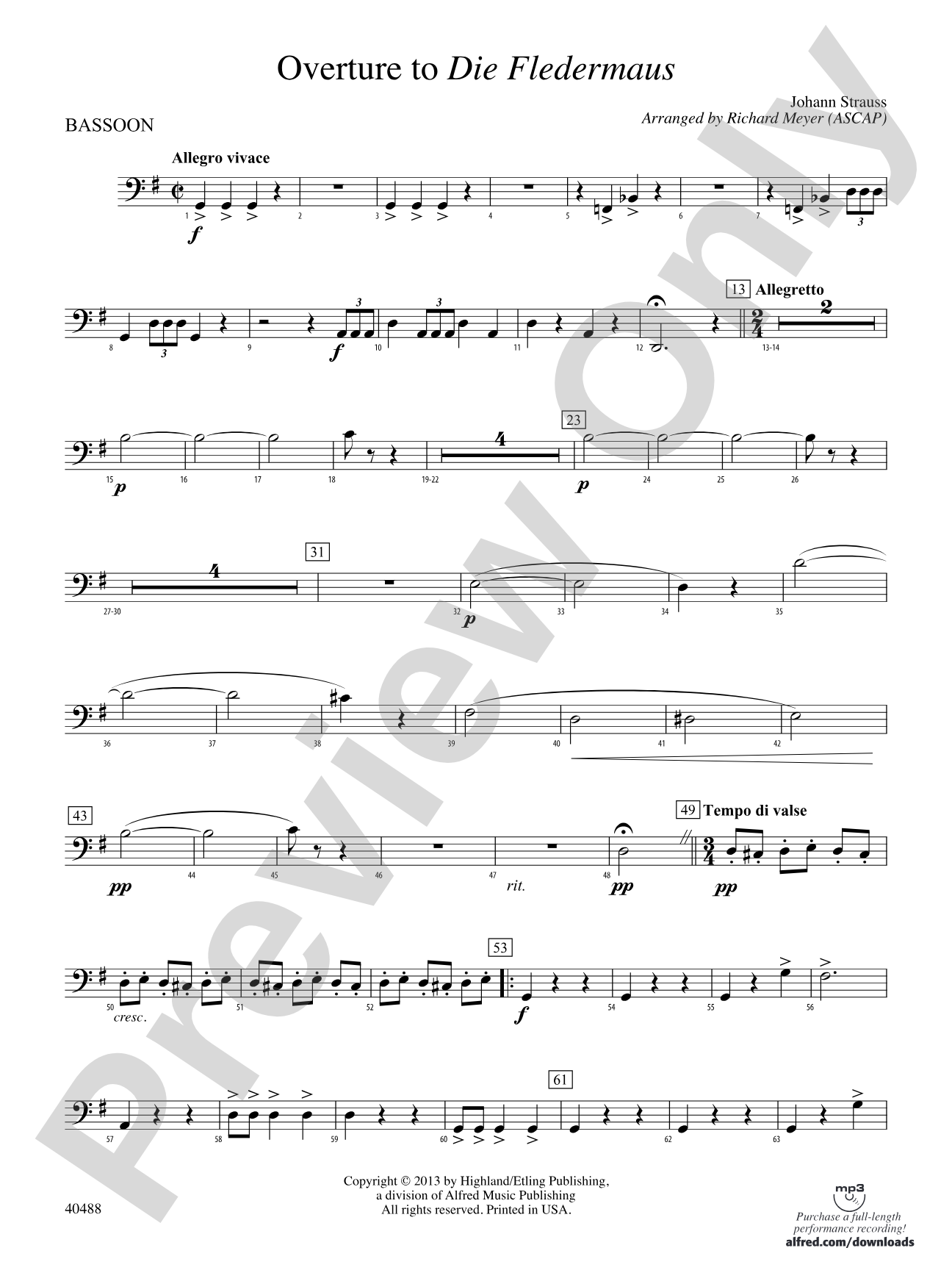

Overture to Die Fledermaus: Bassoon
By Johann Strauss / arr. Richard Meyer
Grade: 2
Item: 00-PC-0016020_B1
$3.00
Pickup currently not available
Description
Since its premiere in 1874, Die Fledermaus (The Bat) has been one of the most beloved operettas ever written. Among Johann Strauss' most famous overtures, this delightful selection abounds with memorable melodies that your audience will surely recognize, and the shifts in tempo and meter will give your student musicians a chance to develop a wide variety of playing techniques. A great concert opener or closer, and a wonderful contest selection, this arrangement sounds like the original while staying well within reach of younger musicians. Includes a full complement of percussion parts as well as parts for Violin III (Viola, treble clef), Alto Saxophone, and Piano Accompaniment. This title is available in MakeMusic Cloud.


Don't just read it, hear it, play along with it, and watch your students grow with it. In MakeMusic Cloud, Overture to Die Fledermaus: Bassoon comes alive with professional accompaniment, adjustable tempo, and built-in practice tools that turn solo practice into real progress.
Open in the Player
Jump straight in and assign it today.
Start Your Free Trial
Open this title and explore the full library in minutes.
Sample Audio
1
Audio File
--:--
0:00
0:00
Sample Video
Additional Details
Series:
Highland/Etling First Philharmonic
Publisher:
Alfred Music
Page Count:
216
SKU:
00-PC-0016020_B1
More about this title
About the Composer: Johann Strauss
Johann Strauss (1825–1899) earned his reputation as the 'Waltz King' by composing some of the most infectious melodies of the 19th century. His operettas, particularly Die Fledermaus, showcased his gift for memorable tunefulness and theatrical brilliance, securing his place in the standard concert and opera repertoire worldwide.
Strauss mastered the art of writing for orchestras with clarity and sparkle. His works remain essential to music education because they offer students access to genuine Romantic-era masterworks that are both musically substantial and immediately engaging.
Why we love this
Richard Meyer's Grade 2 arrangement captures the infectious charm and orchestral sophistication of Strauss's original without overwhelming younger ensembles. The addition of alto saxophone and Violin III (Viola, treble clef) parts makes this accessible to orchestras with mixed instrumentation, while the authentic harmonic language and melodic substance keep the music dignified and engaging for mature audiences.
What to expect
Elegant and jubilant, this overture sparkles with the energy of a Viennese ballroom. Memorable melodies dance across the orchestra, interrupted by brisk tempo changes that keep the music buoyant and theatrical, creating an atmosphere of refined celebration.
Who it's for
Conductors of Grade 2 full orchestras looking for a polished concert work with genuine musical substance and widespread audience appeal. This arrangement suits orchestras with developing players who benefit from working with a Romantic masterwork that remains transparent in texture and clear in its demands.
How to get the most out of it
- Establish the tempo in your opening gesture with precision; the shifts between the waltz sections and faster passages depend on confident metric clarity from the podium.
- Balance the famous melodies so they sing above the accompaniment. Strauss wrote these tunes for the opera house, and they deserve prominence even in a concert arrangement.
- Shape each section with clear phrase direction rather than playing mechanically. The piece thrives on the sense of dance and forward momentum inherent to Strauss's writing.
- Pay special attention to the percussion parts; they provide rhythmic clarity and character definition that supports the orchestra's ensemble feel.
How to use it
Open or close your concert with this crowd pleaser; its immediate appeal and brevity work equally well at either end of the program. The piece also excels as a contest selection because it demands musicality and ensemble precision without requiring advanced technical facility.
Skills your students will build
- Reading multiple tempo changes within a single work
- Balancing melodic lines against harmonic accompaniment
- Executing the rhythm and character of Viennese waltz style
- Coordinating ensemble attacks and releases with conductor
- Sustaining musical phrases across multiple measures